Writing New Jersey Life

People and places of New Jersey…with some travels.

Category: Art

Heart, Mind, and Soul: The BAPS Shri Swaminarayan Mandir

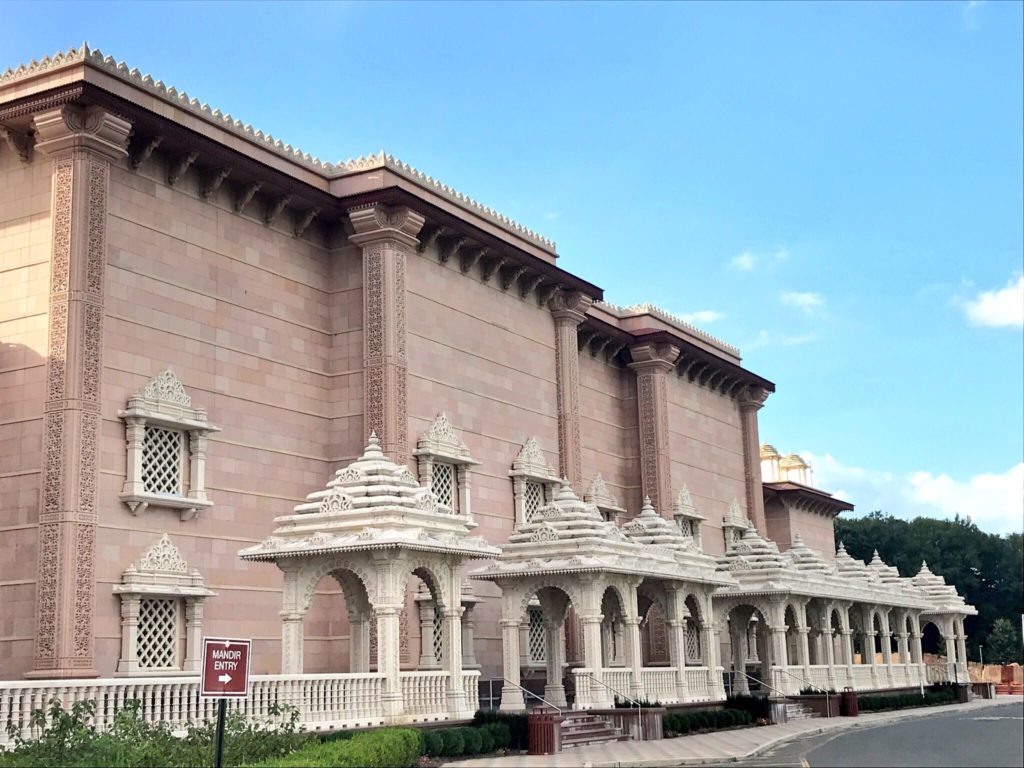
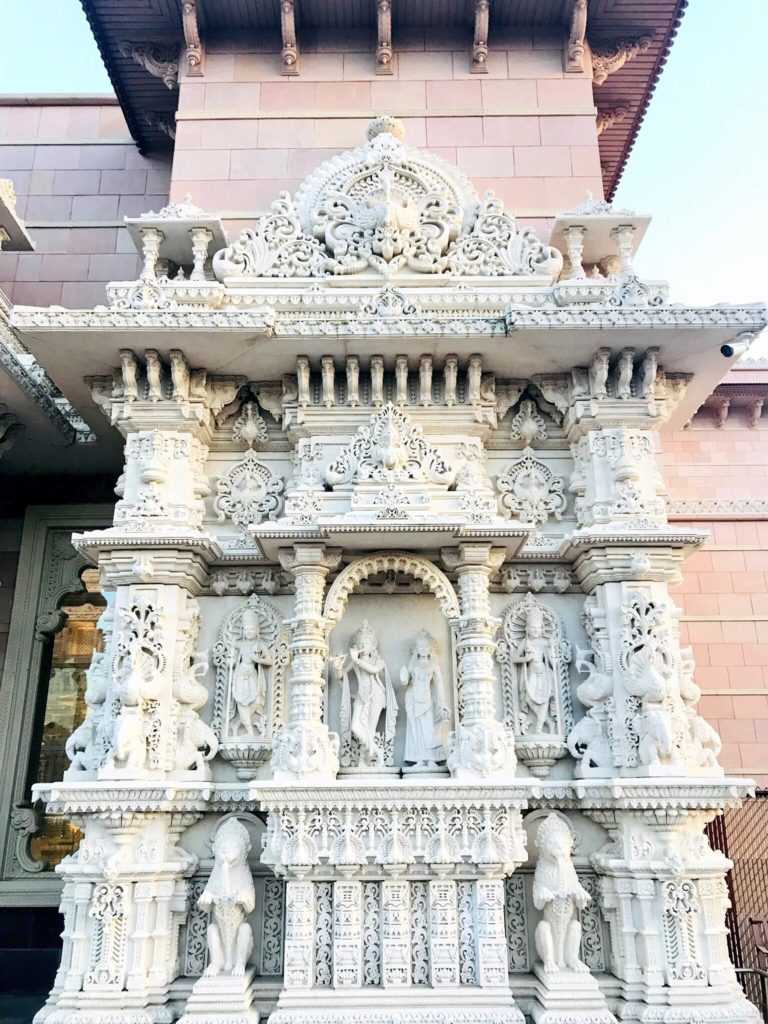
The temple exterior and entranceway. The interior temple resembles the style of the marble arches.

This magical-looking place nestled in the rolling green fields of Robbinsville, New Jersey is a Hindu temple, the BAPS Shri Swaminarayan Mandir.  The temple, or mandir, is one of approximately 100 in the United States and 1,000 globally. The grand exterior, or mandap, houses the inner sanctum, the actual mandir, and the entire complex is is an “akshardham”.  By definition, “mandir” in ancient Sanskrit means “means a place where the mind becomes still and experiences inner peace“. The atmosphere upon arrival is immediately uplifting and reflected through pleasant exchanges with devotees and visitors on the way into and within the mandir.
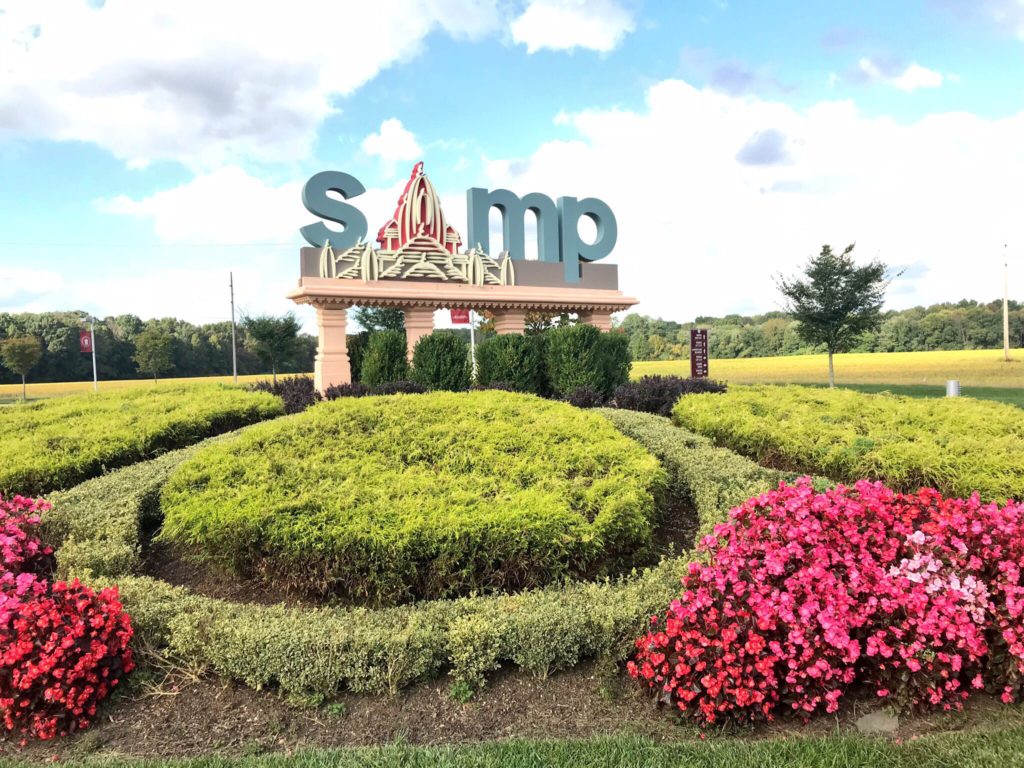
Beautiful floral entry
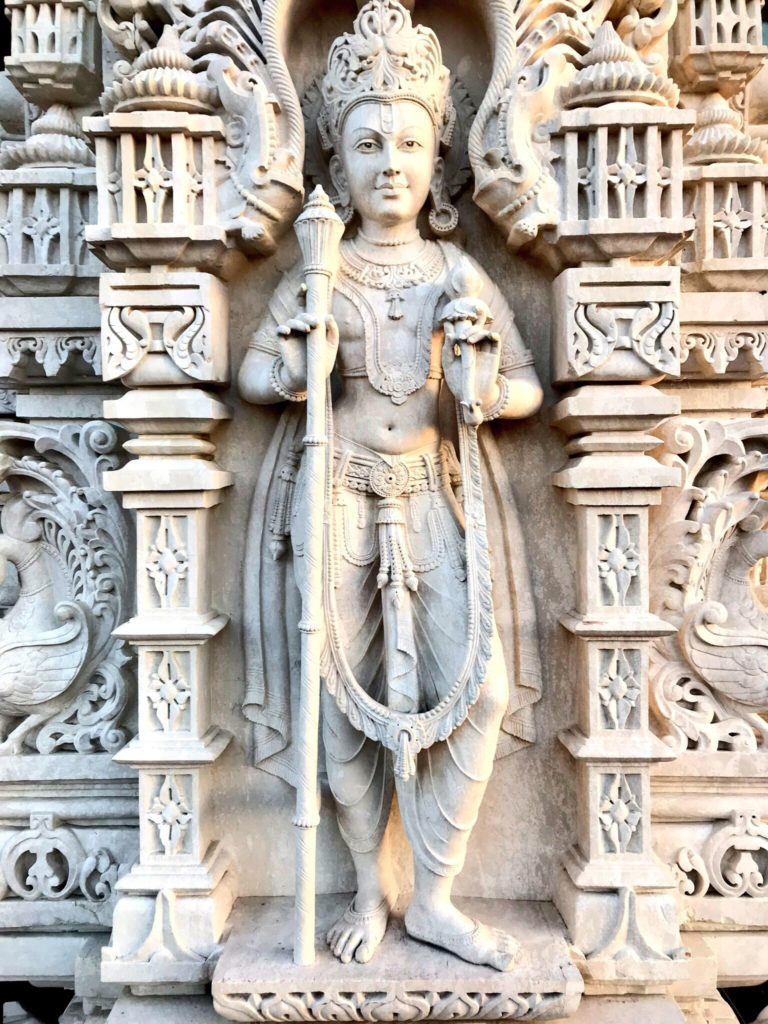
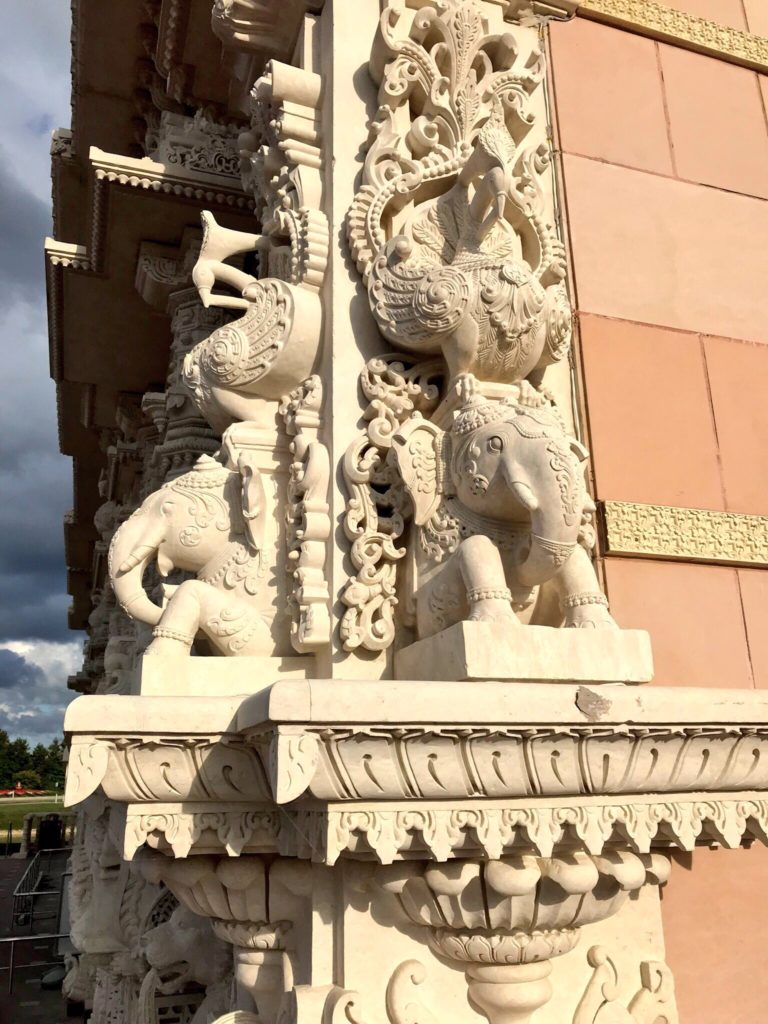
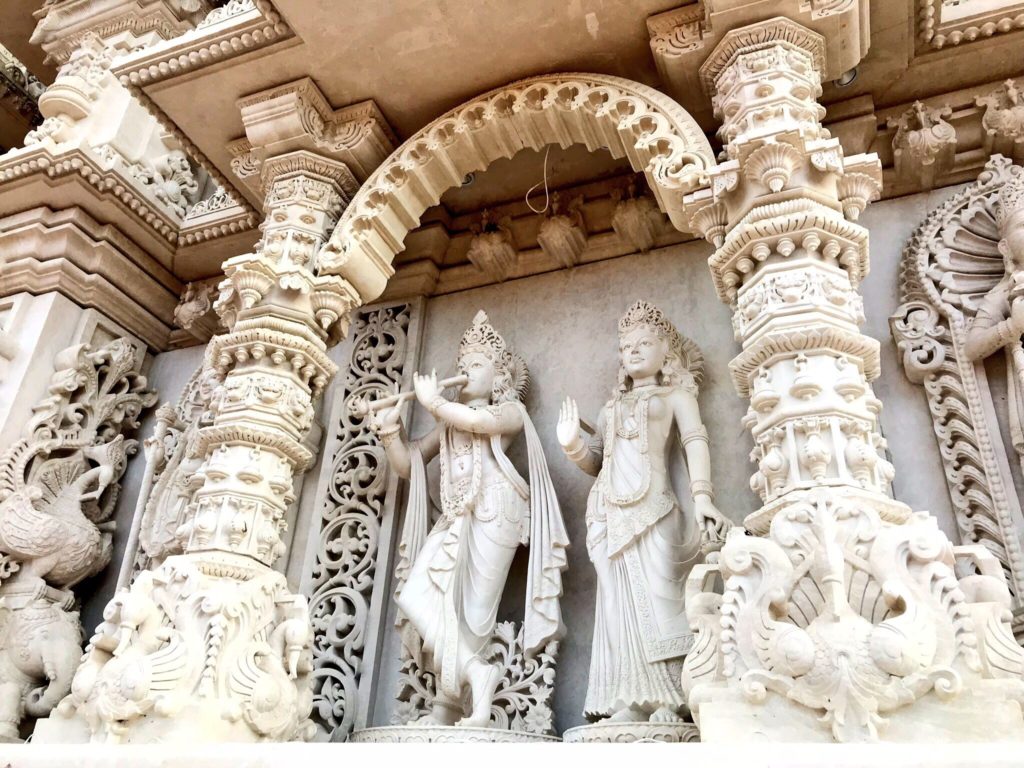
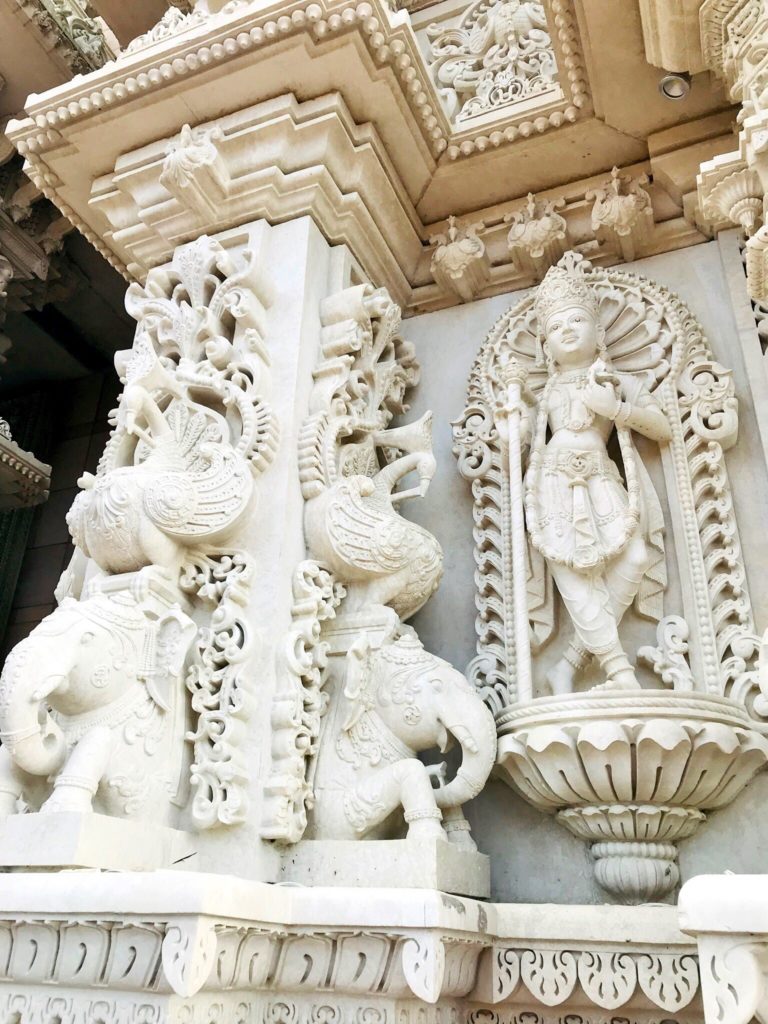
Magnificent temple sculptures

Art, Architecture, and the Divine

The Robbinsville temple is in the Nagara style of Hindu mandir architecture found in Northern India.  Nagara style temples are square with graduated projections and towers that give the mandir height.  Characteristic features in addition to the towers are domes, golden spires, flags, the sanctum, and pillared halls. Each has symbolic meaning like the pinnacles, aspiration, the golden spires, the immortality of the soul, and the flags, spiritual attainment. The inner sanctum is where one will find the most important deities. These elements of temple architecture combined create a link between devotees and the Divine.

The temple’s style is not purely architectural.  The Robbinsville mandir is built according to Scripture as are all traditional mandirs.  This influence of religion on architecture echoed in a recent tour of Central Park when the staff guide mentioned that the landscape designers Frederick Law Olmsted and Calvert Vaux took inspiration directly from the Bible to create serene pastoral settings, though the mandir follows specifications for scared architecture.  These sacred temples are not exclusively traditional. More modern temples, hari mandirs, are smaller, and ghar mandirs, shrines within devotees’ homes, are where families perform rituals and discuss scripture together.

The BAPS Shri Swaminarayan Mandir is made of white marble, white limestone, and pink sandstone, selected to last in this cooler climate. As the mandir’s introductory film notes, the use of natural stone is similar to that of iconic spiritual centers like St. Patrick’s Cathedral and Angkor Wat. The stone-carving process is extensive and fascinating.  For an idea of the undertaking, artisans in India created the sculptures. Many volunteer, but the carving also provides work to skilled artists whose talents are not in demand as they once were.  The marble is primarily Italian Carrara, totaling 68,000 cubic feet, and the limestone is from Bulgaria and India.  The sculptured stone, some 13,499 pieces, arrived in Robbinsville 98% complete after a journey of 21,500 miles. Additional volunteers finished the work. All this is breathtaking, but it does not prepare one for the splendid interior of the mandir with white marble and golden statues that appear silver in the lamplight. The sacred images, or murtis, within the mandir and on the pillars in the mandap are not just deities, but “living works of art” and “liberated souls…ancient sages, and exemplary devotees” that are models of spiritual inspiration.

What may surprise visitors is that the grand, beautiful temple holds fast with interlocking stone.  Quotes from the Rig Veda, hymns in ancient Sanskrit, are inspiring poetry in stone that one can read throughout the temple.  Skylights and white marble floors add to the lightness of the interior.  The tradition of the lamplight in the mandir pre-dates electricity and skylights and once provided the only light in the temple within the temple. Among the sculptures, visitors will see peacocks, particularly at the entrance gate, which are the national bird of India, and elephants, which represent “resolve, grace, and nobility”.  One devotee mentioned that the elephant is honored for the many centuries when it carried stone to build the mandirs in the days before other transportation.  Ganesh, the popular deity known as the Lord of Good Fortune, the Lord of Beginnings, and the Remover of Obstacles, who is also important in Bhuddism, is depicted with the head of these beloved animals that reflect different accounts of his origin.
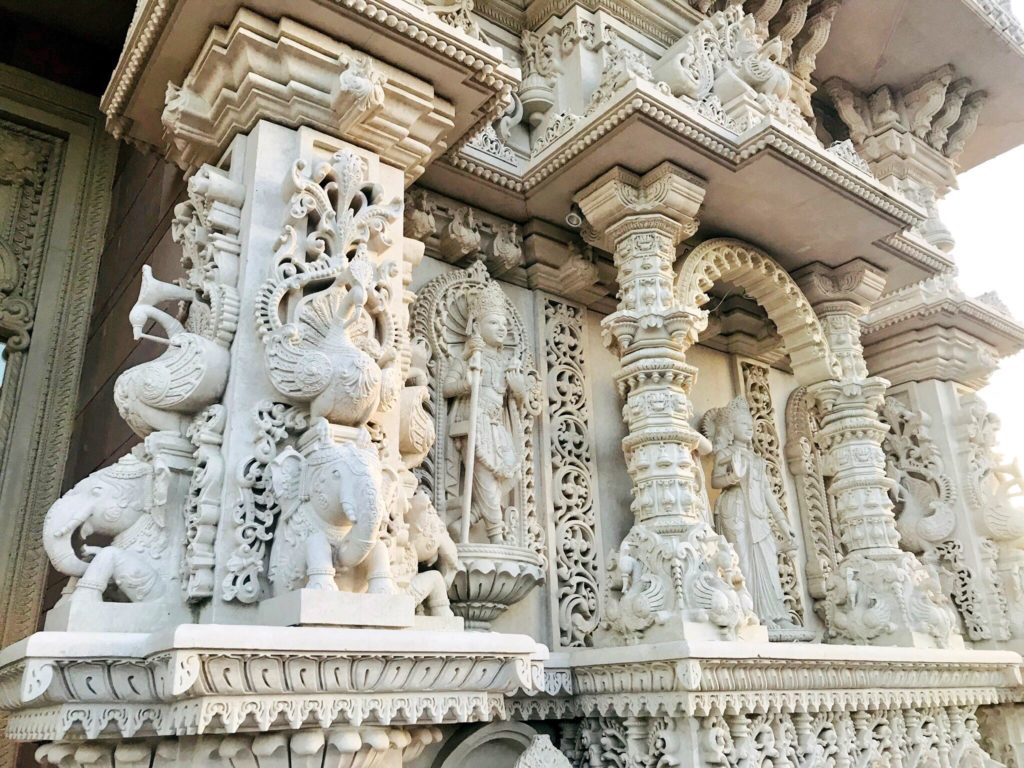
Entranceway
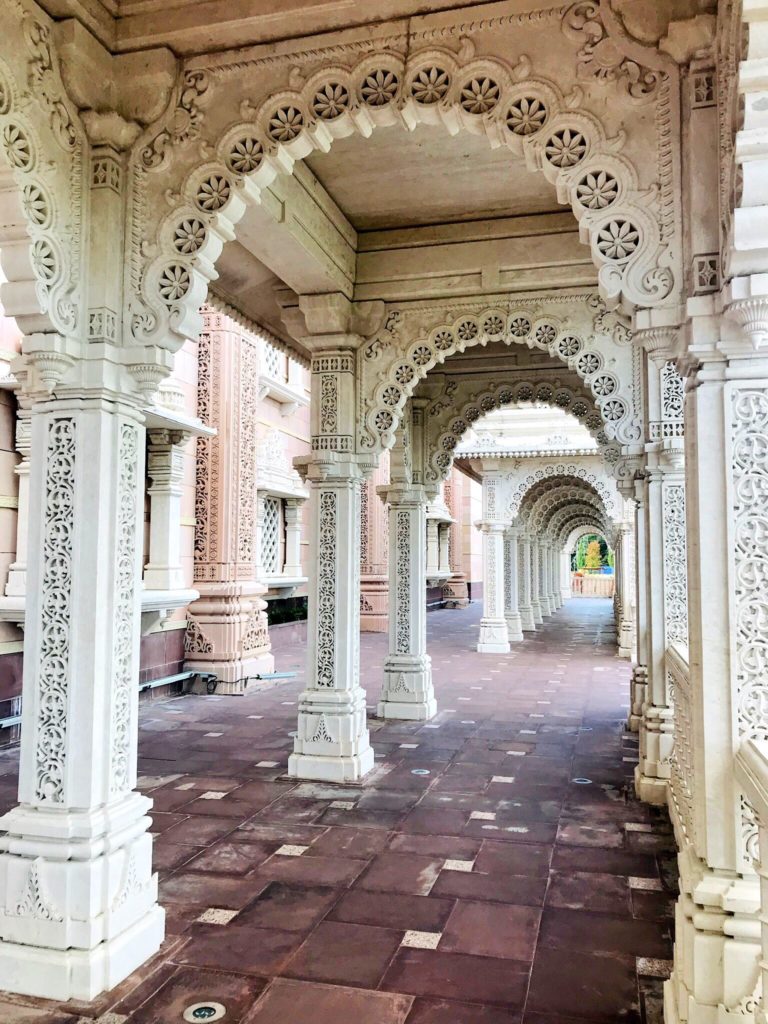
BAPS Shri Swaminarayan Mandir

Bochasanwasi Akshar Purushottam Sanstha (BAPS) is a branch of Swaminarayan Hinduism.  Devotees believes that Bhagwan Swaminarayan, or the yogi spiritual leader, was God on earth and his Divine presence continues through succession.  The Swaminaryran, also referred to as “Swaminaryran Lord,” was born as Ghanshyam Pande (1781-1830). His philosophy led to social reforms in India. His follower, Shastriji Maharaj (1865-1951), a sadhu and Sanskrit scholar, or holy man of ancient Hindu letters, formed BAPS on June 5, 1907 based on his interpretation of the Swaminarayan’s teachings.  One of his successors, His Holiness Pramukh Swami Maharaj, blessed this site in August 2014. The present spiritual leader of BAPS, His Holiness, Mahant Swami Maharaj, bestowed his blessing in September 2017.

BAPS in Robbinsville continues the ancient Hindu tradition of “worshipping the Divine through murtis, or sacred images, enshrined in mandirs”.  The BAPS communities worldwide focus on spiritual living, family values, and community service.  Though the mandir has a respectful quiet on a visit, rituals and festivals involve music.  The mandir also offers Indian cultural events and celebrations for devotees in the great hall.

“A place of paramount peace” is an apt description. While walking through the beautiful inner mandir, devotees brushed aside concerns about interrupting them at prayer.  The devotees warmly shared aspects of their faith and excitement at the near completion of the spiritual center. Construction on this mandir began in 2010 and though it is complete, the mahamandir, a greater temple, reportedly the largest in the world, is under construction adjacent to the mandap where there will also be a youth center and an exhibition hall which will feature “Indian history and culture”.

Visiting

The mandir is an active house of worship.  Visitors are welcome to take photos outside, but the temple kindly requests a respectful covering regarding clothing and no photo-taking inside.  Please respect their wishes.  For visitor information, please see BAPS Shri Swaminarayan Mandir.

The visit is free, but donations, however modest, are welcome as a thank you. Reservations are not required for individuals or families, but do call for larger groups: (609) 918-1212.  Upon arriving, you will be asked to remove your shoes as a respectful courtesy.  The welcome is most cordial with the gift of prasadam (“prasad” grace and joy), a sanctified sweet, for each visitor.  An introductory film and a free guided tour with a volunteer will add to your appreciation of the temple.  If a guide is not available, the audio tour is excellent, and the book available to visitors at the welcome desk is helpful as an introduction to both the mandir and Hinduism. There is a snack shop and café.

To the right of the entrance, one may participate in the ritual of abhishek, or pouring water over the “sacred image of God,” here, Shri Ghanshyam Marahaj, the childhood form of Bhagwan Swaminarayan.  Though the deities may seem confusing initially to those who are not familiar with Hinduism, the belief is that there is one supreme God, Brahman, the creator.  Along with Shiva, who preserves the earth, and Vishnu, who destroys the earth so it can be created anew, the three are both one and separate in a mystical way like the Holy Trinity. All the deities and even devotees are the Divine presence on earth.  “That which we call the Hindu religion is really the Eternal religion because it embraces all others.” The temple guidebook complements this thought, “Without the deities, the mandir would be no more than a beautiful building.  With them, it becomes a sacred place of worship wherein God resides”.

There is so much to see and the atmosphere is so peaceful that you will want to return. We had wonderful practicing neighbors while growing up, but my knowledge of Hinduism is more academic going back to incredible studies as an exchange student at Bowdoin College. This visit is was a welcome opportunity to talk to people about their faith without being intrusive. Devotees were warm and gracious in doing so as well as proud and excited to share their beautiful spiritual home. By no means is this modest travelogue definitive about BAPS or Hinduism, so please do enjoy a visit yourself to learn more.

In researching, this Hindu proverb stood out as a cornerstone of many faiths, “There is nothing noble about being superior to some other man.  The true nobility is being superior to your previous self.”  The faith that brings the mandir’s stones to life is indeed at the heart of its beauty.

(Sources: www.baps.org/Global-Network/North-America/Robbinsville.aspx, BAPS publication for visitors and visitor film, bbc.co.uk, definitions.net, kashgar.com.au, Swami Sivananda quote, Sri Aurobindo quote, iasmania.com, americanshipper.com, Britannica.com, Wiki)
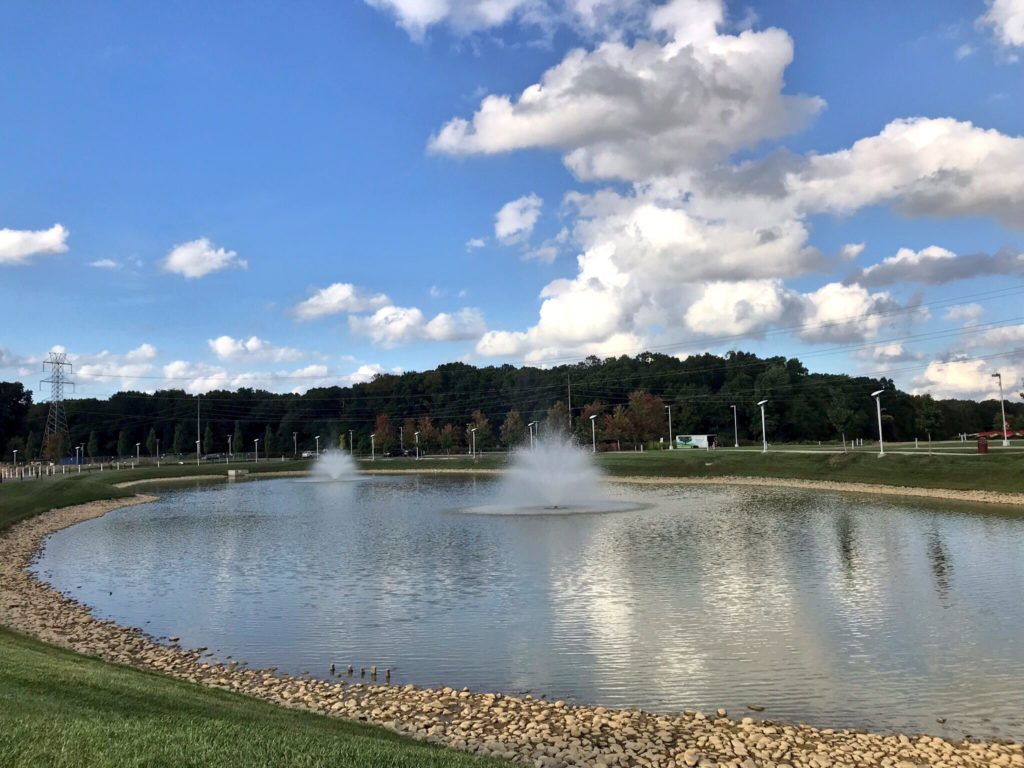
Beautiful grounds
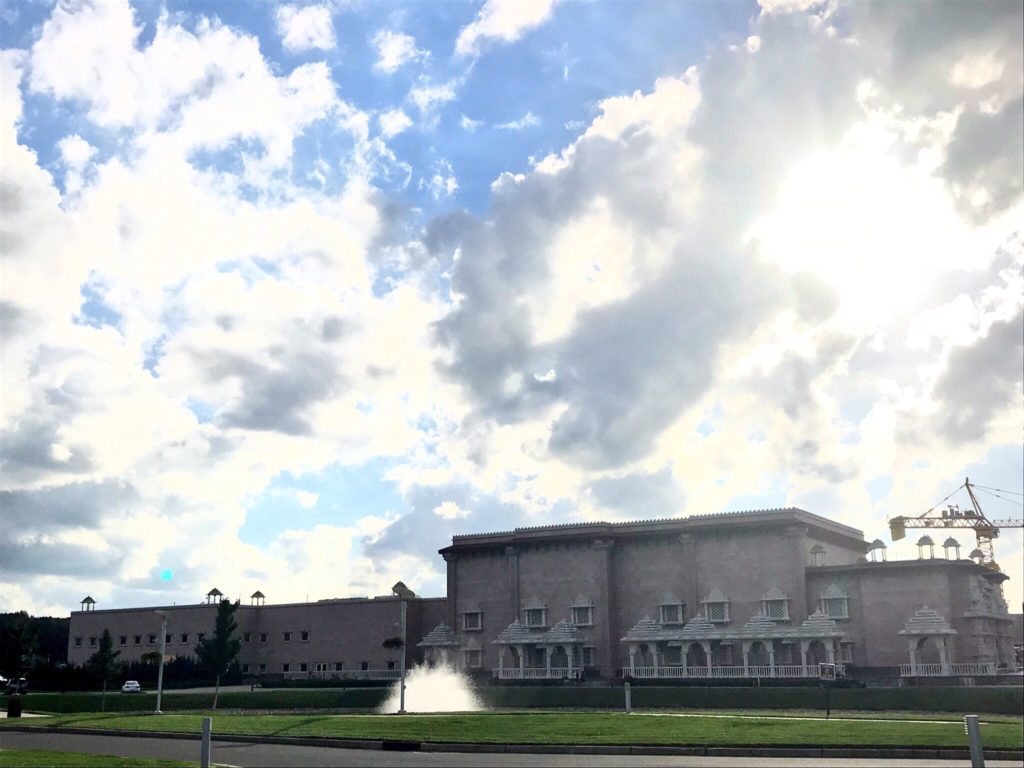
Behind the striking temple exterior (mandap), the construction continues to complete the center (akshardham).
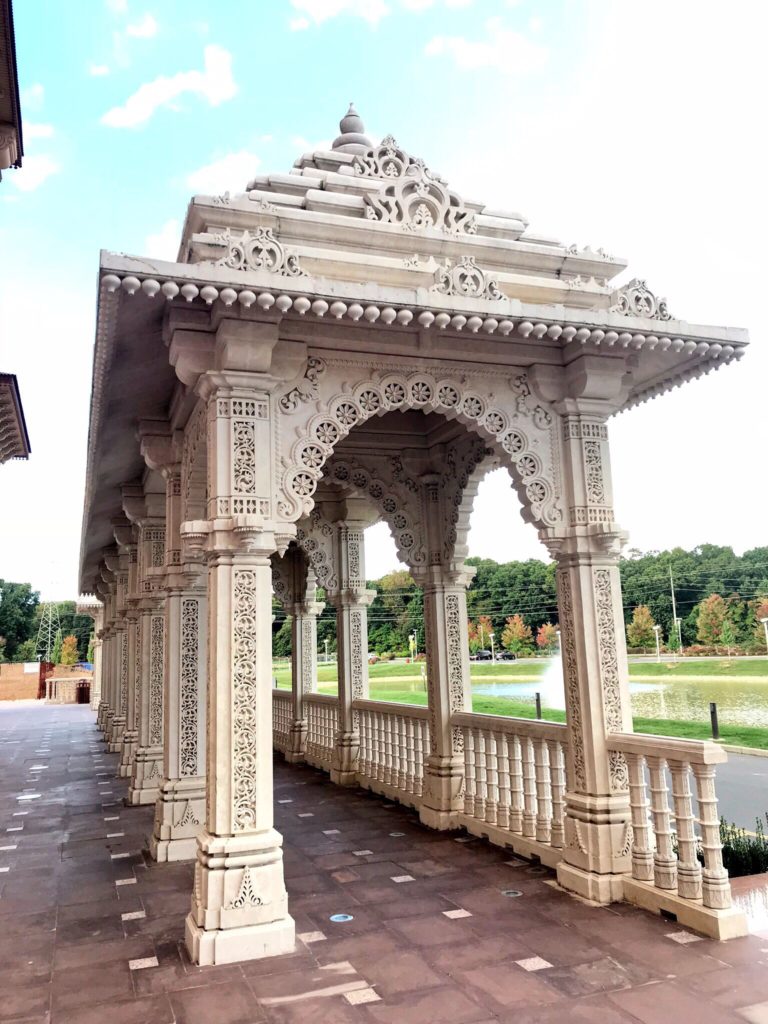
Imagination: Isamu Noguchi

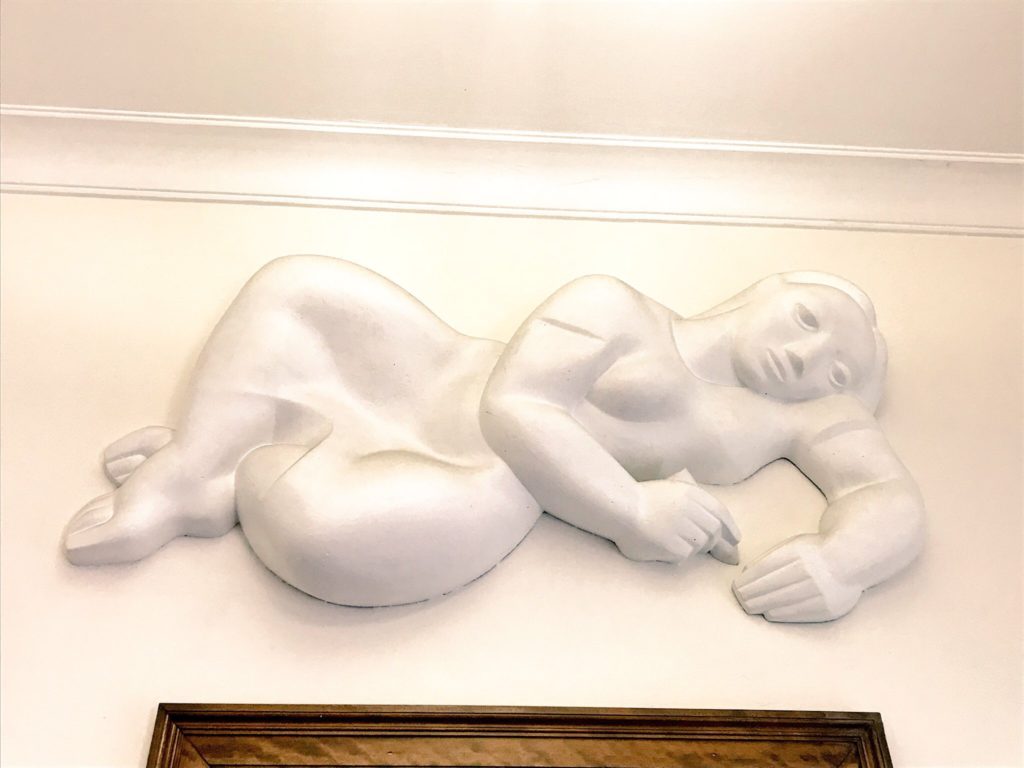
“The Letter,” 1939, Haddon Heights Post Office

“Everything is sculpture. Any material, any idea without hindrance born into space, I consider sculpture.”
The Artist

Isamu Noguchi, 1904-1988, was a Japanese-American artist who felt most at home in New York City.  His neighboring New Jersey legacy is one of sublime beauty, “The Letter,” a WPA era sculpture at the post office in Haddon Heights, near Philadelphia.  The elegantly simple figure of a reclining woman writing a letter floats cloud-like above the grounded, wooden post office decor, reflecting her dreamy reverie as she writes what may be a love letter.  Mr. Noguchi’s work conveys mystery, sharing his imagination while he challenges ours. The letter writer has a serene smile that suits the friendliness of the town-proud residents by an artist who loved creating work for the public to enjoy.  This included sculpture, gardens, fountains, playgrounds, and furniture.  His art combined the best of American and Japanese aesthetics.

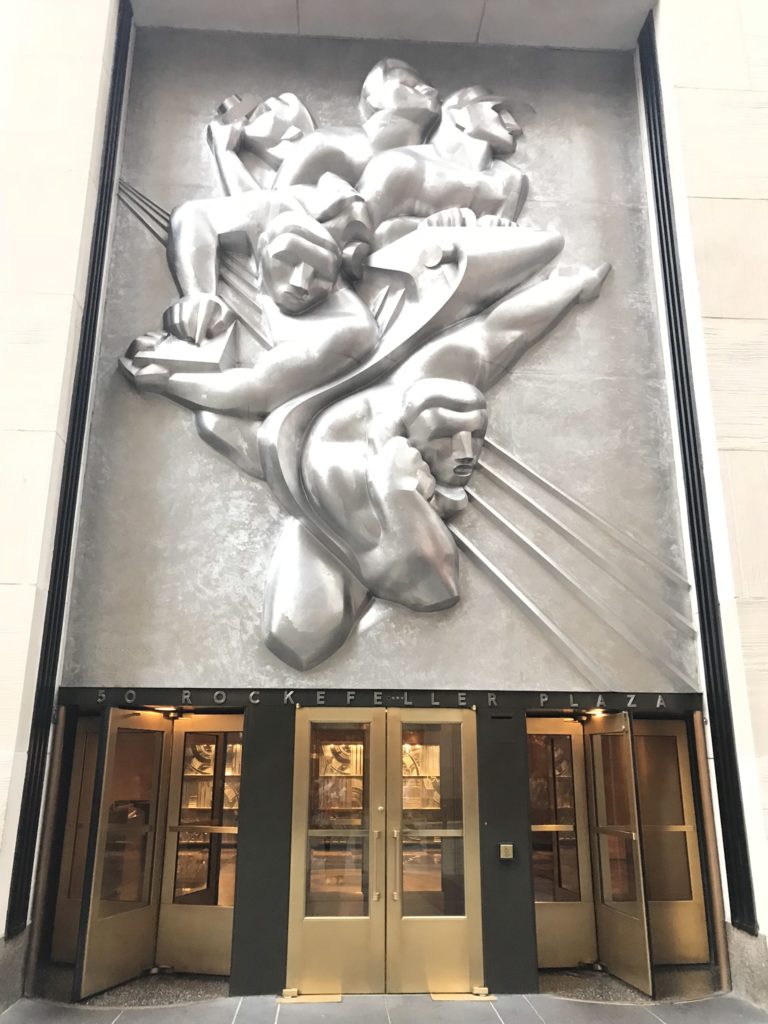
“News,” 1940, stainless steel bas relief, 50 Rockefeller Center, the former Associated Press Building

As one of the great figures of the twentieth century whose 84 year-long life spanned the globe and whose artistic work included Surrealism and Abstract Expressionism, there is so much to learn about Isamu Noguchi.  His mother, Leonie Gilmour, from New York City, was a Bryn Mawr graduate who once taught at the Academy of Saint Aloysius in Jersey City.  While later working as an editor in New York City, Leonie met the Japanese poet Yone Noguchi.  After the relationship ended, Leonie joined her mother in Los Angeles where Isamu was born in 1904.  A few years later, following Yone’s invitation, Leonie and Isamu moved to Chigasaki, Japan, where Isamu grew up in a house with a garden by the sea while his mother supported them with teaching.  By that time, his father had begun a relationship with another woman.  When Isamu was 14, Leonie sent him to the US to attend a progressive school in Rolling Prairie, Indiana, while she remained in Japan with his half-sister.  The school founder and a host family in La Porte, Indiana befriended Isamu, and he later graduated from the local high school.  Though his childhood was far from traditional and included the disappointment of a distant father, Leonie encouraged his artistic talent and was a devoted mother.

Excelling as a student, Isamu enrolled in pre-med studies at Columbia University. Once introduced to sculpture, he had such a natural ability that he pursued art exclusively.  Ironically, his skill was so incredible that it held him back initially, his work criticized for being too perfect.  With a Guggenheim Fellowship that funded an apprenticeship with the Romanian sculptor Constantin Brancusi in Paris, Isamu’s work became more personal, which freed him from previous criticism.  Interestingly, both sculptors had no mutual language in common except art, but understood each other perfectly, a welcome experience after Isamu’s fraught apprenticeship with Gutzon Borglum, the sculptor of Mount Rushmore.  Perhaps reflecting a longing for the father whom he never truly knew, or asserting a new identity, Isamu dropped his mother’s surname “Gilmour” and took “Noguchi” when he became publicly known as an artist.  Incredibly, widespread recognition did not occur until Isamu was in his early 40’s.  Unfortunately, when traveling to Japan as an artist, Isamu learned that his father did not want him to use the Noguchi surname.  On Isamu’s last visit to Japan, while his father was still alive, he did not contact him.

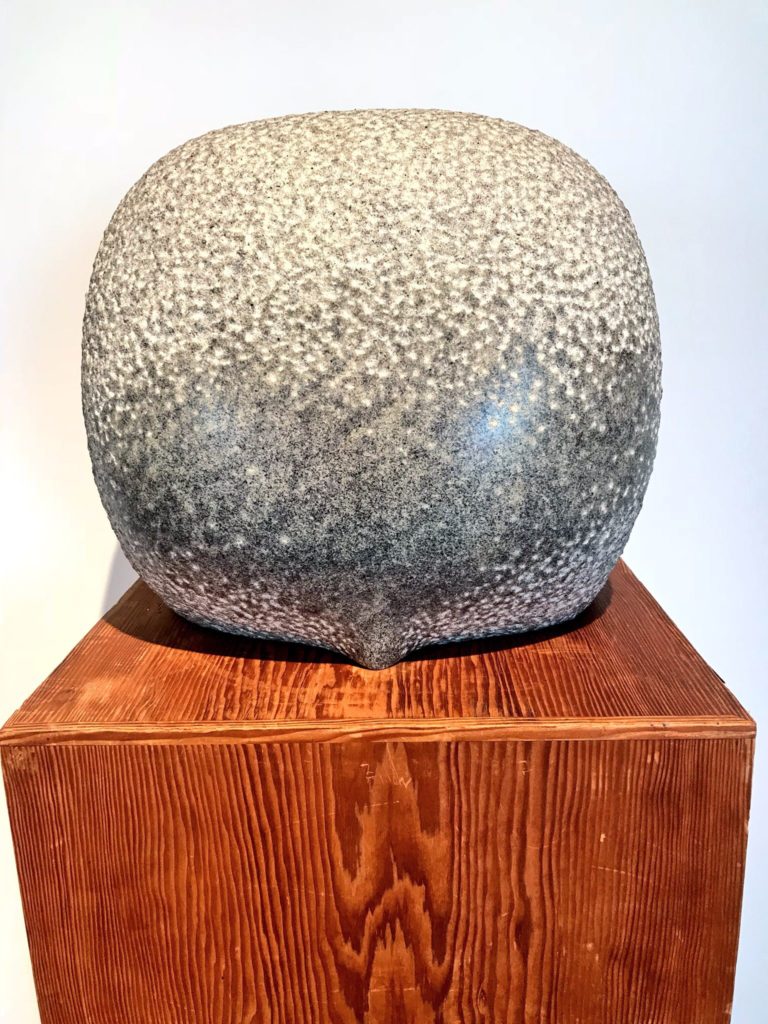
“Childhood,” rough-hewn with a smooth heart, Noguchi Museum

Worldwide travels over six decades as a working artist included friendships with Diego Rivera and Frida Kahlo in Mexico and Arshile Gorky and Willem de Kooning in the US, Greenwich Village neighbors, and collaborations in Japan and Italy.  His global works include architecture, perhaps most meaningfully, his design for the Peace Bridges at Hiroshima Peace Memorial Park, one symbolizing the past and the other, the future.  To his disappointment, his design for the main memorial could not be accepted because he was American.

While maintaining a studio in the village of Mure on the island of Shikoku in Japan, where he received inspiration from the Zen gardens, he fell in love with the beautiful actress and singer Yoshiko Yamaguchi (known in the US as “Shirley Yamaguchi”) whom he married in 1951. An anecdote in the museum’s excellent film shares that Isamu wanted the worldly Yoshiko, who worked with Akira Kurosawa and US filmmakers, to wear a kimono at home.  She found these uncomfortable, so he designed her a type of pantsuit that had the look of a kimono, but offered more modern comfort. Clothing styles aside, they spent several happy years together in Japan.  Sadly, upon their return to the United States for professional reasons, their careers drove them apart.

One account that may best describe the complexity of Isamu’s life was his noble impulse to join fellow Japanese-Americans during their internment in World War II. Living in New York, and not on the West Coast, Isamu, whose name means “courage” in Japanese, was free from this but volunteered to go with the thought of teaching art to boost spirits and develop talent as Brancusi had done for him.  The day after the Japanese bombed Pearl Harbor, Ginger Rogers, who had commissioned him to create a bust of her, invited Isamu to her home for an initial sitting.  He stayed on the grounds for a month as a guest in a studio she had made for him.  Isamu finished the movie star’s sculpted portrait in pink marble while living in the Poston, Arizona internment camp on the Colorado River Indian Reservation. During this time he wrote two letters to Ms. Rogers about the work’s progress.  As The Washington Post notes, his work may have come to the dancer’s attention through his set designs for the Martha Graham Dance Company where his sister, Alies Gilmour, was a dancer. Despite his good intentions, Isamu found that he had little in common with the farmers, shopkeepers, and laborers in the camp and asked to leave, a process which took several months.  One detainee recalled how Isamu would wander out into the desert alone to collect wood to carve. Ginger Rogers treasured her Noguchi portrait, which was a centerpiece in her home until she died, and now is in the collection of the National Portrait Gallery.

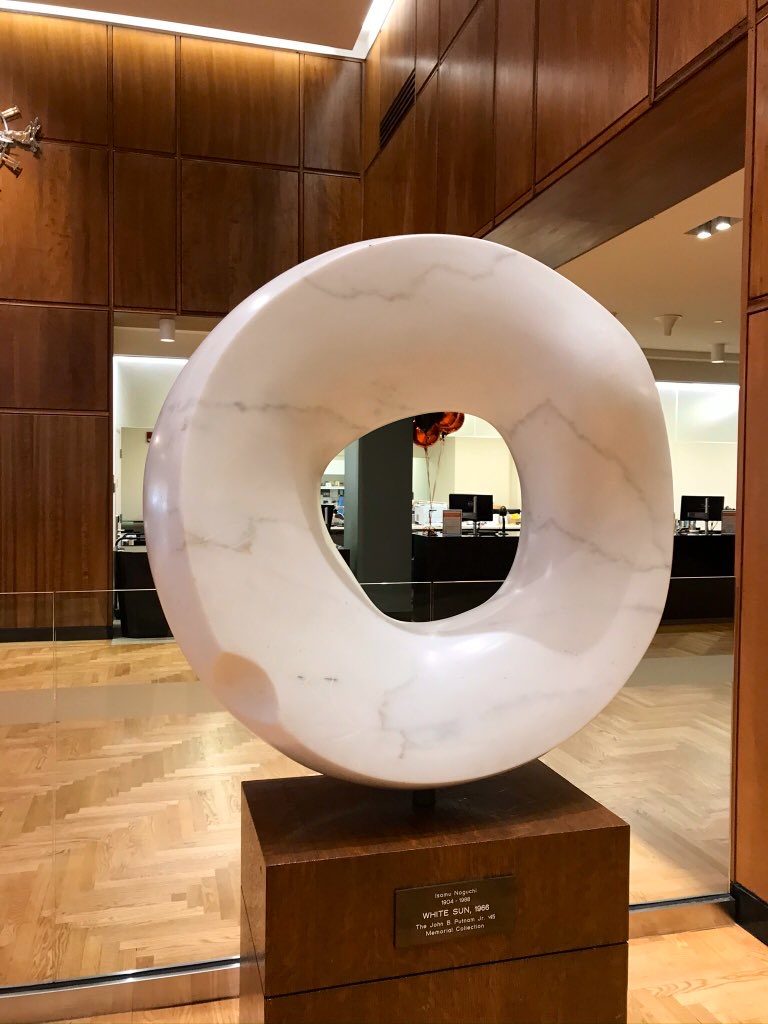
“White Sun” 1966, Firestone Library, Princeton University, one of the artist’s favorite sculptures

The Noguchi Museum, New York City

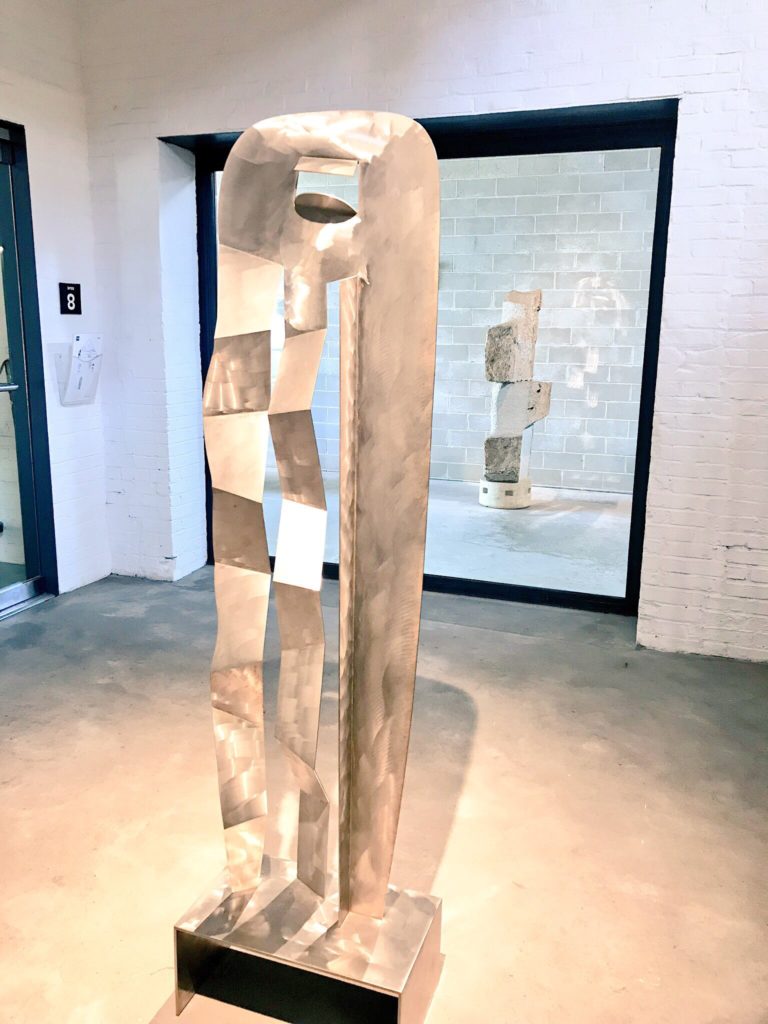
Art at its best is transporting like incredible music, film, or literature that takes us out of ourselves and into the world of the artist’s imagination. As someone who experimented throughout his life by expressing different styles and working with a range of materials (marble, basalt, ceramics, steel, cement, paper, wood, aluminum), Mr. Noguchi risked failure and experienced rejection, but his striving makes the successes soar in a way that defies time and space.  Ideal, then, that the complementary works of Spanish sculptor Jorge Palacios, are presently on view along with Mr. Noguchi’s in the latter’s museum in Long Island City, Queens.

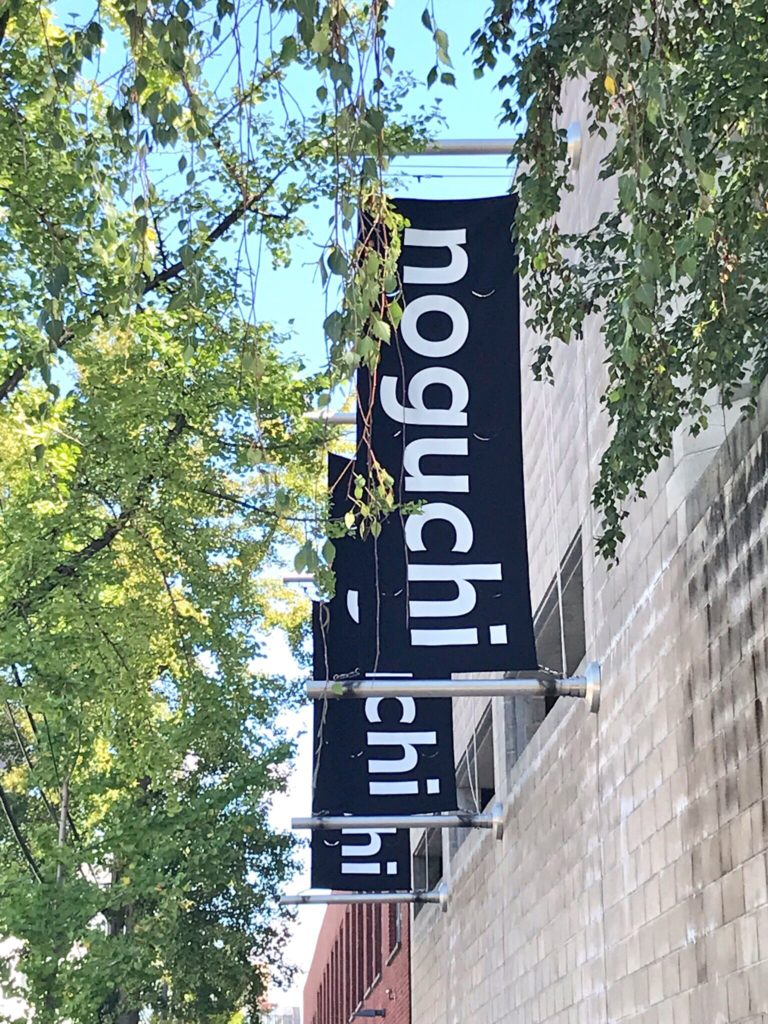
Noguchi Museum banners


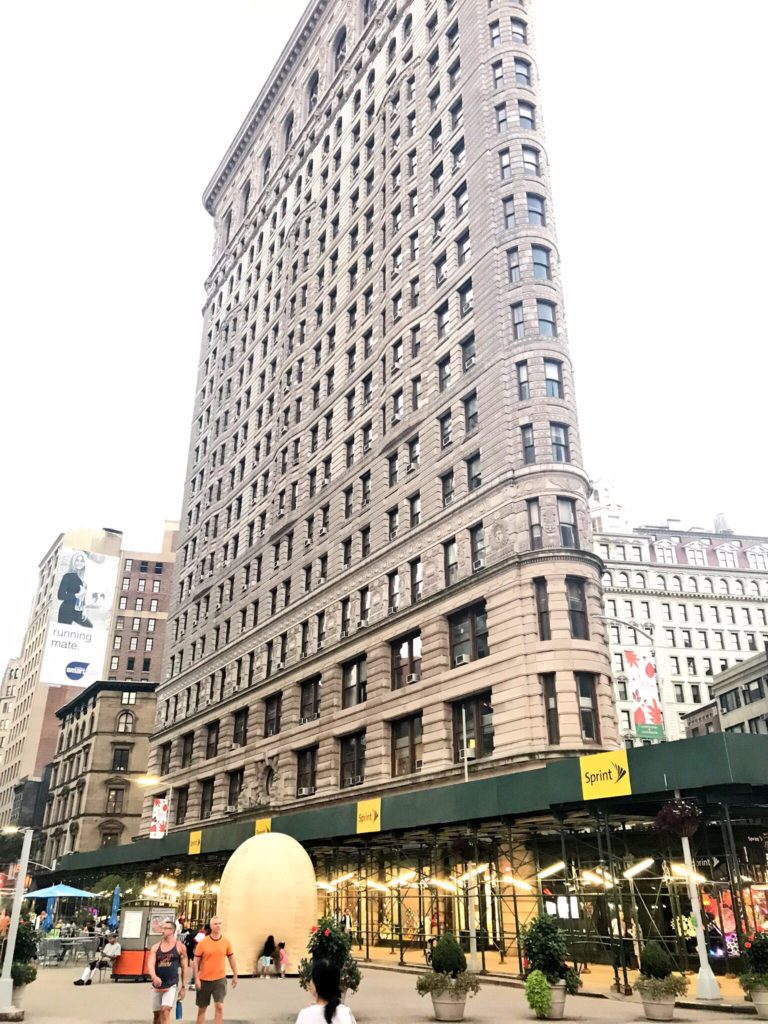
Jorge Palacios sculpture “Link” at Flatiron Plaza North, sponsored by Noguchi Museum


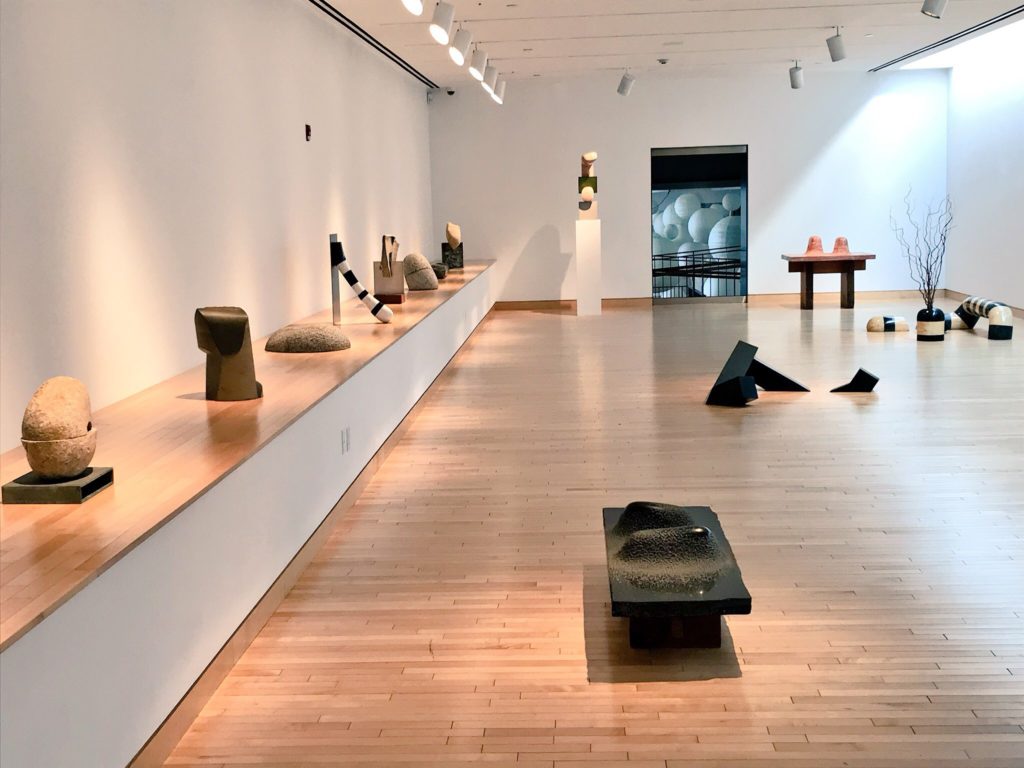
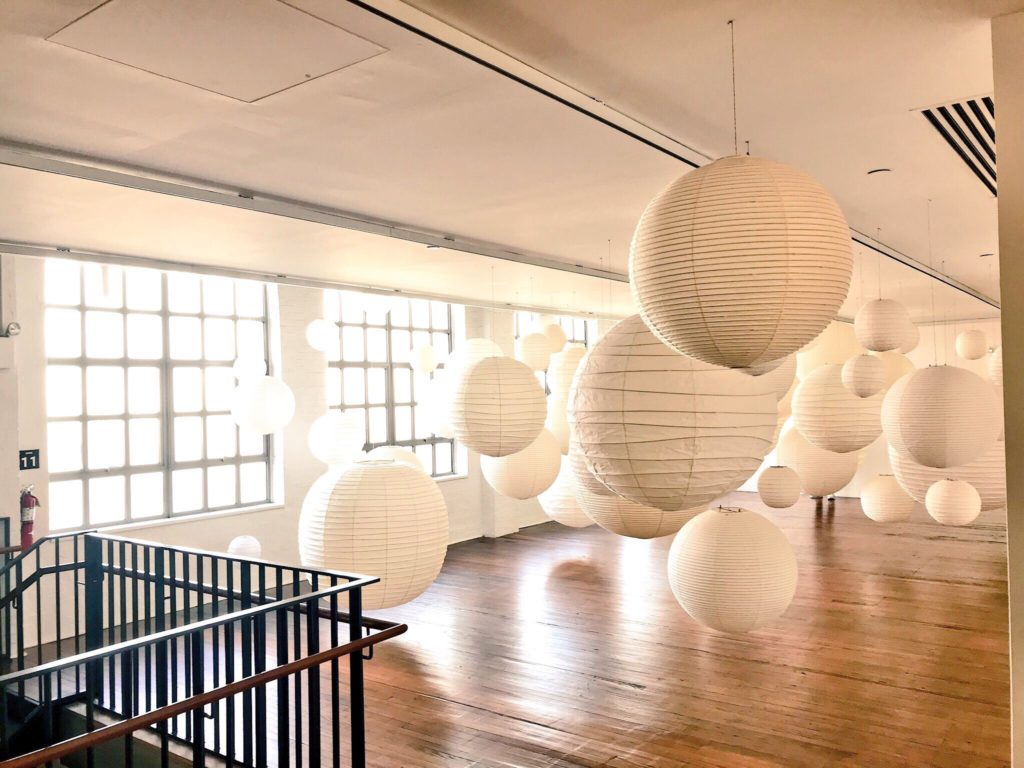
Second floor museum gallery with view to Akari light sculptures

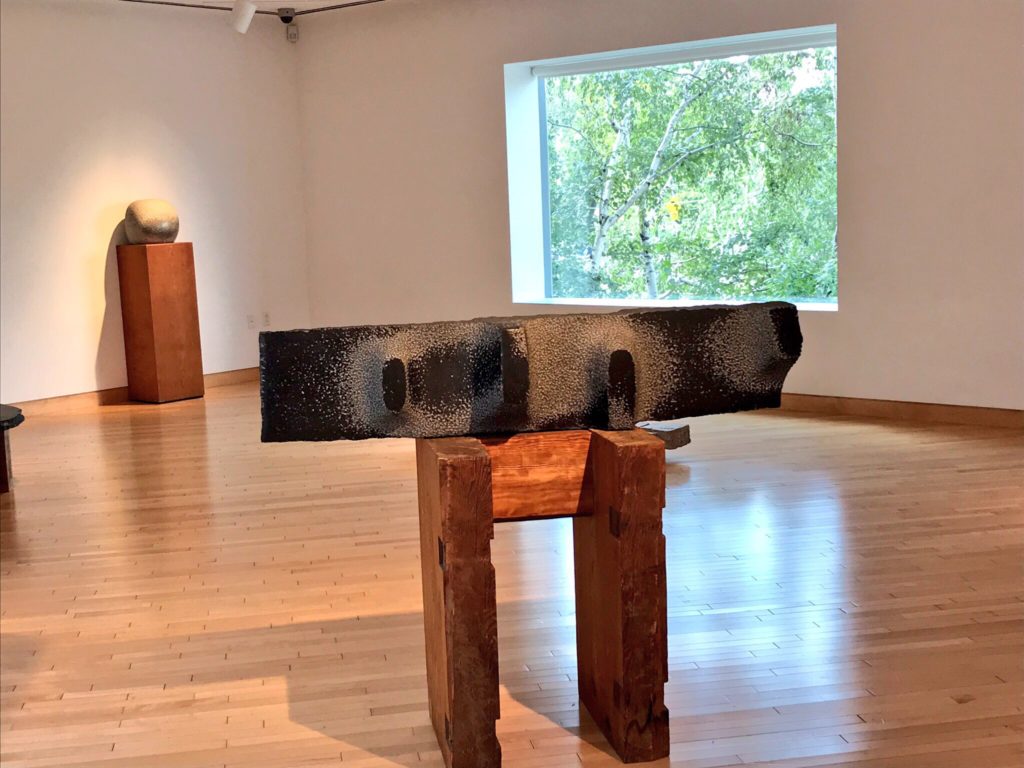
Second floor museum gallery

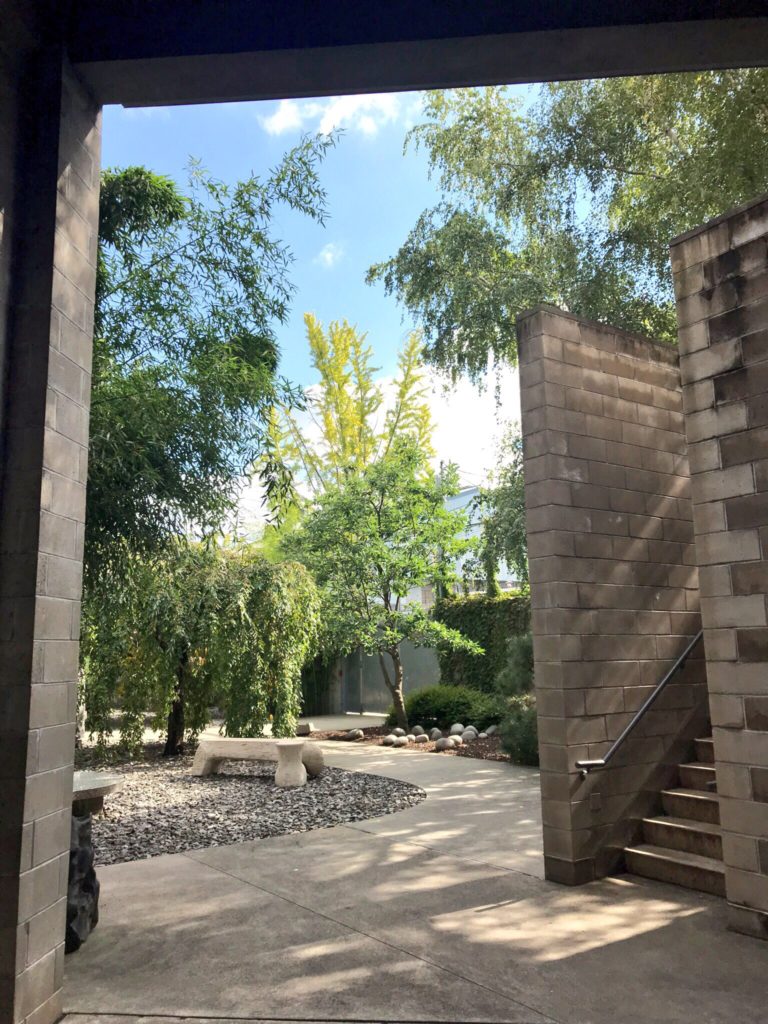
At The Noguchi Museum, which the sculptor founded and helped plan, many of the National Medal of Arts recipient’s sculptures relate to time.  The Zen Garden, rooted in a serenity that stands outside of time, is beautiful and enjoyed by visitors.  One can also admire it from the staircase exit on the second floor as well as from eye level.  Flowing water, important to Isamu, creates serenity with the fountain. Central, too, was the artist’s relationship to the material, including an almost spiritual connection to natural elements like wood, clay, and stone, describing carving as a “process of listening,” a quote from his obituary in The New York Times.

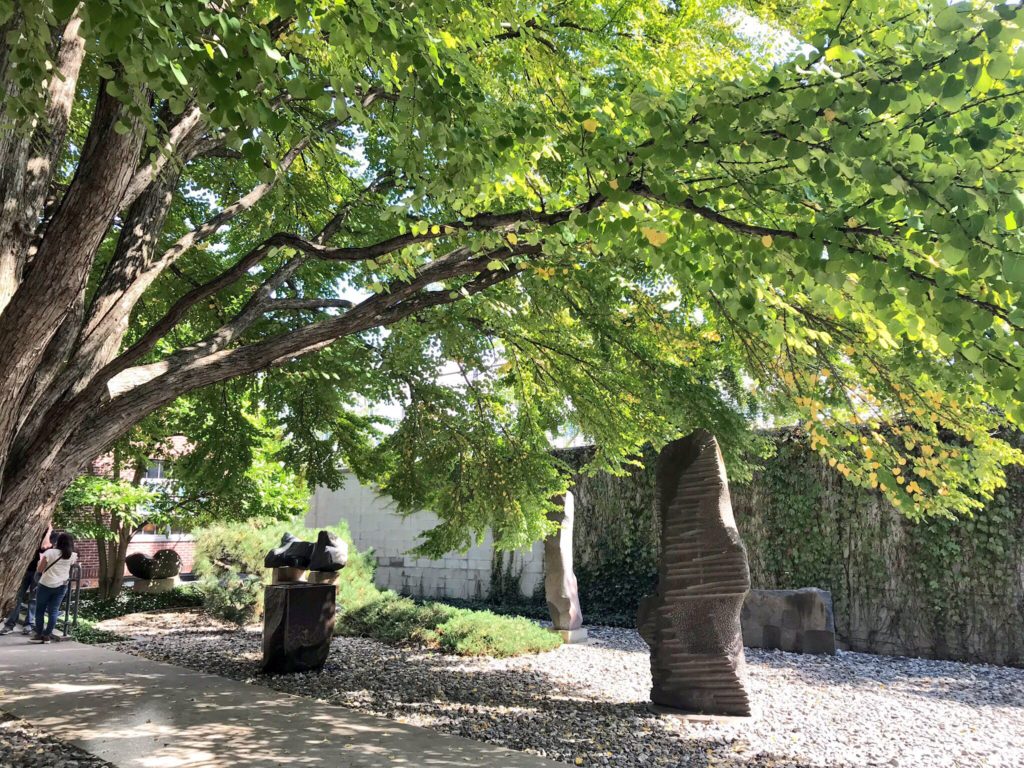
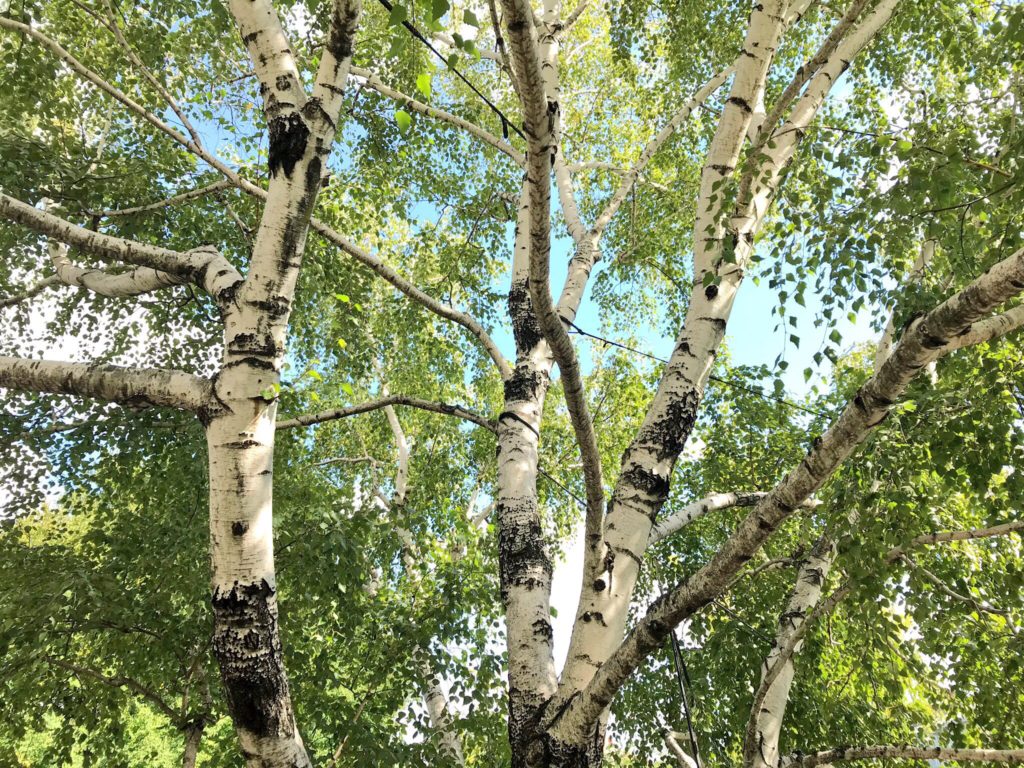
There is so much to take in at the museum that it calls for at least a second visit. Everyone will find pieces that stand out. The impermanent works with their interplay with light, water, and nature, appealed to me most on this first visit, perhaps because they are so novel. The beautiful trees are interwoven with Mr. Noguchi’s art.

Zen Garden

View into the garden

Partial garden view from upstairs

The museum’s film about his life features interviews with people who knew Isamu, including a befriended half-brother, and that is also worth a revisit to see in its entirety.  A common touching thread in the interviews was that being American and Japanese in the era when Isamu Noguchi grew up, and later, as a citizen of the world, were both often lonely paths for the artist.  By living in New York City, however, he returned not to another place, but a home with fellow artists and kindred spirits in the realization of the life he had imagined for himself.

Akari light sculptures

Going up the stairs, where you will find the film, and entering into the world of Akari light was a heavenly surprise.  These lamp creations use “electrical light as a sculptural element”. For those interested in reading more about his life, Mr. Noguchi wrote an autobiography Isamu Noguchi: A Sculptor’s World with a foreward by his close friend architect R. Buckminster Fuller.  This is available at the museum and on Amazon, which is on order and calls for an Isamu Noguchi 2.0 revisit in “Writing New Jersey Life” and #FridayReads.  There is, however, momentum with things, and better to post an introduction before the flurry of the holidays and the Akari and Palacios exhibitions end on January 27th.

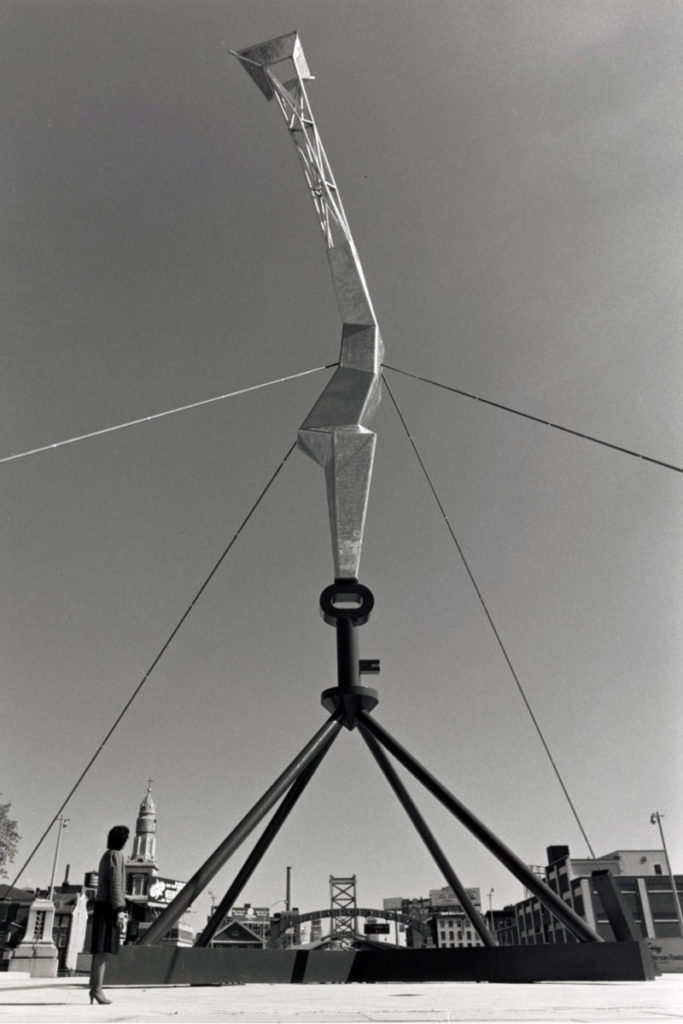
“The Kite” stainless steel and reminiscent of “Bolt of Lightning,” 1984, Philadelphia, in honor of Benjamin Franklin. Mr. Noguchi’s plans were on hold for years until a 1979 retrospective of his work at the Philadelphia Museum of Art renewed interest in his art.

Whether visiting as a family, a couple, or on one’s own, and there were one and all, the Long Island City museum is a delight. There is a pleasant café with a select, good menu including coffee and beverages. You can reach the museum by public transportation or car.  For those driving, there is street parking, and someone kindly suggested finding parking in a nearby store lot, which you did not read here, but a good faith purchase will put you in good standing. The Socrates Sculpture Park across the street has a free exhibit through March 10th. A blocks up is a new, charming neighborhood place, Flor de Azalea Café, which has some Wifi in a pinch, and thank you to the museum staff for mentioning it.

For travelers, Isamu’s former Japanese studio is now The Isamu Noguchi Garden Museum Japan.  Other notable public works include the UNESCO Gardens in Paris, the Billy Rose Sculpture Garden in Jerusalem as well as works throughout the United States pictured in the online gallery of The Noguchi Museum in Queens.

The nearby Socrates Sculpture Park

Socrates Sculpture Park views

Backpack book exchange

The Letter

As the museum notes, “The Letter” is a “mural relief” in magnesite, once again displaying Isamu Noguchi’s versatility as a sculptor.  The post office has a display case sharing information about what we might call a “3-D mural”. There is a wonderful atmosphere in places that preserve their treasures. Both their appreciation that they are such and their pride in them emanates in a generous spirit. The US Post Office itself released stamps of Isamu Noguchi’s works in 2004, which are still in use.

Under the New Deal, the Public Works of Art Project that brought about “The Letter” and through which it came to my attention, aimed to give work to artists in the Great Depression and existed under the supervision of the US Treasury’s Section of Painting and Sculpture. The intent was for the art to reach as many people as possible, which brought the commissioned artists to the WPA’s newly constructed post offices throughout the country to share their work for the public’s benefit.

“The Letter” in context with a display case (right)

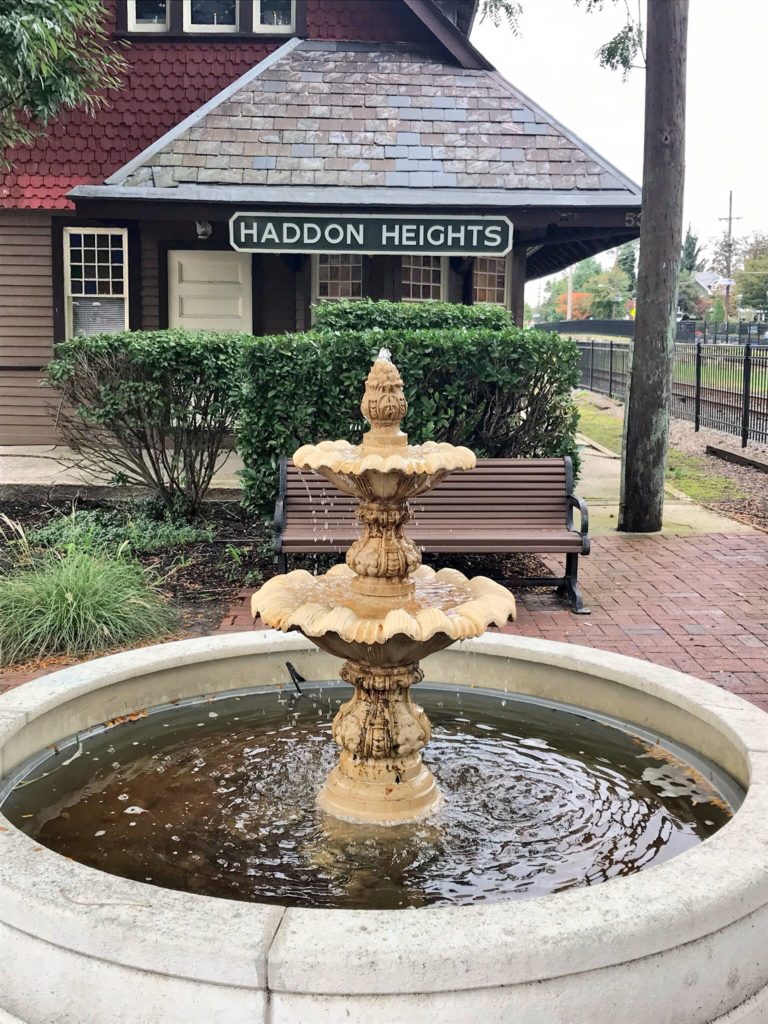
Haddon Heights still charms on a rainy day

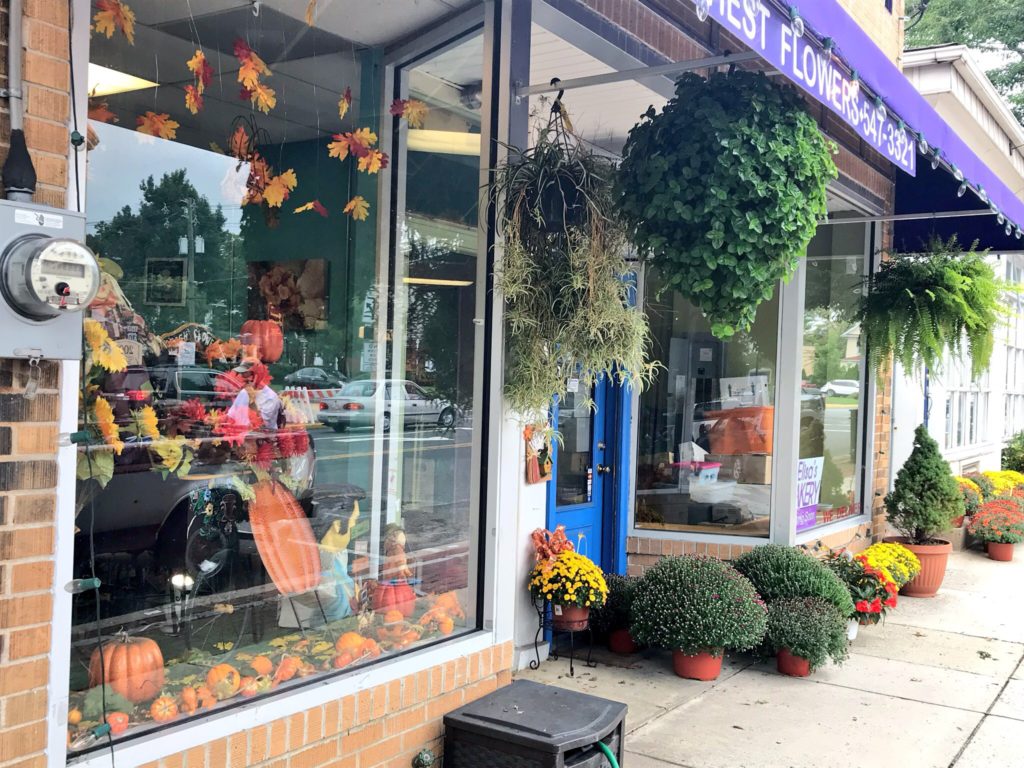
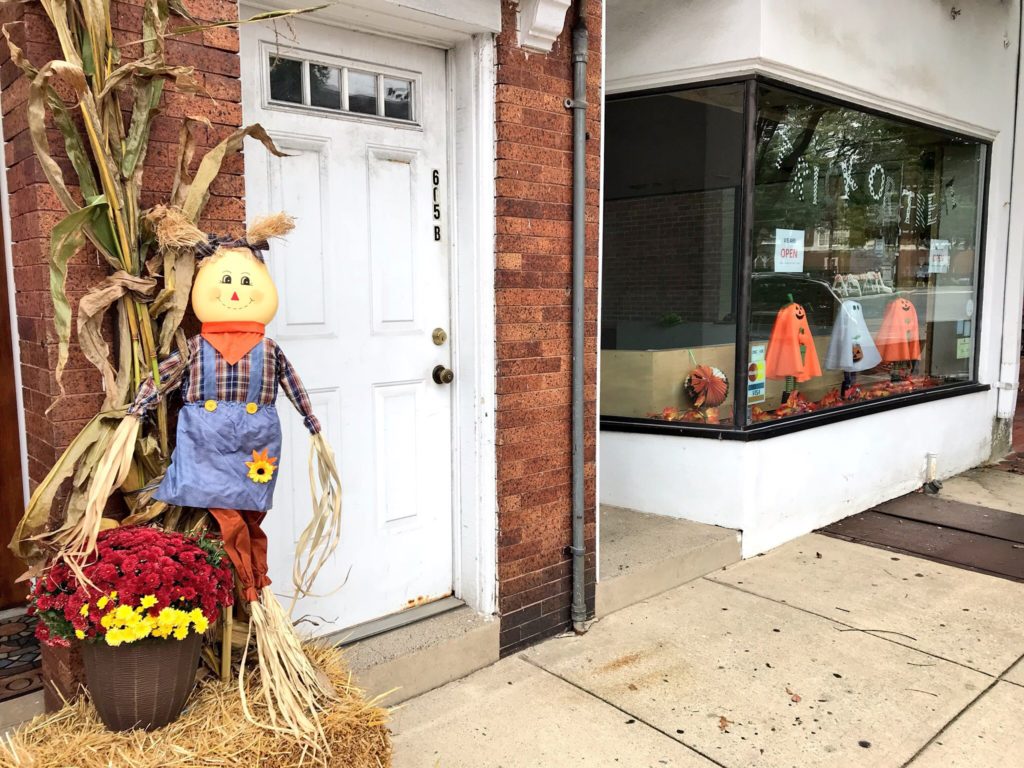
Halloween spirit in Haddon Heights

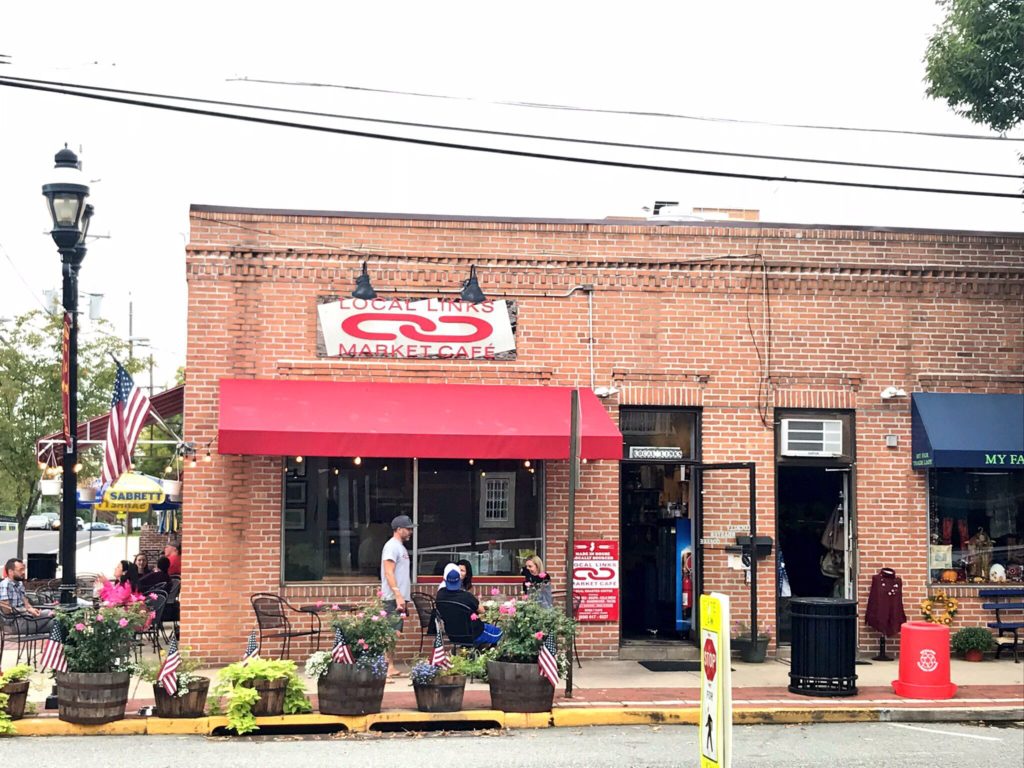
Out and about in friendly Haddon Heights with thanks for the cafe and dining friends’ permission

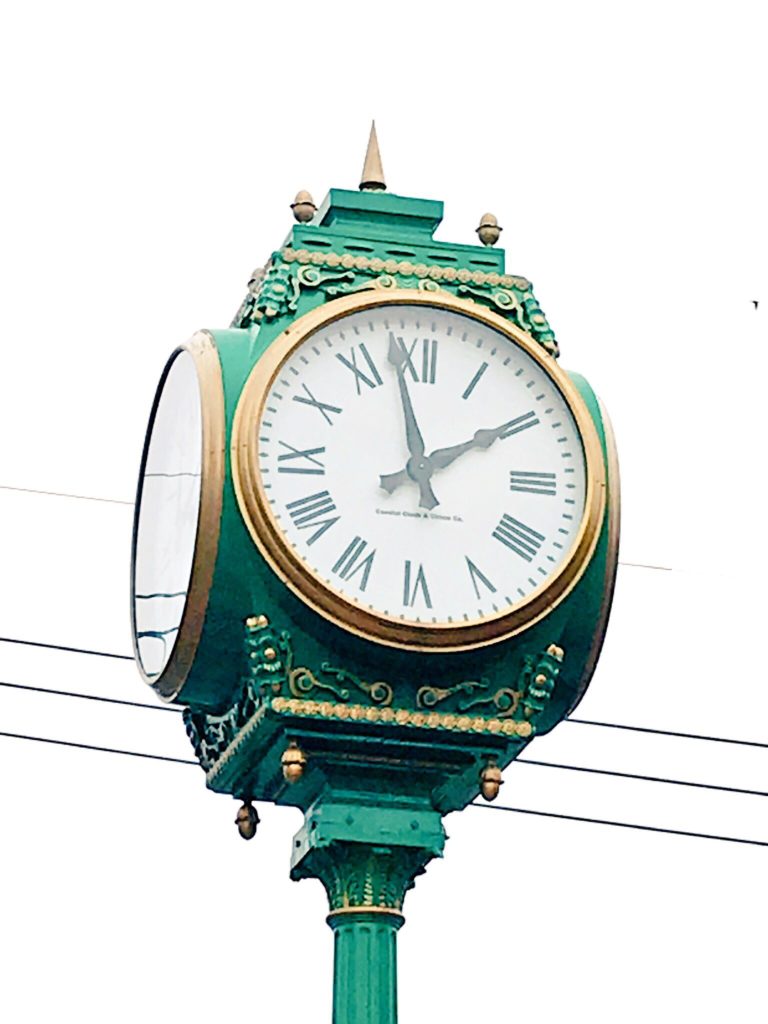
Town clock, Haddon Heights

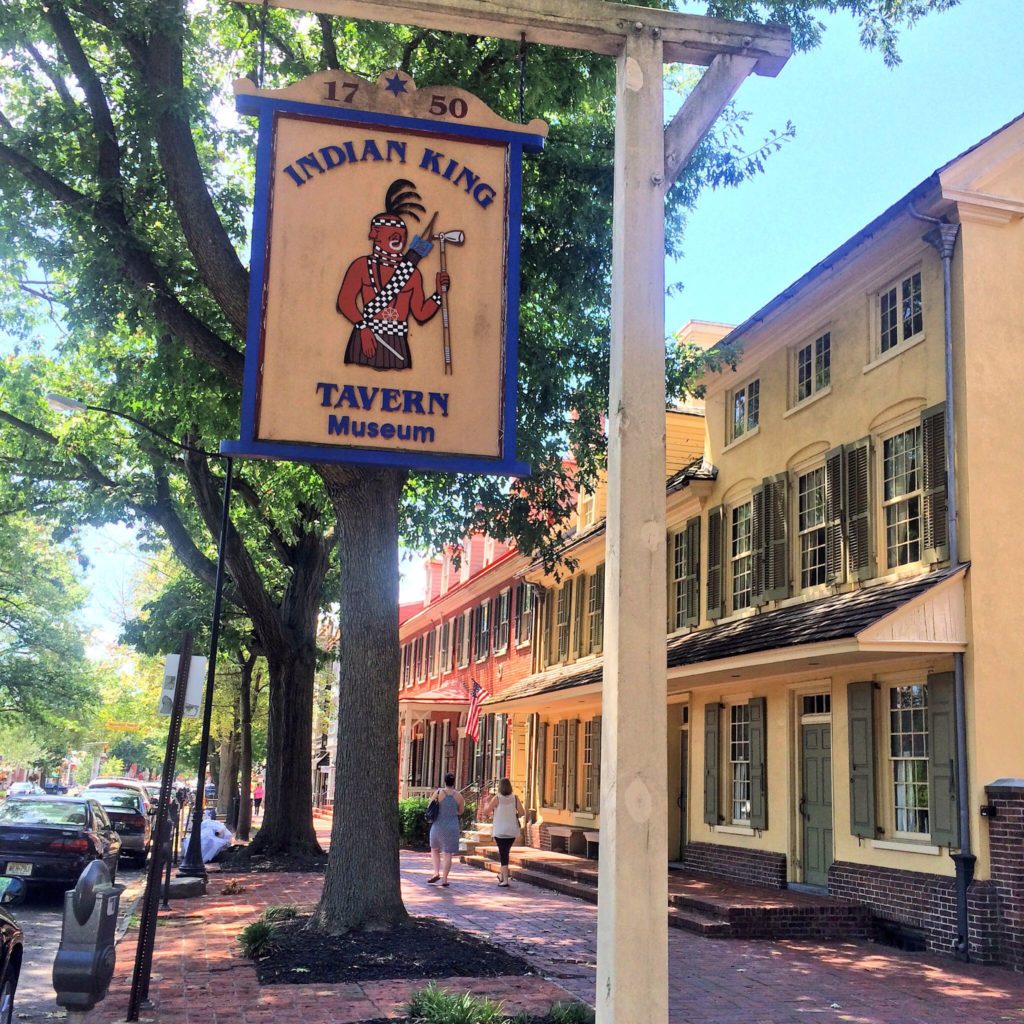
Named to honor Algonquin chief and meeting place of New Jersey legislature, historic site, Haddonfield

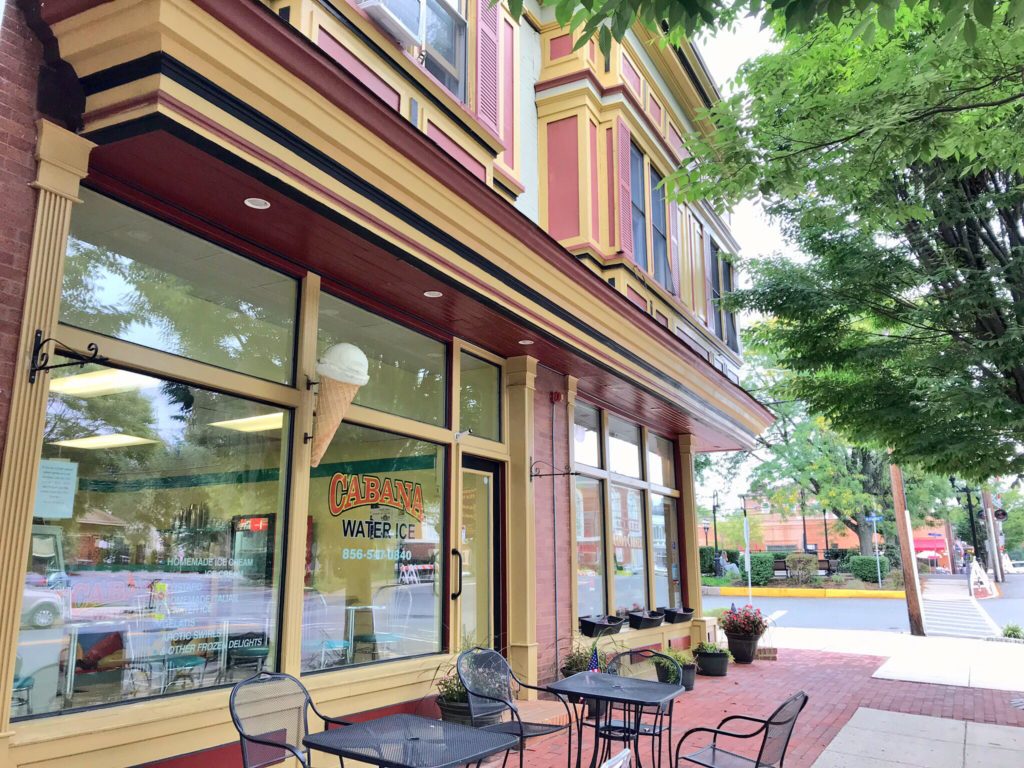
Cabana Water Ice, Haddon Heights

Halloween spirit, Haddon Heights

Returning to South Jersey, picturesque Haddon Heights where “The Letter” floats timelessly, shares a scenic beauty with Haddonfield and Haddon Township, all the namesakes of Elizabeth Haddon.  An English-born Quaker, she sailed to the Colonies alone to begin the settlement of a large area of land in Southern Jersey, southeastern Pennsylvania, and Delaware, bought by her father who had envisioned a peaceful new start for Quakers, unwelcome in England at that time.  Too ill to make the journey, his dream was realized by Elizabeth and his name carried on with “Haddon’s Field” where she and her minister husband created a beautiful home and helped to establish the Quaker community. Their courtship, brought to the public’s attention by Lydia Marie Child, a writer and abolitionist who authored the Thanksgiving poem “Over the River and Through the Wood” that became the popular Christmas song, inspired Henry Wadsworth Longfellow to write “Elizabeth,” part of a long poem “Tales of a Wayside Inn”.

Elizabeth Haddon had a shared world view with fellow Quaker Sarah Norris, who renamed her establishment “The Indian King” in gratitude to the “Sachem” in Algonquin, the elder or chief of the Unlachtigo Lenape, the southernmost of the three Lenape tribes in the state. With their knowledge of survival skills, the Lenape, particularly Sachem Ockanickon, were responsible for keeping the Quakers alive through their first winters. Later, when that generosity was not reciprocated, Sarah called her establishment “The Indian King” in gratitude and posted a highly visible sign as a reminder to the settlement of its debt to the Lenape. It was here at the Indian King Tavern that the New Jersey legislature read the Declaration of Independence into the minutes in 1776, and New Jersey became a state on September 20, 1777, with the changing of “colony” to “state” in its Constitution. On this site, the legislature adopted the Great Seal with the cornucopia for the bounty of the Garden State, designed by a Swiss-born artist Pierre Eugene Du Sumitiere.

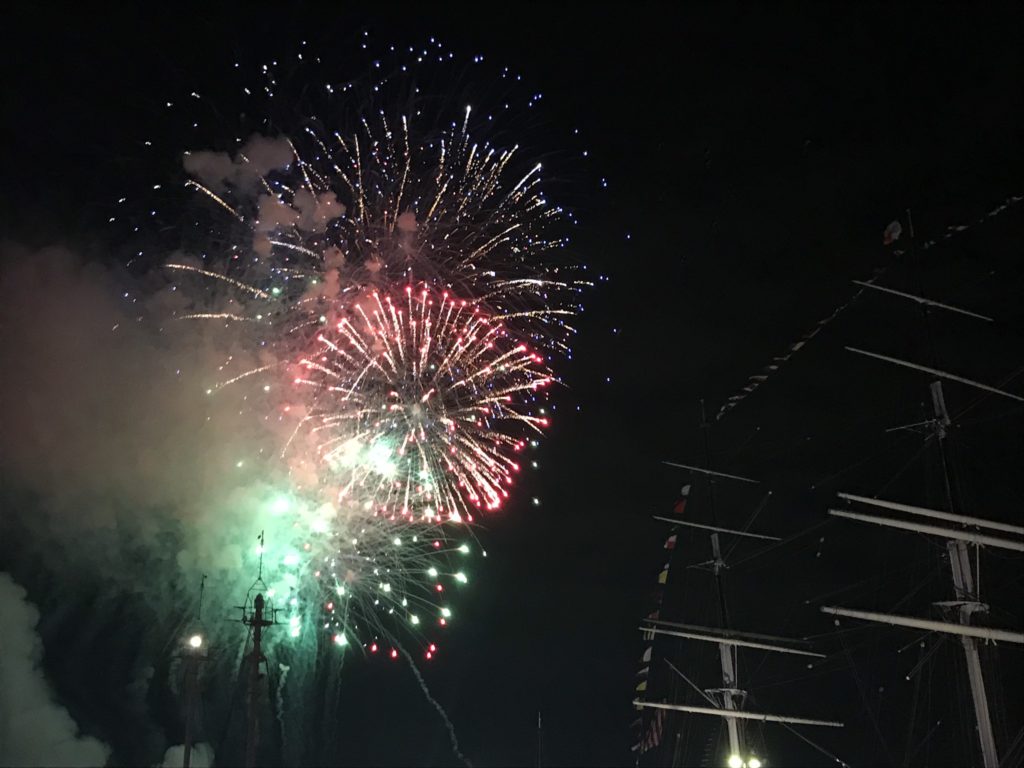
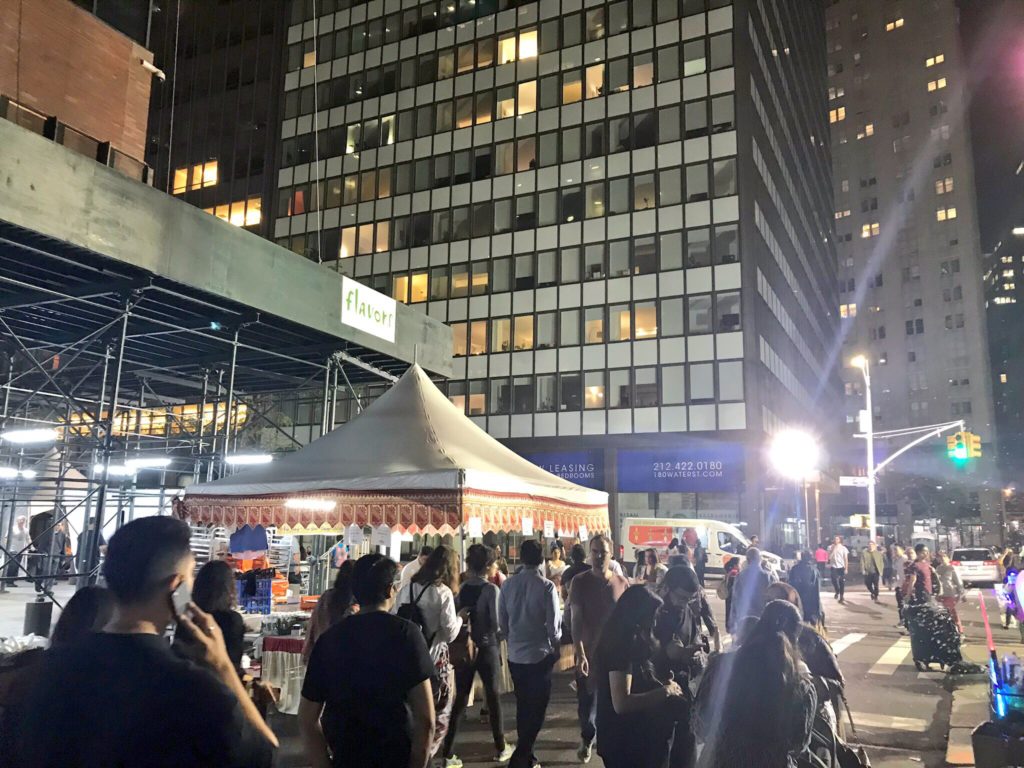
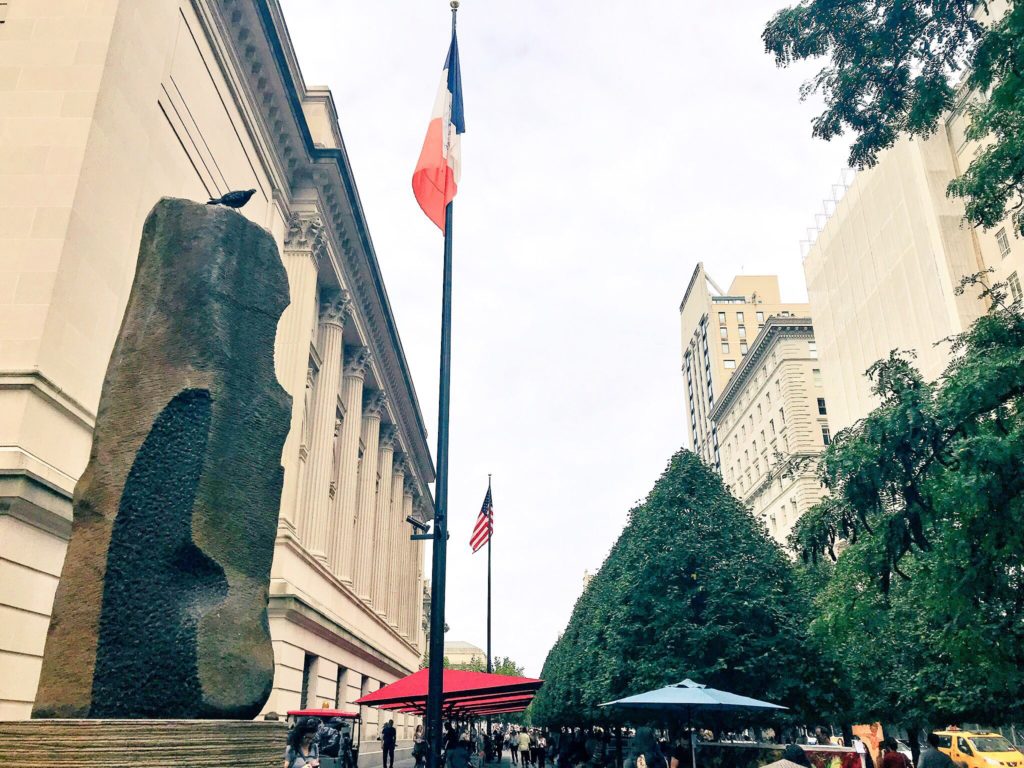
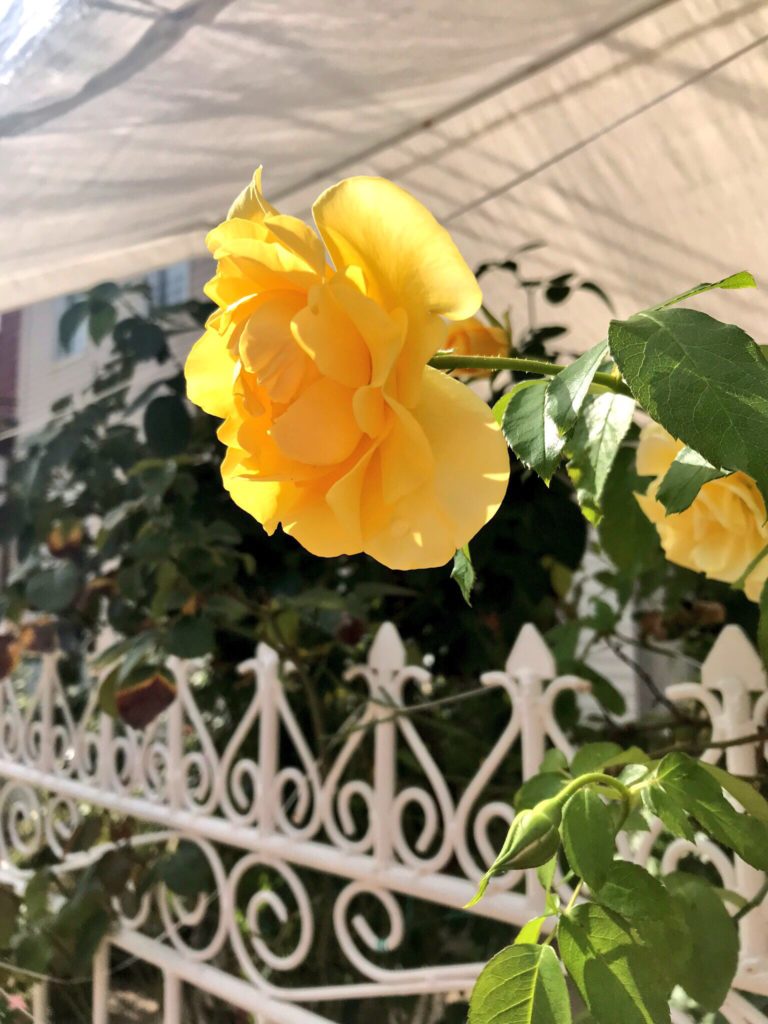
In the Empire State, the path to find Isamu Noguchi’s works in the New York City he loved started with chats with people uptown at the Metropolitan Museum of Art and Central Park to midtown to downtown in Manhattan.  These began with directions when the iPhone map app slowed with the number of photos, which led to the delightful surprise of fireworks downtown and the Diwali Festival. There was the added warmth of Long Island City, people smiling on the streets, leafy parks, roses and flowers growing skyward through garden gates, and Halloween decorations set up early in happy anticipation.  Queens visits were welcome excursions in my Manhattan shoebox apartment days and still are.  Being able to dine anywhere in the world in Astoria and shop working my way out from Broadway, especially at the holidays, was a Saturday well spent.  Thank you to all the gracious navigators along the way and the staff at the Noguchi Museum.

(Sources: Noguchi Museum, “Central Park: A Template of Beauty”, WashingtonPost.com, pcf.city.hiroshima.jp, Princeton.edu, Rockefellercenter.com, Haddonfield history: @kathleenhelen15, now @kathleenlevey, 2015, theartstory.org, muse.jhu.edu/article/686375/, nytimes.com, summarylevins.com, IndianKingfriends.org, njwomenshistory.org, Avalon.law.yale.edu, A-Z Quotes, Wiki)

“Imagination: Isamu Noguchi” All Rights Reserved © 2018 Kathleen Helen Levey

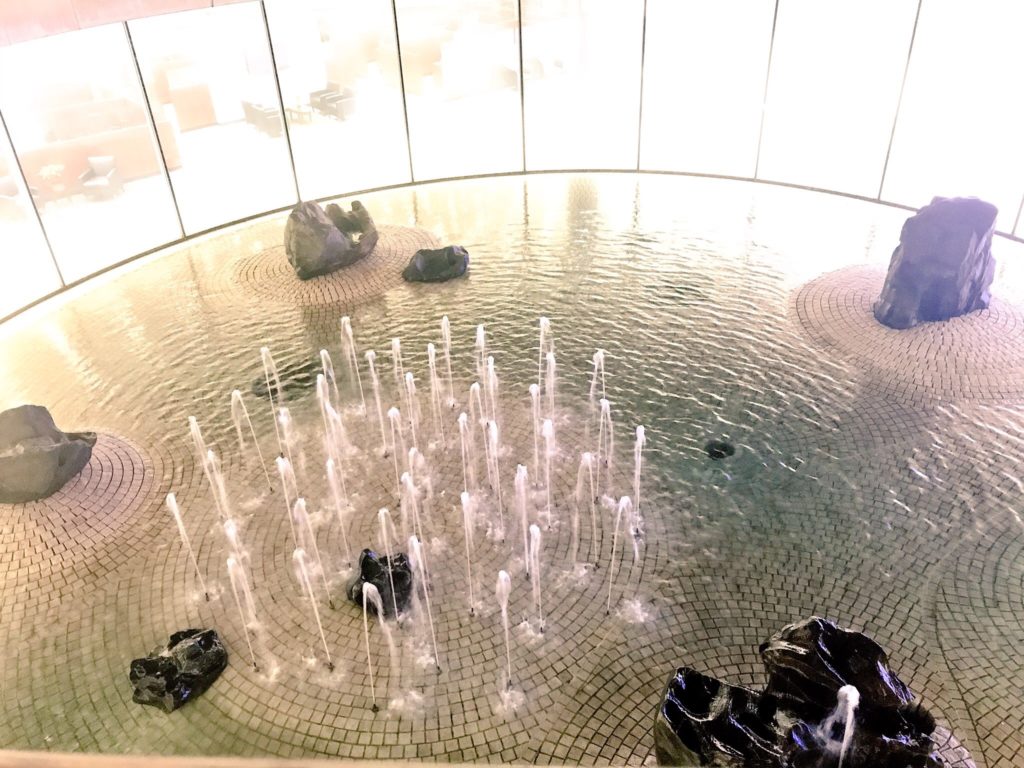
Sunken Garden at the former Chase Manhattan Bank Plaza, downtown

Fireworks, Festival of Lights, South Street Seaport

Diwali Festival, Southstreet Seaport

Noguchi’s “Landscape of the Clouds,” 666 Fifth Avenue

“Unidentified Object,” 1979, basalt sculpture created in Shikoku, Japan, at the Met and Central Park

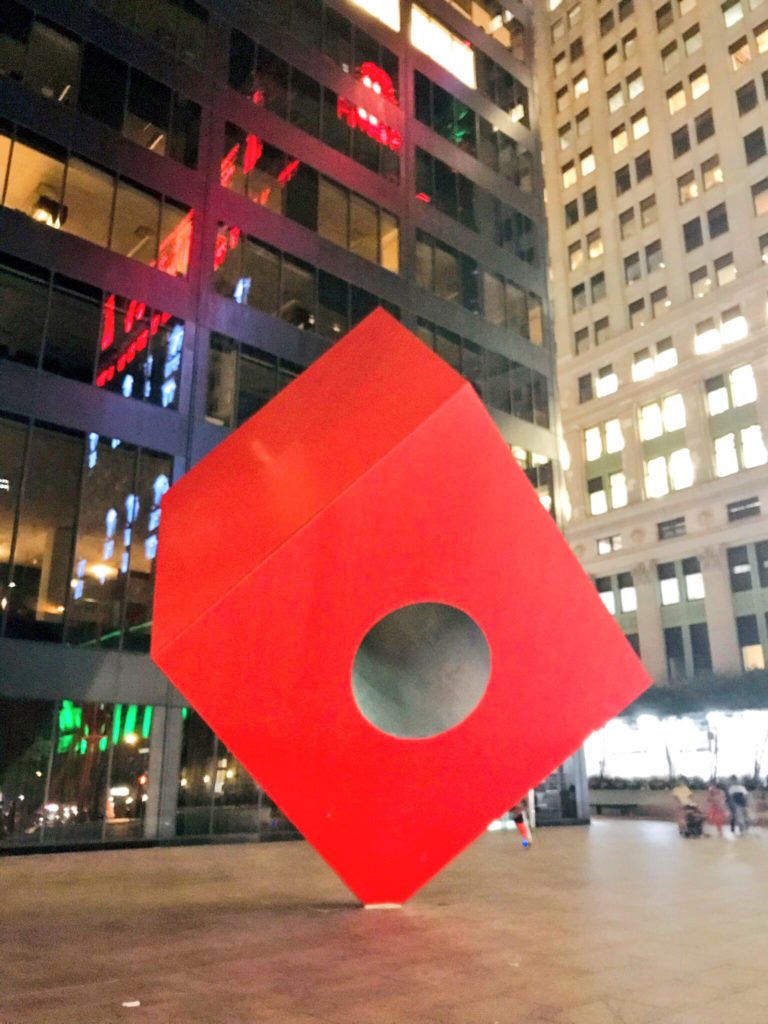
“Red Cube,” 1968, downtown

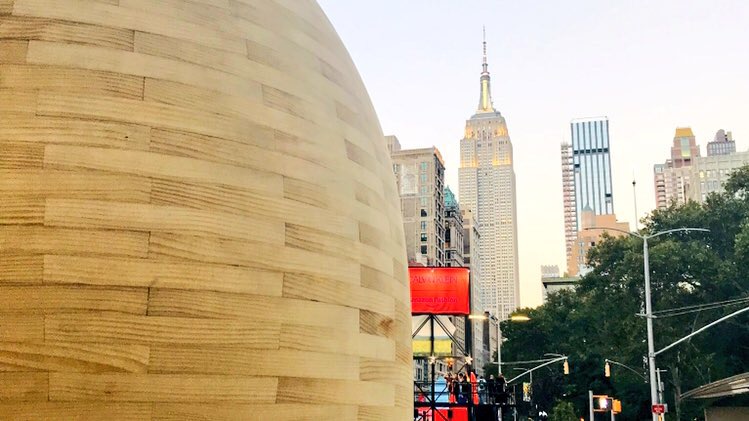
Jorge Palacios sculpture “Link” with a view of the Empire State Building

Long Island City, Queens

“Bolt of Lightning,” a tribute to Ben Franklin and a welcome to Philadelphia (The Noguchi Museum)

Frankly Norman: A Sketch

“I paint life as I would like it to be.”  Norman Rockwell

Who could seem more different than Frank Sinatra and Norman Rockwell?  On the surface, one might think “Fly Me to the Moon” as a song to capture their disparate public images.  Both, however, were iconic artists of the twentieth century dedicated to excellence in their work, and each told stories in his own medium. At the annual New Jersey Festival of Balloons each July, when the balloons launch at dawn to Frank’s “Come Fly with Me,” his incredible voice soars along with them, still resonant with life, fresh like a Norman Rockwell “snapshot”.  What seems effortless is always the result of dedication.

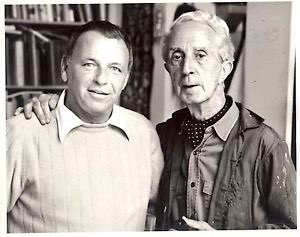
Frank and Norman at the studio (eBay.com)

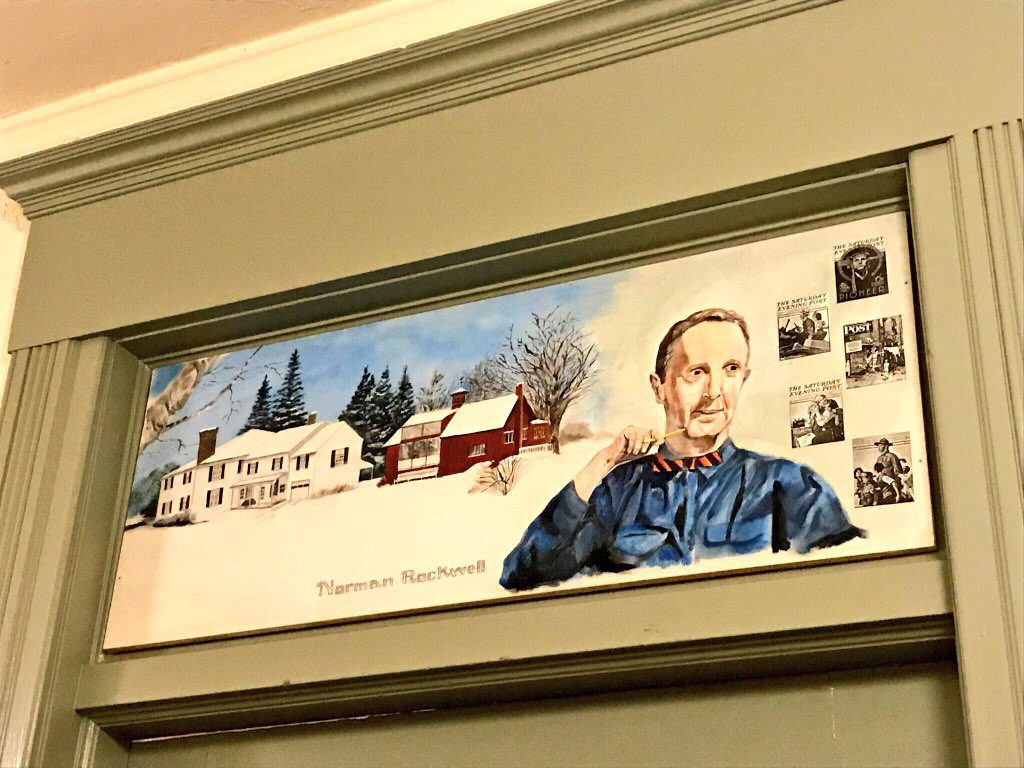
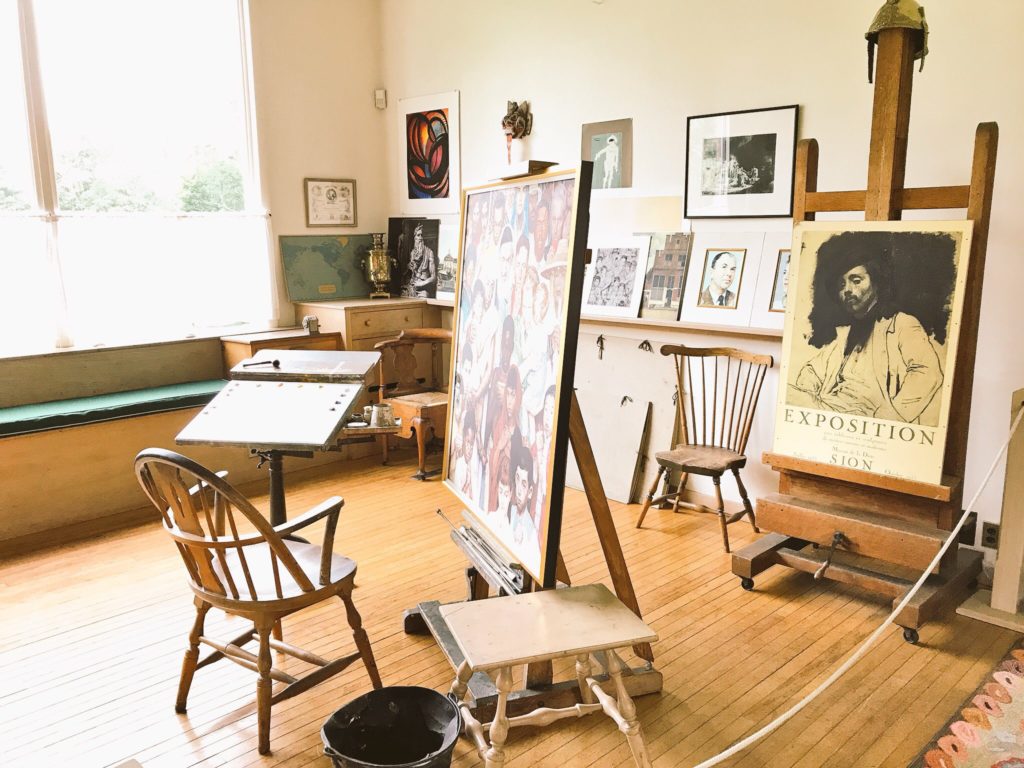
Norman Perceval Rockwell and Francis Albert Sinatra met in at Norman’s studio in Stockbridge, Massachusetts in 1971, when Frank sat for a portrait commissioned as a gift for his family.  The relocated studio is now part of a visit to Norman Rockwell Museum – The Home for American Illustration, one of the highlights on a scenic Berkshires stay.

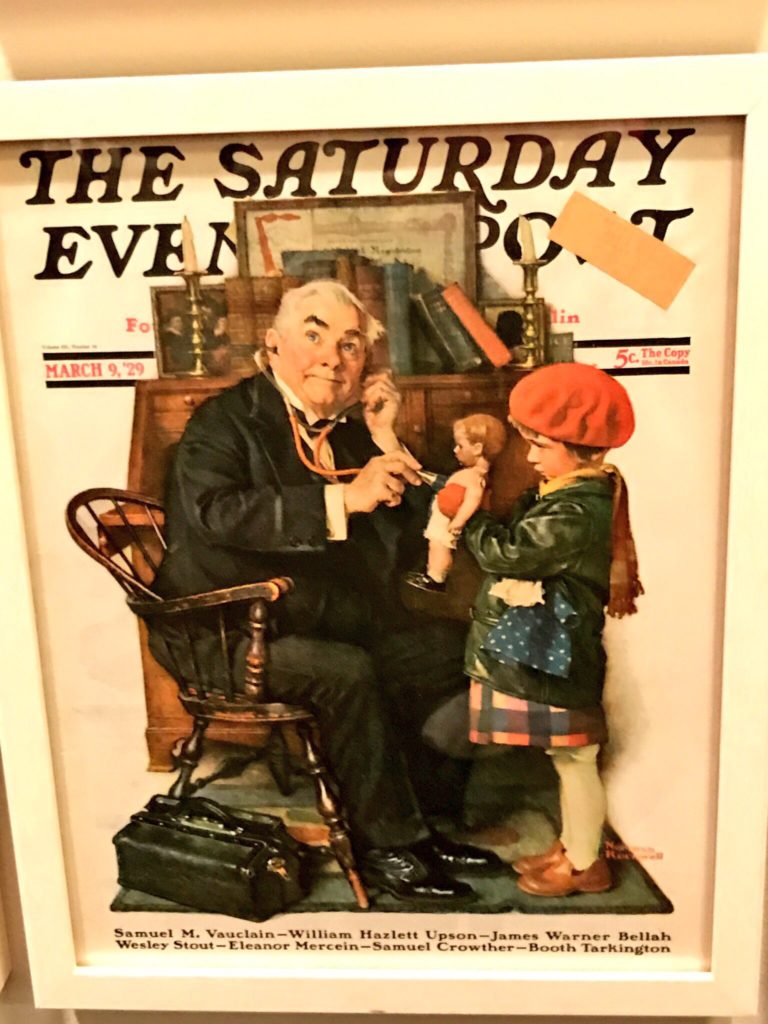
There’s almost always a New Jersey connection wherever one goes and the same is true of the museum dedicated to Mr. Rockwell’s work in Stockbridge, Massachusetts.  Norman Rockwell became a tried and true New Englander and the official state artist of the Commonwealth of Massachusetts, but he grew up in New York City across the Hudson River from Frank’s native Hoboken about twenty-one years earlier.  An artist who came on the scene at the end of the Golden Age of Illustration, the period between the late 1800’s and post World War I, Norman was fortunate to start out at a time when talent met with opportunity.  New publications in wide circulation were in need of artists.  Though famous for his cheerful slices of American life, it may surprise people to know that Norman Rockwell created one of his most beloved paintings “Doctor and the Doll,” 1929, during a difficult time following a divorce.  The model is actor Pop Fredericks who appears in a number of Norman’s paintings and often played the role of Ben Franklin and Santa Claus at events.

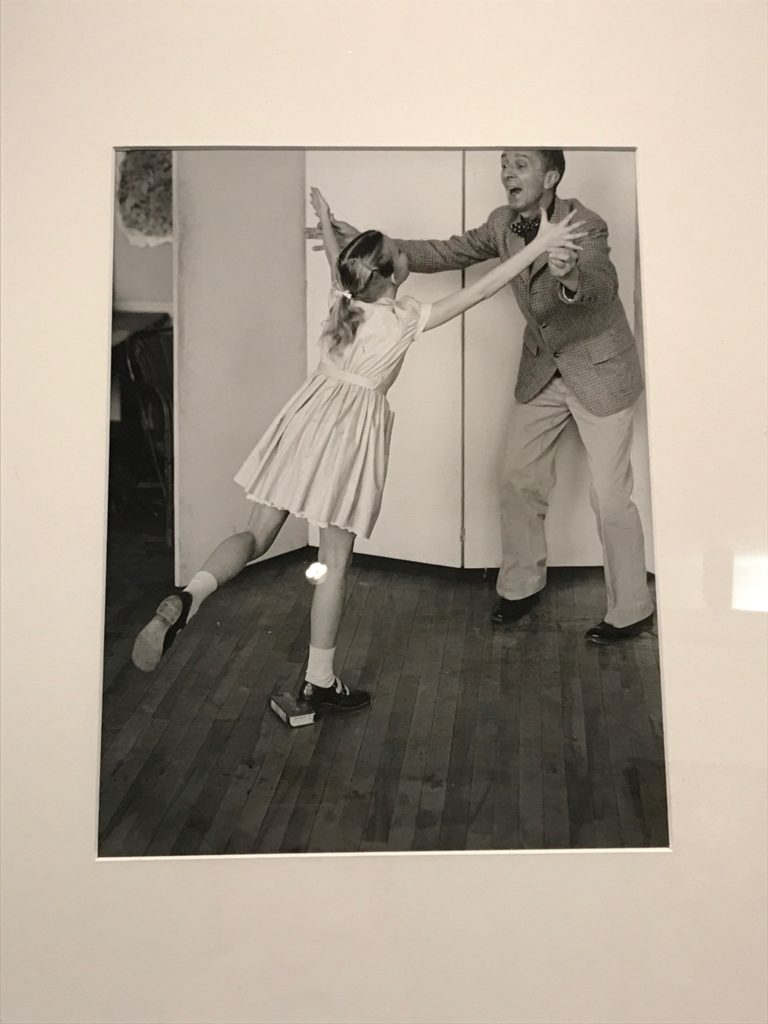
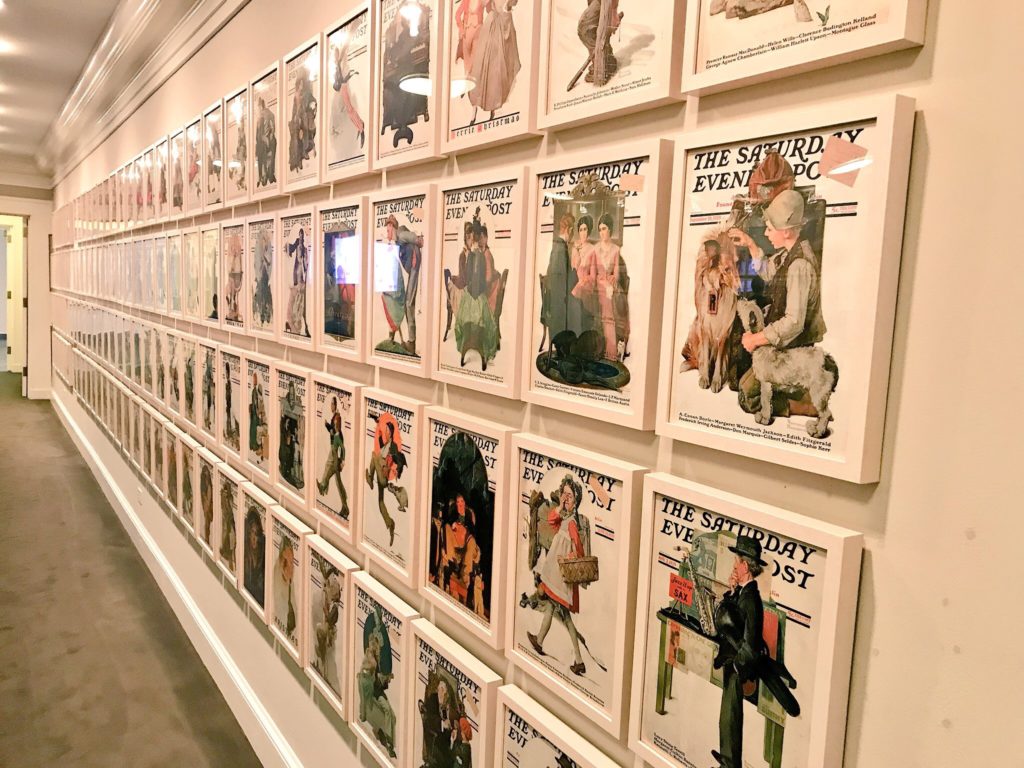
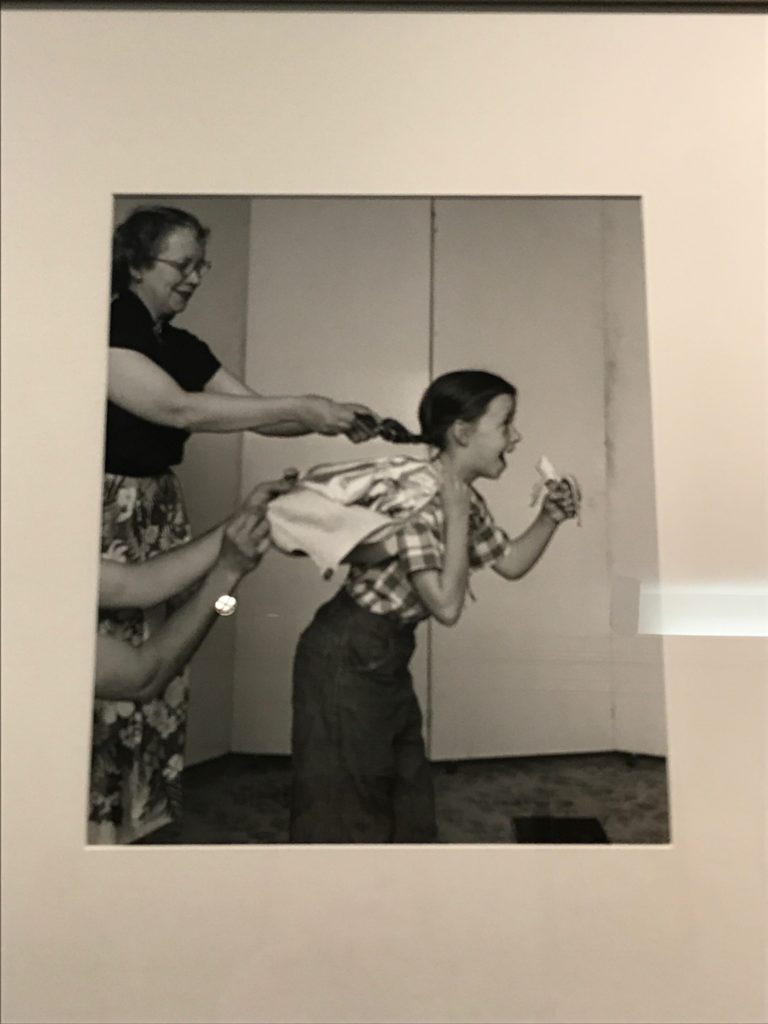
Norman lived in Stockbridge after moving there from Vermont. People know his lighter depictions of everyday life best from The Saturday Evening Post covers delivered weekly to homes across the United States from 1916 and 1963, which made his work a part of American life for five decades.  Those paintings live on in reprint on calendars, greeting cards, and just about everywhere for any holiday.  Norman often used local models, including his three sons, and the beautiful Berkshires for inspiration.  Stockbridge residents fondly recall seeing him riding his bicycle around town.  His 323 Post covers are on display in a room downstairs in the museum.  Framed, they fill the four walls in a stunning tribute to Mr. Rockwell’s prolific talent and one can see why whenever his art graced the cover, the magazine had to print an additional 250,000 copies to meet customer demand. This wonderful photo shows him setting one of his models at ease, though he may have been giving direction as he often worked from photographs.

One wall of “The Saturday Evening Post” covers

Another view of the process

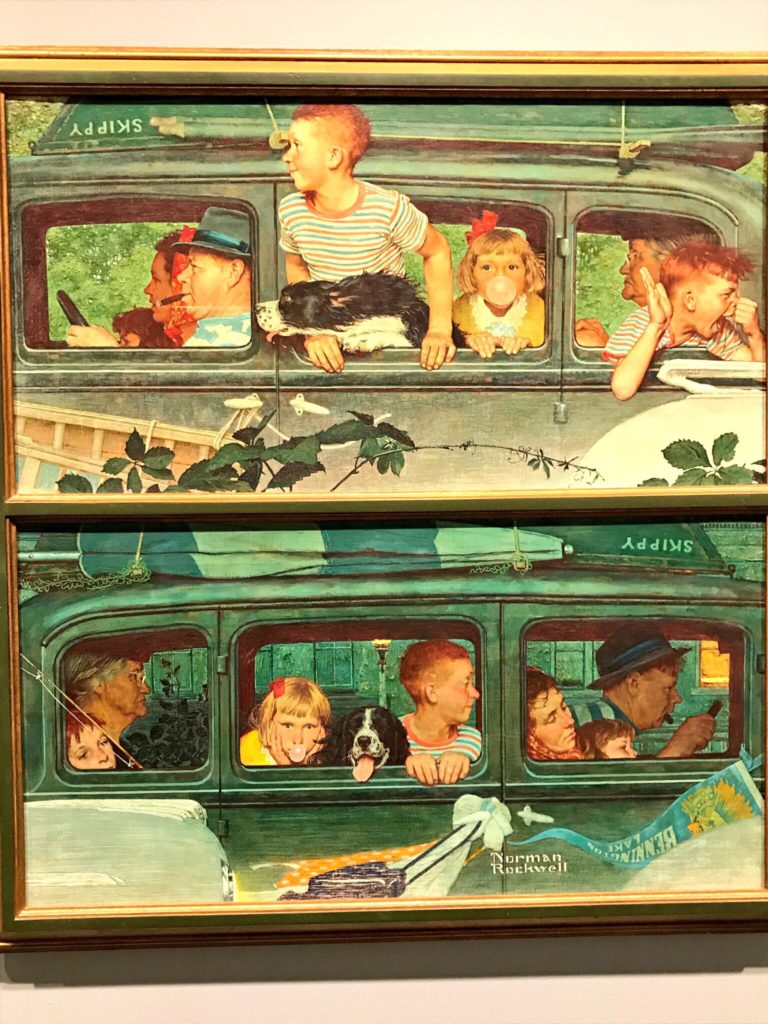
On the way to and from vacation – can you guess which is which?

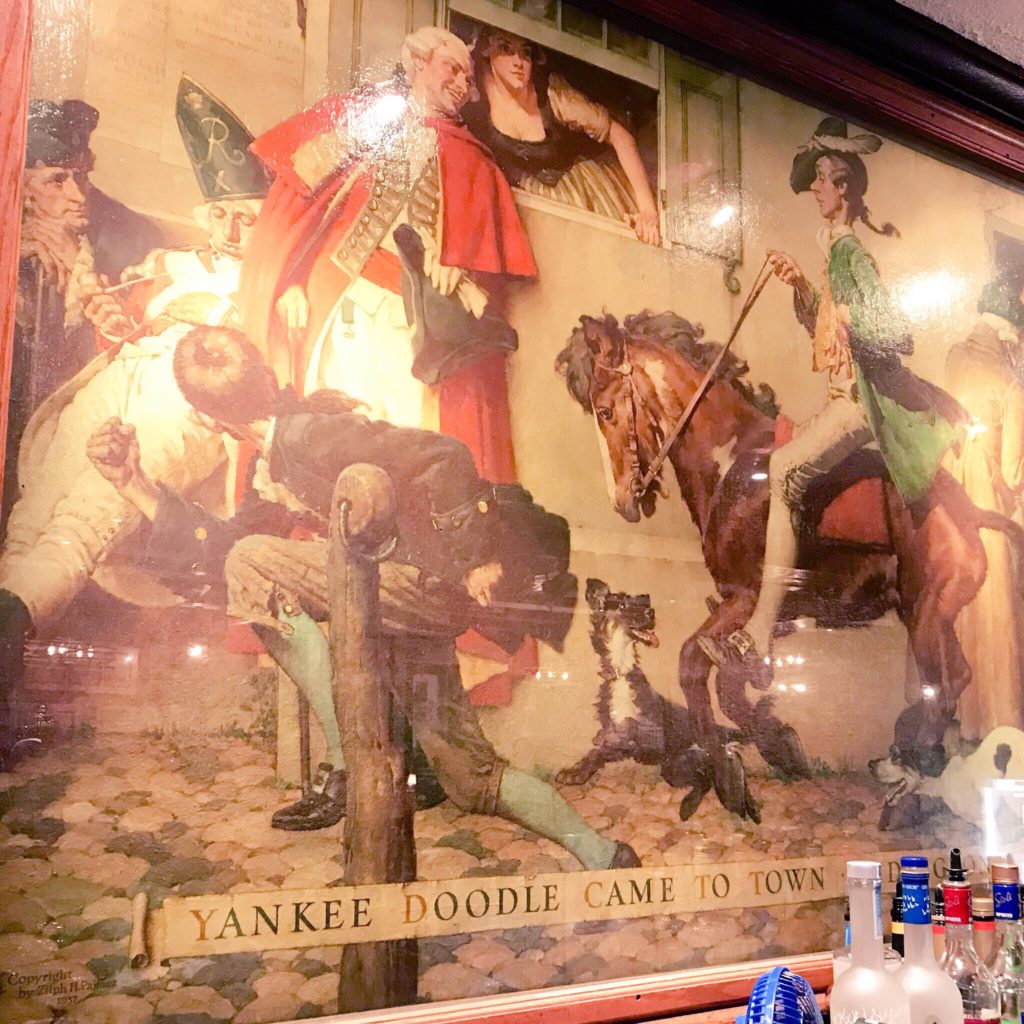
Norman was a talent from the outset, landing a cover and a job at Boy’s Life magazine right out of high school. For years, he also provided art for the annual Boys Scouts of America calendars.  His work still is everywhere and can be enjoyed here in New Jersey at Princeton’s historic Nassau Inn where one can view the “Yankee Doodle Mural”.  The historic inn is neighbor to cultural resources like the Arts Council of Princeton which one can discover in walking tours through the inn or Discovering Princeton, both also noted as a thank you for longtime social media follows.

Detail from “Yankee Doodle Mural,” Nassau Inn, Princeton

A Norman Rockwell real-life happy ending happened last year in Cherry Hill, New Jersey. Years ago, a young man had accidentally damaged a Rockwell painting “Taking a Break” with his pool cue during a game and apologetically purchased the work for $50.  Despite the minor flaw, the family enjoyed the painting until it was stolen. Forty years later, authorities recovered it much to the family’s delight.  Concerned about security as it was, alas, not painted on a wall, they sold it for a staggering $900,000.

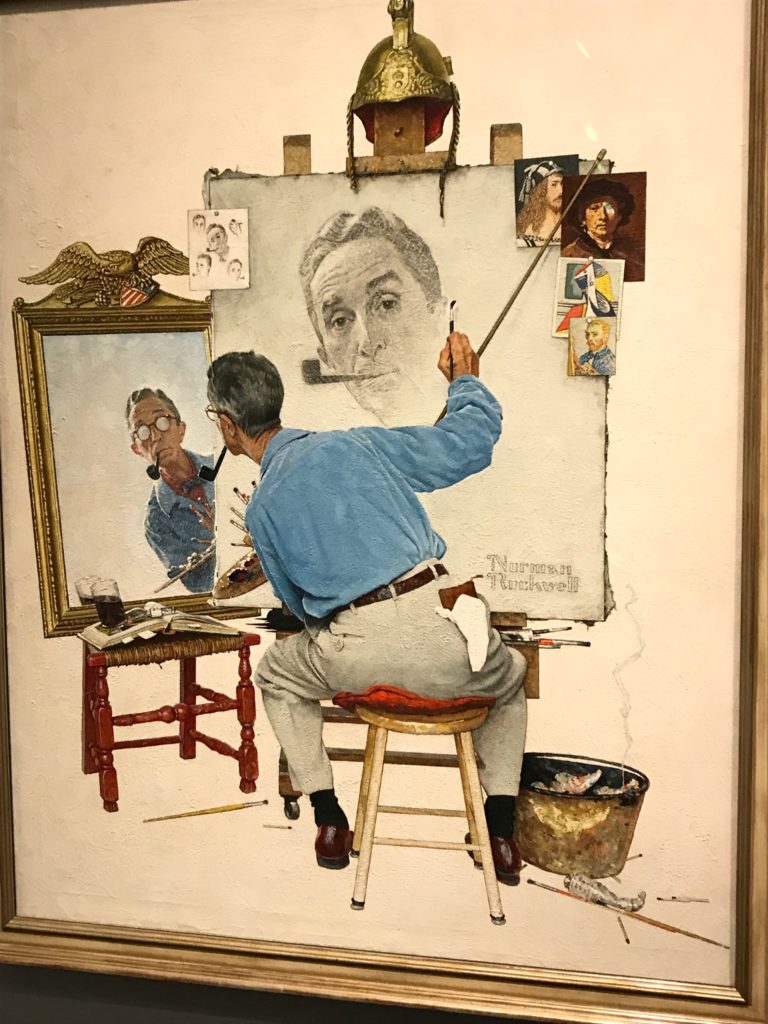
“Triple Self-Portrait,” 1960. The helmet is a symbol of humility. Norman bought it from a Parisian antiques dealer. Thinking himself clever for getting a deal, turned out that it was a contemporary dress French fireman’s helmet.

Noted for conveying charm through humor, both Norman and Francis would likely have enjoyed the Cherry Hill story.  More profoundly, they also shared similar beliefs about freedom and civil rights.  This aspect of Frank’s public life is perhaps better known today than Norman’s via documentaries and televised dramas, including Mr. Sinatra’s rise to stardom as a proud Italian-American who kept his surname in the 1940’s despite advice to the contrary.  “Sinatra” on the marquee was more than billing.

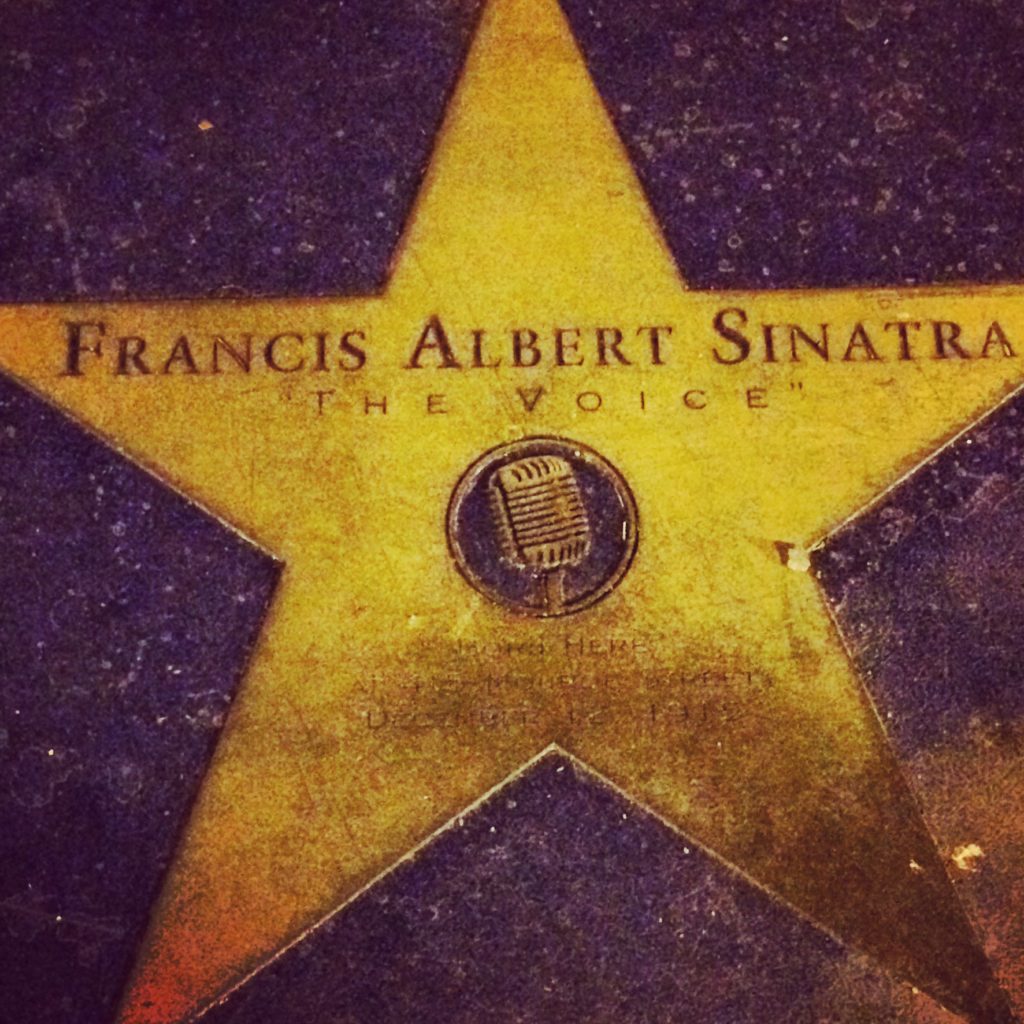
Star on the sidewalk outside Frank Sinatra’s former home on Monroe Street in Hoboken

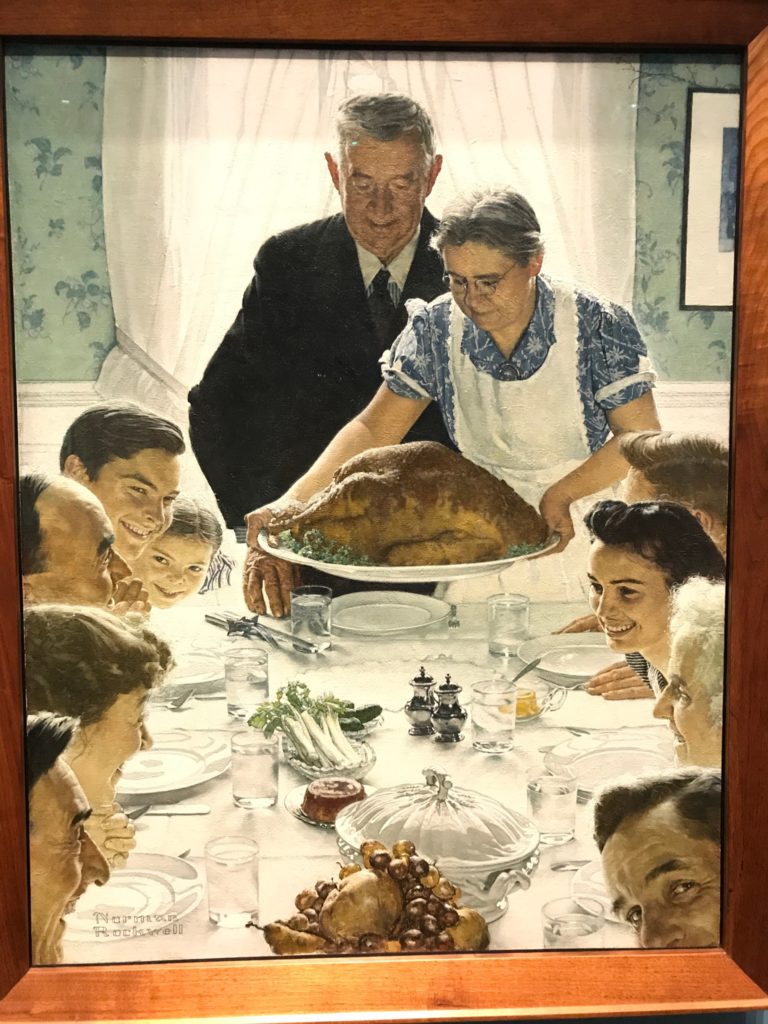
Americans may experience name-recognition with Norman Rockwell’s paintings of the Four Freedoms from President Franklin Delano Roosevelt’s Annual Message to Congress of January 6, 1941: Freedom of Speech, Freedom of Worship, Freedom from Want, and Freedom from Fear.  The speech did not go over as the president had hoped.  Hitler’s threat seemed far away to war-weary Americans, but the wide circulation of Norman’s paintings in The Saturday Evening Post in 1943 made the ideas relatable to the public.  The paintings later traveled to help sell war bonds, and their civic contribution earned Mr. Rockwell a Presidential Medal of Freedom from President Gerald R. Ford.  Those in the New York City area, enjoyed seeing the Four Freedoms Exhibit, which includes “The Golden Rule,” at The New-York Historical Society Museum & Library till September 1st.  The exhibit is now on tour to The Henry Ford Museum in Dearborn, MI, The George Washington University Museum and The Textile Museum in Washington, D.C., the Mémorial de Caen in Normandy, France, Museum of Fine Arts in Houston, TX, and finally back home to the Norman Rockwell Museum.

“Freedom from Want”

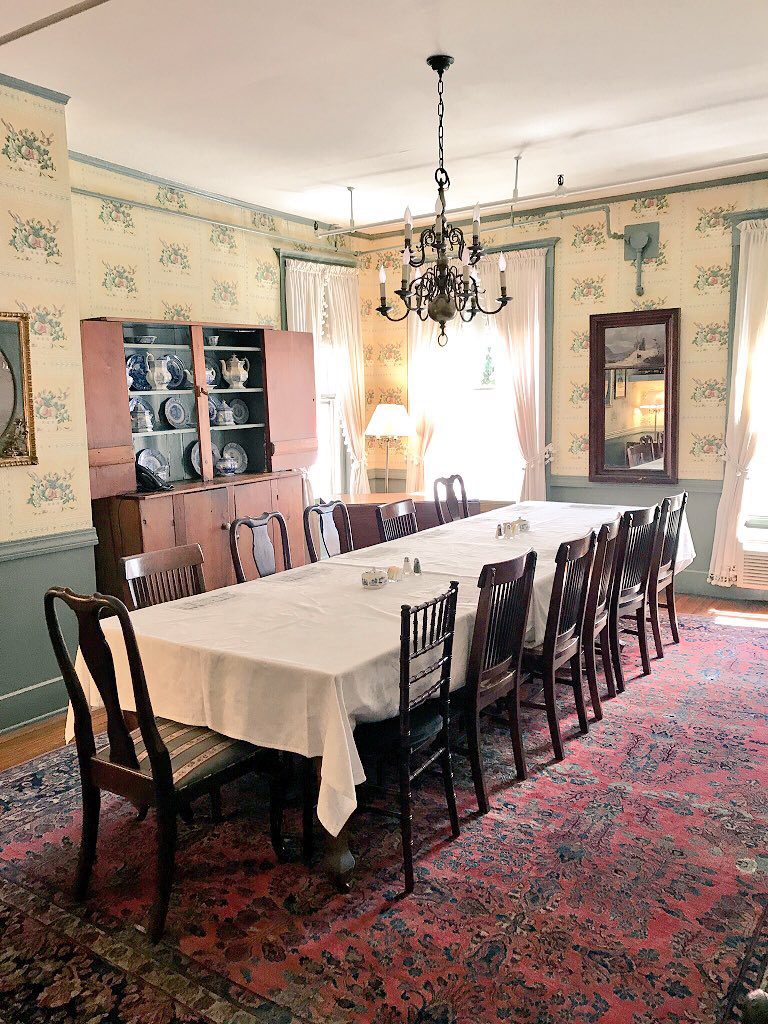
Setting for “Freedom from Want”: staff dining room at Red Lion Inn, Stockbridge

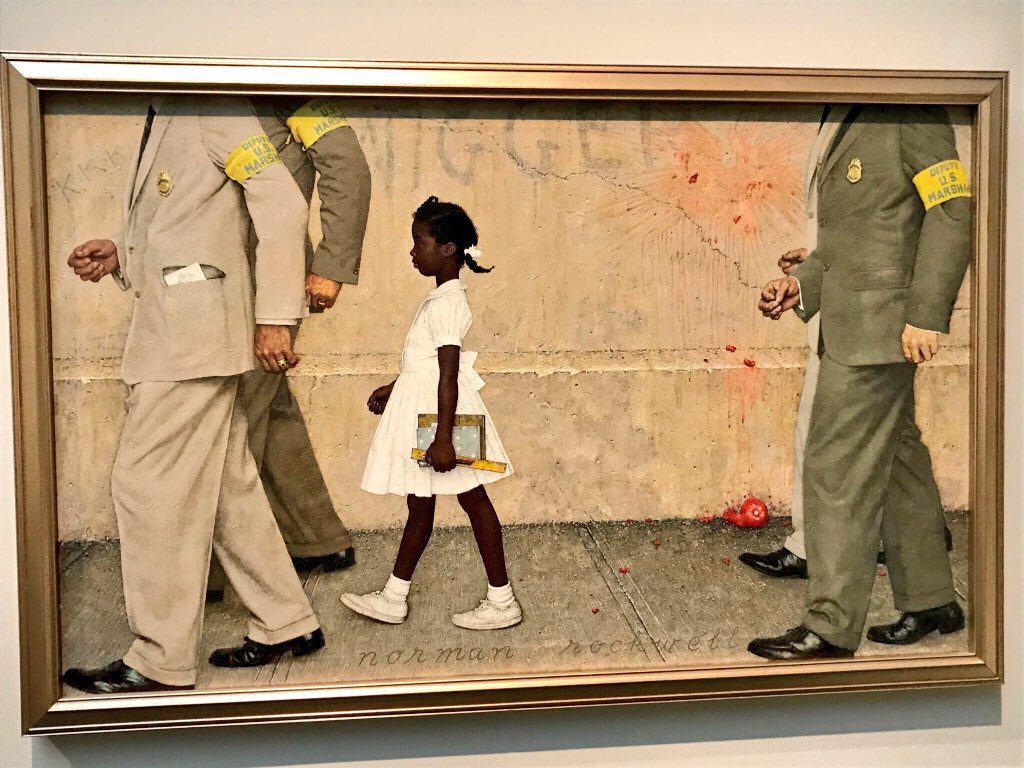
A painting of which both the artist and the museum is proud, “The Problem We All Live With”, 1963, is a story version of the experience of Ruby Bridges, reflective of social issues in Mr. Rockwell’s work in the 1960’s, also in the New York exhibit.

On exhibit at the museum through October 29th is “Keepers of the Flame: Parrish, Wyeth, Rockwell and the Narrative Tradition” featuring works by Maxfield Parrish and Andrew Wyeth in addition to those of Norman Rockwell.  The museum also has fun events like visits from former Rockwell models, a history of hand-drawn animation from Mickey Mouse to Tom and Jerry to The Flintstones, children’s events, and lectures by the museum curators, all of which you can find via Twitter: @NRockwellMuseum.

Mr. Rockwell remembered at the Red Lion Inn

Thank you to the delightful and knowledgeable docent at the Norman Rockwell Museum for the studio tour and the fun tidbit about Frank Sinatra.  Mr. Sinatra had good company in John Wayne, whose portrait the National Cowboy Hall of Fame and Western Heritage Center commissioned, and Bob Hope, Jack Benny, and Gary Cooper, years earlier.  A fun anecdote about Gary Cooper from the Post writers is that he was a model for a May 1930 cover for his film “The Texan,” not a portrait but a painting-story about a cowboy actor having make-up applied on the set.  Mr. Cooper, a friend of Frank Sinatra’s in the small world of Hollywood, was not only conscientious but nice to everyone on the staff and crew even as he was becoming a household name.  As to where the painting is now, it could be in the collection of avid Rockwell admirer Steven Speilberg, who lived as a child in Haddon Township, New Jersey, and was one of the significant supporters behind the new museum that had outgrown the one in town due to the artist’s popularity.

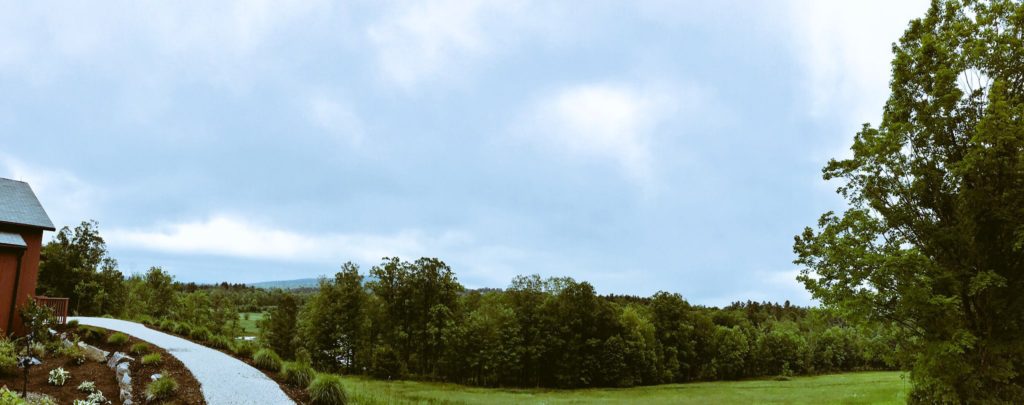
Berkshire view from the studio near the Housatonic River

The museum has dedicated talented volunteers who are part of the vibrant Stockbridge community, one of whom recently performed from Shakespeare at the Red Lion Inn. For more information on this Blue Star Museum that welcomes active military members and their families, also visit: www.nrm.org.  The museum photos are from a trip last summer, but we look forward to our next Berkshire visit.

(Sources: nrm.org, saturdayeveningpost.com, nyhistory.org, mccall.com, history.com, totallyhistory.com, https://sinatrafamily.com/forum/showthread.php/46529-Norman-Rockwell-s-portrait-of-Frank-Sinatra, Wiki)

 “‘Frankly Norman: A Sketch” All Rights Reserved © 2018 Kathleen Helen Levey

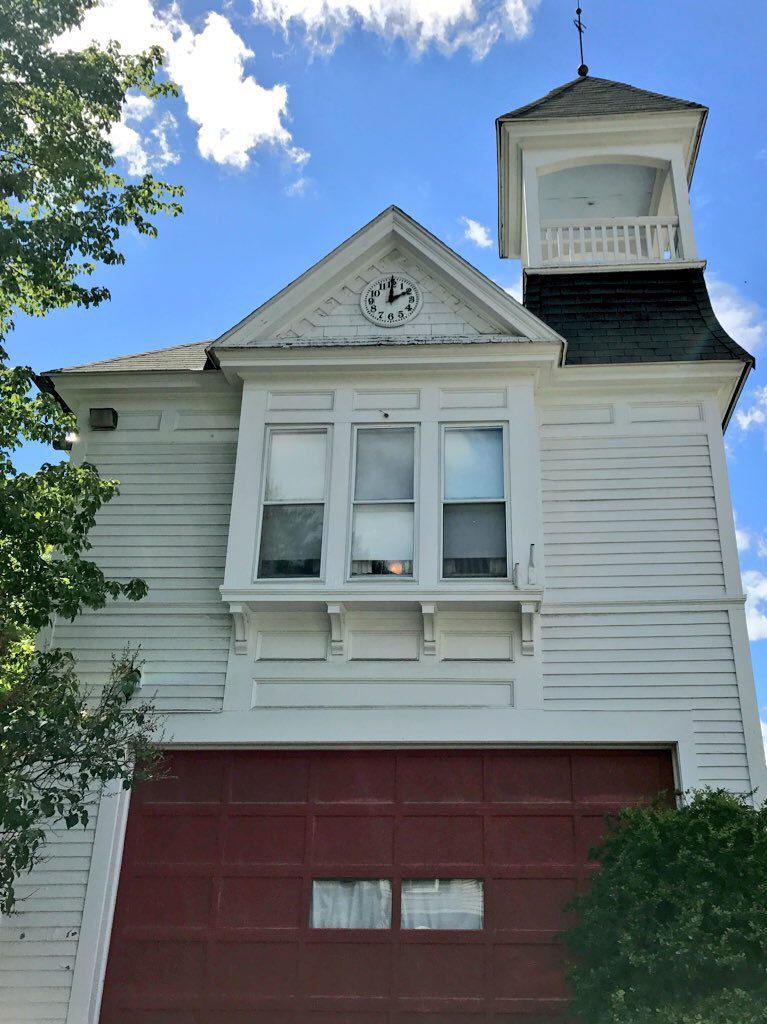
Stockbridge former firehouse featured in “The New American LaFrance is Here!” a popular ad in 1971 for ATO, Inc. American-LaFrance Fire engines.

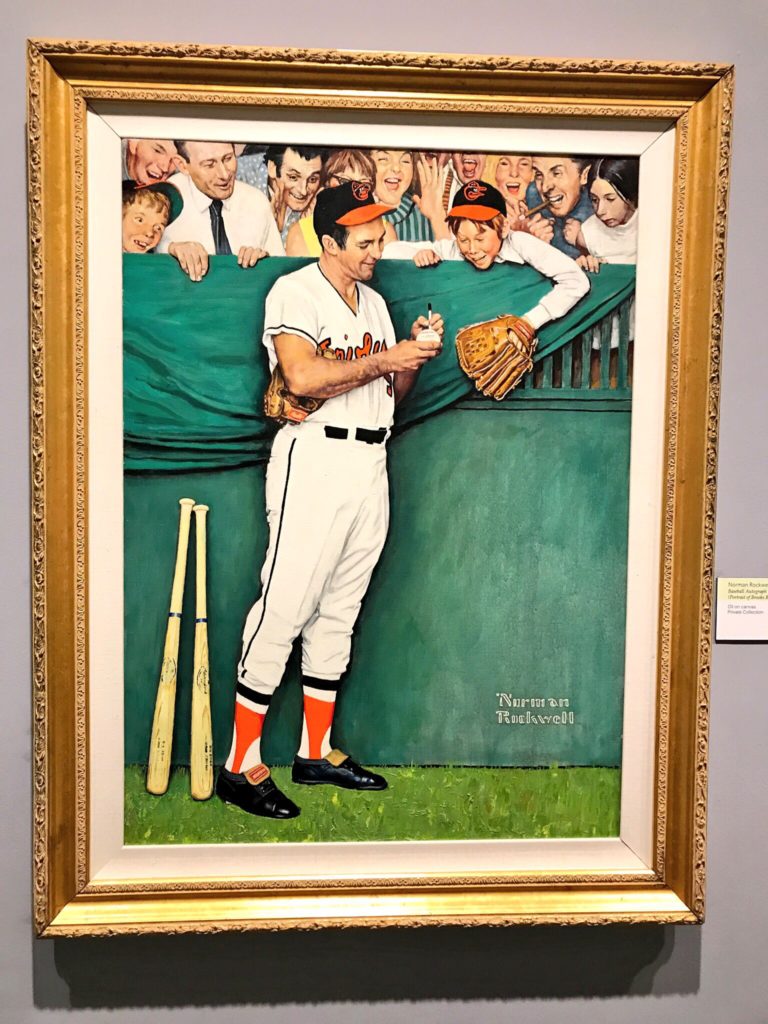
Brooks Robinson of the Baltimore Orioles 

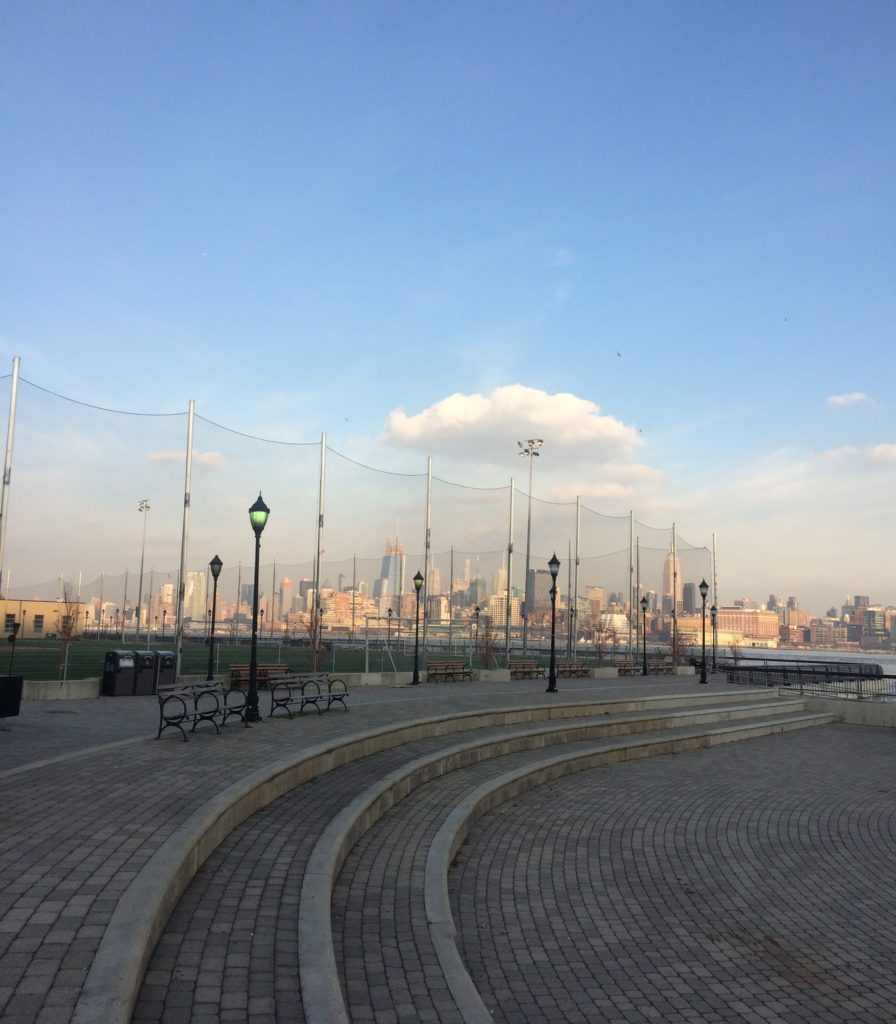
Frank Sinatra Park, Hoboken, with a spectacular view of “New York, New York,” an outdoor amphitheater for concerts, and a playing field in the “home of baseball”.

Studio with a copy of “The Golden Rule,” 1961. The original hangs in the United Nations when not on loan.

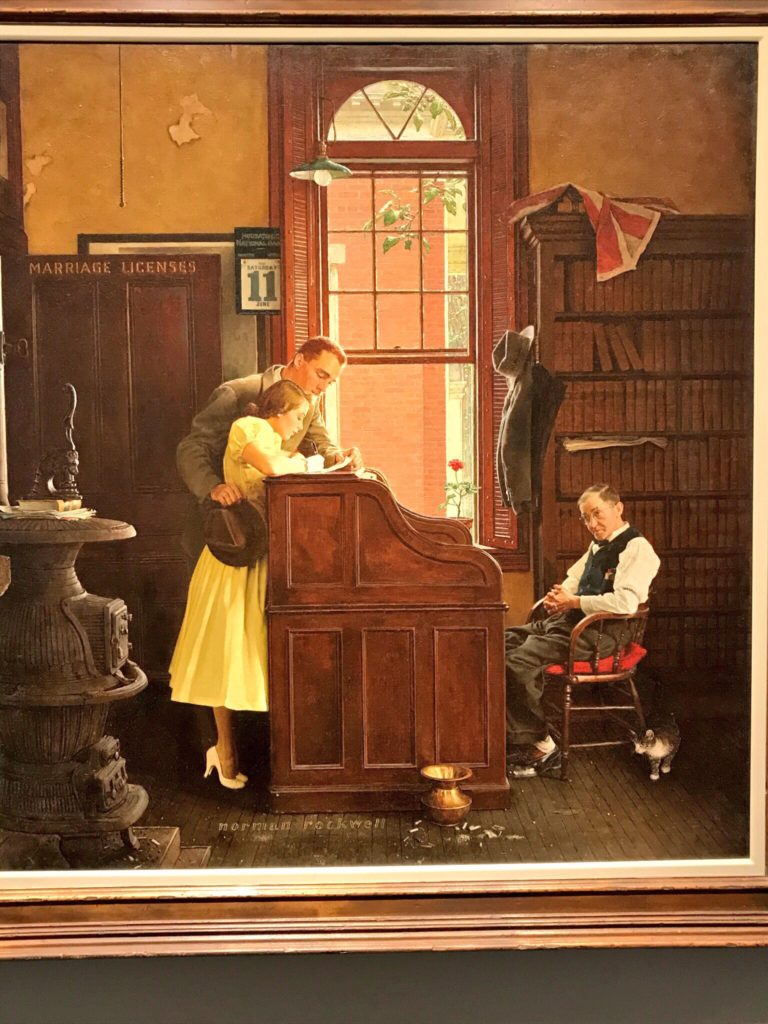
“The Marriage License,” 1954

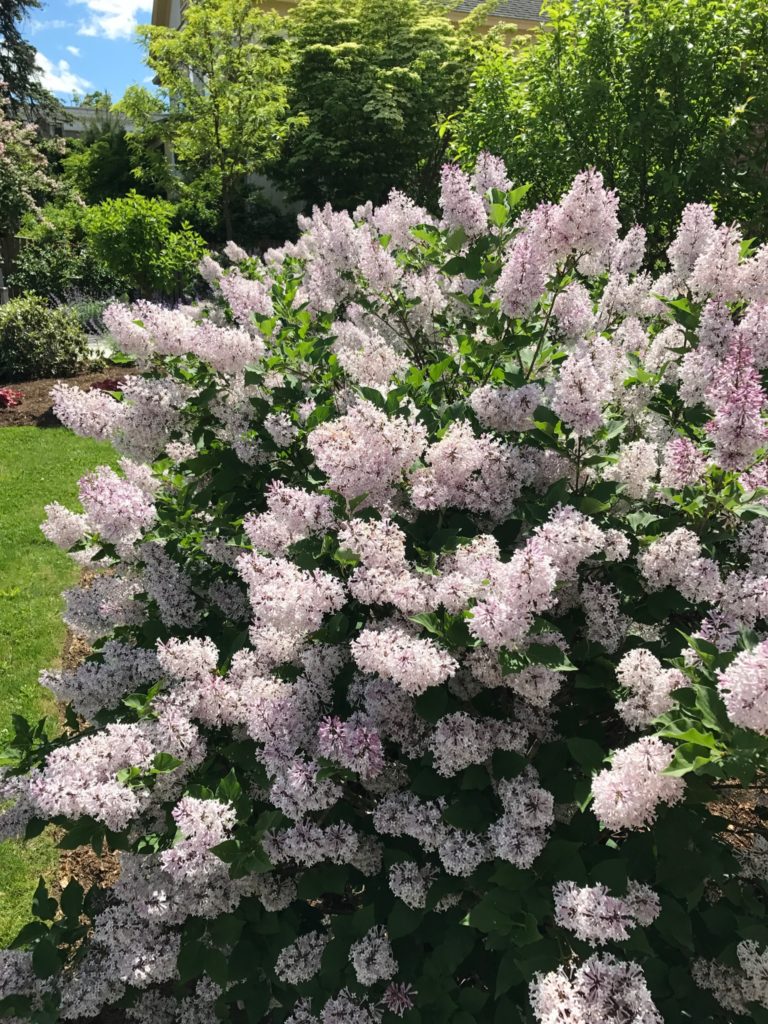
Summer lilacs, Stockbridge

Frank Sinatra statue by sculptor Carolyn Palmer, dedicated on his Dec. 12th birthday, 2021

‘Work Lovingly Done’: Two Exhibitions at The Clark

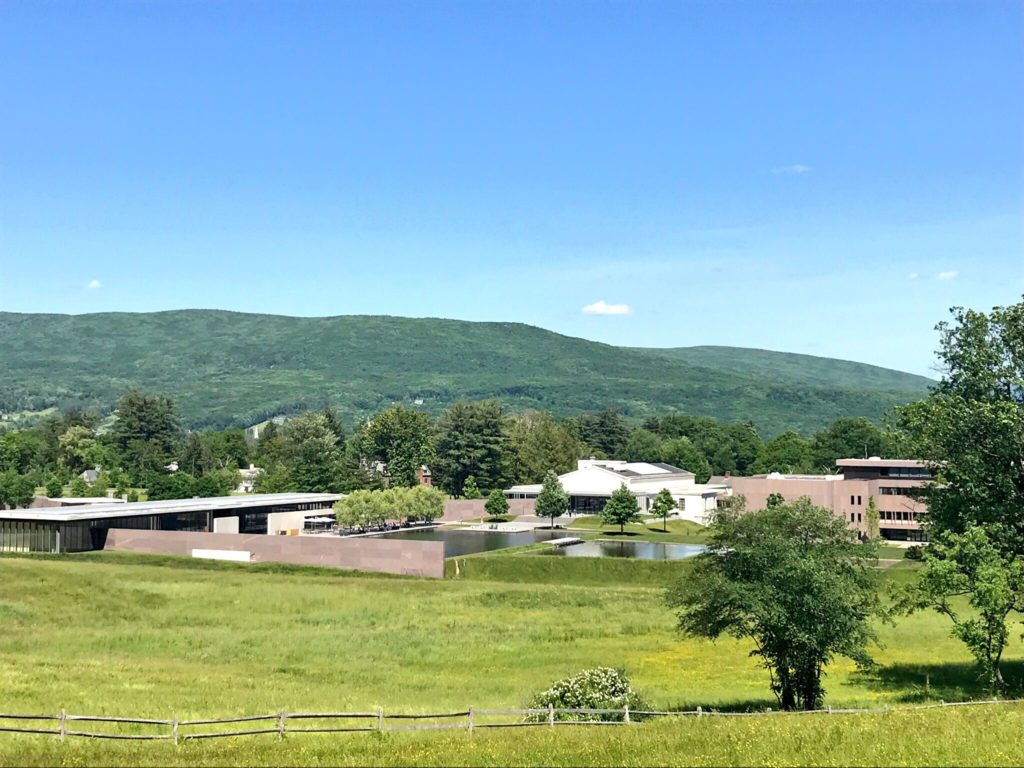
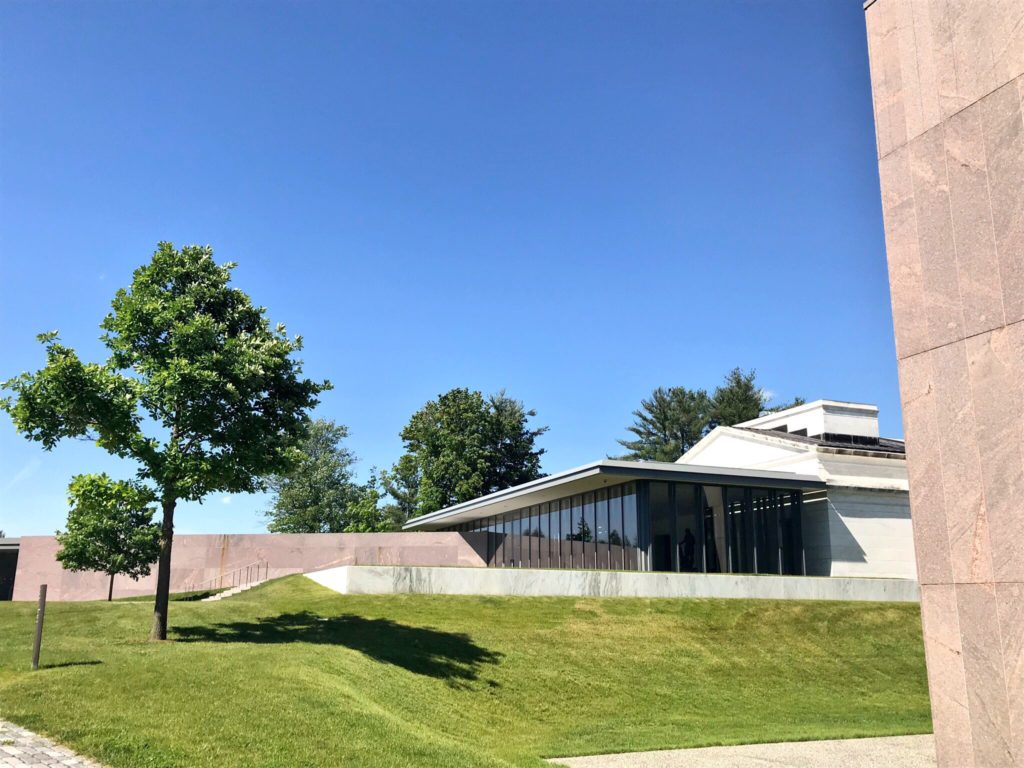
The Clark Art Institute viewed from one of its mountain trails.

The Clark Art Institute, nestled in the Berkshires in Williamstown, Massachusetts, has four summer exhibitions: “Women Artists in Paris, 1850-1900,” “The Art of Iron,” “A City Transformed: Photographs of Paris, 1850-1900,” and “Jennifer Steinkamp: Blind Eye,” the first two shared here from a June visit.

“Women Artists in Paris, 1850-1900”

Each of the featured 33 female artists has her story, but striking similarities run throughout those, primarily, each woman’s commitment in relocating to the Parisian artistic epicenter to develop her talent and to connect with other artists. In 1857, the School of Fine Arts (Ecole des Beaux-Arts) opened its doors to women, creating an unprecedented opportunity. Whether the women were students at the school or protégés of great artists as Berthe Morisot was of Camille Corot, their collective style had a profound influence on Realism, Impressionism, and later, Symbolism.

Works in each room revolve around themes like “The Art of Painting,” “The Lives of Women” and “Picturing Childhood”.  Themes such as “History and Everyday Heroism” marked departures from traditional subjects for female artists. Some of the artists like the crowd-pleasing Mary Cassatt and Morisot are familiar names today, the equally successful Rosa Bonheur, a Swiss artist, who favored realism in her painterly style, perhaps less so, though she was also the daughter of a well-known artist Oscar-Raymond Bonheur. New for this visitor were the Scandinavian artists like Anna Archer, Denmark, and Elin Danielson-Gambogi and Ellen Thesleff, Finland.  Many of the artists continued to paint after returning to their home countries, a number teaching to support new, young artists.  Some found encouraging partners in marriage, others discovered that painting was not complementary to domestic life. A common thread is that most of them found a way to continue to do what they loved. For a complete list of the artists, visit Women In Paris.

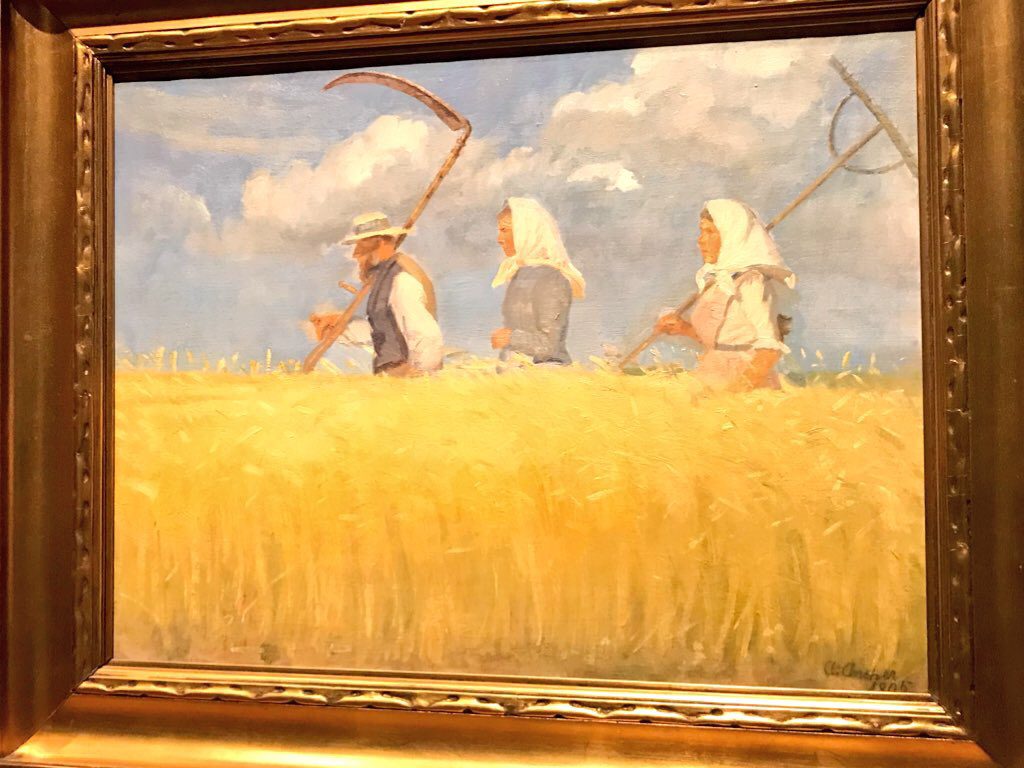
A successful Danish artist, Anna Archer, lived in the northern artists’ colony Skagen, with her painter-husband Michael. At the time Anna began her career, the Royal Danish Academy did not admit women, which led to her discovery of the works of Vermeer abroad, an influence here in “The Harvesters,” 1905, where she depicts a family.

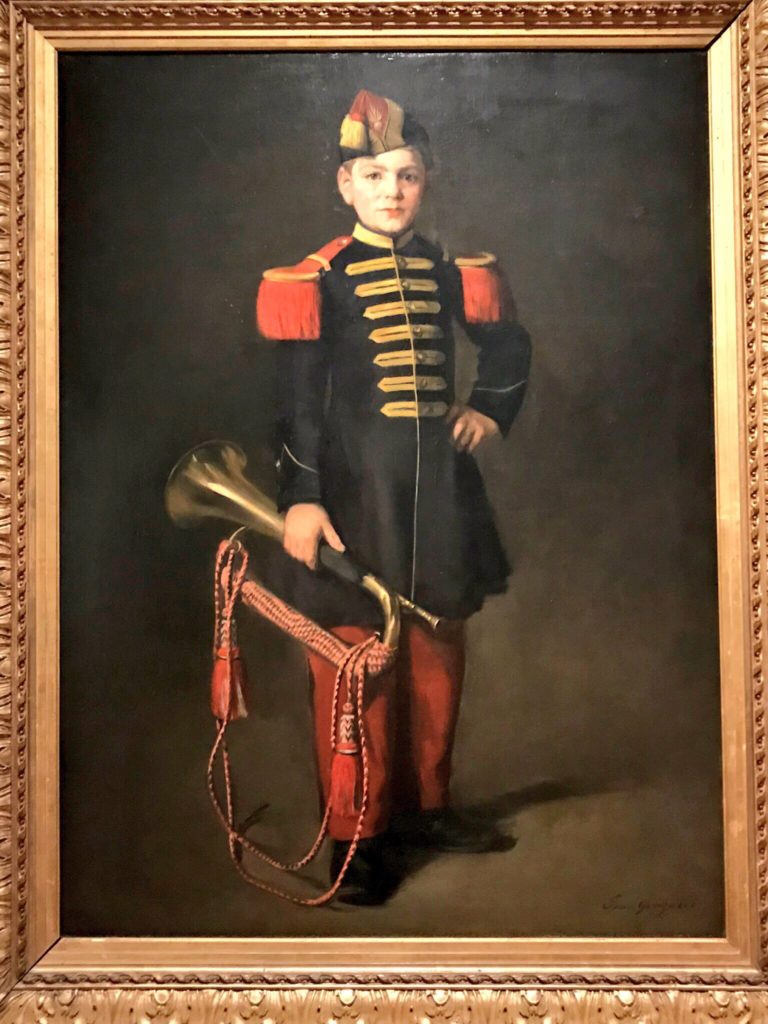
In the innovative “History and Everyday Heroism,” this military portrait by Eva Gonzales inspired by Edouard Manet’s “The Fife Player of 1866” is striking.

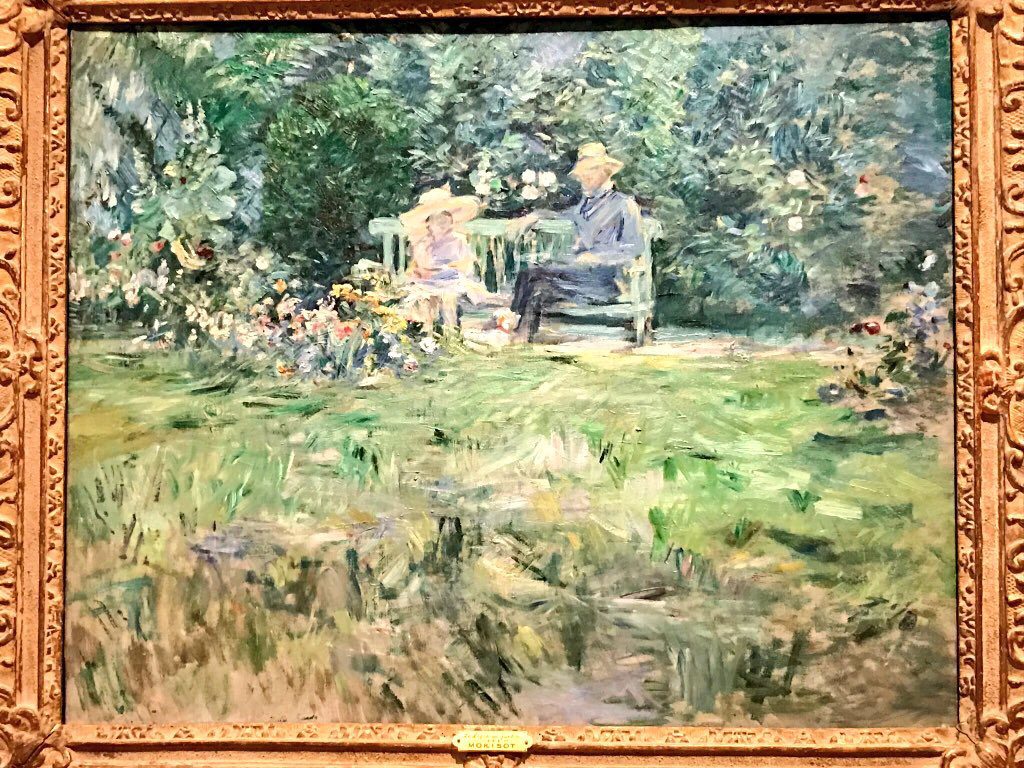
Berthe Moriset, French, Impressionist scenes were often from daily life. Here are her husband and daughter: “The Lesson in the Garden,” 1886.

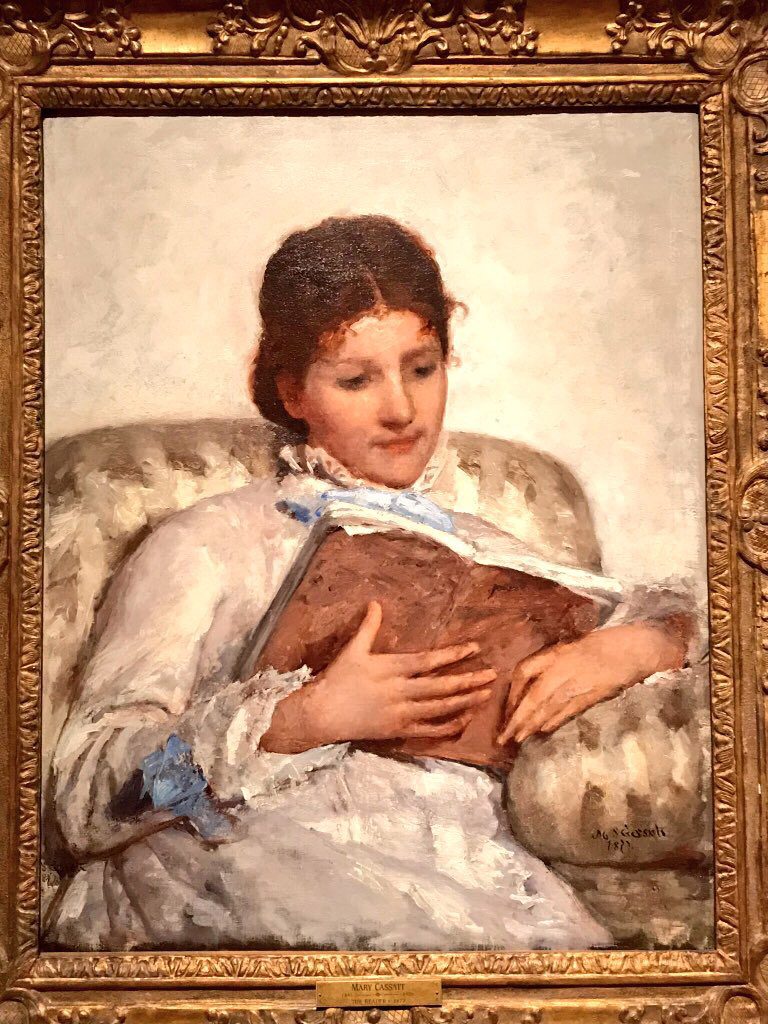
Mary Cassatt,  “The Reader,” 1877:

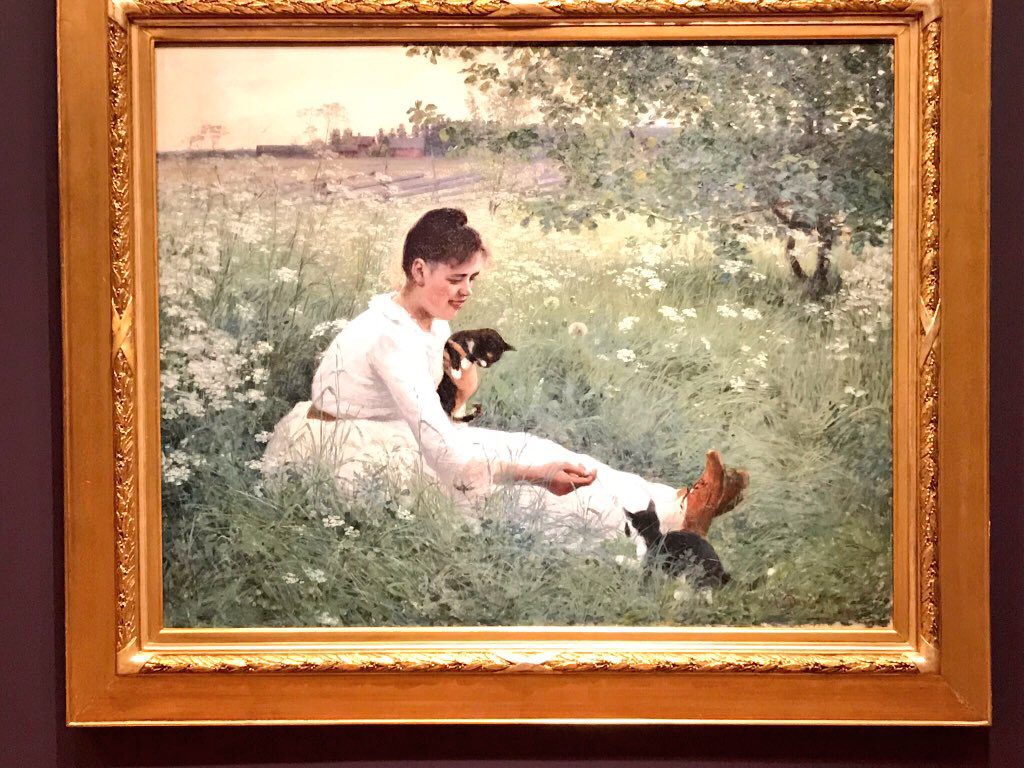
Elin Danielson-Gambogi, part of the Finnish “painters sisters” generation along with Helen Schjerfbeck, painted “Girl and Kittens in a Summer Landscape,” 1892.

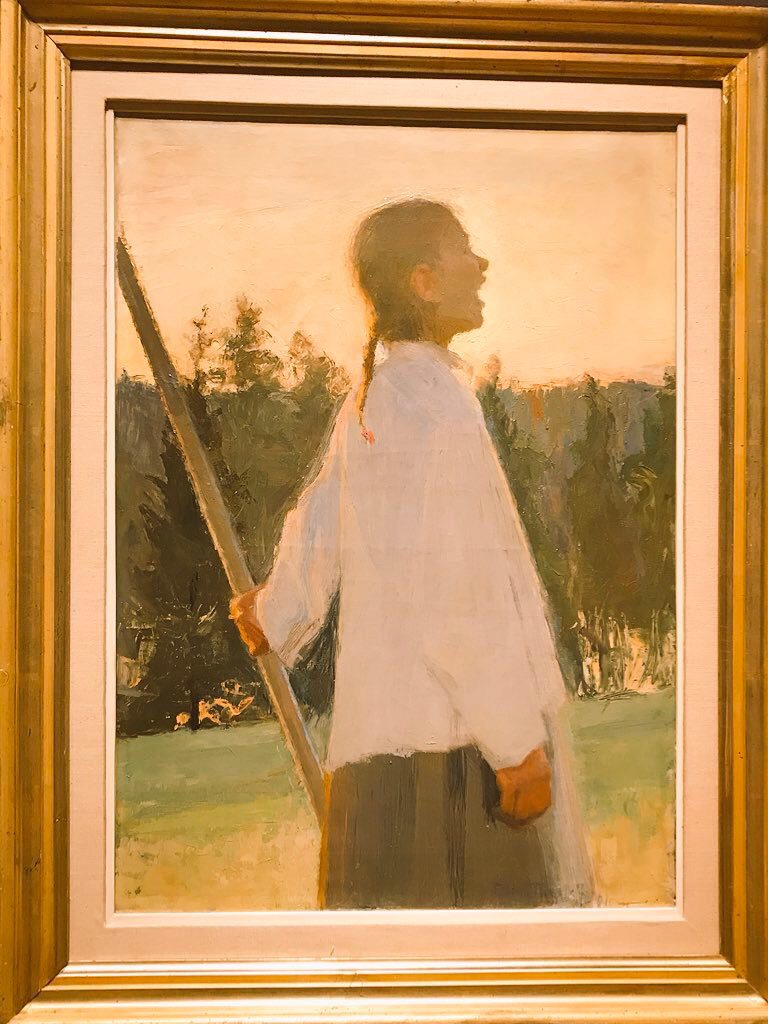
Ellen Thesleff, “Echo,” 1891, in which a young girl finds her voice

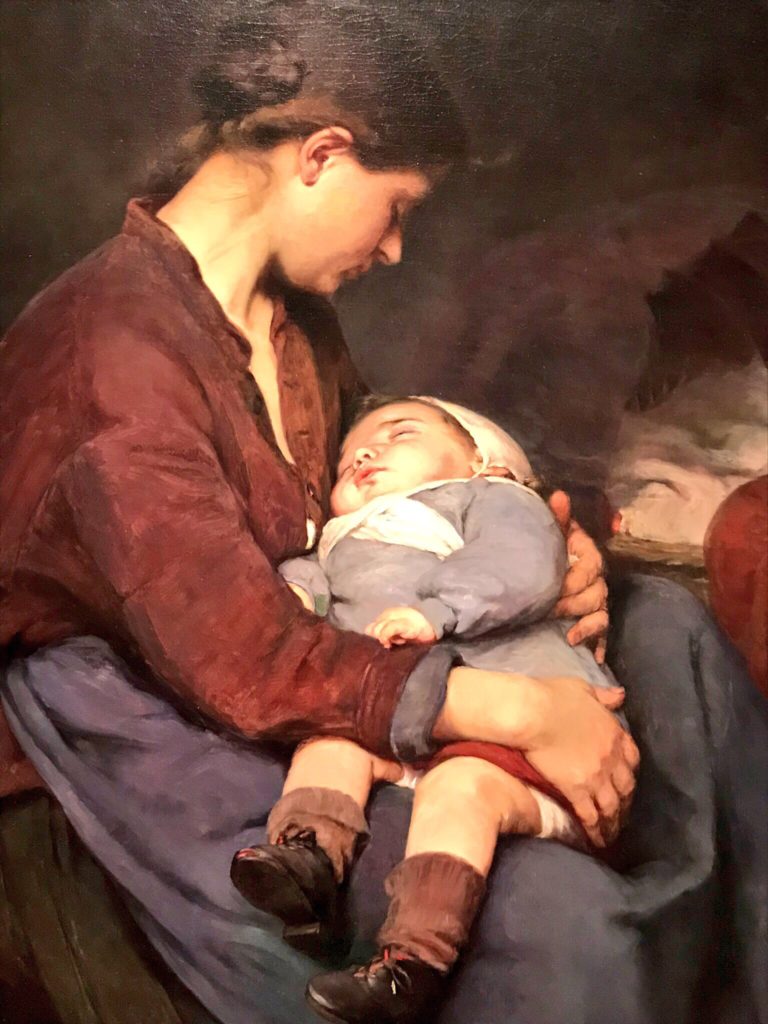
Notable American painters were among the group.  Elizabeth Nourse, Cinncinati, Ohio, detail from “A Mother,” 1888.  The depiction of a working class mother and child was a bold statement at the time.

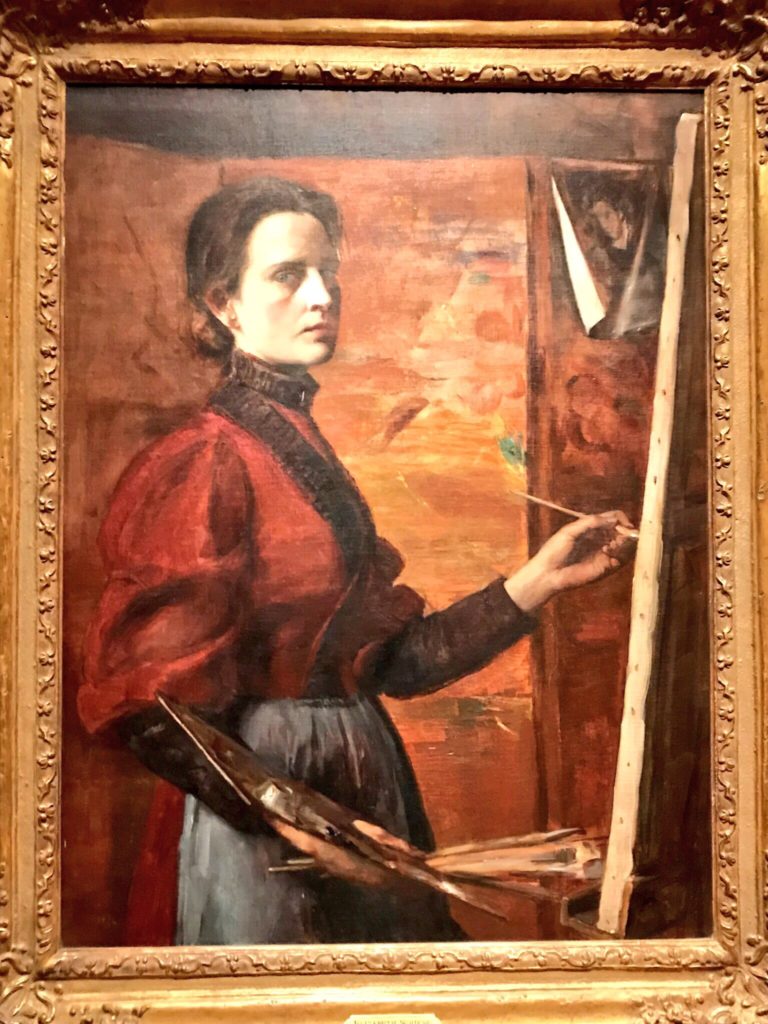
And self-portrait, 1892.

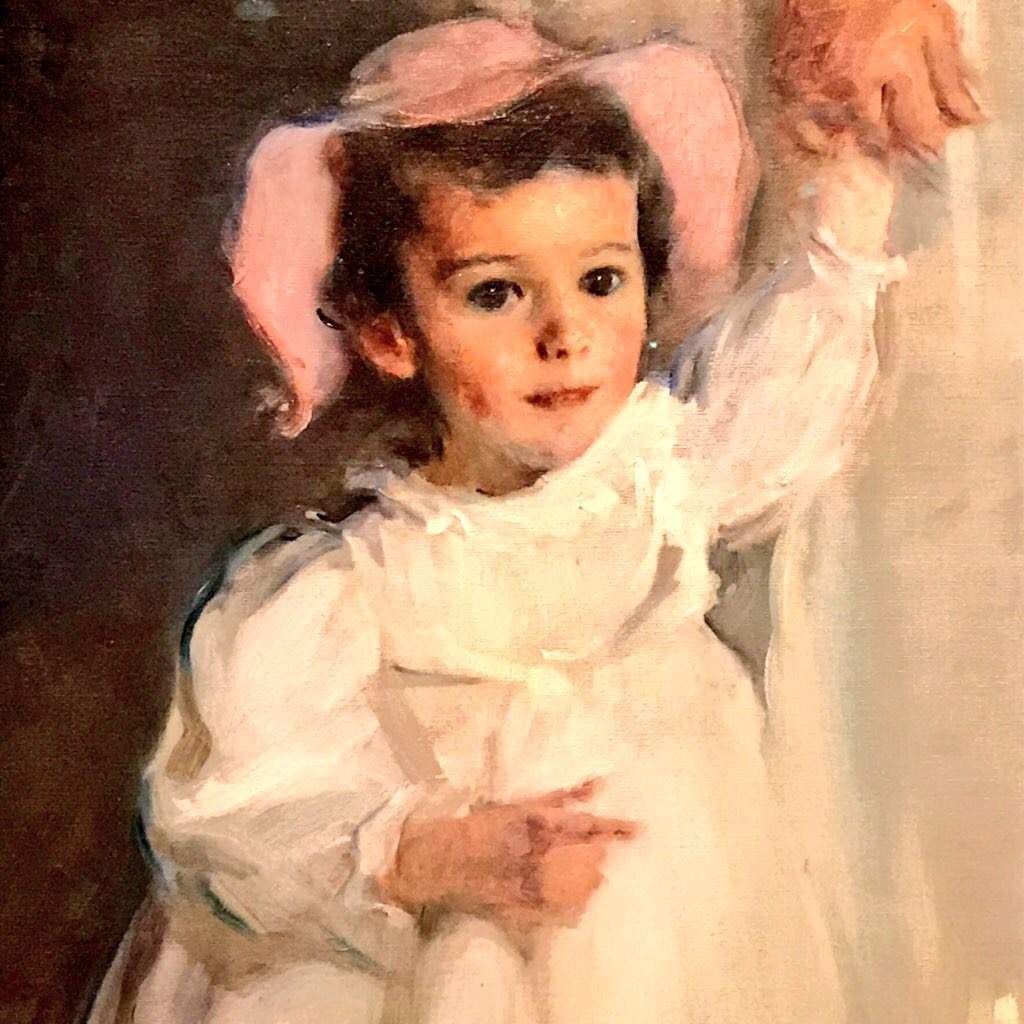
“Ernesta (Child with Nurse)”, 1894, by Cecelia Beaux, both student and instructor at Pennsylvania Academy of Fine Arts.

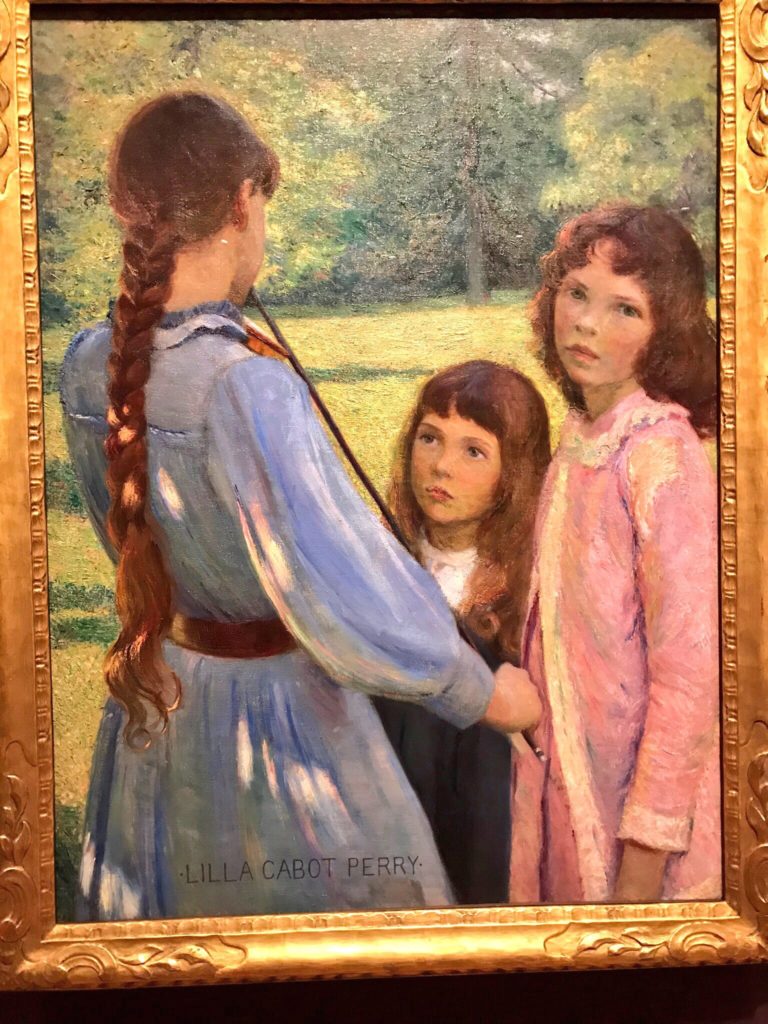
Lilla Cabot Perry, from Boston, Masschusetts and Hancock, New Hampshire: “Open Air Concert,” 1890.

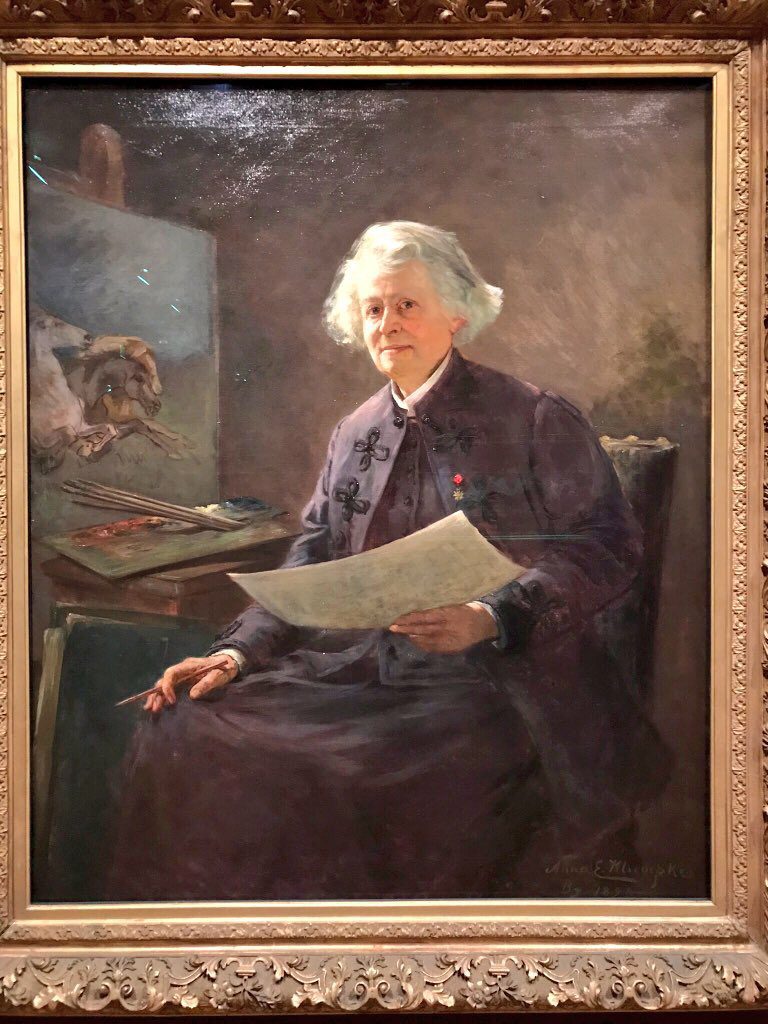
Rosa Bonheur, painted by her partner Anna Elizabeth Klumpke, San Francisco.

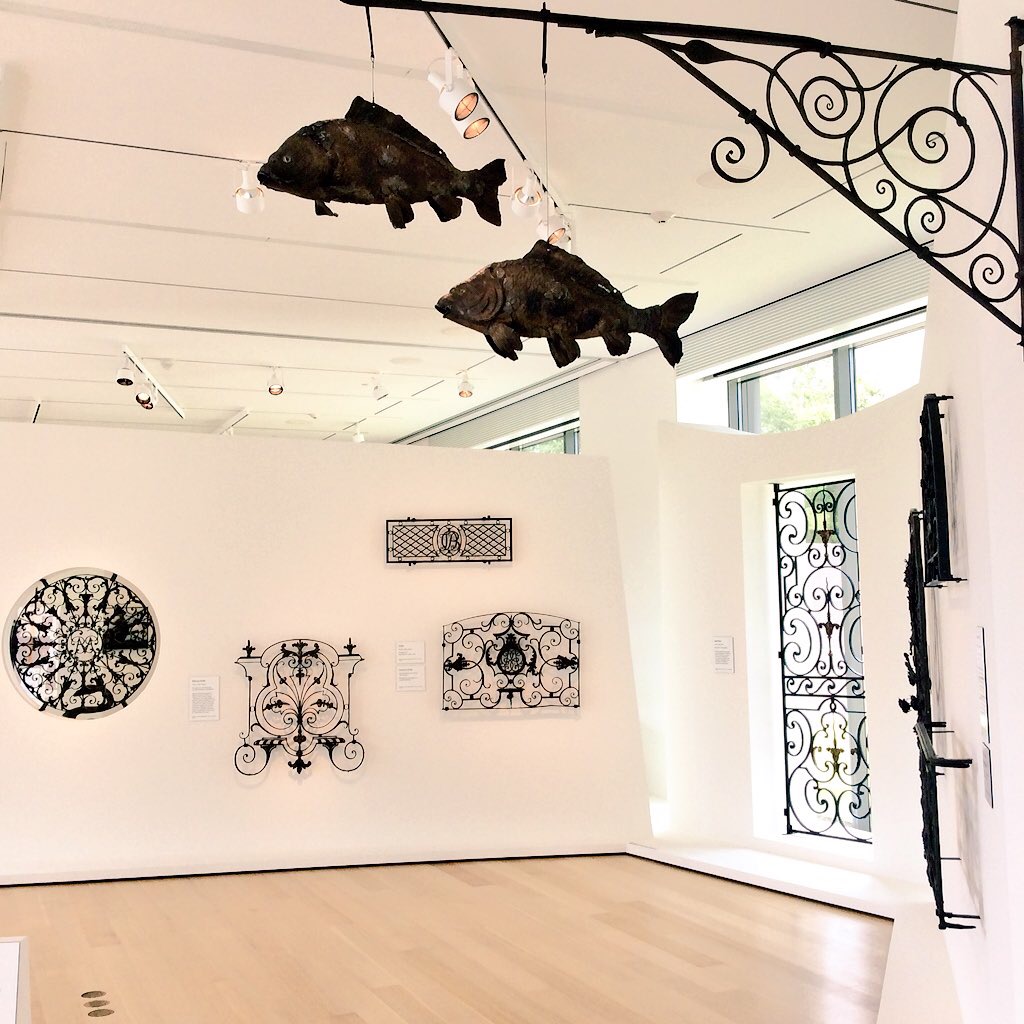
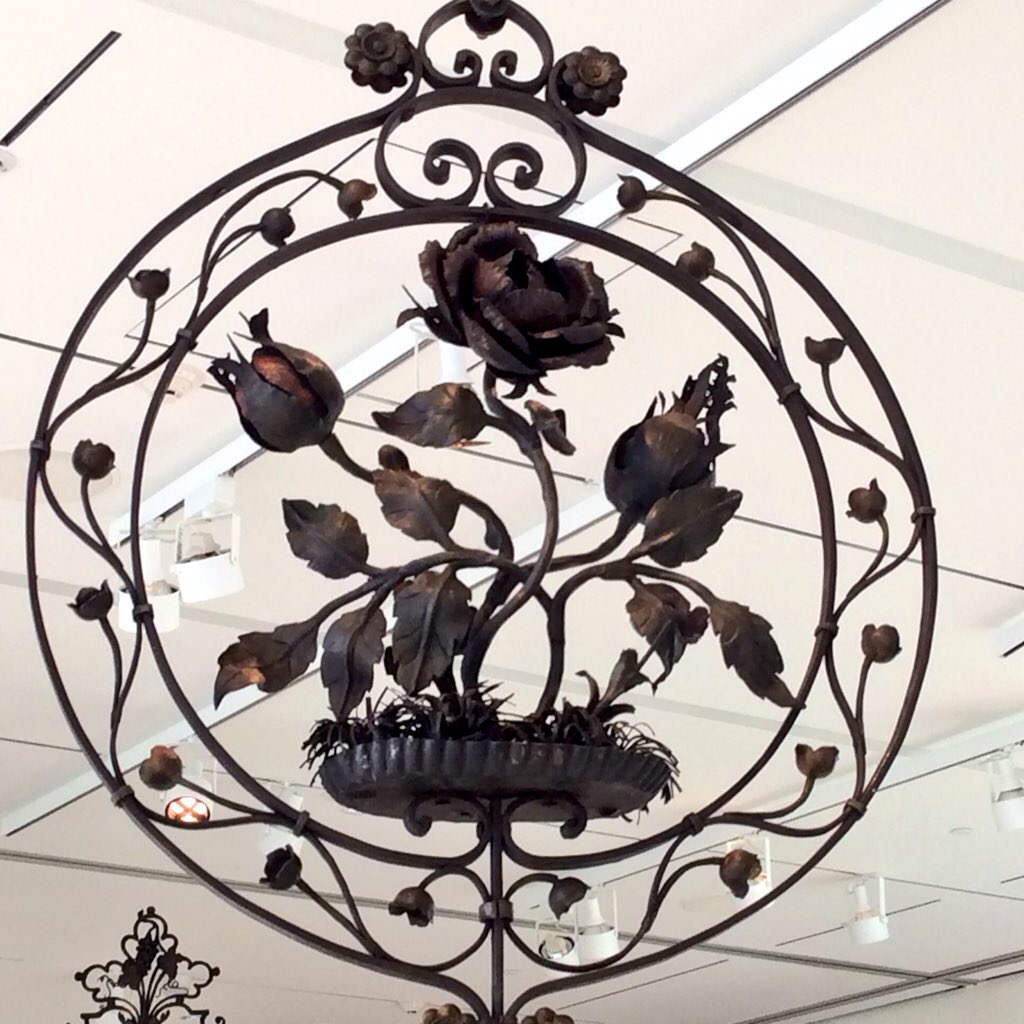
“The Art of Iron, Objects from the Musee Le Secq Des Tournelles, Rouen, Normandy” 

As the exhibit notes, at a time when many people could not read, ironwork signs for shops had a practical purpose.  Pictured in the forefront of the exhibit is “At the Two Fish,” 1750-1800, from Alsace.  The details and craftsmanship of these works for everyday raise these works to an artistic level. One person who appreciated this was artist and photographer Jean-Louis Henri Le Secq Destournelles, 1818–1882, who began to collect these often cast aside wrought iron works in Paris.  His son Henri continued this, ultimately donating their collection to the city of Rouen in Normandy, France, where they are on display in a former Gothic cathedral converted into a museum.

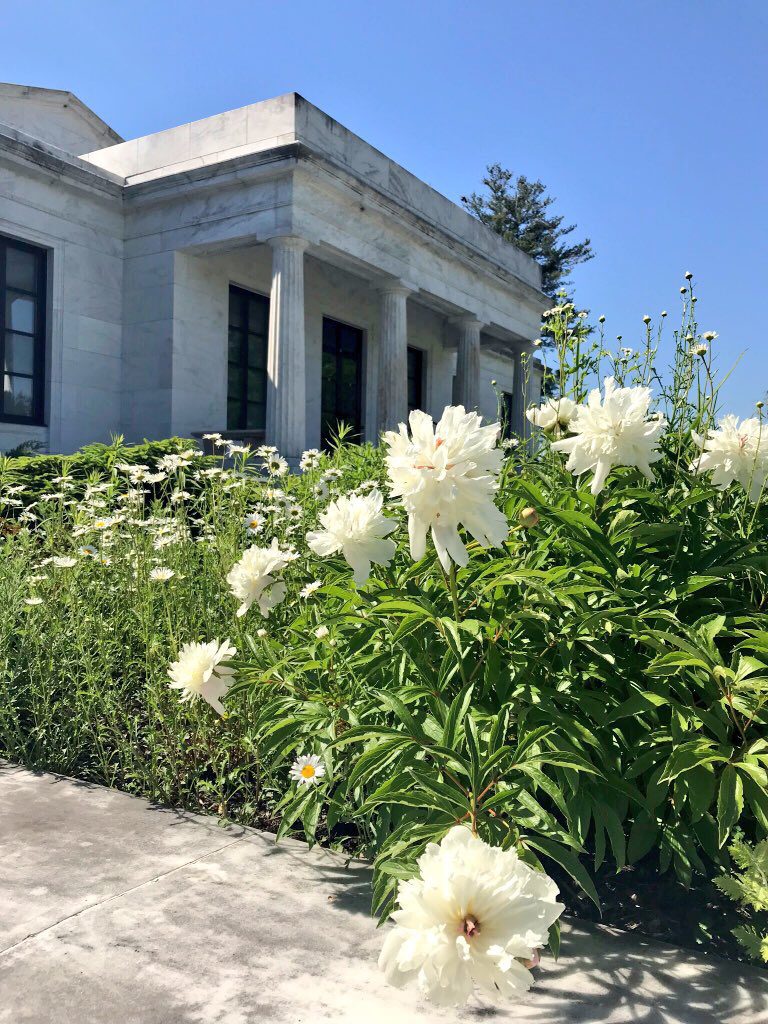
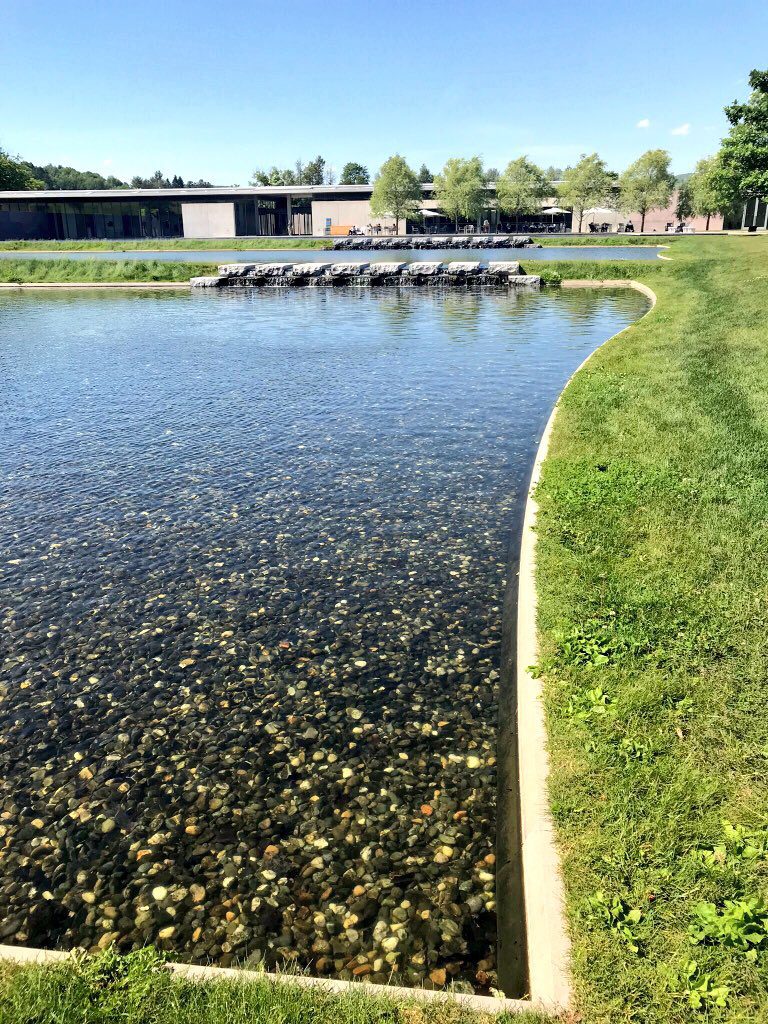
Both The Clark Art architecture and nature contribute to showcasing the works.

Work lovingly done is the secret of all order and all happiness.” A few months ago, The Clark posted this wonderful quote by Pierre Renoir that describes fulfillment in art and life.  The shared artist’s spirit that transcends gender and life station as seen in “Women Artists in Paris: 1850-1900” and “The Age of Iron” resonates with visitors.  For more information, visit The Clark.

Museum Building

Campus reflecting pools outside Clark Center

Museum Building extension

Campus life: outside Manton Research Center

On the way up the hillside

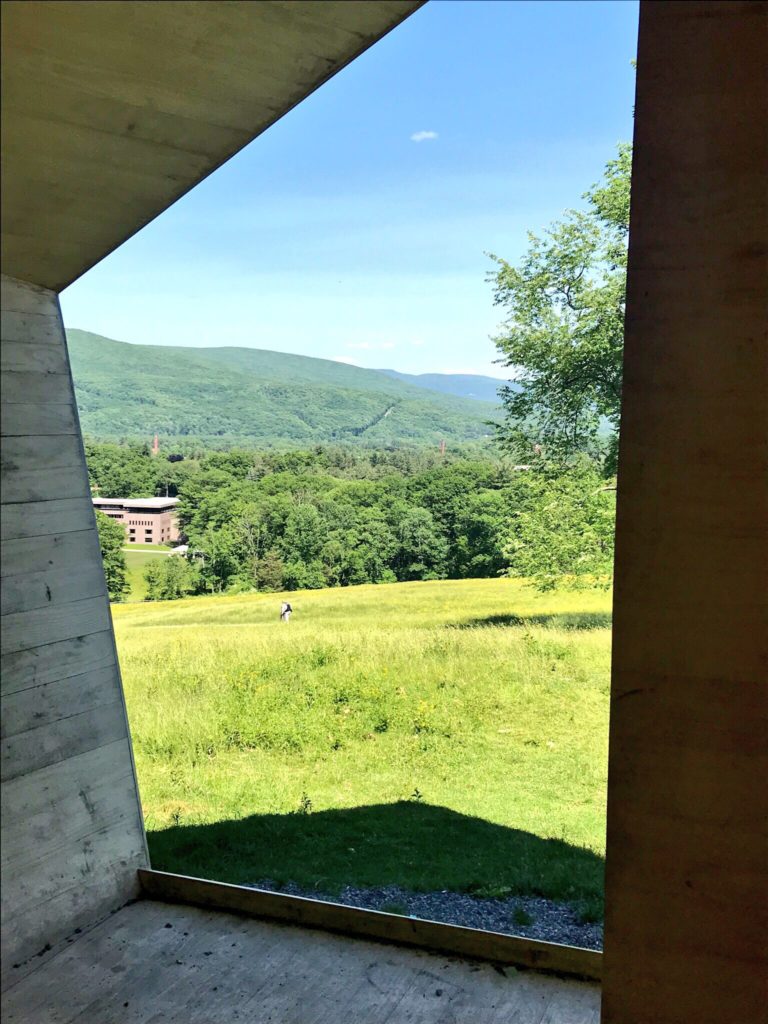
View from artist Thomas Schutte’s Crystal

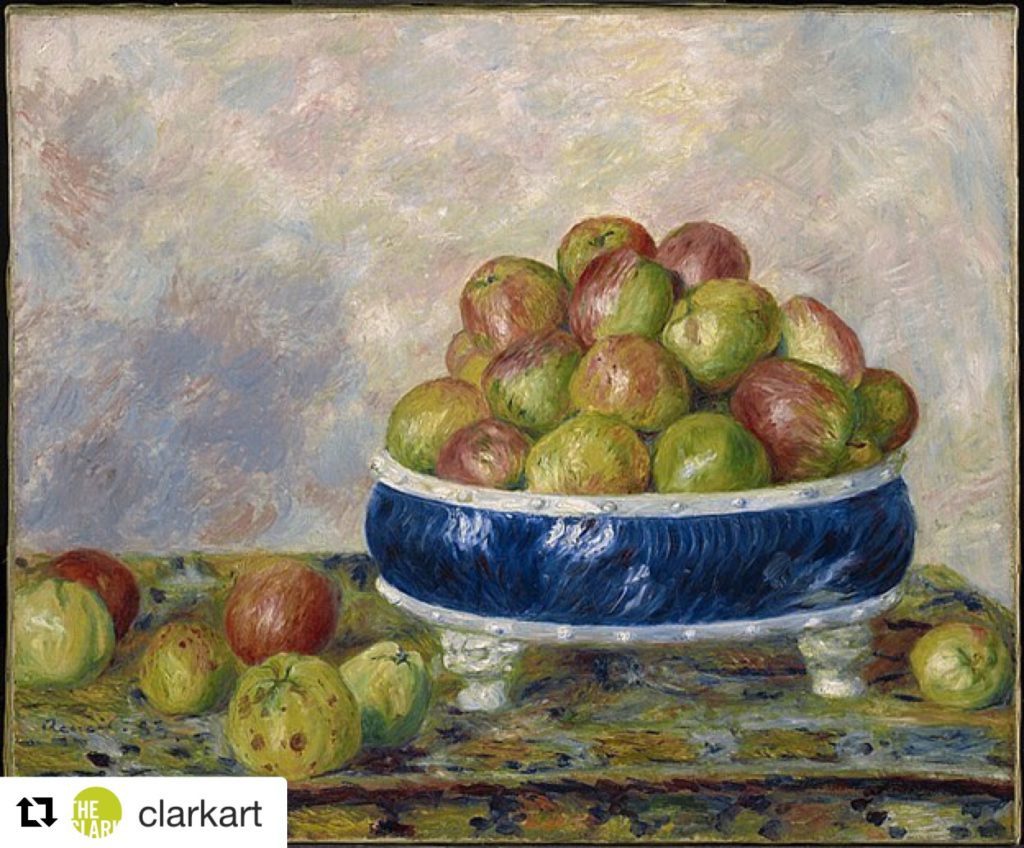
“Work lovingly done is the secret of all order and all happiness.” Pierre Renoir

(Photo credit: “Apples in a Dish”, The Clark)

The Clark grounds, referred to as the “campus” are beautiful with trails to enjoy as part of the visit.  “Women Artists in Paris: 1850-1900” is through September 3rd and “The Age of Iron” is through September 13th. (Sources: Clark Art, Wiki)

“‘Work Lovingly Done’: Two Exhibits at The Clark” All Rights Reserved © 2018 Kathleen Helen Levey


Page 2 of 2

Powered by WordPress & Theme by Anders Norén