“I will honour Christmas in my heart, and try to keep it all the year. I will live in the Past, the Present, and the Future. The Spirits of all Three shall strive within me. I will not shut out the lessons that they teach.”
A Christmas Carol, Charles Dickens
Often, we experience and hear similar stories from others that children enjoy playing with the embellishments of Christmas – making art with bows, creating collages, and stacking present boxes -more so than exploring the more costly gifts. Their playfulness is a celebration.
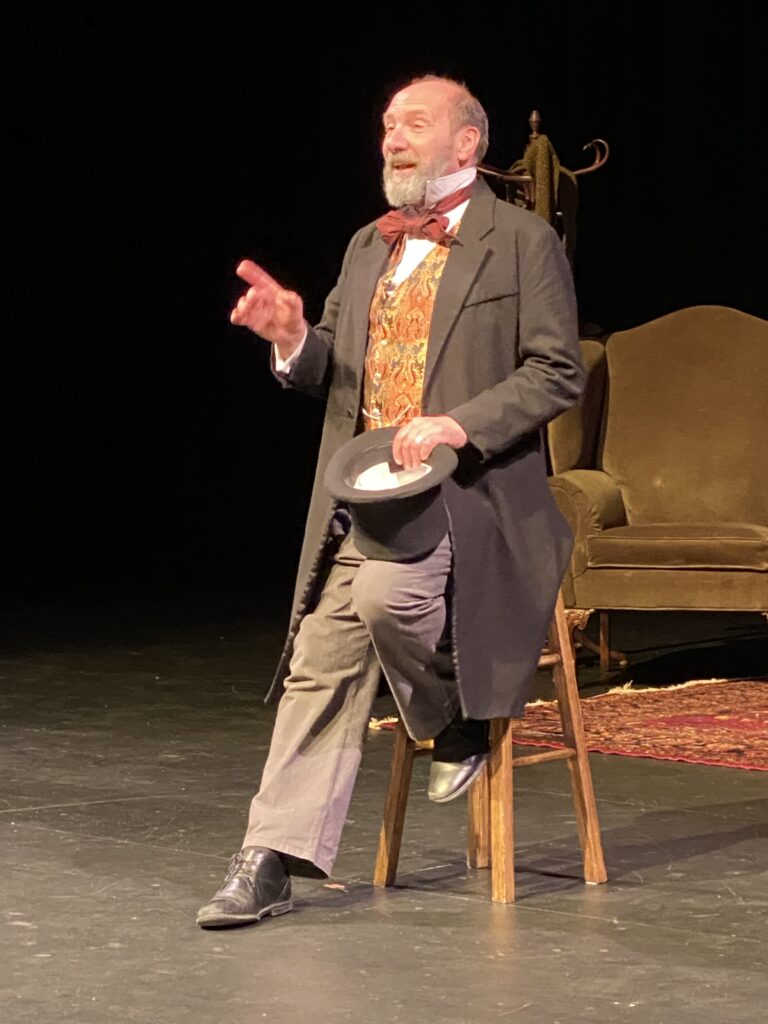
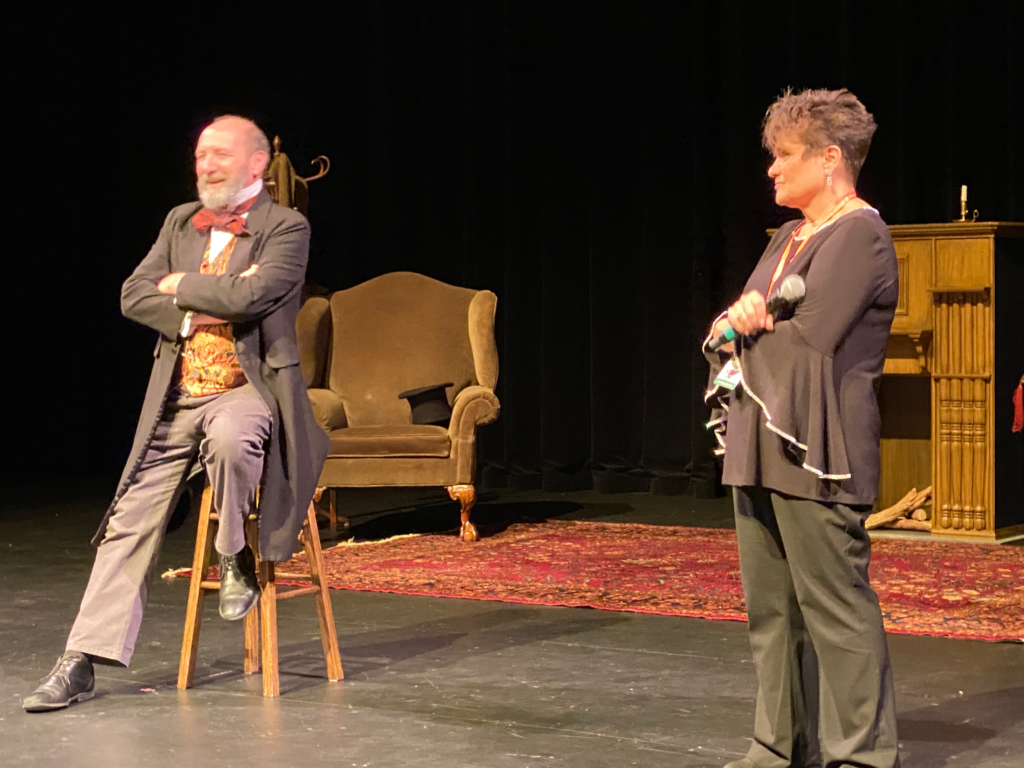
In Gerald Charles Dickens’ performance of A Christmas Carol, his pared-down, one-man interpretation of the beloved story reminds the audience that his great-great-grandfather’s words are a gift. There are no lavish stage settings or fancy props. Instead, Mr. Dickens plays with the gift, reinventing it to present it anew to the audience. In early December of 2025, on his USA Farewell Tour at Two River Theater, sponsored by The Historic Village at Allaire, in a Q&A Gerald warmly shared that he “feels a theatrical connection with Dickens, which allows for versatility and interpretation…” After being on the road performing this and other Dickens works for thirty-two years, Mr. Dickens wants to spend more time with family, but his cousin’s son may pick up the mantle.
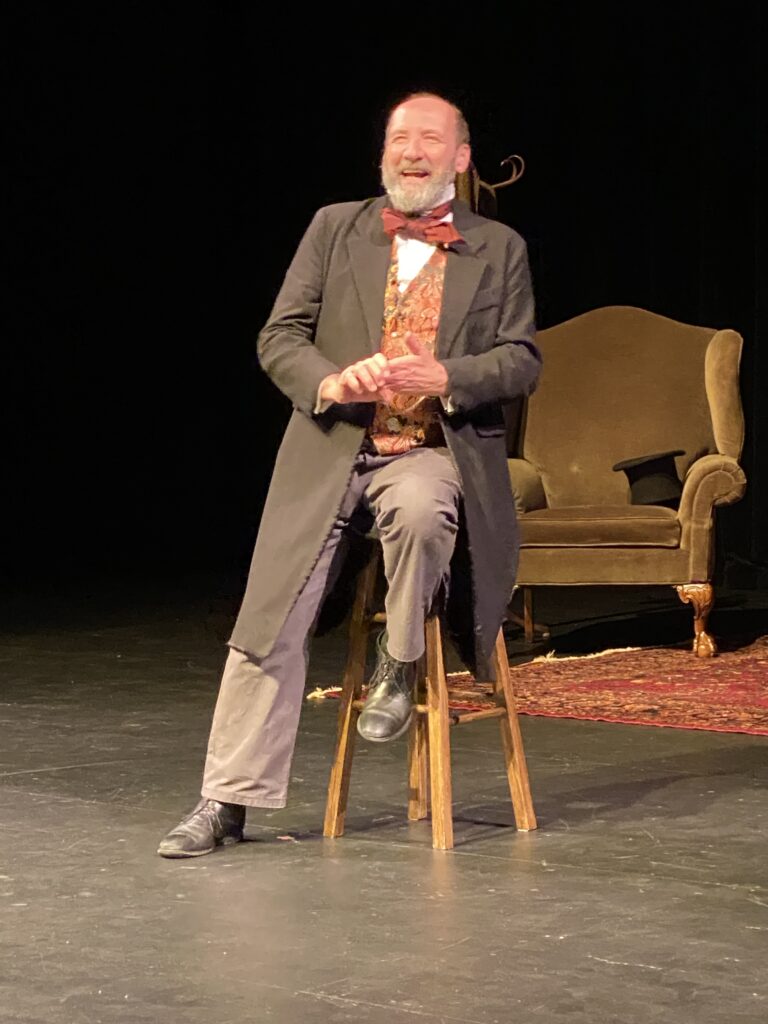
Mr. Dickens conveys the warmth and charm of the kindest and best of Dickens characters.
A heartwarming anecdote is Gerald’s sweet memory of the first time that he discovered A Christmas Carol. In a scene straight out of a Dickens novel, five-year-old Gerald was celebrating Christmas with all his family. The little cousins got into a big bed to listen while a family member read the story to them.
Mr. Dickens explained some historical context of the novella. Charles Dickens wrote A Christmas Carol at the height of the Industrial Revolution. Once a child worker himself after his father was sent to debtors’ prison, and as a man of deep faith, Charles Dickens was concerned that the workers’ children would have no education and become a lost generation. Rather than lecture people, Dickens hoped that his moving tale would connect with audiences and convince them to care about England’s many Tiny Tims.
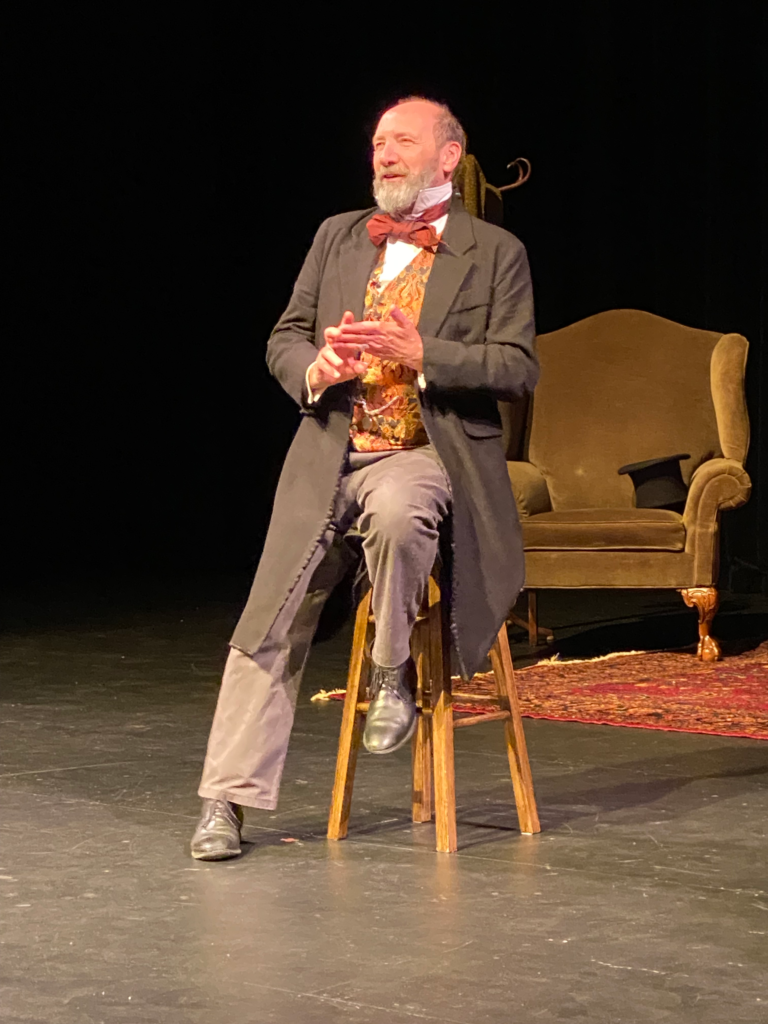
Charles Dickens created the beloved novella in six weeks of intensive writing. Published on December 19, 1843, the first edition sold out by Christmas Eve. Meticulous about the book cover’s quality and illustrations, Dickens did not make as much money as he might have, but his message of “reformation and redemption,” as Gerald described it in a YouTube interview, resonated. By 1844, the novella had gone through 13 printings and is still a bestseller. His original handwritten copy is at The Morgan Library & Museum, where the Renoir drawings are on exhibit until February 8th.
Regarding films of the story, Mr. Dickens enjoys the Muppets version with Michael Caine, because it uses more of the narration as does his play; he also favors the George C. Scott and Alistair Sims films. Regarding Charles Dickens’ biographers, Gerald prefers the books of Clair Tomalin, Edgar Johnson, and the biography by his great-great-grandfather’s friend John Foster. Those interested in more may follow Gerald’s charming blog, On the Road with Gerald Dickens. Gerald Charles Dickens is also the author of two books My Life on the Road with A Christmas Carol and Dickens and Staplehurst: A Biography of a Rail Crash. (What was refreshing and likable is that Mr. Dickens only mentioned his books once in passing.) Everyone can also enjoy interviews with him via YouTube.

The elegant, state-of-the-art Two River Theater from Facebook, which notes events like Shakespeare’s As You Like It, with student performers, premiering January 24th.
Gerald’s great-great-grandfather, with whom he also shares a family resemblance, toured across the United States twice and received warm welcomes. His first trip was for writing inspiration and to promote the idea of an international copyright, because his books were routinely published outside of England without credit. On the second trip, he read from his works, which included A Christmas Carol, and acted some of its roles.
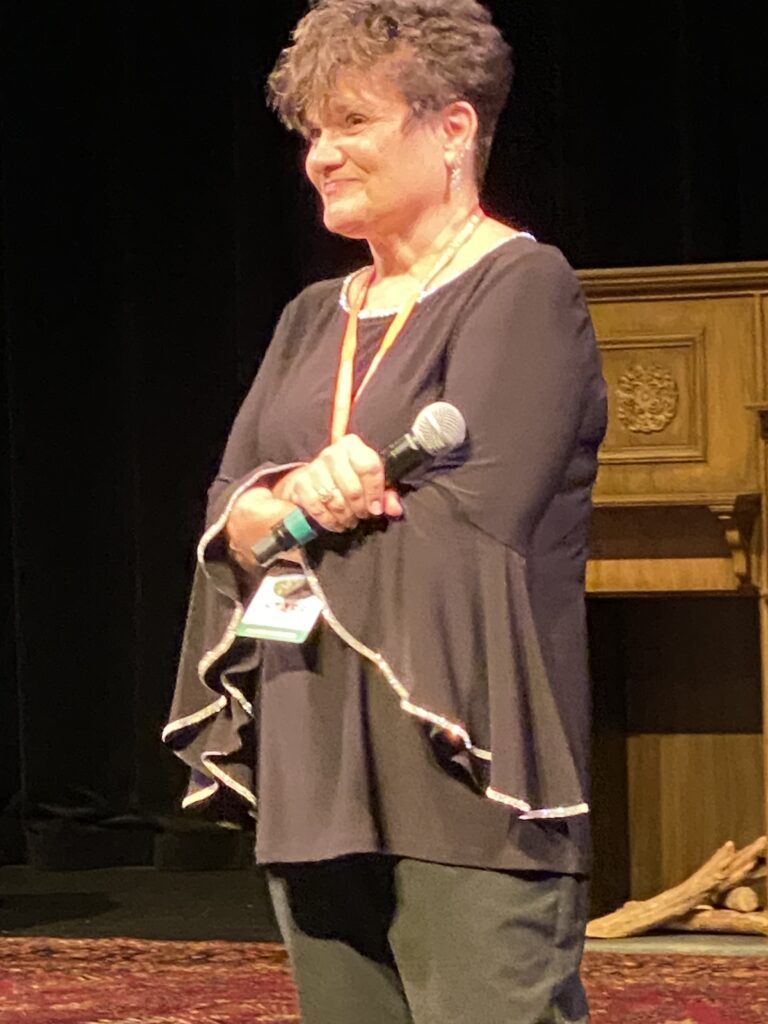
Daryl O’Connell, Allaire Director of Development, served as emcee
A Christmas Carol festivals are held throughout England. Here in the US, Mr. Dickens has performed A Christmas Carol in fundraisers for The Historic Village at Allaire, in Farmingdale, New Jersey. (Industrialist and philanthropist James Allaire, a contemporary of Charles Dickens, founded the village, now a nonprofit living history museum, in 1822.) Further south, for fifty-two years, the Galveston Historical Foundation has hosted “Dickens on the Strand” on the first weekend in December (4th-6th in 2026). This Texan celebration of A Christmas Carol has always had a Dickens family member present; it may be possible to see Gerald Charles Dickens as a speaker, though his US performances ended December 15th. Hearing the inside story of family members warmly exchanging thoughts on their “Dickens on the Strand” experiences was fun to hear.
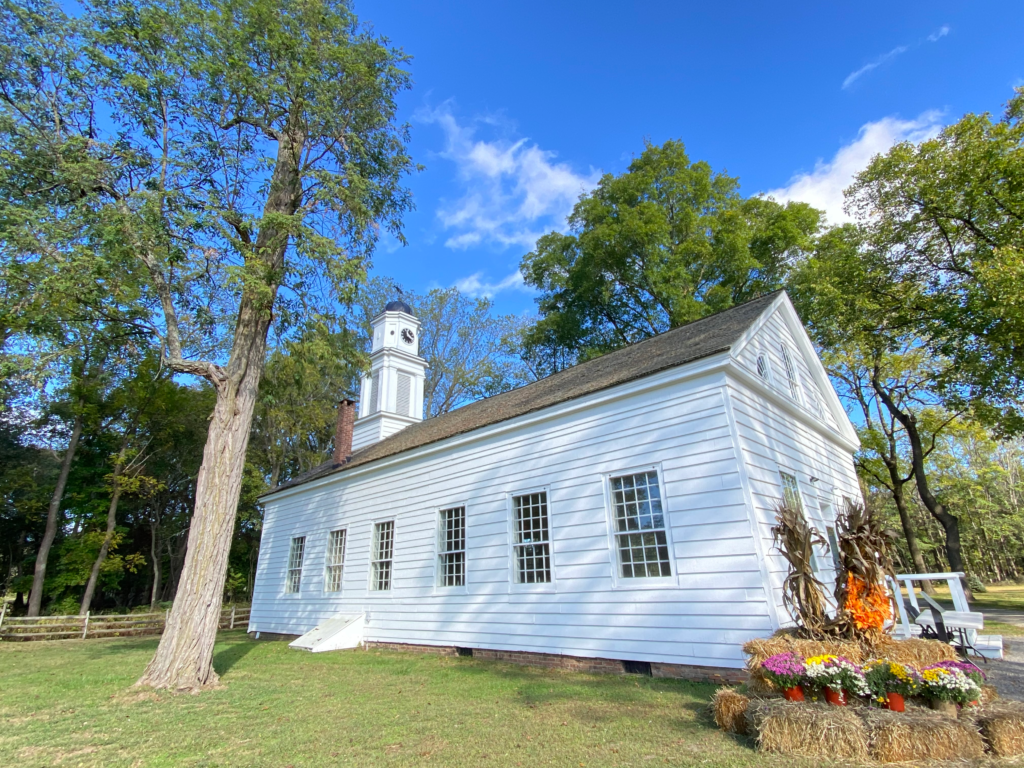
For upcoming events, kindly visit the The Historic Village at Allaire on social media.
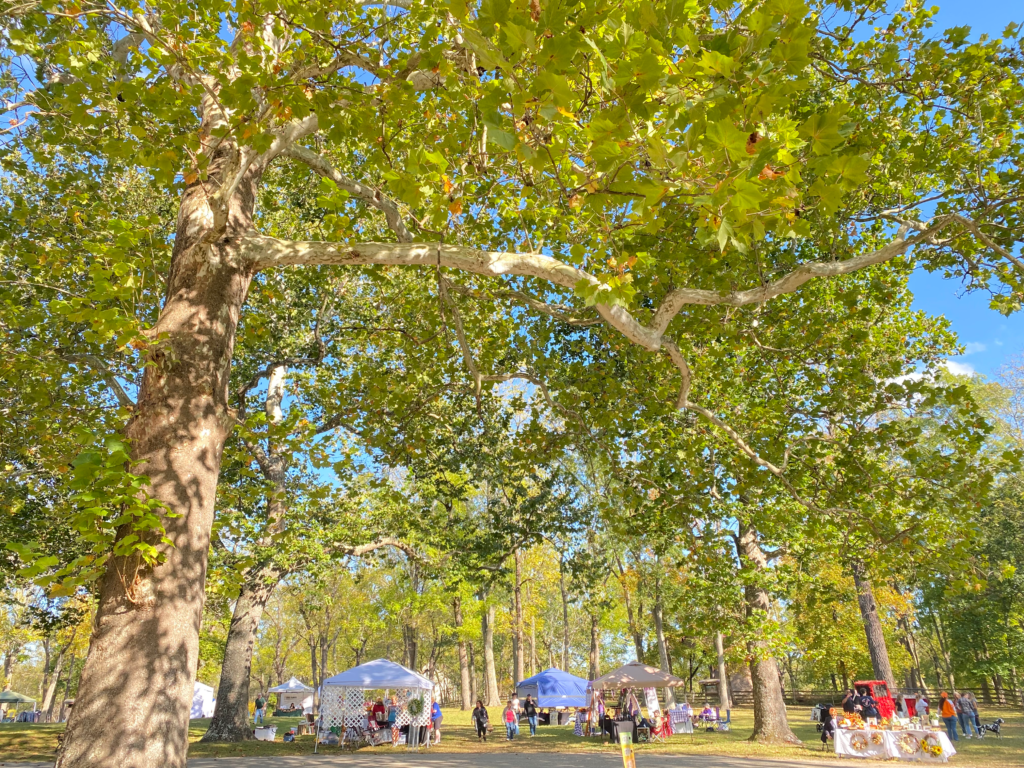
The scenic village grounds host events from April through December – visitors and new members are welcome!
Charles Dickens’ words have passed through the generations in his family and created the bond of a unique, shared experience. For those traveling to, or living in the UK, Mr. Dickens and his brother Ian are starting a “Dickens House Party Weekend” at The Royal, where Dickens stayed in 1838 while writing “David Copperfield,” on the Isle of Wight, February 27th-March 1st. The Dickens Fellowship, which is supported by Gerald and other family members, has chapters around the world and offers a connection for admirers of Charles Dickens. With the Dickens family’s dedication, A Christmas Carol is a gift from the past that delights us in the present and will continue to do so in the future.
Thank you to the Historic Village at Allaire for the wonderful experience!
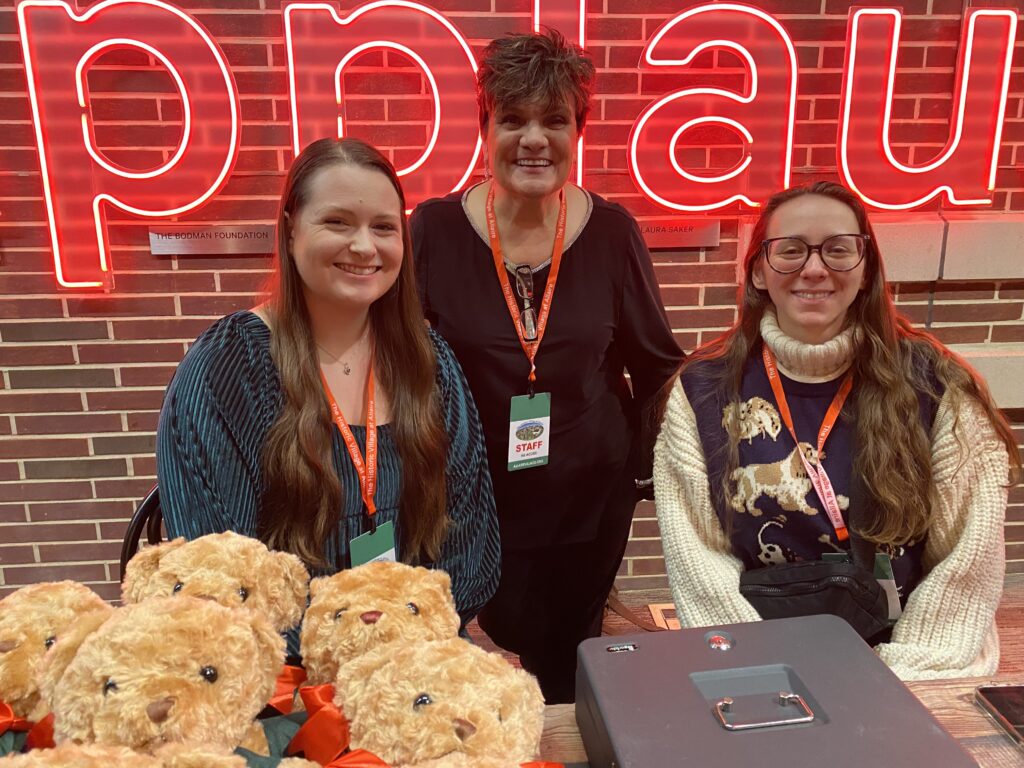
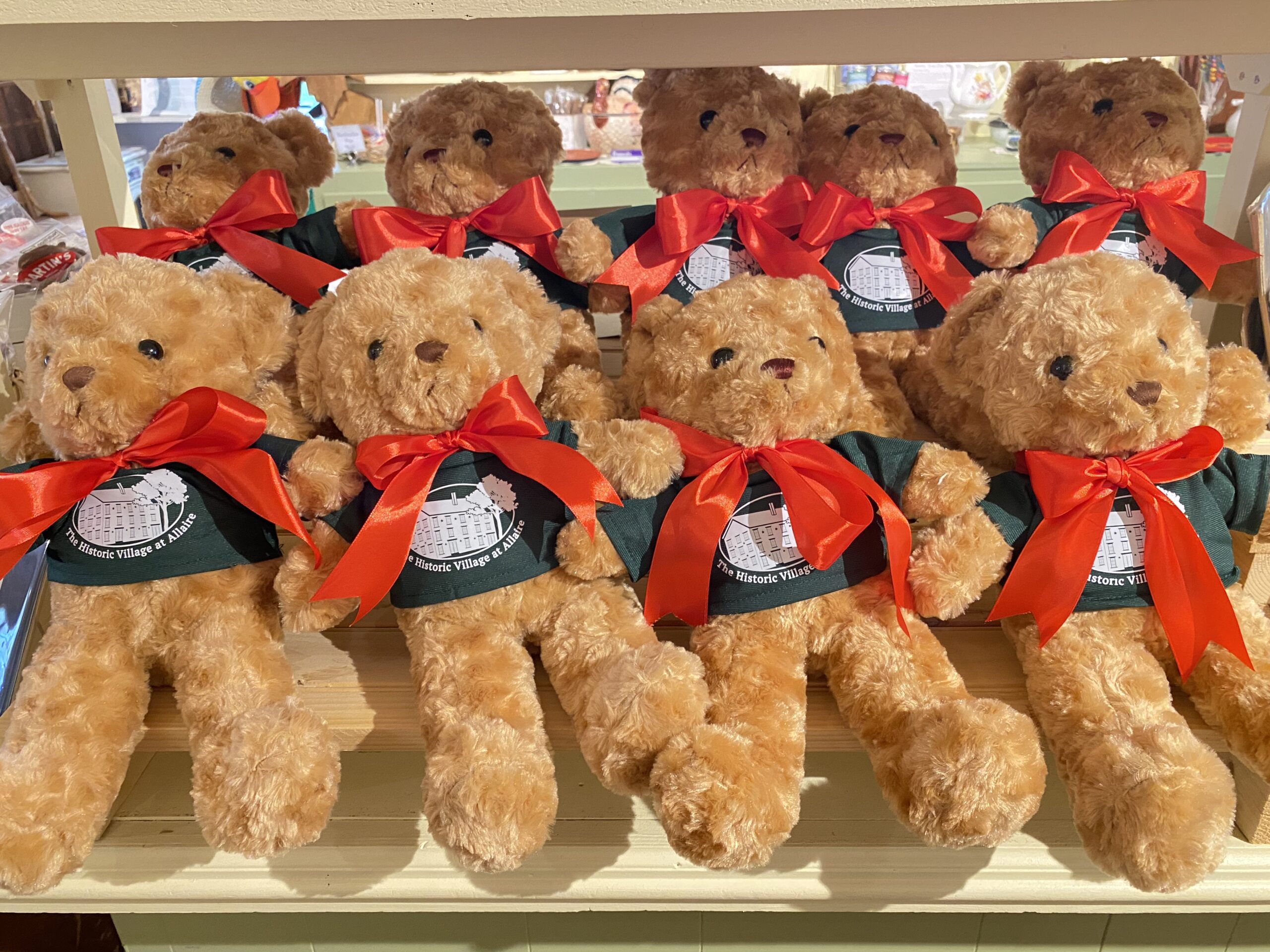
Ms. O’Connell and two members of the dedicated team of staff and volunteers of Allaire Village with fundraising Christmas bears from the General Store – definitely more fun to play with than wrapping paper!
(Sources: geralddickens.wordpress.com, arts.gov, www.charlesdickenspage.com, YouTube, Wiki)
“‘A Christmas Carol’ with Gerald Charles Dickens, The Historic Village of Allaire, and Two River Theater” All Rights Reserved ©2026 Kathleen Helen Levey