
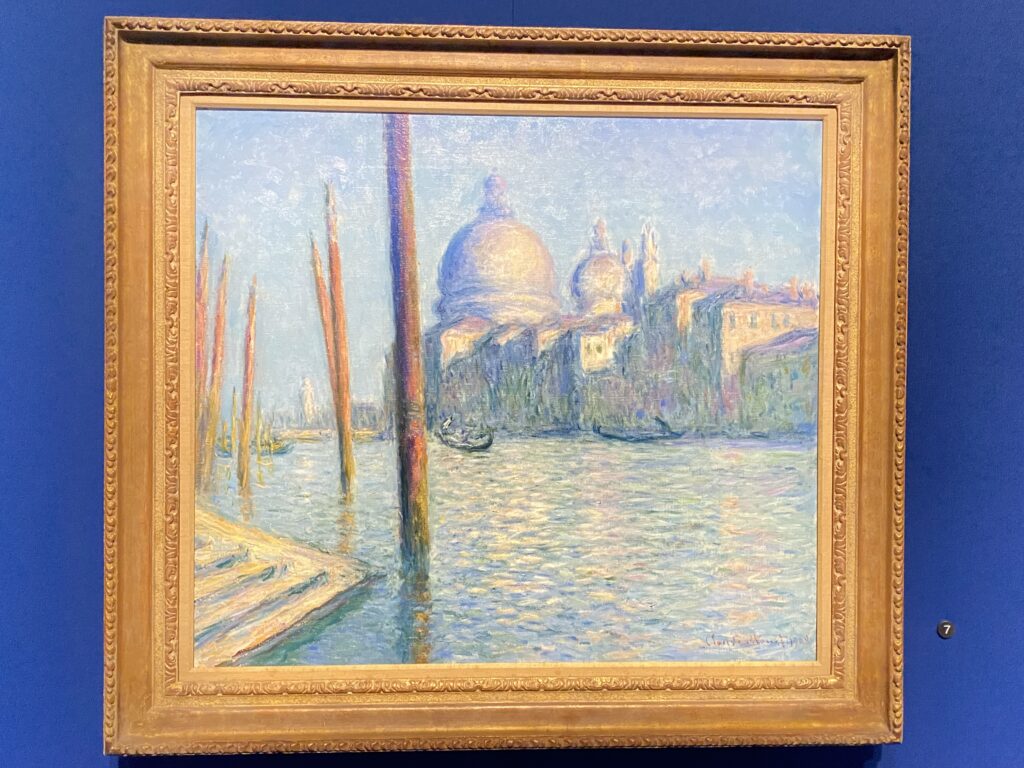
“The real subject of every painting is light.”
Claude Monet
Step out of grey skies and bitter cold into the luminous world of Claude Monet and Venice before it ends this Sunday, February 1st. Venice, also known as “La Serenissima (‘The Most Serene’),” casts its spell on visitors as they gaze in quiet joy at the beautiful works.
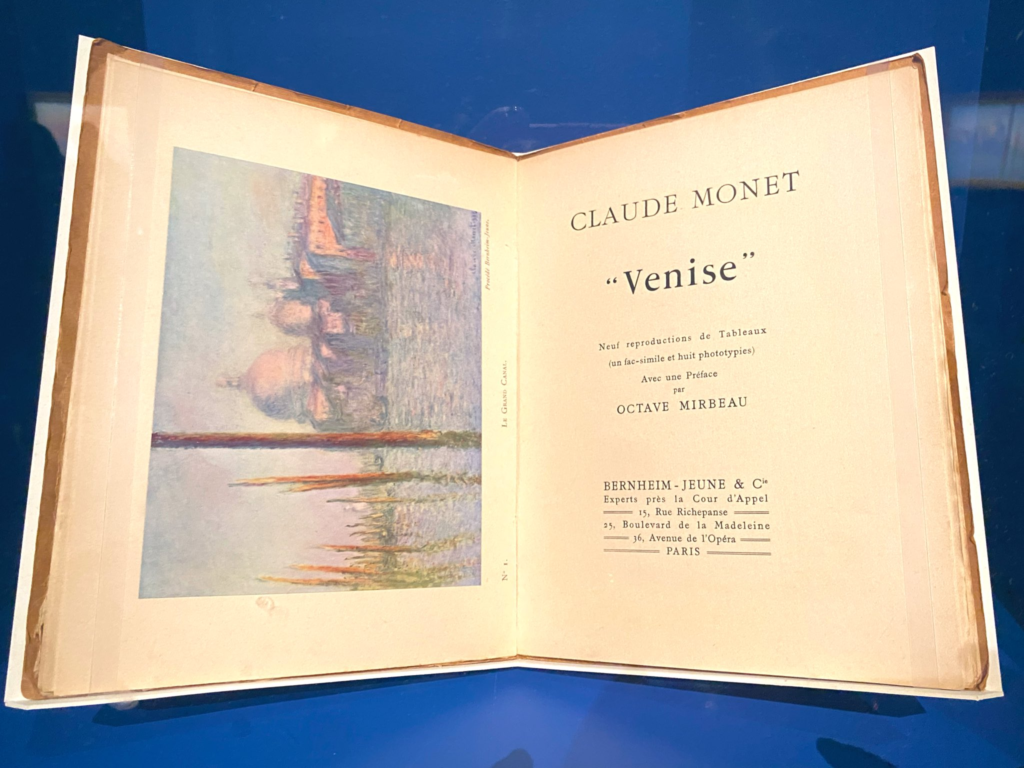
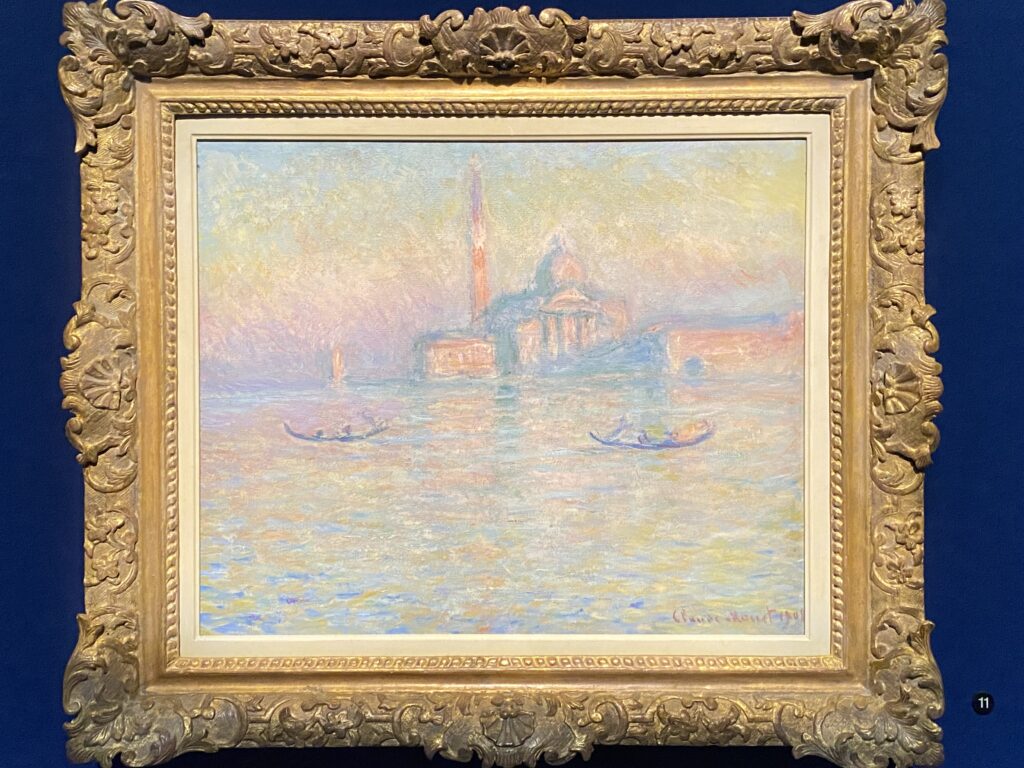
At the invitation of friends, Monet visited Venice with his wife Alice during the fall of 1908. Claude did not want to leave his beloved gardens at their home in Giverny, but the 68-year-old artist, who painted prolifically until his passing at 86 in 1926, became captivated by the city. Monet spent a lifetime trying to capture light, essentially trying to depict the elusive, as the exhibition notes, which often left him unsettled. By painting an exact moment of light, he was capturing time. His series of paintings, such as those of Venice’s island of San Giorgio Maggiore (“Saint George the Greater”), with its beautiful church, show both an eternal view and a “symphonic” passing of time as Jackie Wullschläger, one of his biographers, notes. The museum underscores this with serene, classical music. One might think Monet’s quest was unattainable, but 115 years later, each of his works in this beautifully curated exhibition continues to transfix museum-goers by transporting them to those moments in Venice. Visitors can hear the soothing lapping of the Grand Canal. Part of the beauty is seeing the faces of captivated viewers of different generations, lit by the luminous light that emanates from Monet’s canvases.
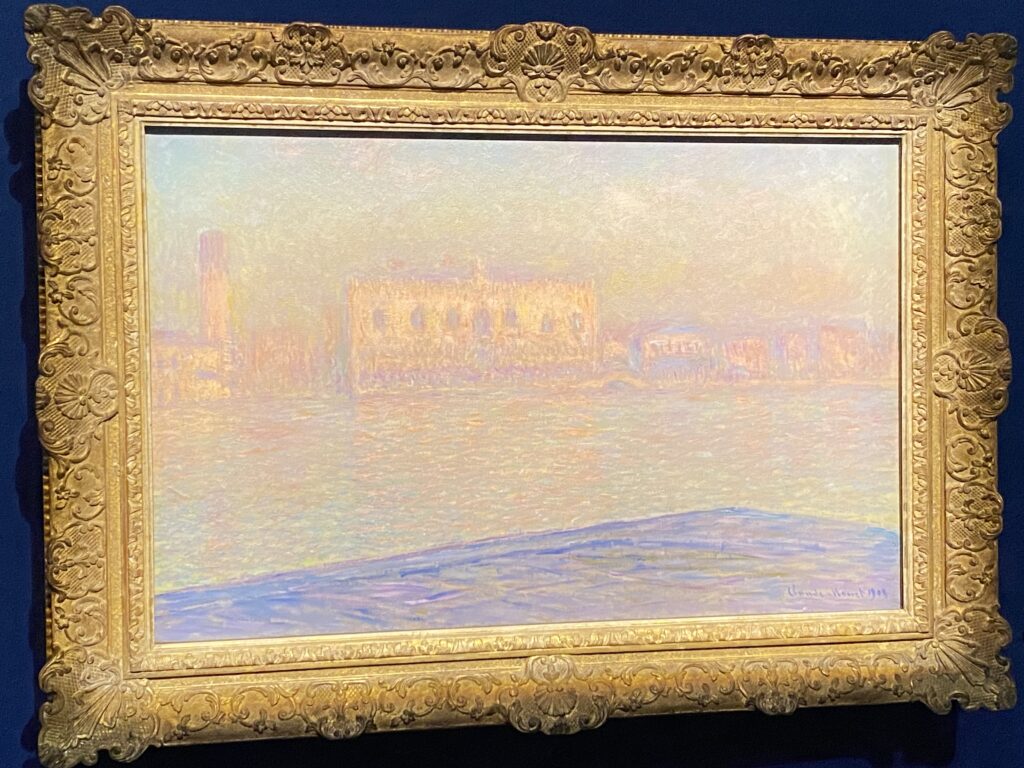
The Palazzo Ducale (“The Doge’s Palace,” below) represents the Venice that stands outside of time:
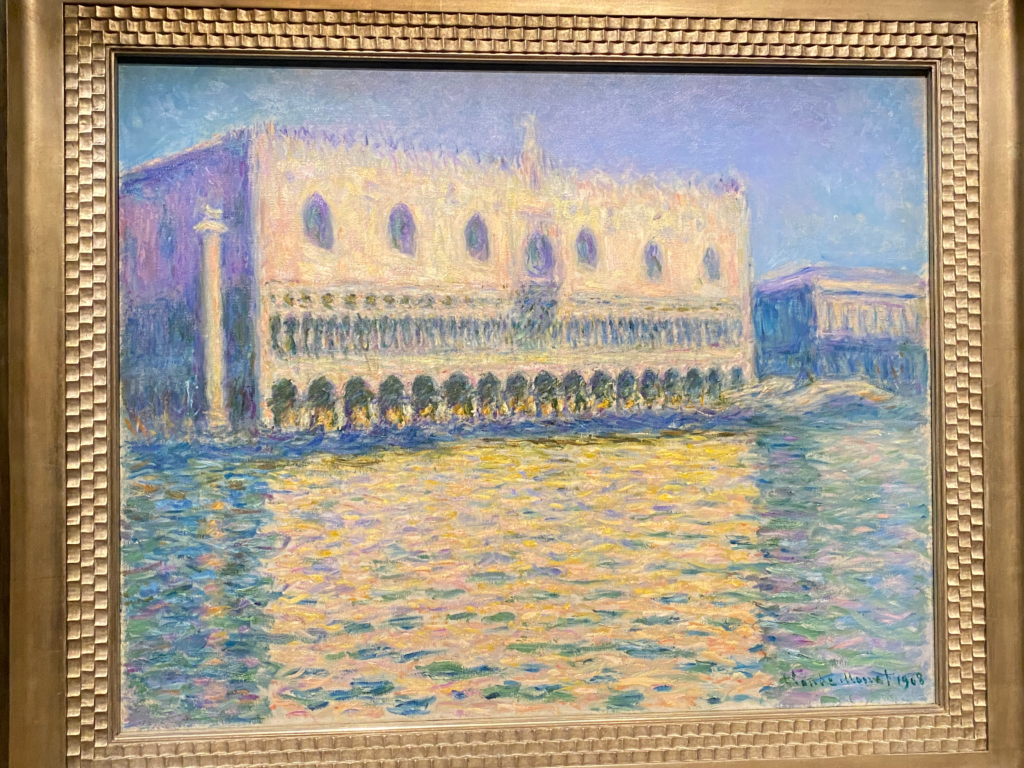
Monet was a proponent of painting en plein air (“in the open air/outdoors”), introduced to him by Eugene Boudin, his instructor at the Academie Suisse, who was also a mentor of Monet’s classmate and friend Jean Renoir. So taken with Venice, Monet began more paintings than he anticipated, working each morning with Alice beside him, but he had to complete them back in France. They planned to return to Venice together, but his wife Alice passed away, a second profound loss for Monet whose first wife Camille had also died. Grief kept him from returning to the paintings until 1911, when he completed them in Alice’s memory. What is incredible about Monet’s accomplishment is that cataracts had begun to cloud his eyesight, but he managed around this until finally acquiescing to surgery on one eye at the age of 82.
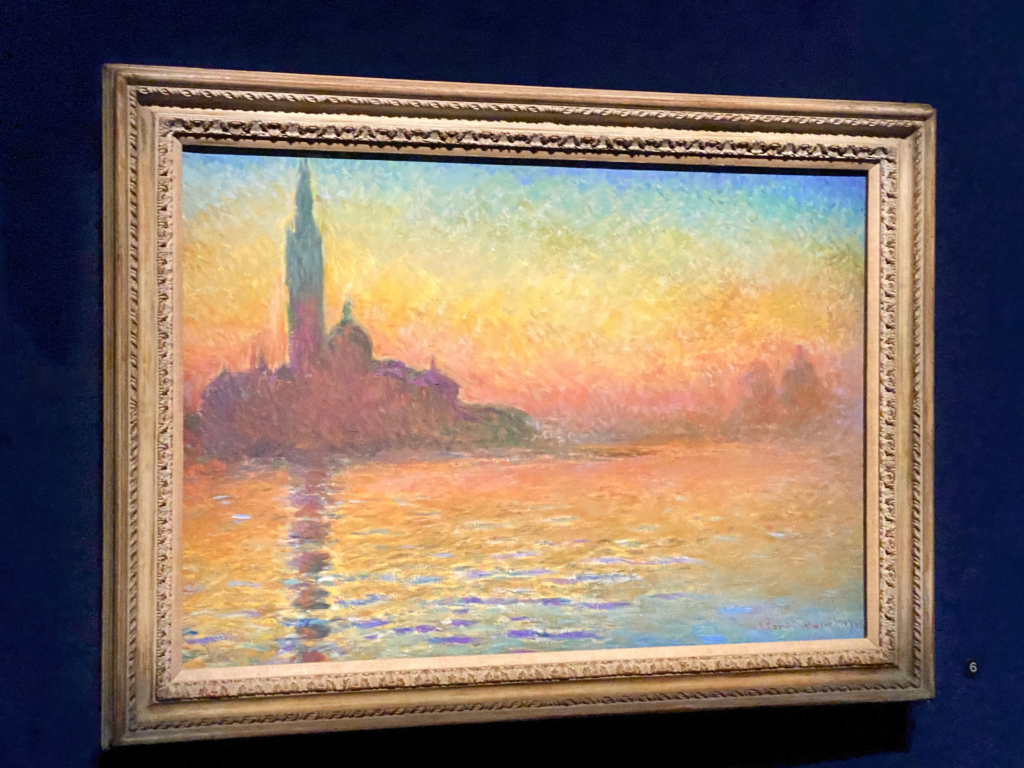
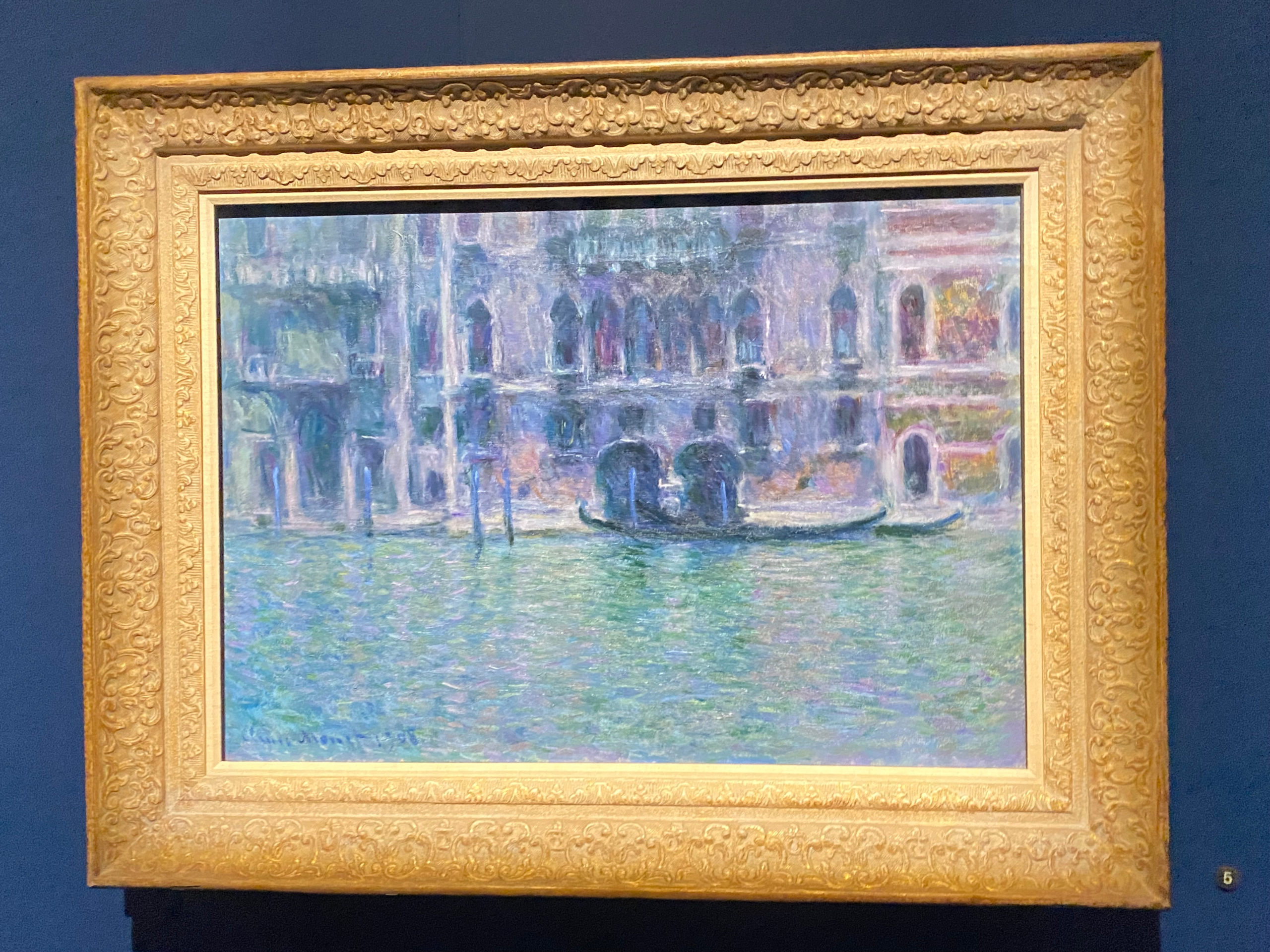
Though it is difficult to believe now, the Paris Salon often rejected Monet’s early art for exhibition, as did London’s Royal Academy, both deeming it too radical. Monet struggled for years. Art critics ridiculed the works of the first exhibition by Monet and his peers in 1874. Louis Leroy noted that Monet’s “Impression, Sunrise (1872)” was just an impression, a work left unfinished like those of the other artists. This painting, which launched Impressionism and abstract art, did not sell. Ultimately, it was the first sales of his art in the United States that led to Monet’s financial stability. By the time of his trip to Venice, Monet had achieved critical and commercial success.
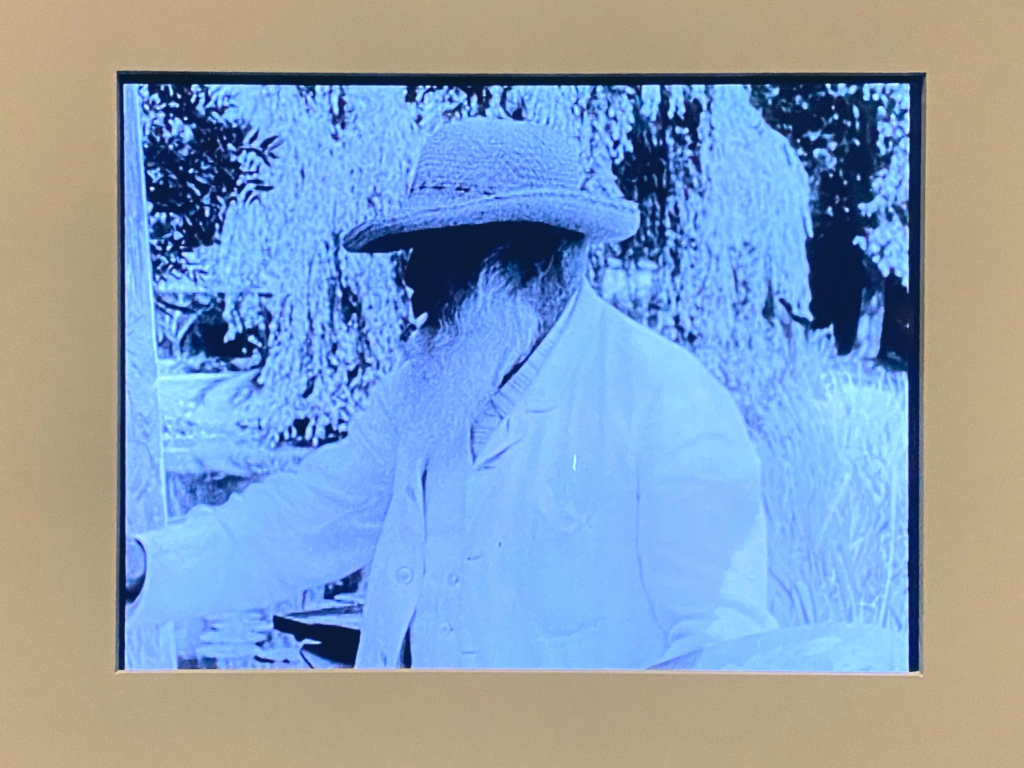
Monet, 75, at work in the gardens of Giverny from Sacha Gurtie’s 1915 film “Those of Our Land,” which included Renoir, Degas, and Rodin.
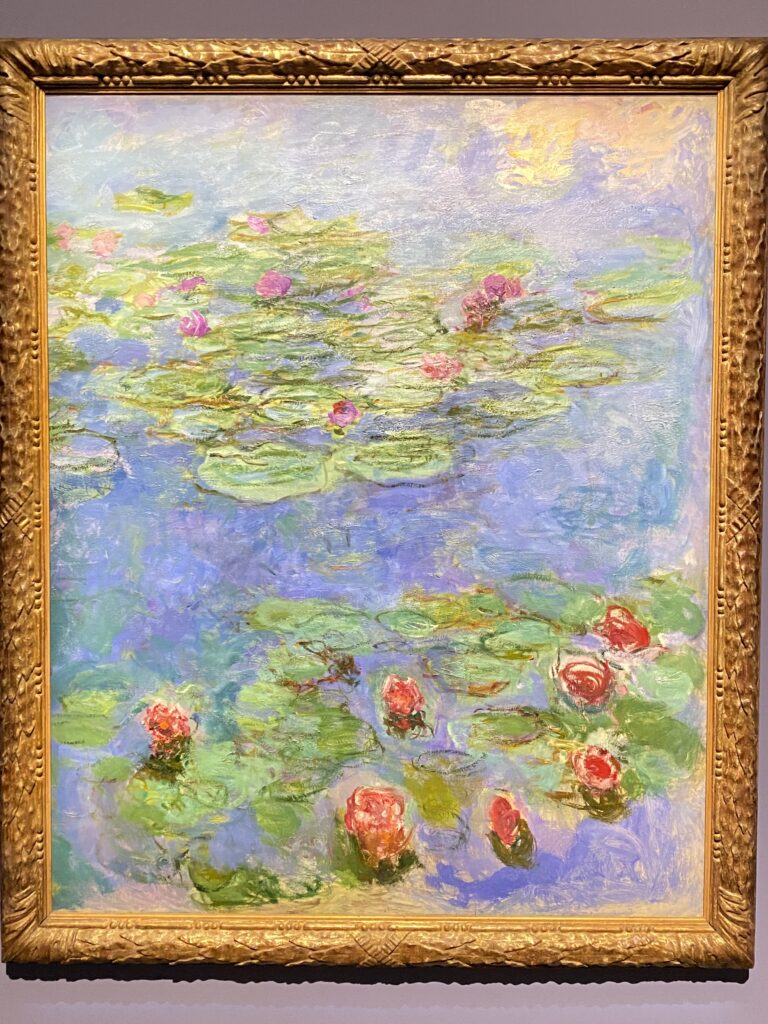
A sublime treat in the exhibition, a Monet water lily painting:
Just when one might think life couldn’t get any better, there is the incredible surprise of Canaletto. Canaletto (Giovanni Antonio Canal), also painted en plein air in the 1700’s, which distinguished his work from the studio-based art of the time:
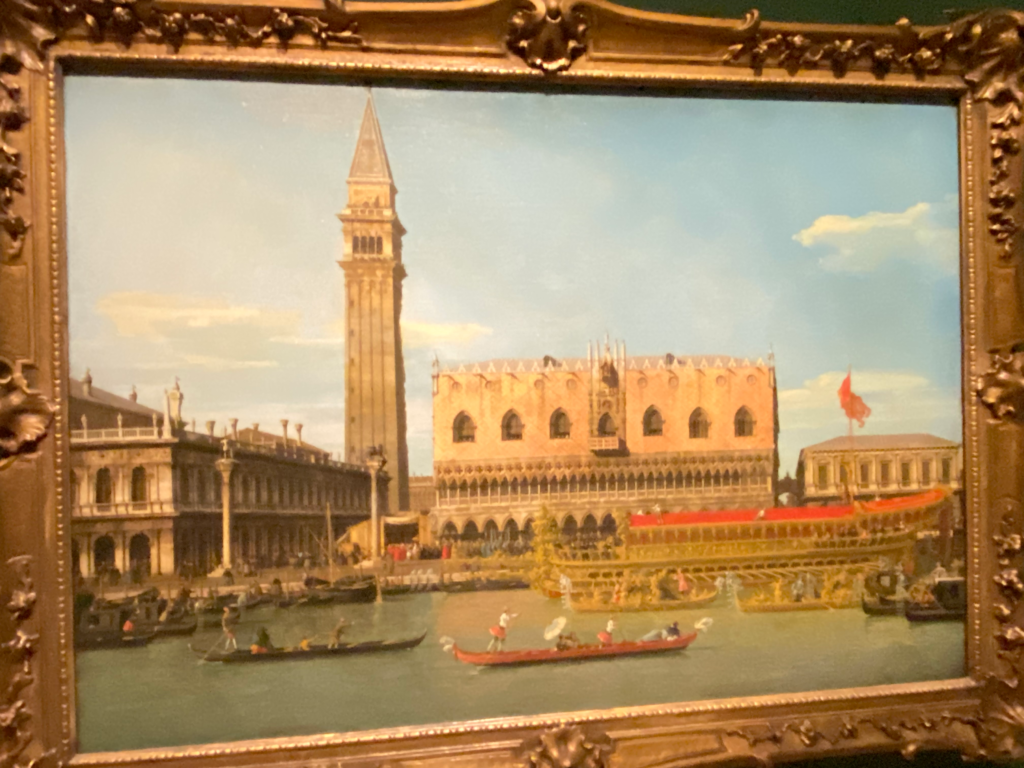
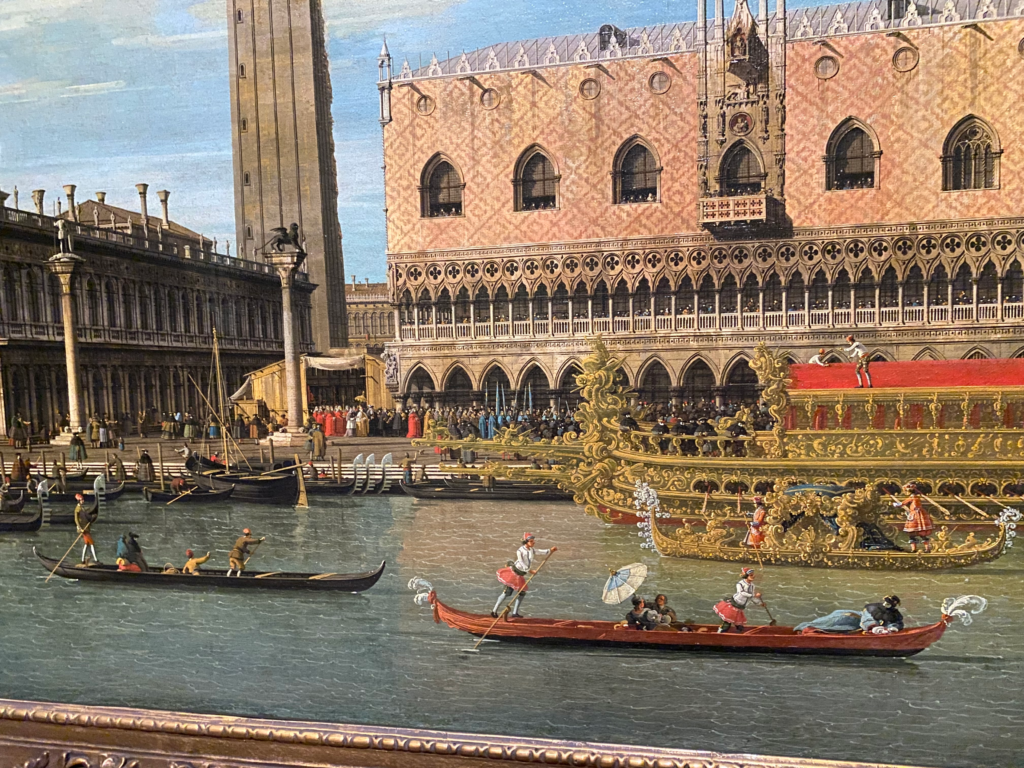
“The Bucintoro at the Molo on Ascension Day,” Canaletto, 1745, and some details (below), created using a camera obscura, a precursor to the modern-day camera.
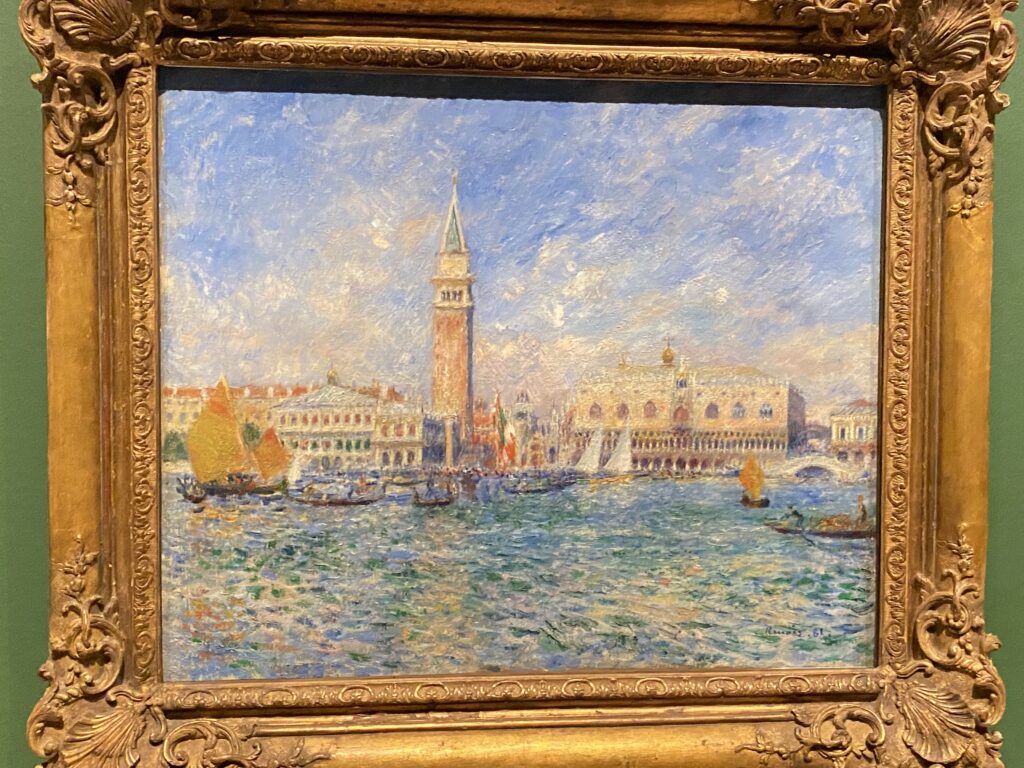
The exhibition includes the Venice-inspired work of other renowned artists like Jean Renoir, Monet’s friend, classmate at the Academie Suisse, and co-founder of Impressionism, who suffuses his paintings with warmer light and greater detail. (An exhibition of Renoir’s drawings was recently at The Morgan Library.) To enhance Venice’s serenity, Monet included few people despite the crowds of tourists, while Renoir depicted more vibrant scenes. Renoir noted that sometimes as many as six other painters were working alongside him. Each artist may have had the same view, but made it his or her own.
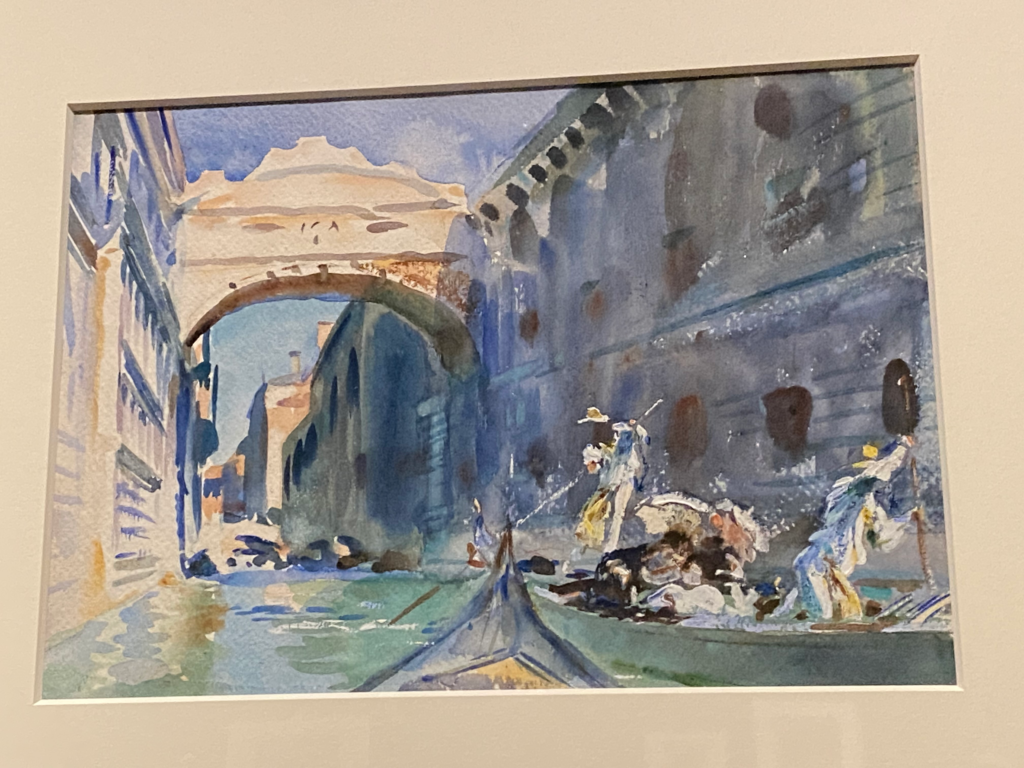
John Singer Sargent, whose works are in the museum’s own impressive collection, had a recent exhibition at The Met. He shared everyday scenes of Venice in watercolor paintings such as “The Bridge of Sighs,” 1903-1904:
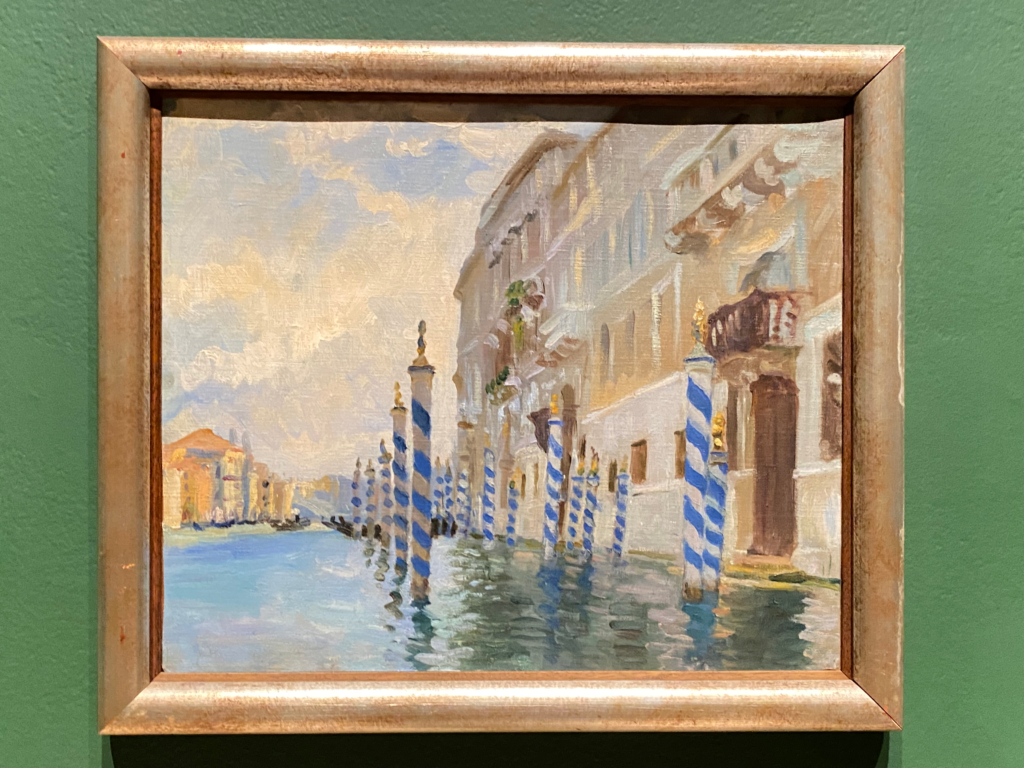
“Canal View, Venice,” Jane Emmet de Glehn, ca. early 1900s; the artist was a friend of John Singer Sargent:
Paul Signac, a younger artist whom Monet encouraged:
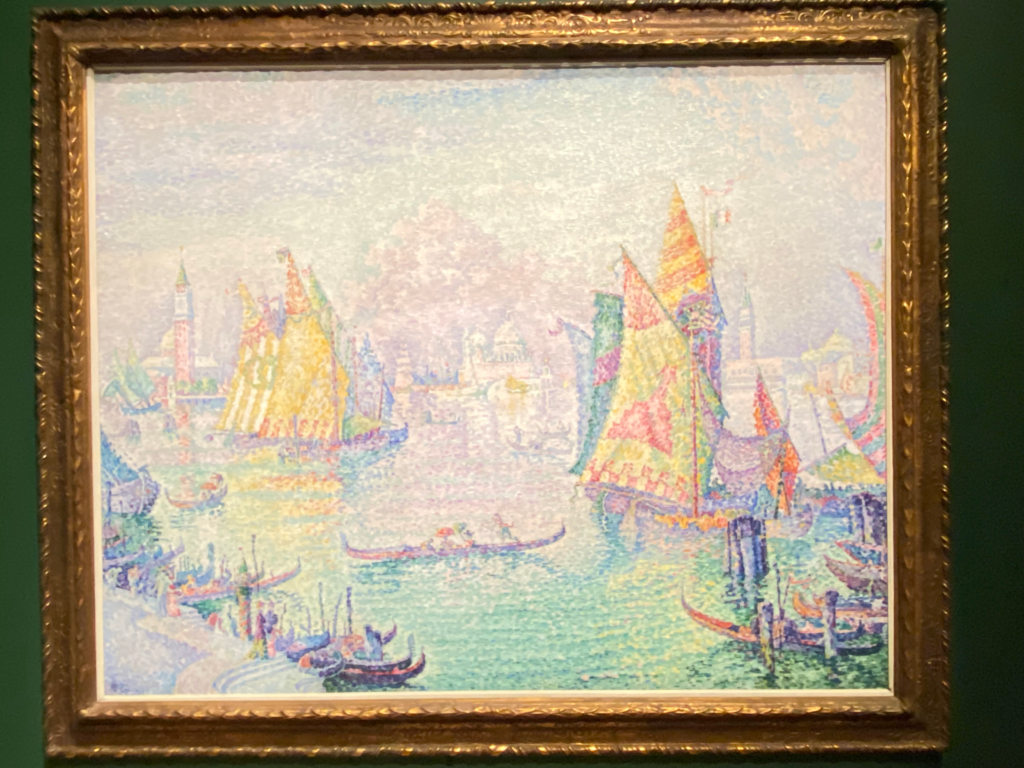
“The Lagoon of Saint Mark, Venice,” Paul Signac, 1905
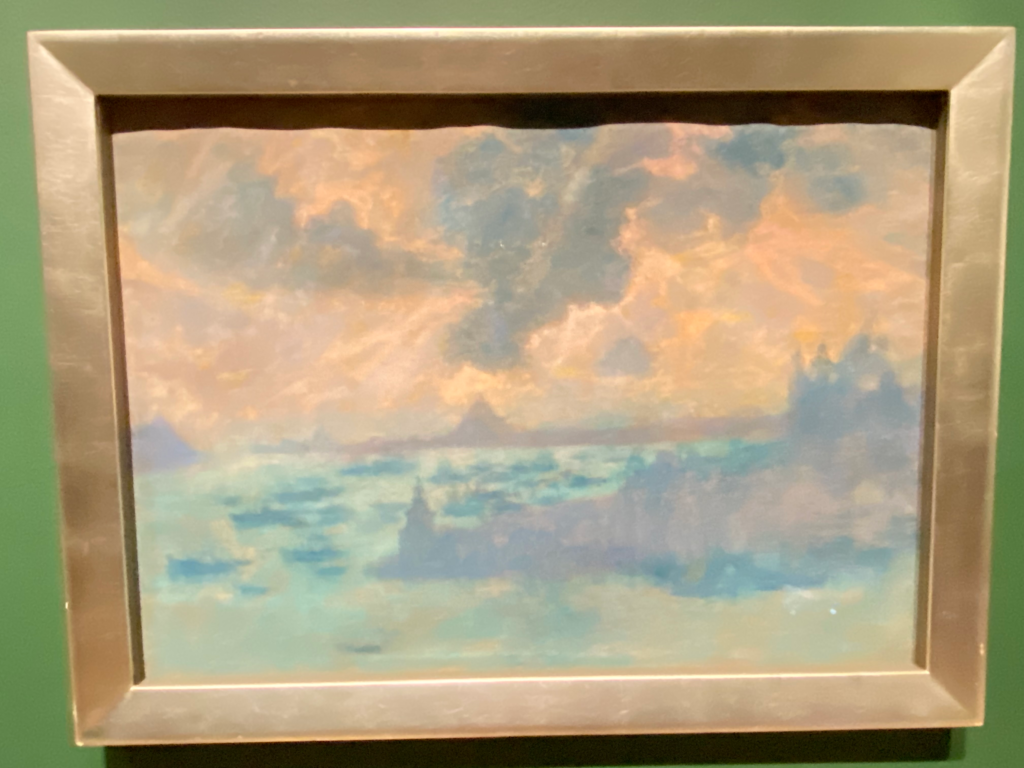
“The Grand Canal at Night,” Lucien Levy-Dhurmer, 1895, Symbolist style
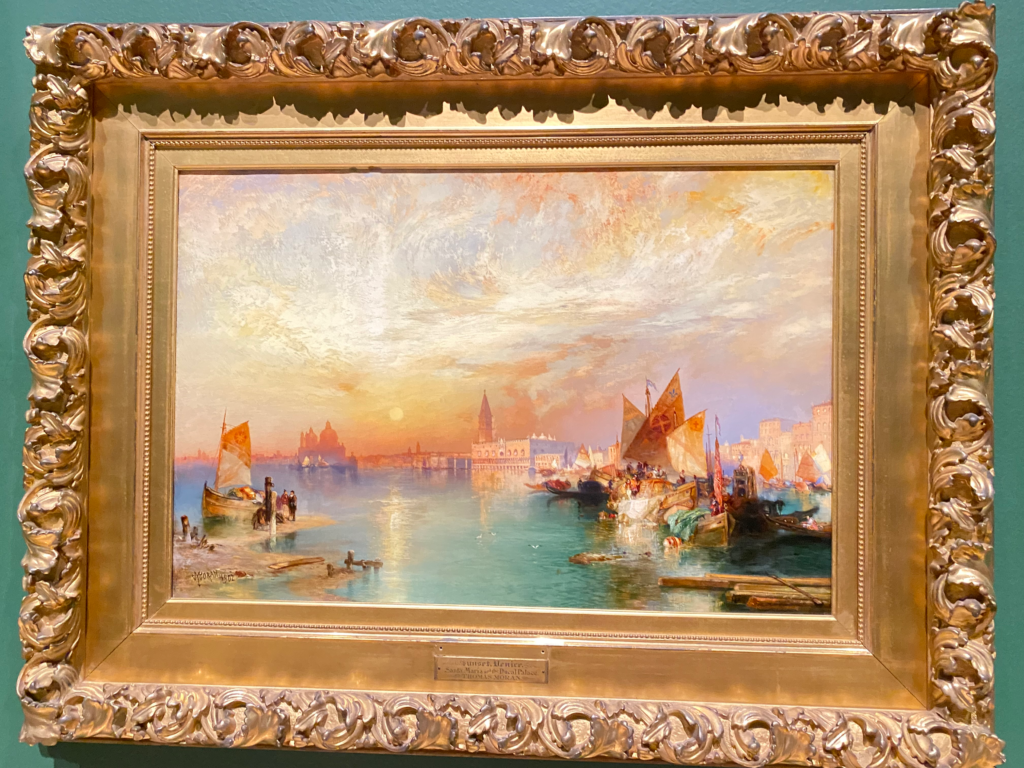
“Venice, Sunset behind Santa Maria,” Thomas Moran (American), 1898
In a rotunda-like room and alcove towards the end of the exhibition, a few children were sketching on the carpeted floor. Parents proudly toted adorable newborns in baby carriers, which added to the overall charm. Monet drew visitors from the Metro area, and internationally, including his native France.
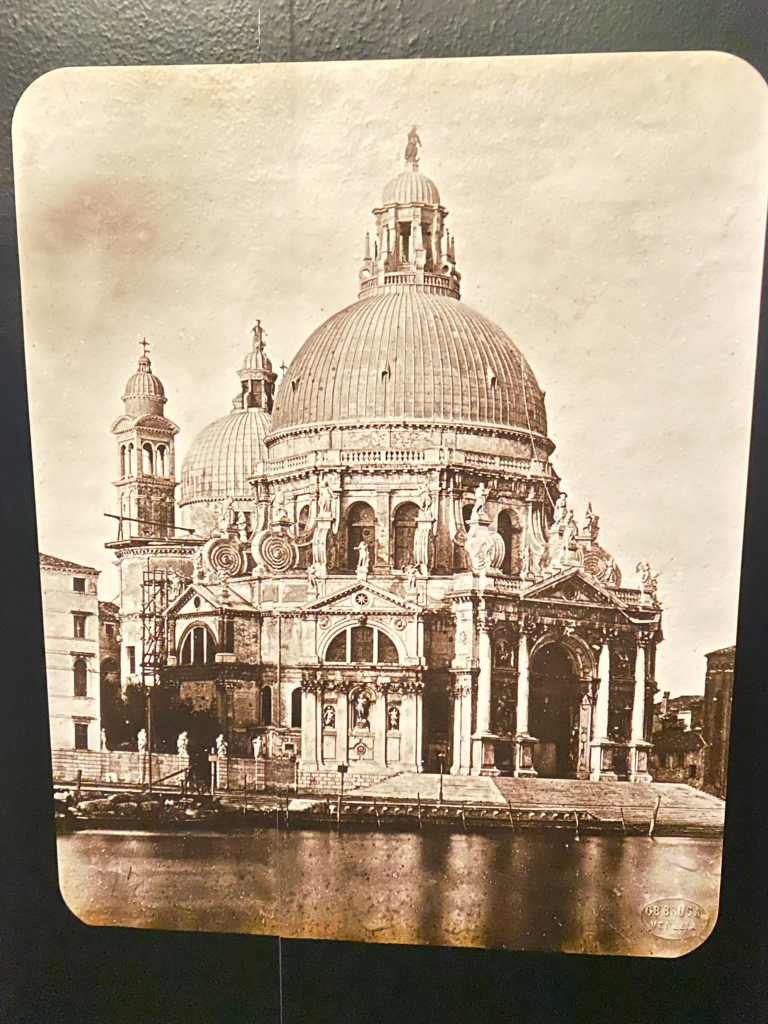
The Church of San Giorgio Maggiore of the same era from the Brooklyn Museum’s noteworthy and extensive lantern-slide collection
As an aside, one of the perks of visiting NYC museums is enjoying the stylish clothing of international visitors, though the city that hosts Fashion Week each February touts its own inestimable style. Such style is notable in the American gallery next to Monet on the museum’s fifth and top floor.
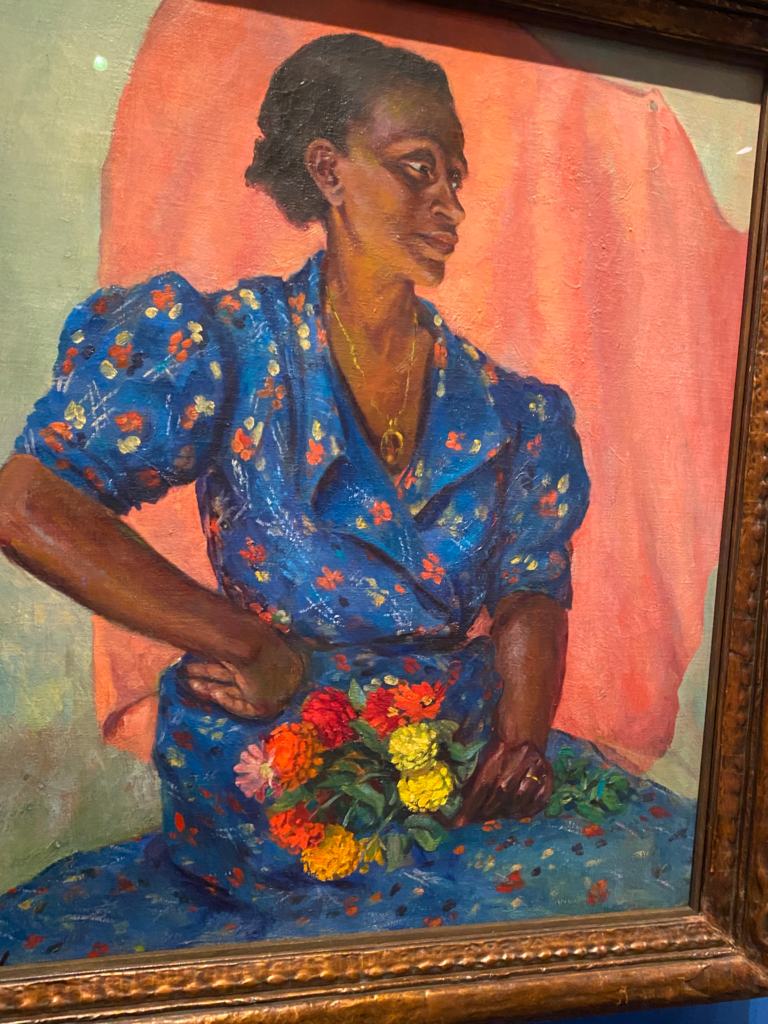
“Woman with a Bouquet,” Laura Wheeler Waring, 1940
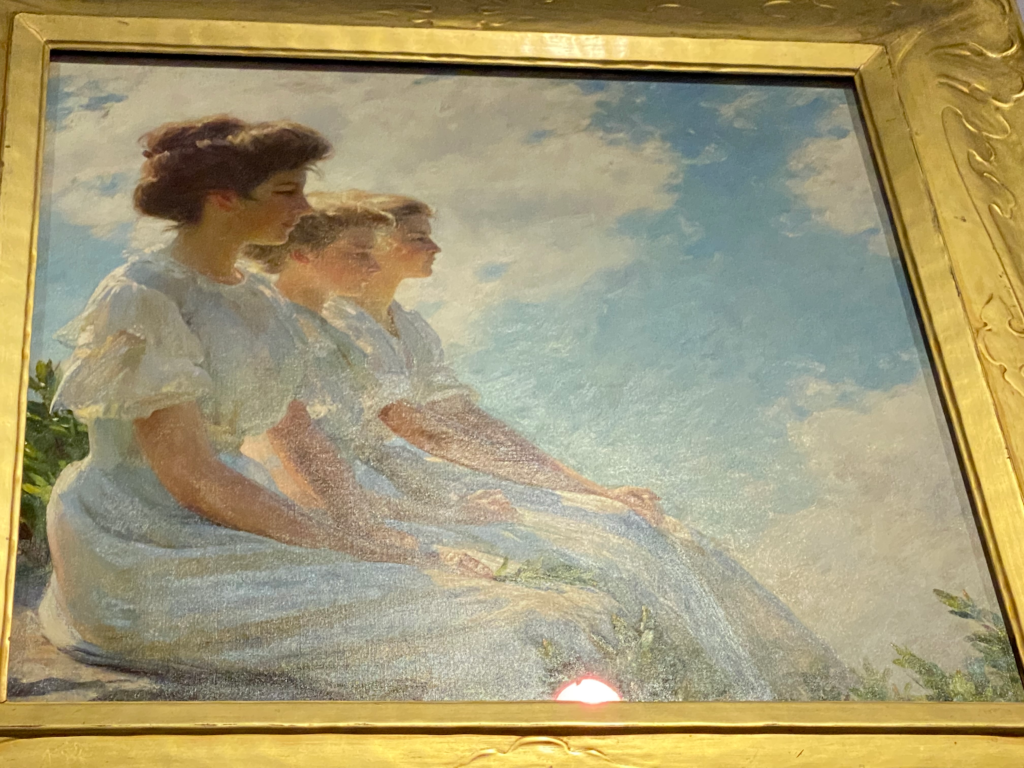
”On the Heights,” Charles Courtney Curran, 1909, oil on canvas
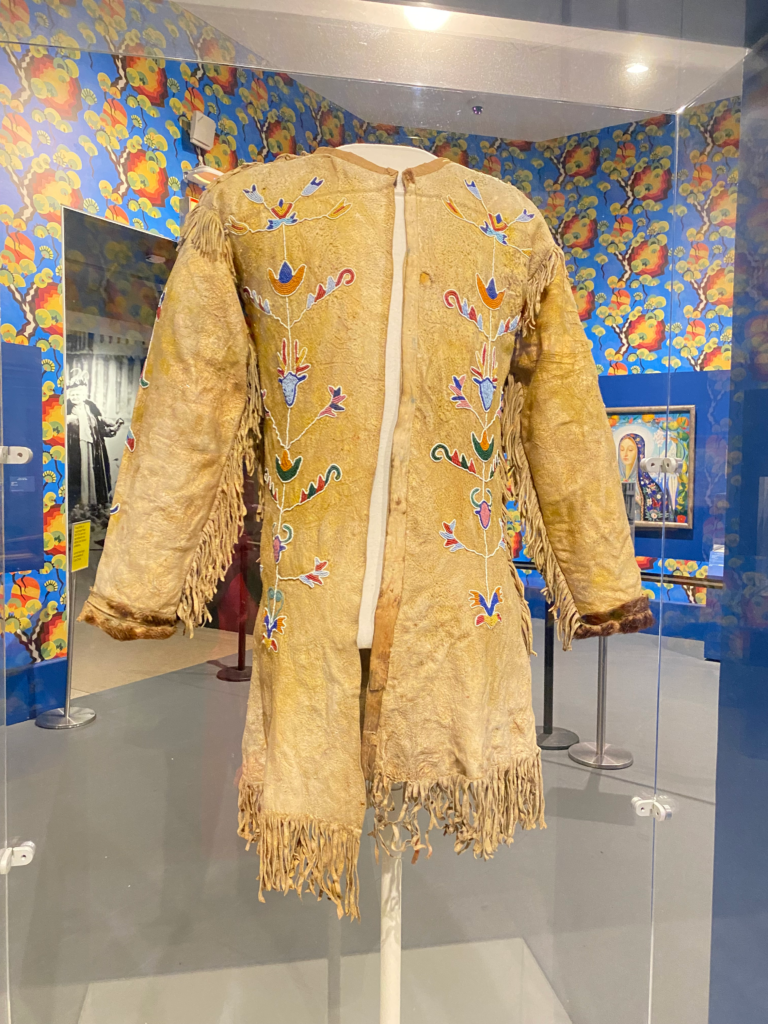
“Man’s Shirt Cut in European Style”, late 19th century, Red River Metis Artist or Eastern Dakota Artist (Manitoba Plains, Canada, or Northern Plains, Dakota) (North America)
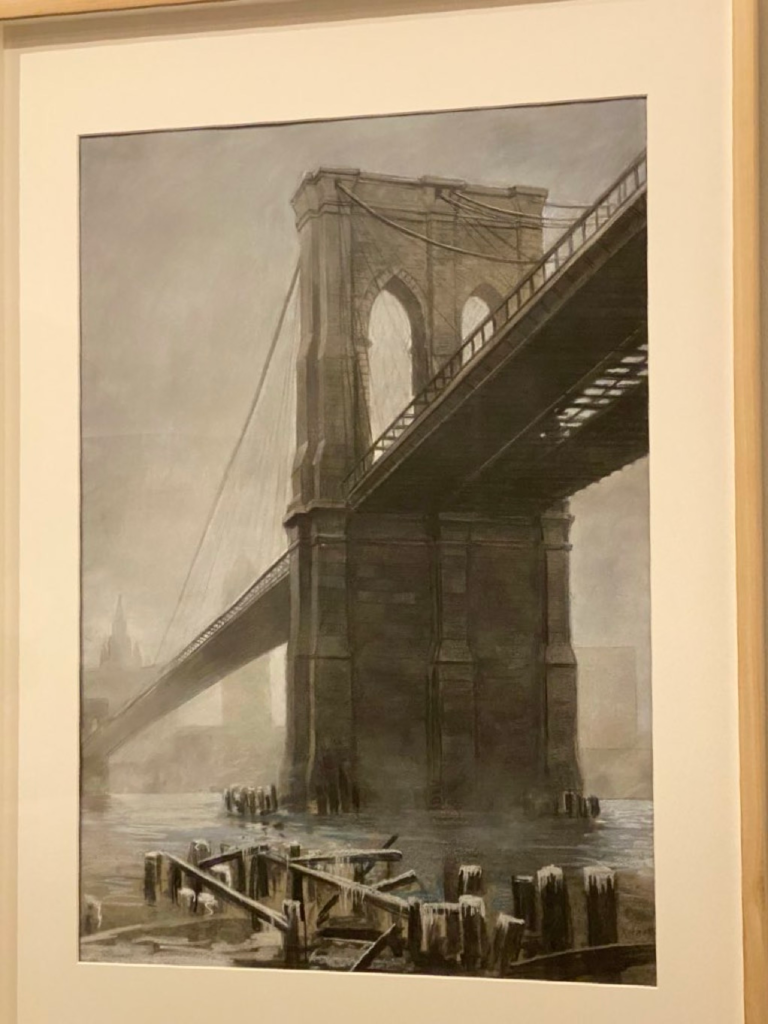
“Brooklyn Bridge,” Richard Haas, 1985, charcoal and pastel; iconic bridge designed by John A. Roebling
Also in the American gallery is Christian Marclay’s “Doors,” a film created with movie clips of characters going in and out of doors, which was thought-provoking and fun. (Having only seconds to “name that film” was an unexpected delight. Spotted Ocean City-Philadelphia’s Grace Kelly several times.)
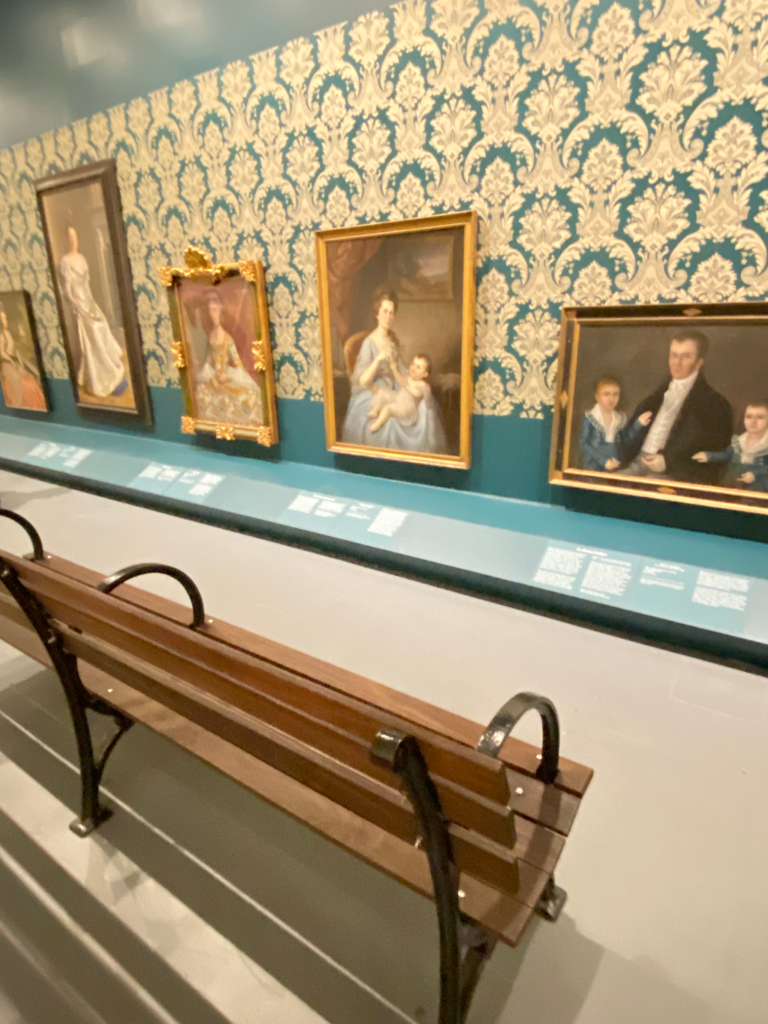
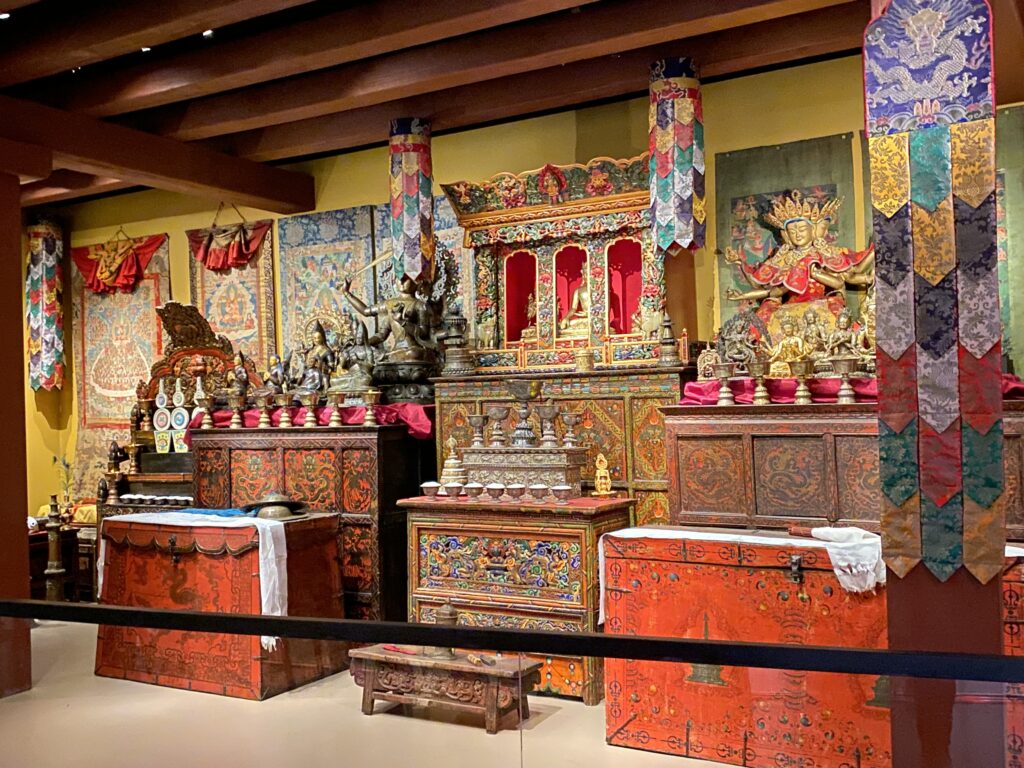
Partial view of the Rubin Museum Tibetan Buddhist Shrine Room
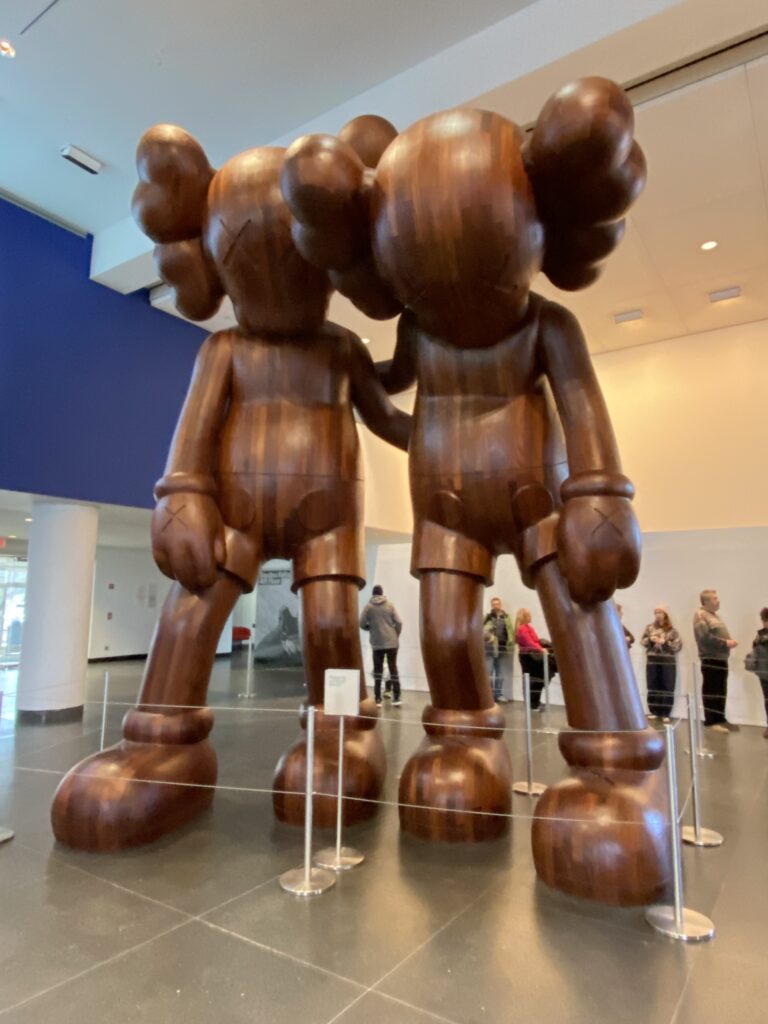
From the get-go, visitors know that the museum is fun. The wooden pals in the Rubin Pavilion by Brooklyn-based artist KAWS (Brian Donnelly), originally from Jersey City, serve as hosts in the sunny atrium. Visitors are greeted with smiles by courteous and helpful staff members. The museum is meant for enjoyment and is not just a checklist of cultural must-sees. Floral wallpaper, park benches, and interactive exhibitions underscore this. The Beaux-Arts style building, now being refurbished, is a work of art, designed by the renowned architectural firm McKim, Mead & White, 1895-1897.
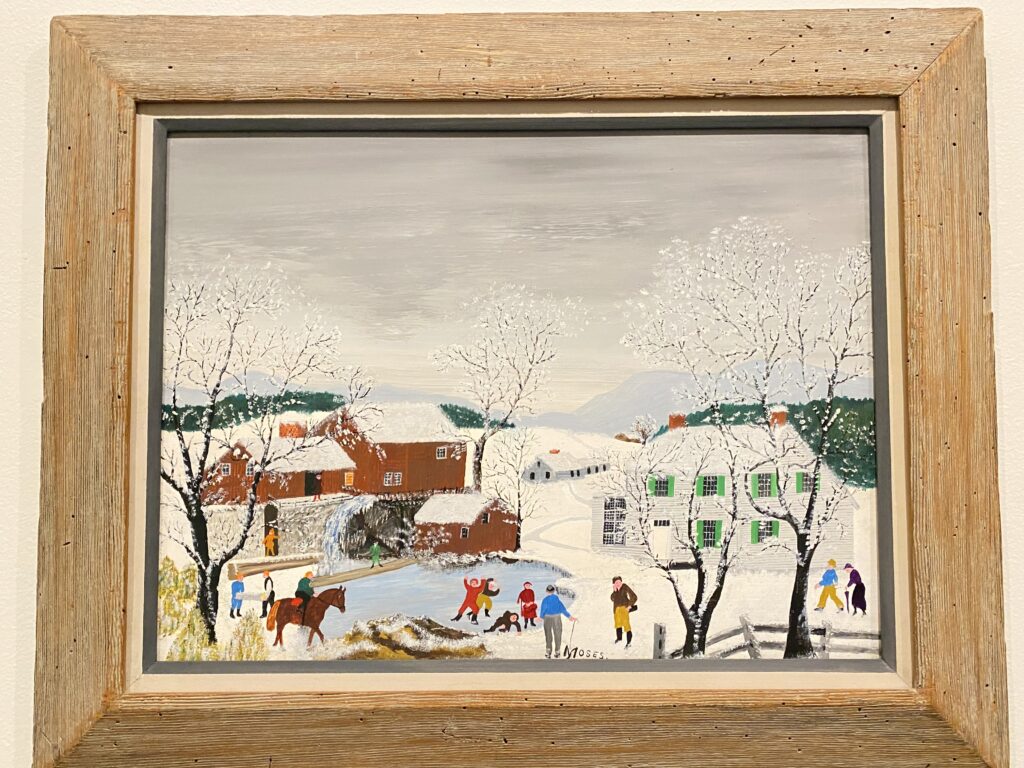
A charming greeting warms the wait of those in the coat check line who have come in from a wintry cold like that depicted in ‘Early Skating,” Anna Mary Robertson Moses (Grandma Moses), 1951:
Must tempt the crash of WordPress with so many beautiful works (!):
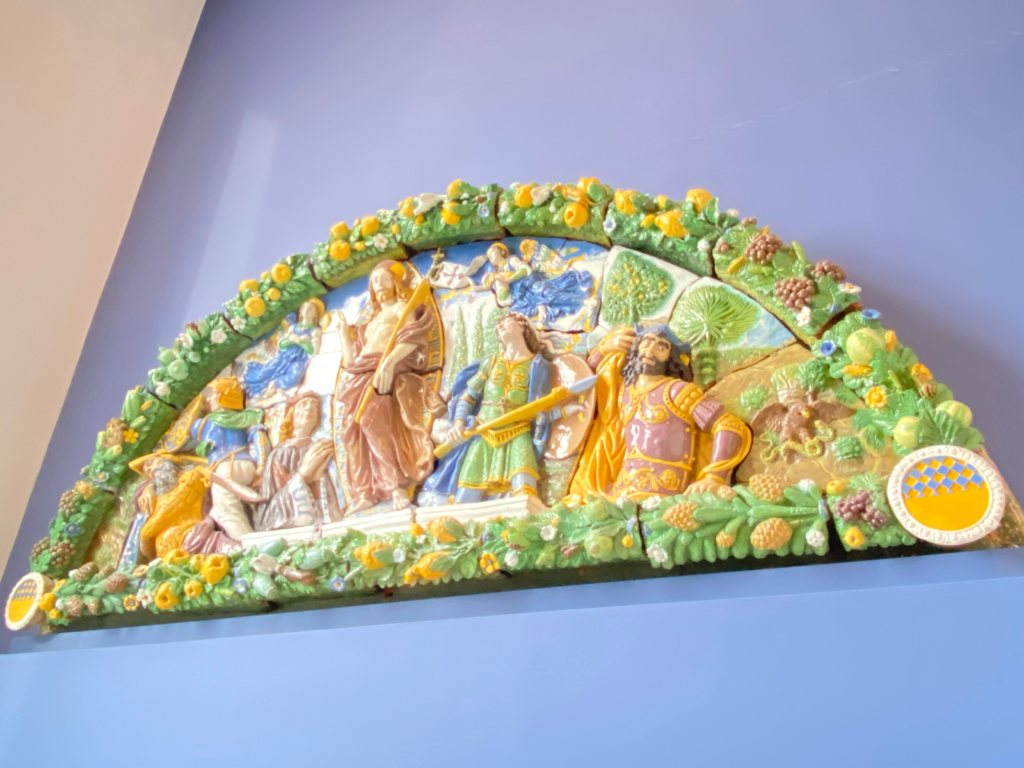
“The Brooklyn Della Robbia” or “The Resurrection of Christ,” Giovanni della Robbia (Italian), 1520, glazed terra cotta, restored by the museum in 2015
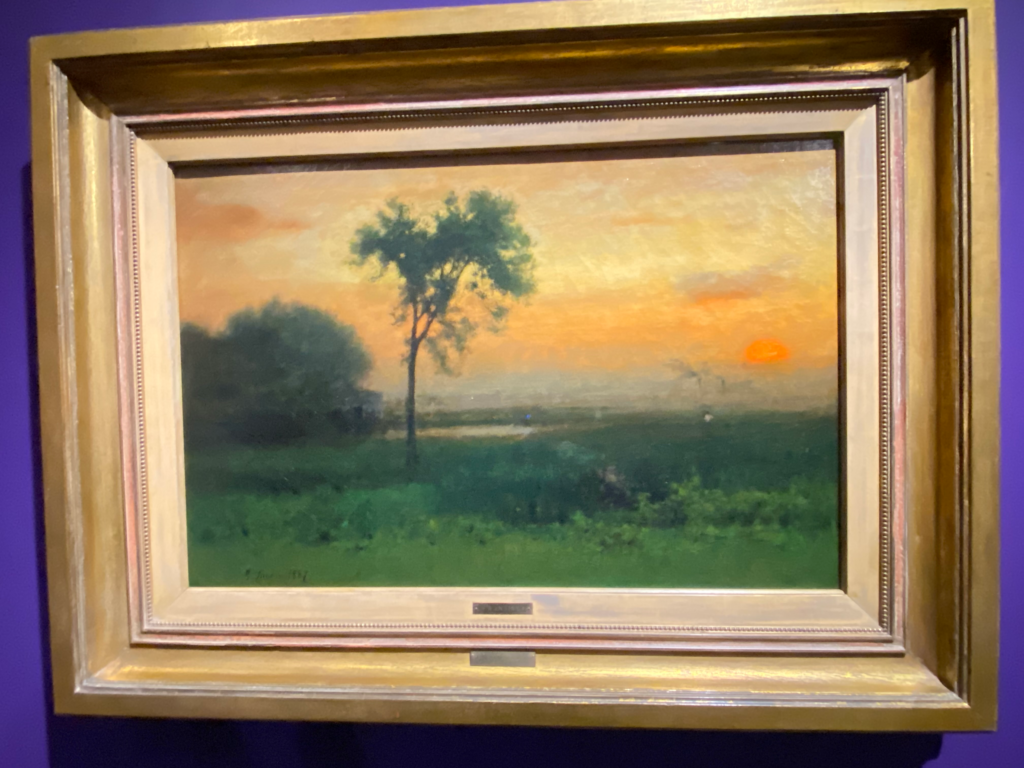
George Inness, “Sunrise,” 1887, Montclair, NJ; his paintings are also on view at the Montclair Art Museum and The Clark Institute with a visit to the latter to see his works described in “Clicking at the Clark”.
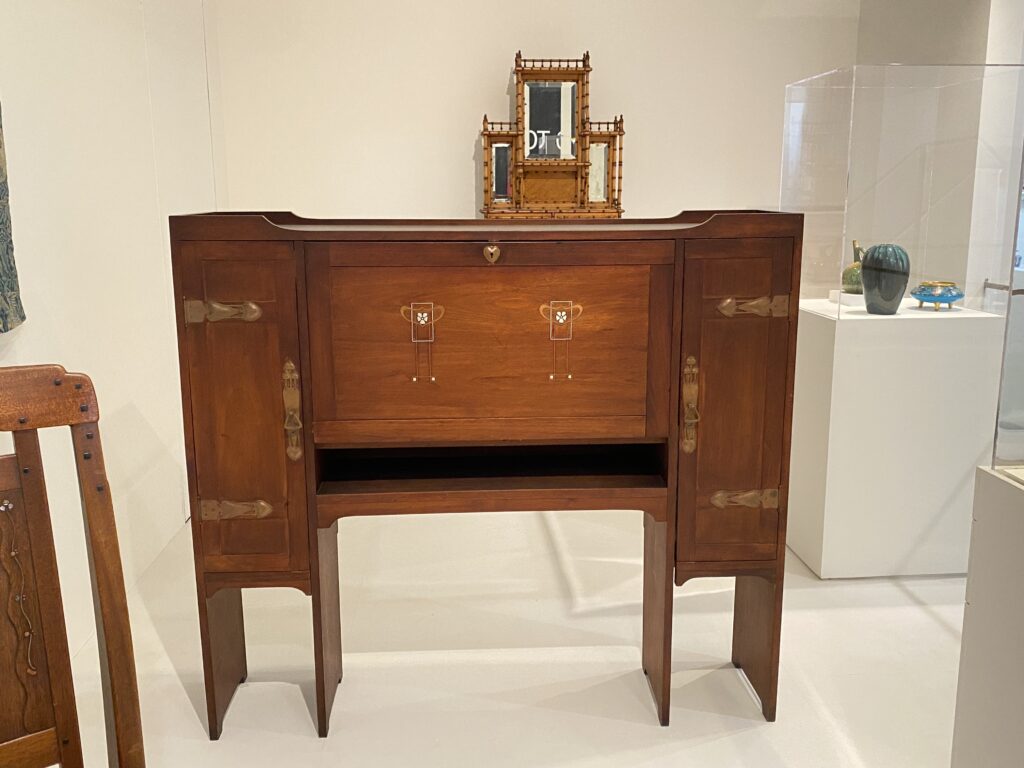
Walnut desk, Gustav Stickley, 1904, whose works are also on view at The Stickley Museum at Craftsman Farms, Parsippany-Troy Hills, NJ
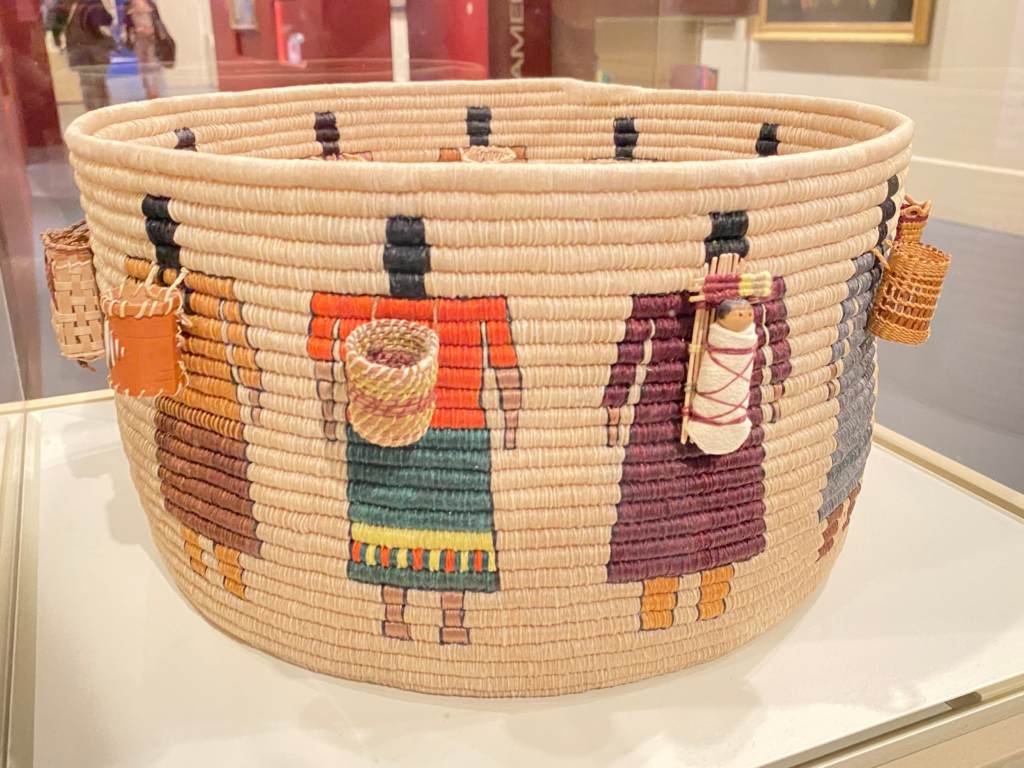
Cultural Burdens Basket, Carol Emarthle-Douglas, 2016, hemp, waxed linen thread, reed, hickory
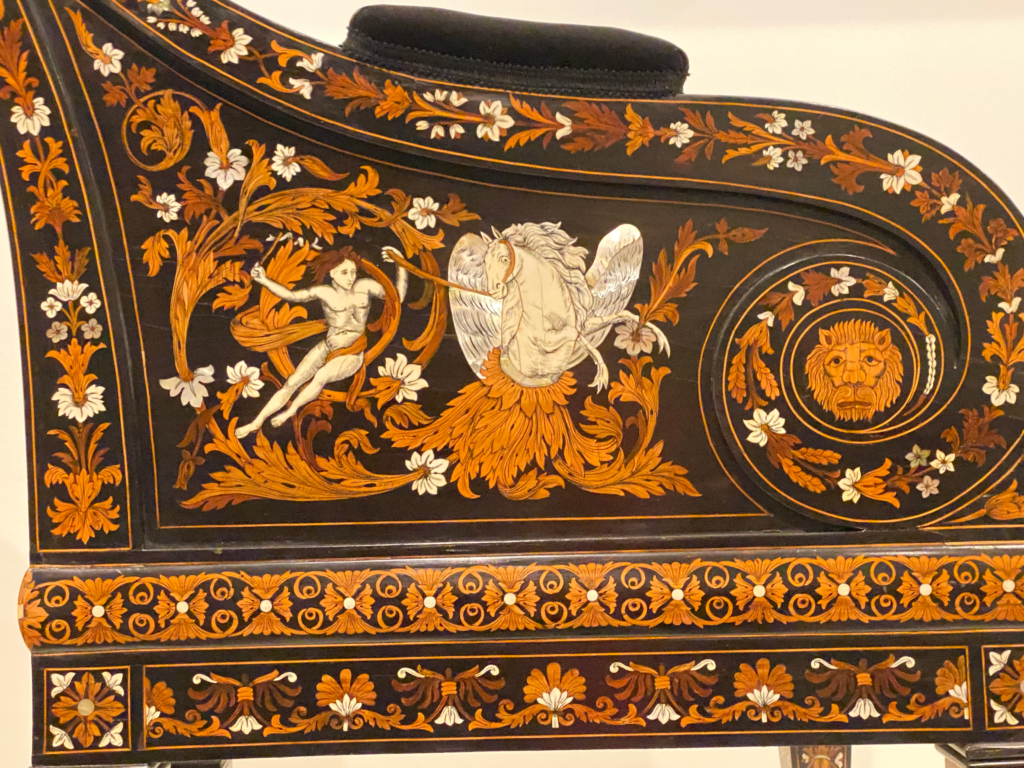
Mahogany chair, Charles-Honore Lannuier, 1700’s, with shimmering details, inspired by Ancient Greek klismos chair
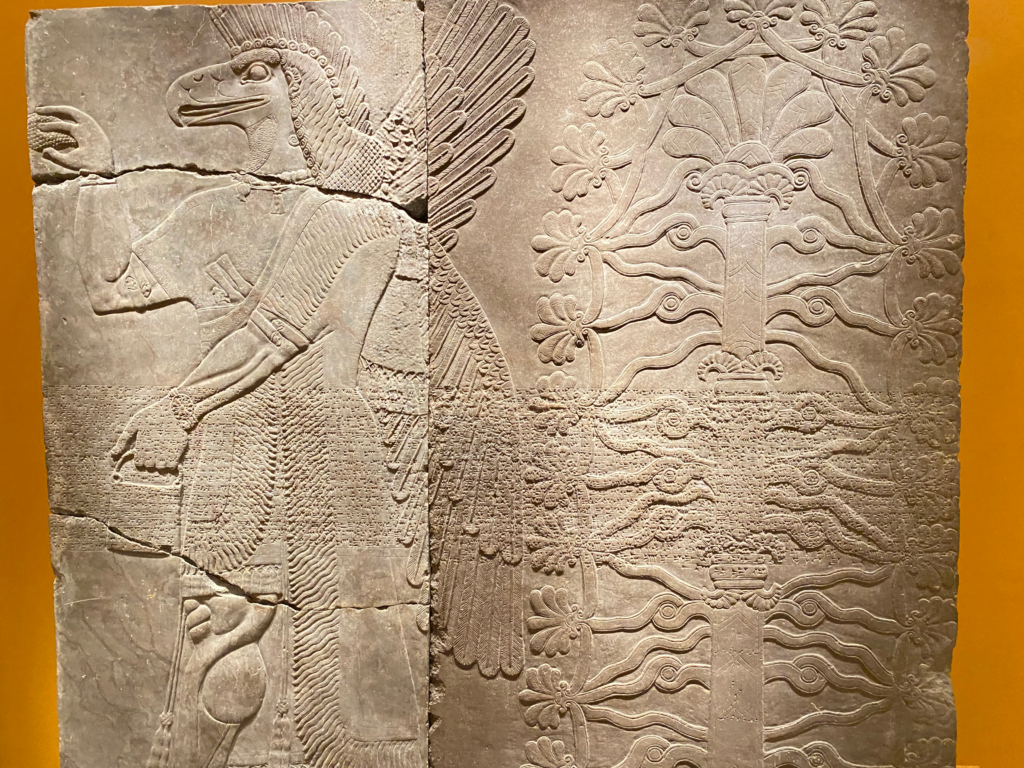
Apkallu-figure (a Mesopotamian demi-god) between Two Sacred Trees, Neo-Assyrian Period, circa 883-859 B.C.E., from the palace of Ashur-nasir-pal II at Nimrud; the reliefs were “meant to awe” visitors.
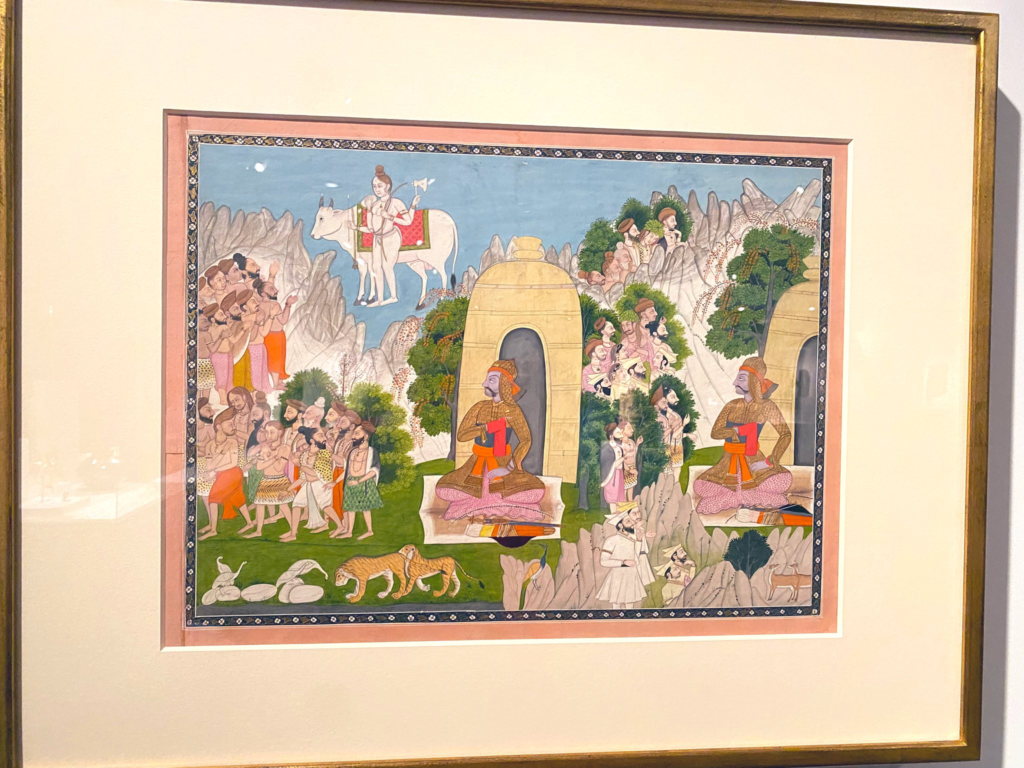
“Ajuna’s Penance” from the “Muhabharata,” ca. 1825-40, India
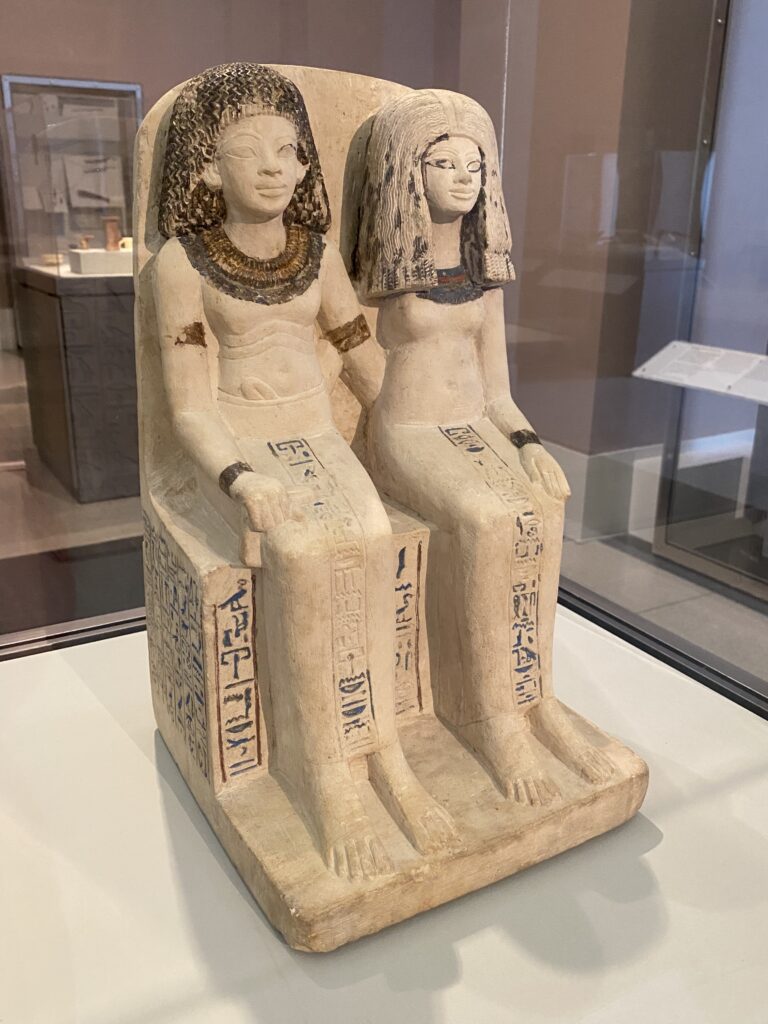
Pair Statue of Nebsen and Nabet-ta, New Kingdom, Dynasty 18, reign of Thutmose IV or Amunhotep III, circa 1400-1352 B.C.E. (The label notes that Nebsen was “a scribe in the royal treasury” and Nebet-ta was “a singer in the temple of the goddess Isis”.)
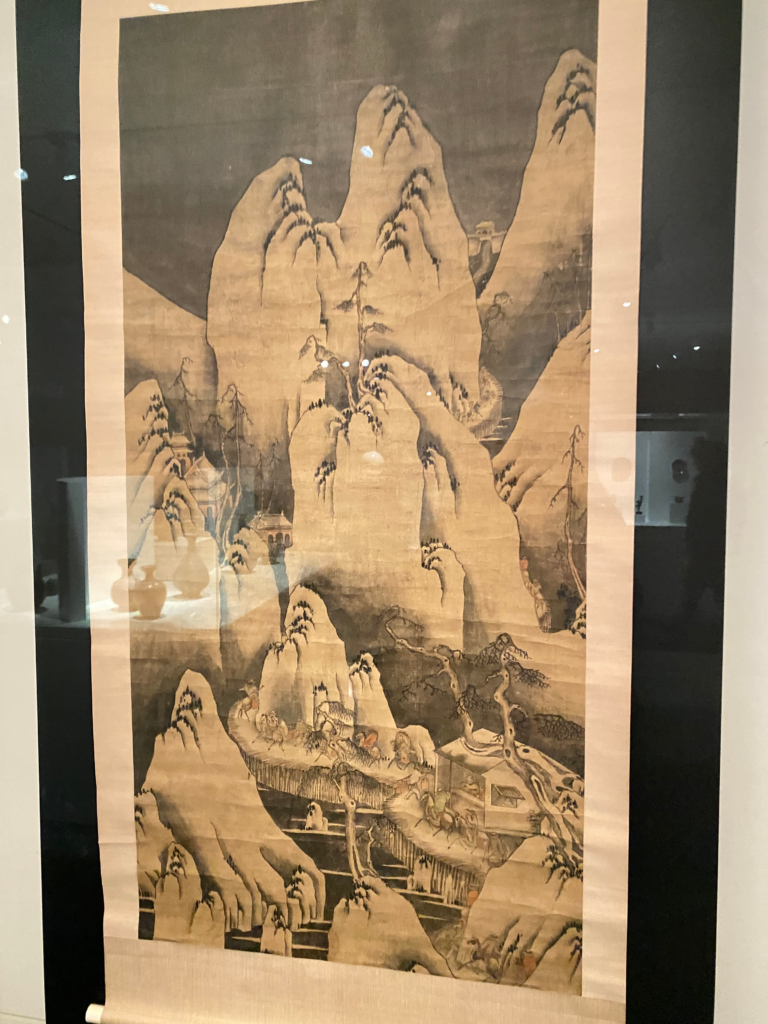
Ancient scroll, Arts of Korea
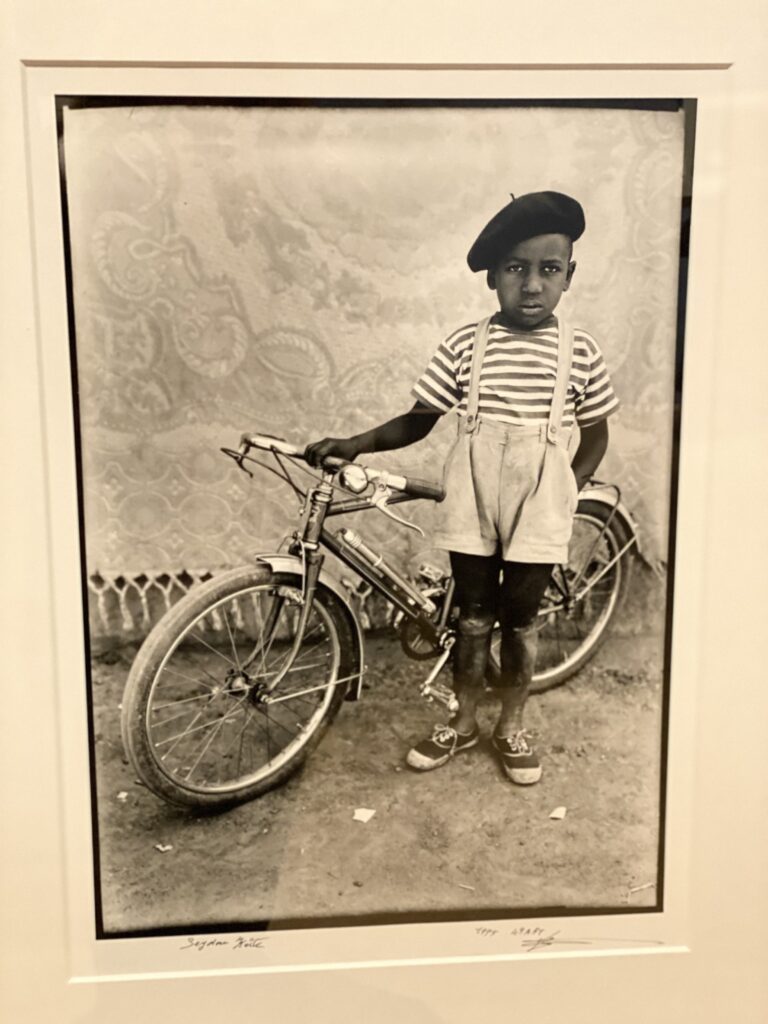
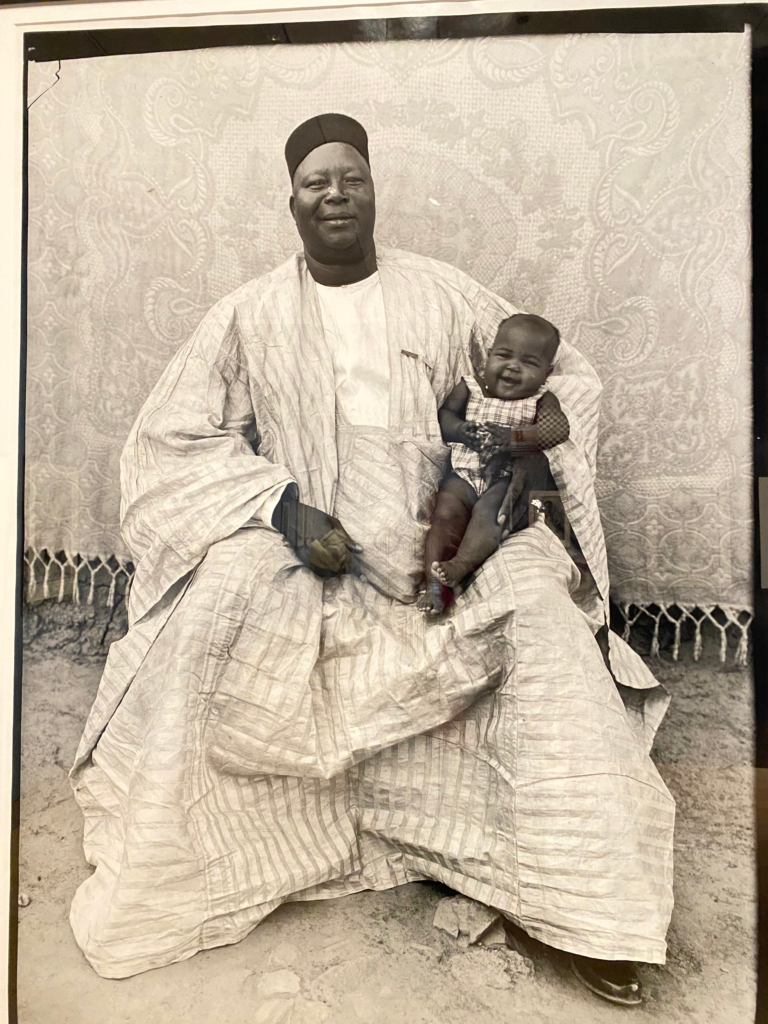
Not to be missed are the mesmerizing portraits of “Seydou Keïta: A Tactile Lens” through May 17th. The Malian photographer Seydou Keita (1921/1923-2001), “the father of African photography,” worked primarily in his studio in the nation’s capital of Bamako. He produced beautiful portraits that reflected the country’s history from the 1950s through the 1970s, a period which saw national independence, a coup, and a famine. The sweet account of Seydou’s start is that his uncle gifted him a Kodak Brownie camera. Photography was a curiosity at the time in Mali. People flocked to have their photos taken by Keita, who had a mentor in French photographer Pierre Garnier, but was largely self-taught and initially supported himself as a carpenter. The compelling portraits reveal his subjects’ trust in him. What is remarkable is that due to costs, he only took a single shot of each person.
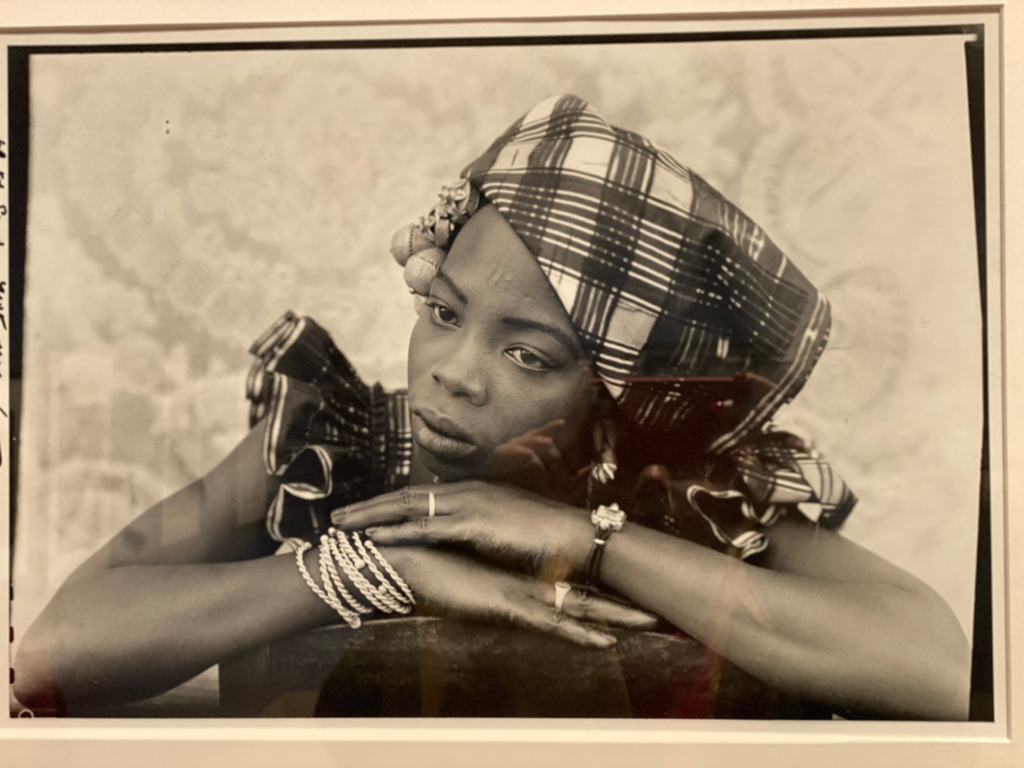
Eventually, a government job and the theft of his equipment in the 1970’s took the artist-photographer from his studio; however, as he remarked, he retired once color photography became the fashion. In the 1990s, his work was discovered in Europe and the United States. (Seydou Keita’s portraits are also on exhibition at MOMA through July.)
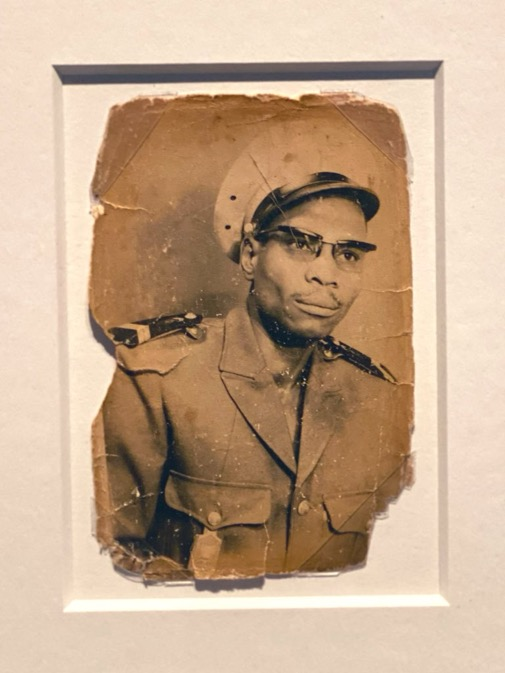
Seydou Keita, 1963, when he served as official state photographer (1962-1977)
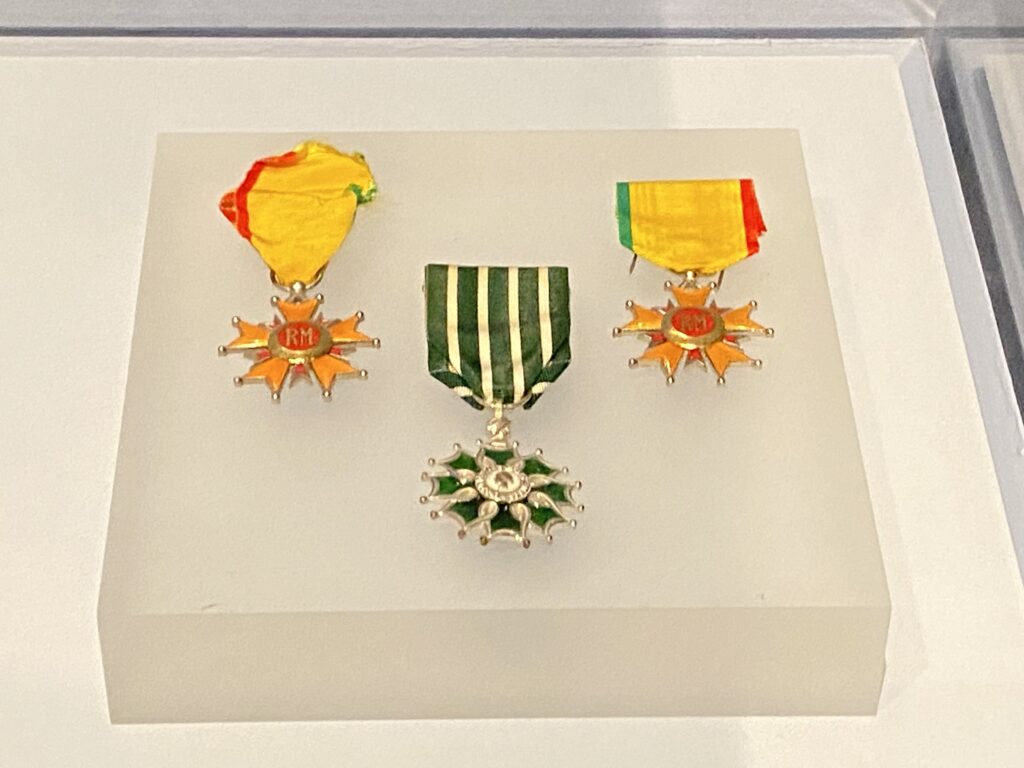
Mr. Keita’s National Order of Mali Medals and a Silver Order of Arts and Letters Chevalier Medal from the French government for his “significant contribution to the arts”.
There is still so much more to see at the Brooklyn Museum including, “Breaking the Mold: Brooklyn Museum at 200,” commemorating the history of art in the borough. “Unrolling Eternity: The Brooklyn Books of the Dead” opens January 30th. Went back a couple times, but kept missing, “The Dinner Party” (the invitation must be in the mail) and the Feminist Exhibition (mea culpa from a Seven Sisters graduate), and Norman Rockwell’s “The Tattoo Artist,” which was in storage on this visit. On that note, the Visible Storage and Study Center was an innovative way to enjoy some of the collection not currently on view.
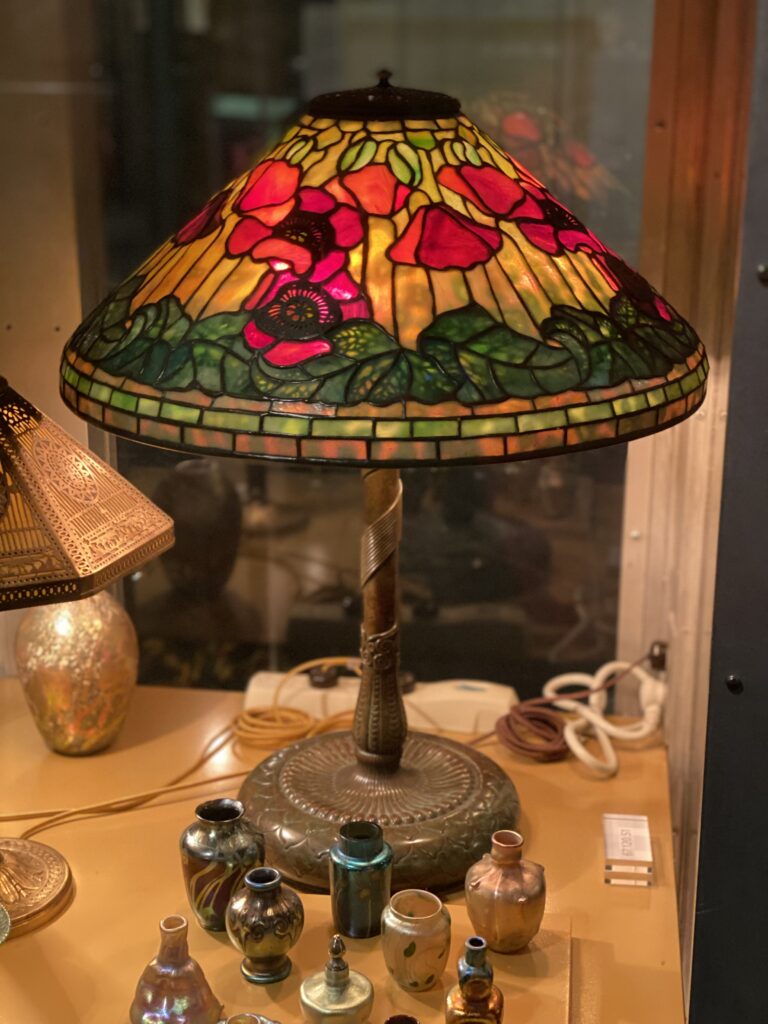
Tiffany Studios Leaded Glass Red Poppy Bronze Table Lamp, early 1900’s. Historical trivia: While a student at Eagleswood Military Academy in Perth Amboy, NJ, Louis Comfort Tiffany studied art with George Inness.
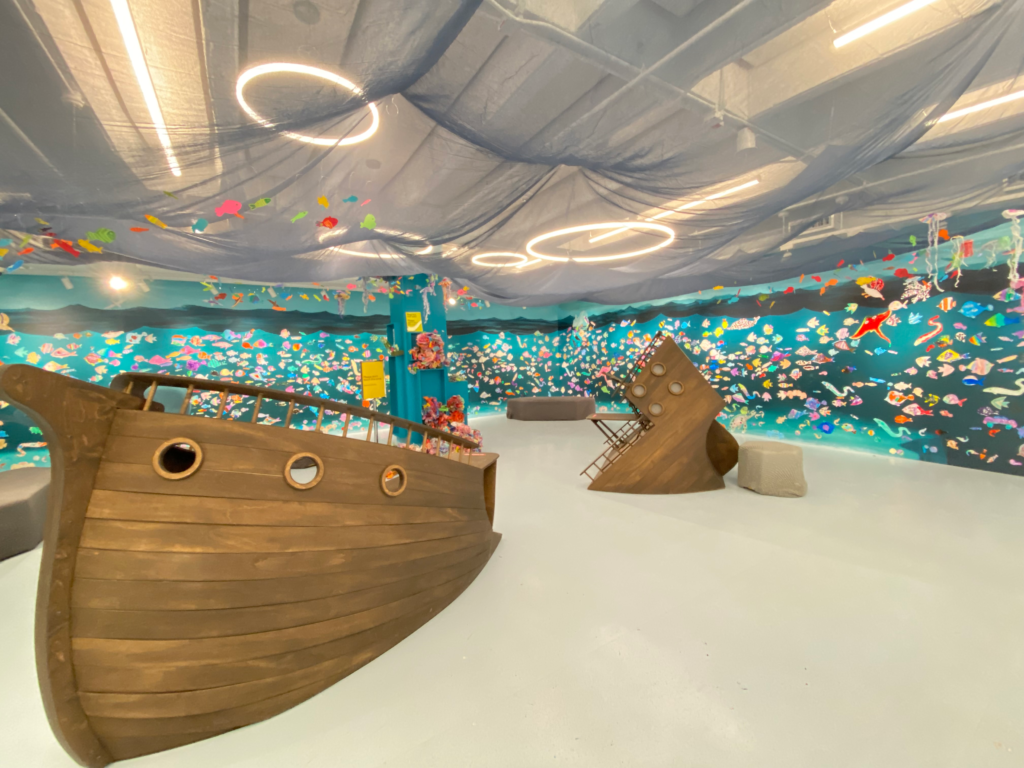
An inviting Education Center with Oliver Jefferies’, “Life at Sea,” 2025, on view through April 26th. The museum offers activities for children and teens, Kids Club memberships, and university memberships.
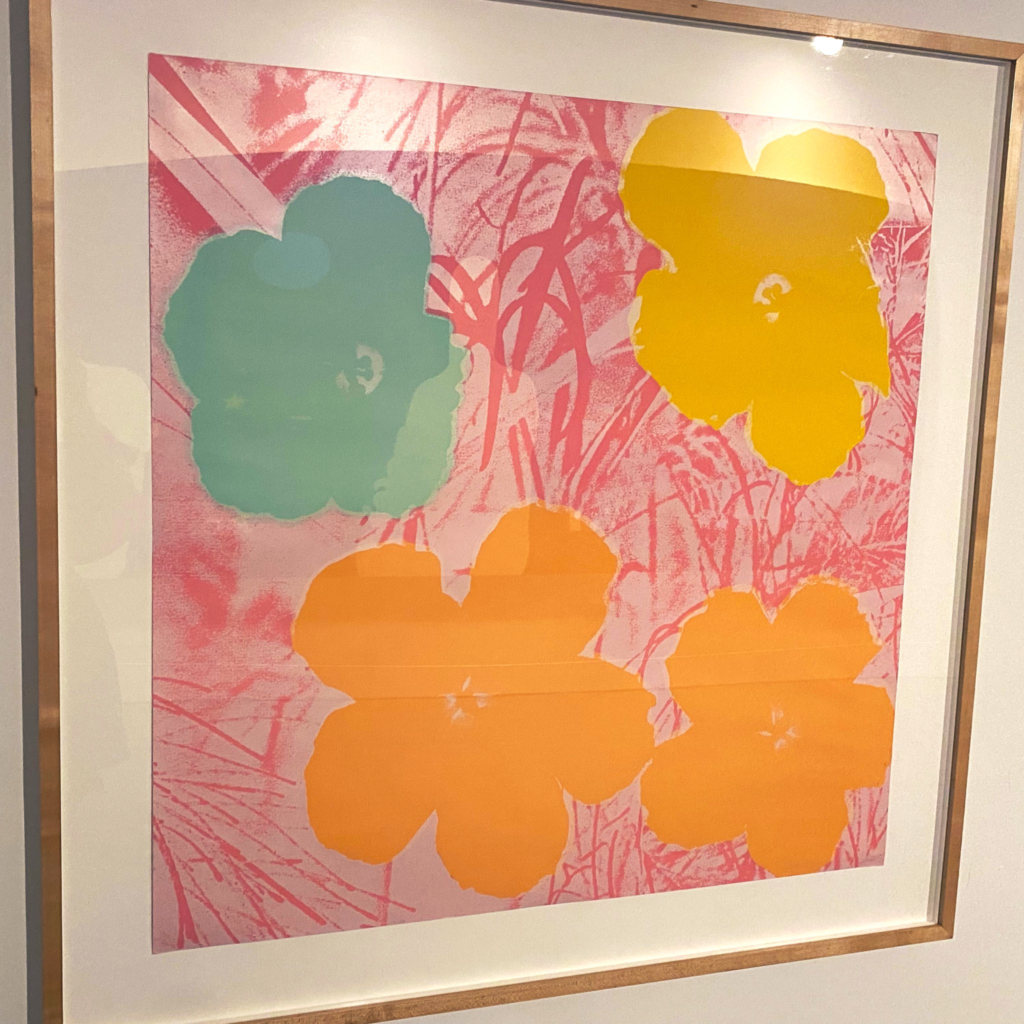
“Flowers,” Andy Warhol, 1970, screenprint
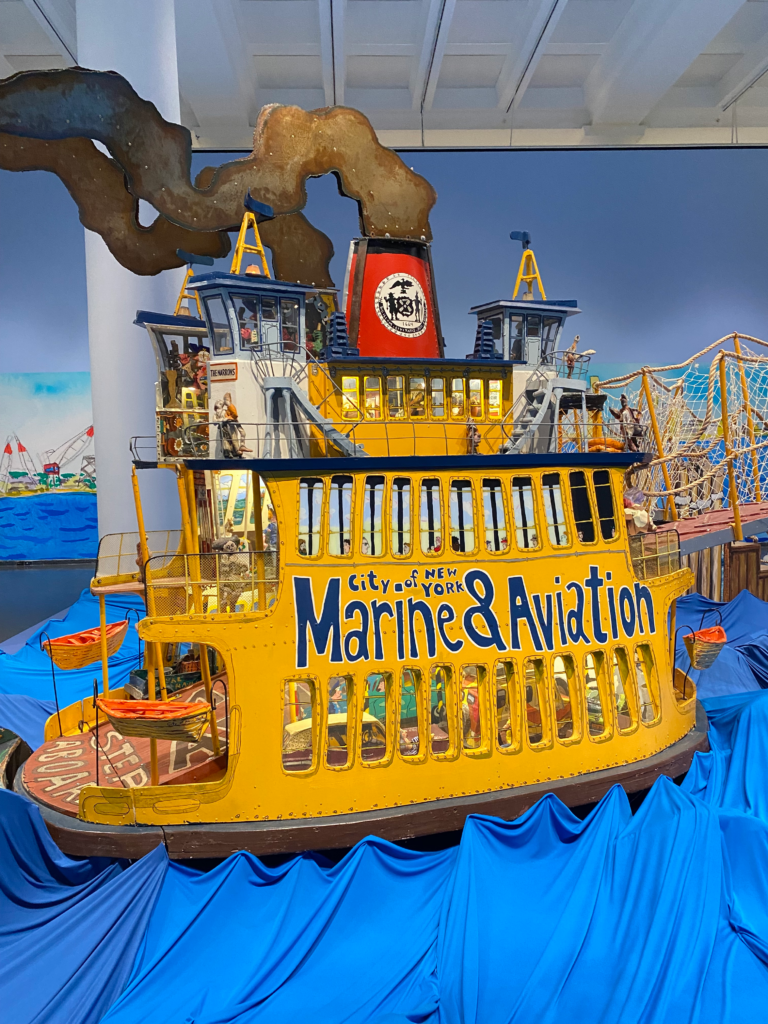
Excerpt from “Ruckus Manhattan” by Red Groom, Mimi Gross, and “The Ruckus Construction Co.”
Practical, random tidbits: Timed tickets for “Monet and Venice” kept things moving, though not rushed. Ticketed parking is convenient, as was public transportation on a visit some years ago; the 2/3 subway lets visitors out on Eastern Parkway–Brooklyn Museum, which is wheelchair accessible. (In a neighborly fashion, there are directions from Long Island, Westchester, New Jersey, and Connecticut on the museum website.) Bike racks are available for cyclists. The museum allows standard-size strollers, which flow smoothly in museum traffic. Most galleries include live captioning. Trained service animals are permitted; there was one beautiful and impeccably well-behaved tall, white poodle or a labradoodle on a leash, which looked like it stepped out of a painting. If anyone wants to avoid the coat check, which takes a while, consider wearing a lightweight coat and a wristlet or the like; purses and bags will need to be checked for security.
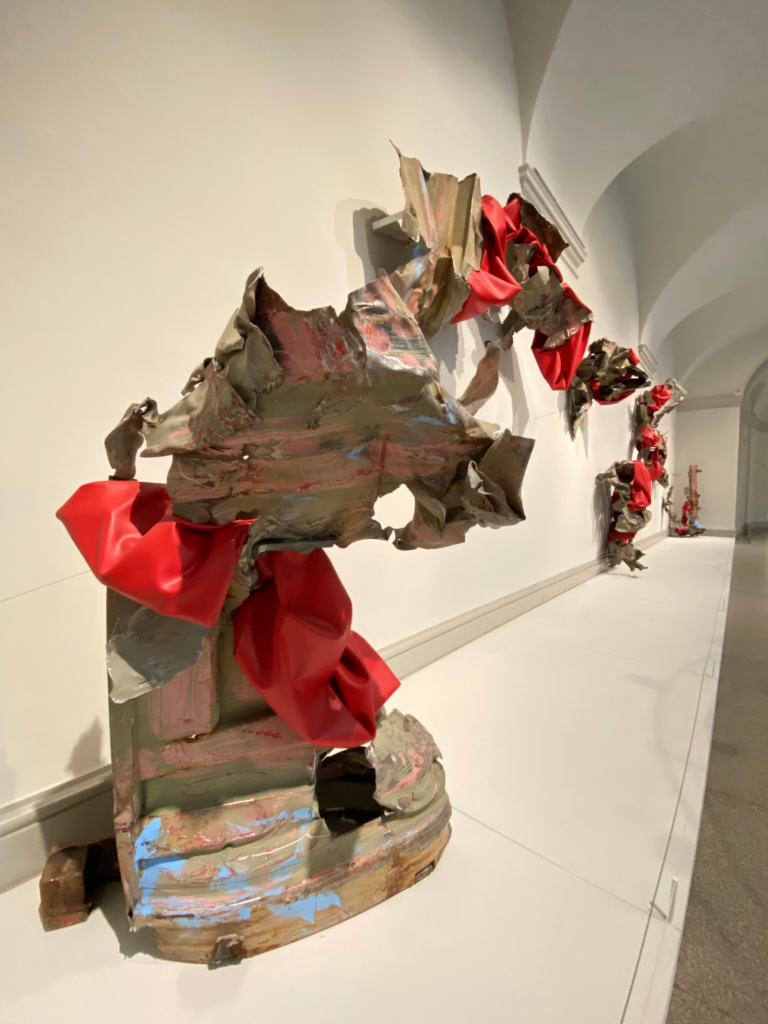
Side view of “No More Drama,” Kennedy Yanko, 2022, Brooklyn-based artist via St. Louis, Missouri
The light and airy café features friendly staff and healthful options. Though it is not overly expensive for a museum café, it could be costly for a family. The profit, however, supports the museum. (Members receive a 10% discount.) In warmer weather, food trucks are outside.
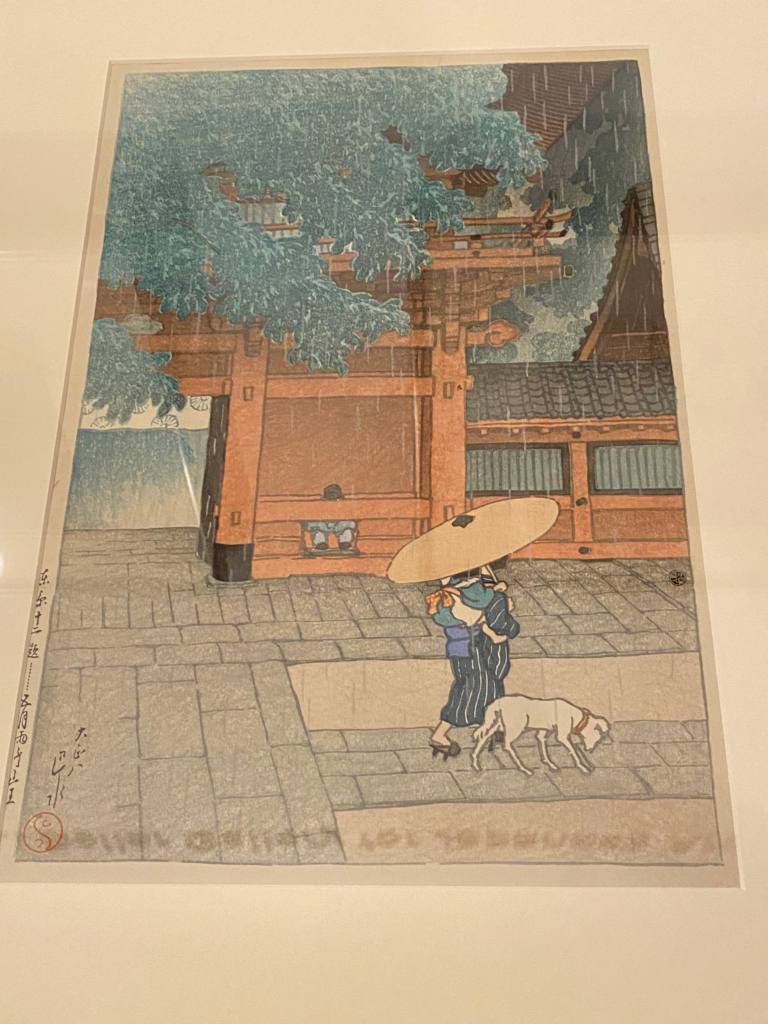
“Early Summer Rain at the Sanno Shrine” from the series “Twelve Scenes of Tokyo,” Kawase Hasui, 1919, woodblock print on paper
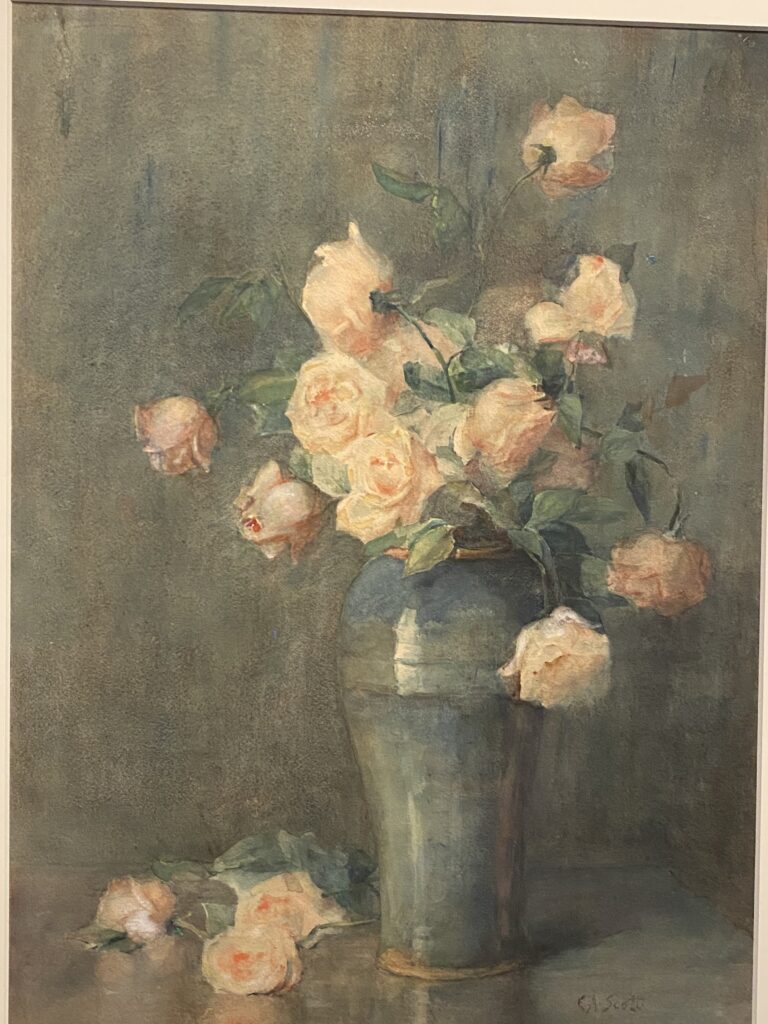
“Tea Roses,” Emily Maria Spaford Scott, aka “Lady of the Roses,” late 19th-early 20th century, watercolor
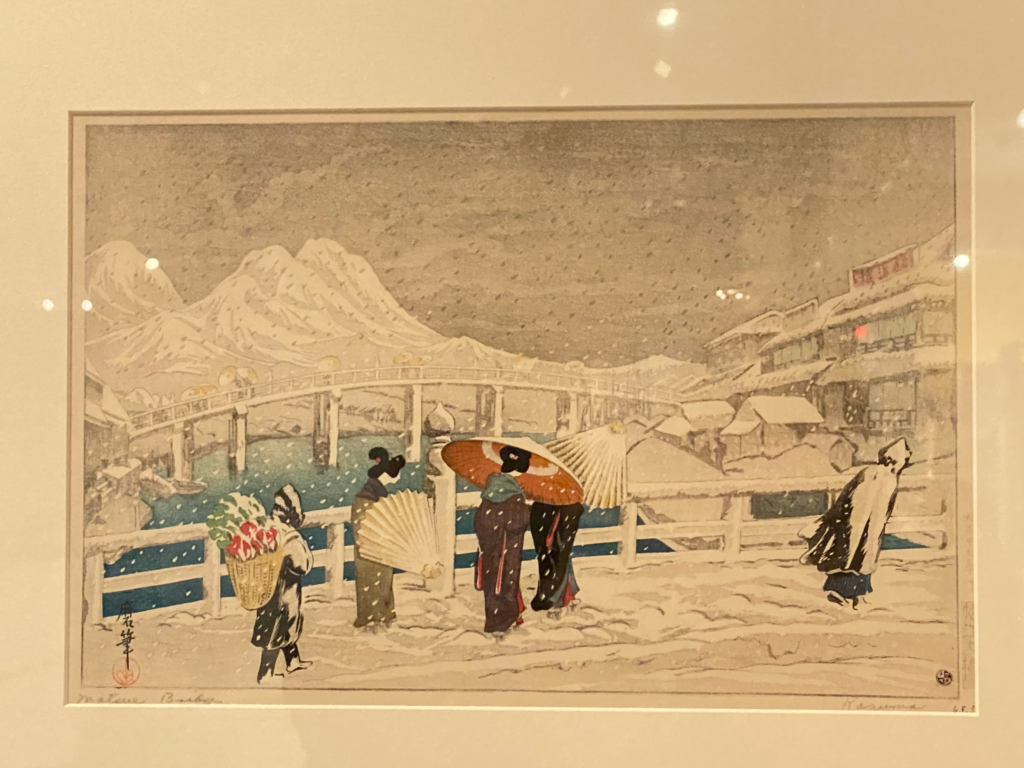
Winter scene by Kawase Hasui
Select First Saturdays, which start February 7th, welcome visitors free of charge. Enjoy upcoming programs like the Lunar New Year celebration.
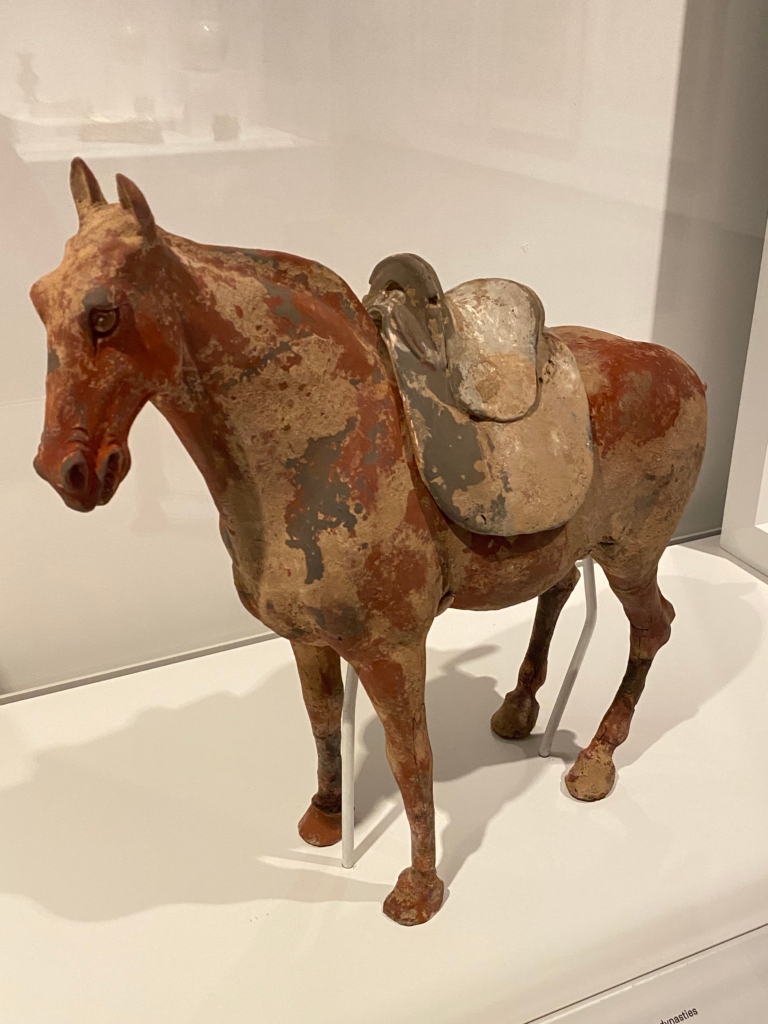
Year of the Horse 2026, Horse with Saddle, late 6th century, China, earthenware
Travel sites note that a visit to the Brooklyn Museum takes between 2-4 hours. Reserve a day to enjoy all that it has to offer!
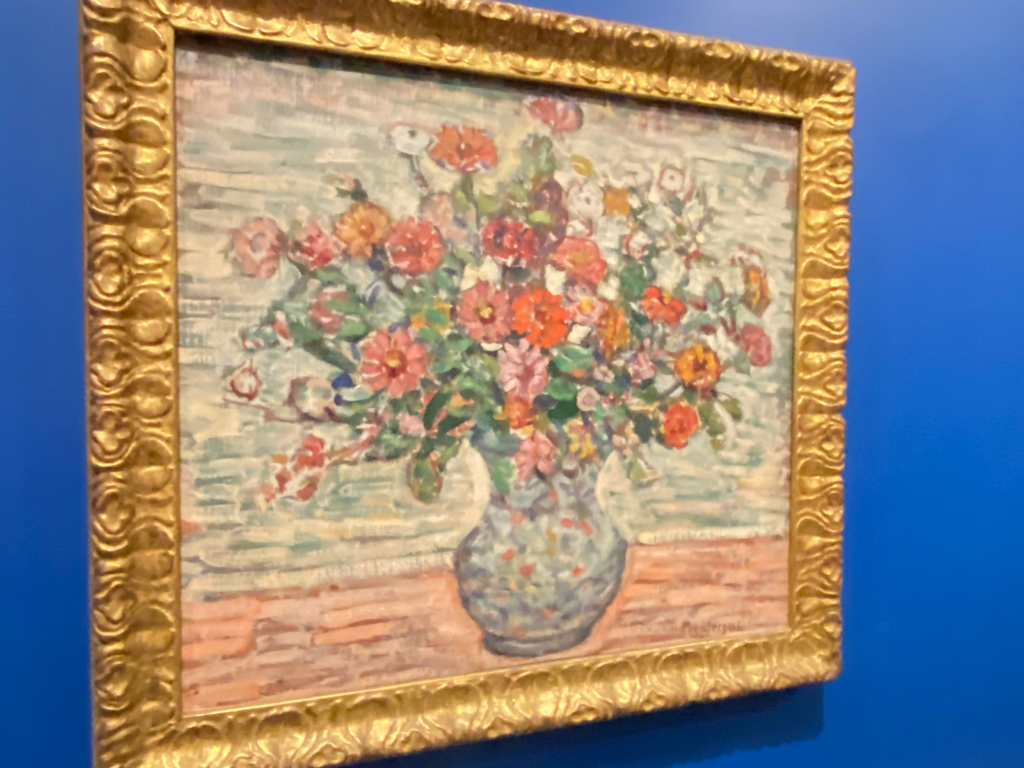
“Flowers in a Vase (Zinnias),” Maurice Brazil Prendergast, ca. 1910-1914, presented with a note on zinnias from the Brooklyn Botanic Garden
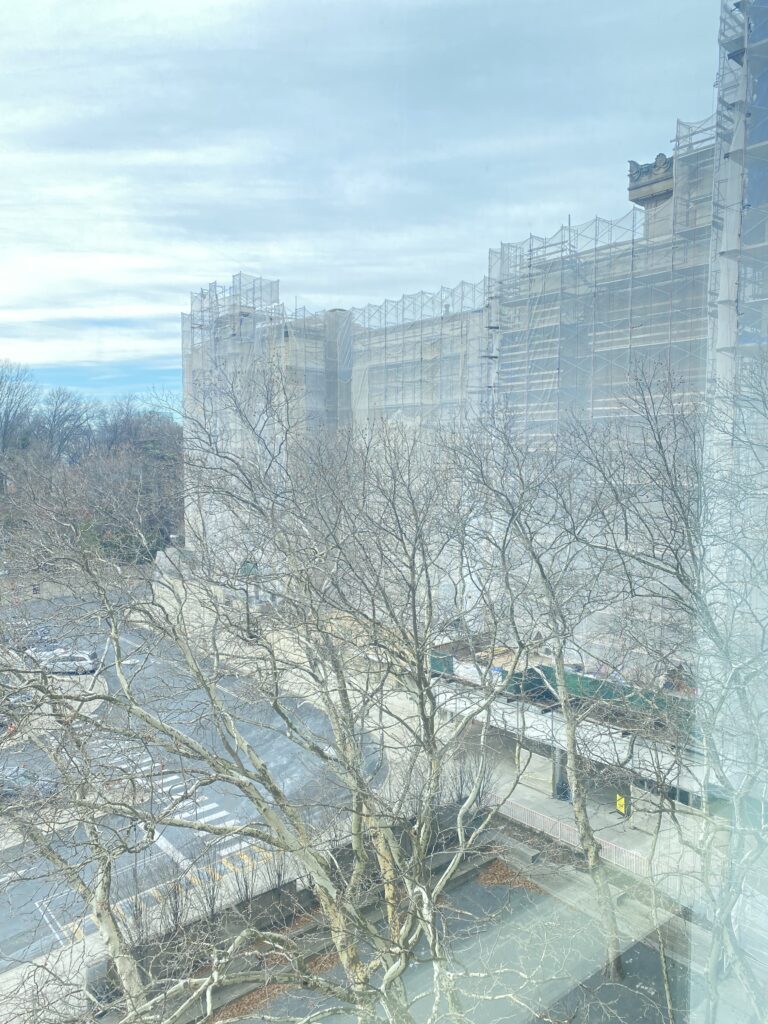
Brooklyn Museum’s refurbishment in Monet’s blue light
(Sources: brooklynmuseum.org, theartnewspaper.com (interview with Jackie Wullschläger, author of “Monet: The Restless Vision“), claudemonetgiverny.fr, dailyartmagazine.net, seydoukeitaphotographer.com, artnet.com, all-about-photo.com, traveladvisor.com, reverse image app, YouTube, Wiki)
“’Monet and Venice‘ at the Brooklyn Museum” All Rights Reserved ©2026 Kathleen Helen Levey
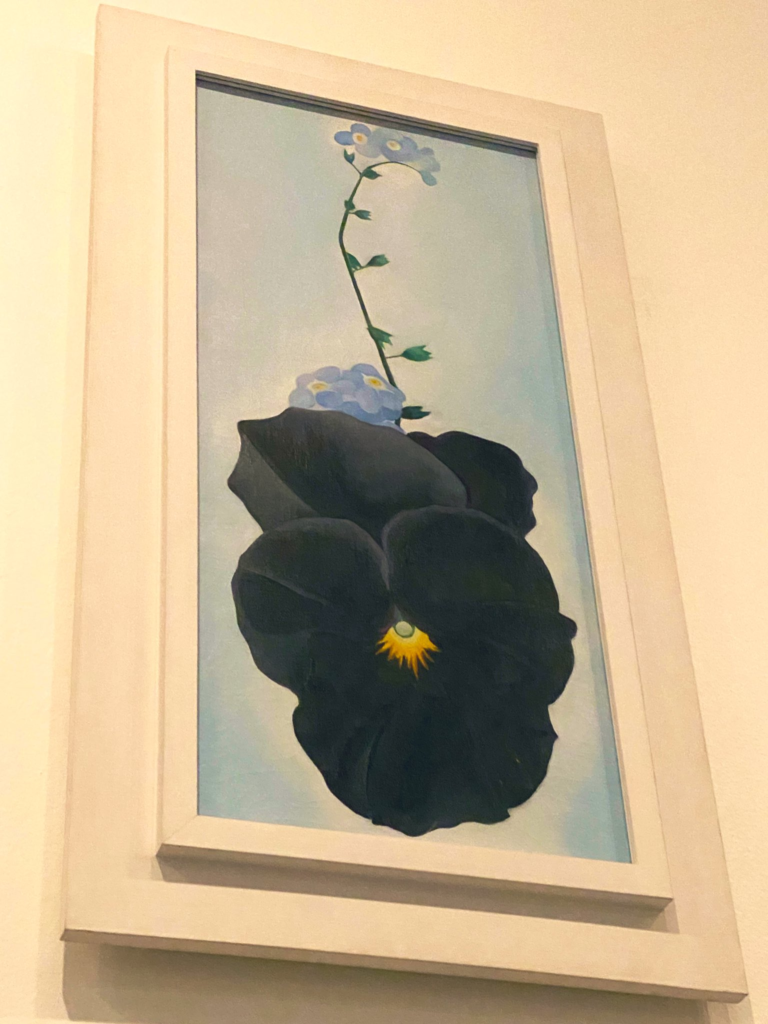
Georgia O’Keefe has the final word with “Black Pansy & Forget-Me-Nots,” 1926, oil on canvas
Comments are closed.