Writing New Jersey Life

People and places of New Jersey…with some travels.

Tag: Impressionism

“Monet and Venice” at the Brooklyn Museum

“The real subject of every painting is light.”

                                      Claude Monet

Step out of grey skies and bitter cold into the luminous world of Claude Monet and Venice before it ends this Sunday, February 1st.  Venice, also known as “La Serenissima (‘The Most Serene’),” casts its spell on visitors as they gaze in quiet joy at the beautiful works. 
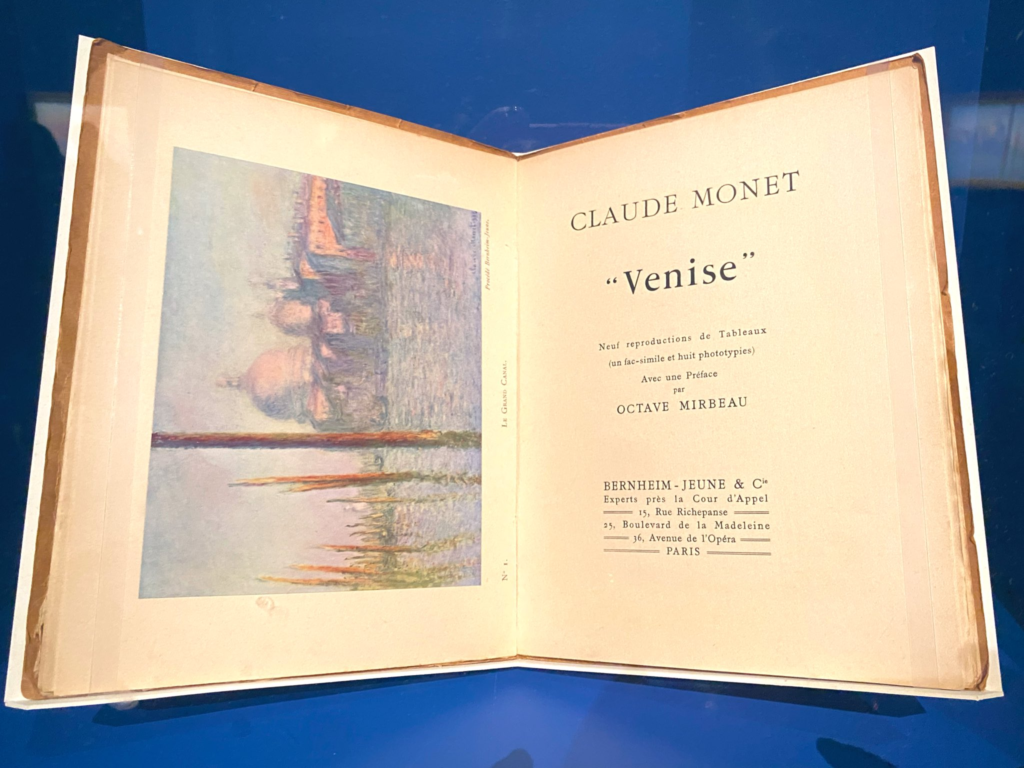
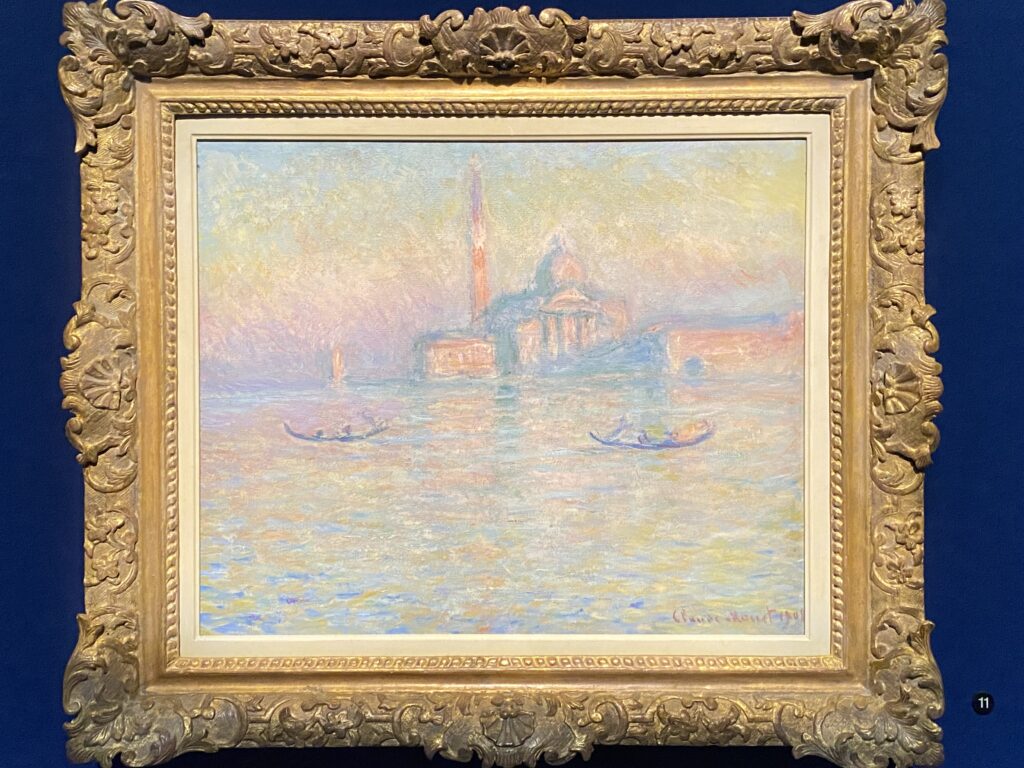
At the invitation of friends, Monet visited Venice with his wife Alice during the fall of 1908.  Claude did not want to leave his beloved gardens at their home in Giverny, but the 68-year-old artist, who painted prolifically until his passing at 86 in 1926, became captivated by the city. Monet spent a lifetime trying to capture light, essentially trying to depict the elusive, as the exhibition notes, which often left him unsettled.  By painting an exact moment of light, he was capturing time.  His series of paintings, such as those of Venice’s island of San Giorgio Maggiore (“Saint George the Greater”), with its beautiful church, show both an eternal view and a “symphonic” passing of time as Jackie Wullschläger, one of his biographers, notes. The museum underscores this with serene, classical music. One might think Monet’s quest was unattainable, but 115 years later, each of his works in this beautifully curated exhibition continues to transfix museum-goers by transporting them to those moments in Venice.  Visitors can hear the soothing lapping of the Grand Canal.  Part of the beauty is seeing the faces of captivated viewers of different generations, lit by the luminous light that emanates from Monet’s canvases.
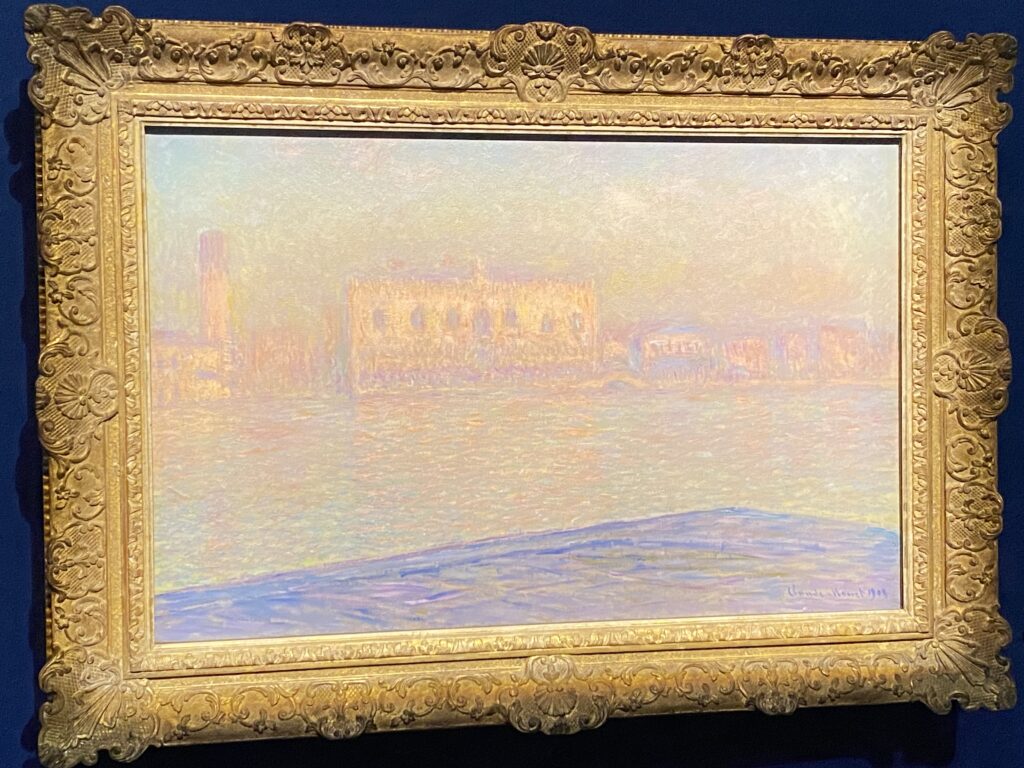
The Palazzo Ducale (“The Doge’s Palace,” below) represents the Venice that stands outside of time:
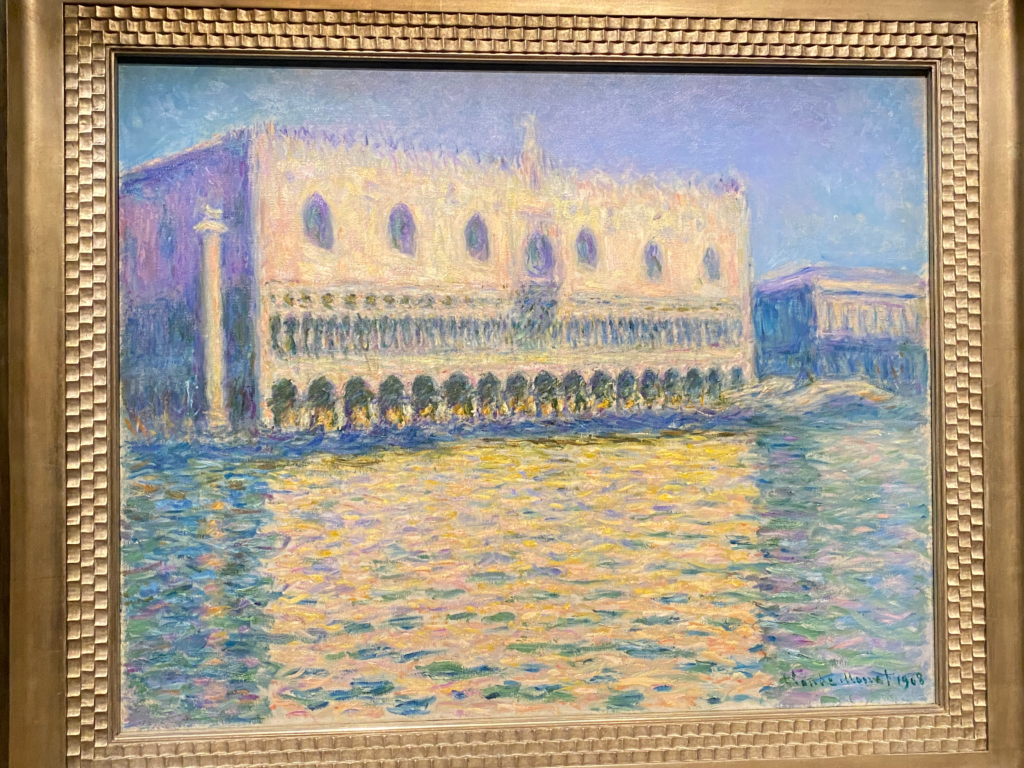

Monet was a proponent of painting en plein air (“in the open air/outdoors”), introduced to him by Eugene Boudin, his instructor at the Academie Suisse, who was also a mentor of Monet’s classmate and friend Jean Renoir.  So taken with Venice, Monet began more paintings than he anticipated, working each morning with Alice beside him, but he had to complete them back in France. They planned to return to Venice together, but his wife Alice passed away, a second profound loss for Monet whose first wife Camille had also died. Grief kept him from returning to the paintings until 1911, when he completed them in Alice’s memory. What is incredible about Monet’s accomplishment is that cataracts had begun to cloud his eyesight, but he managed around this until finally acquiescing to surgery on one eye at the age of 82.
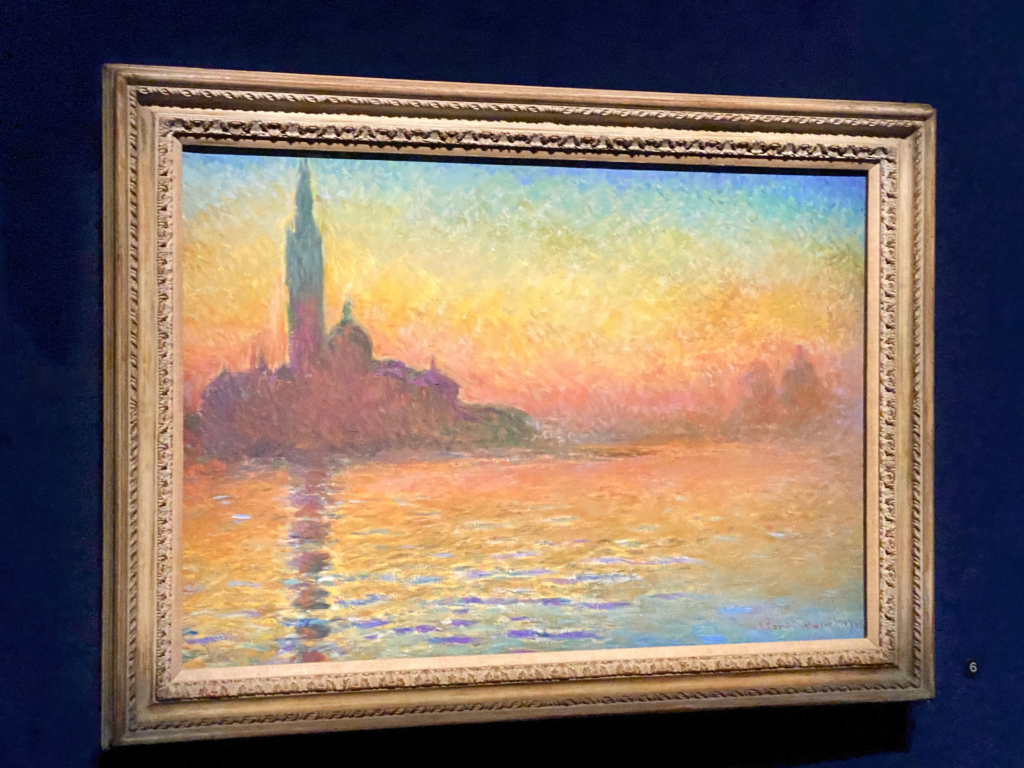
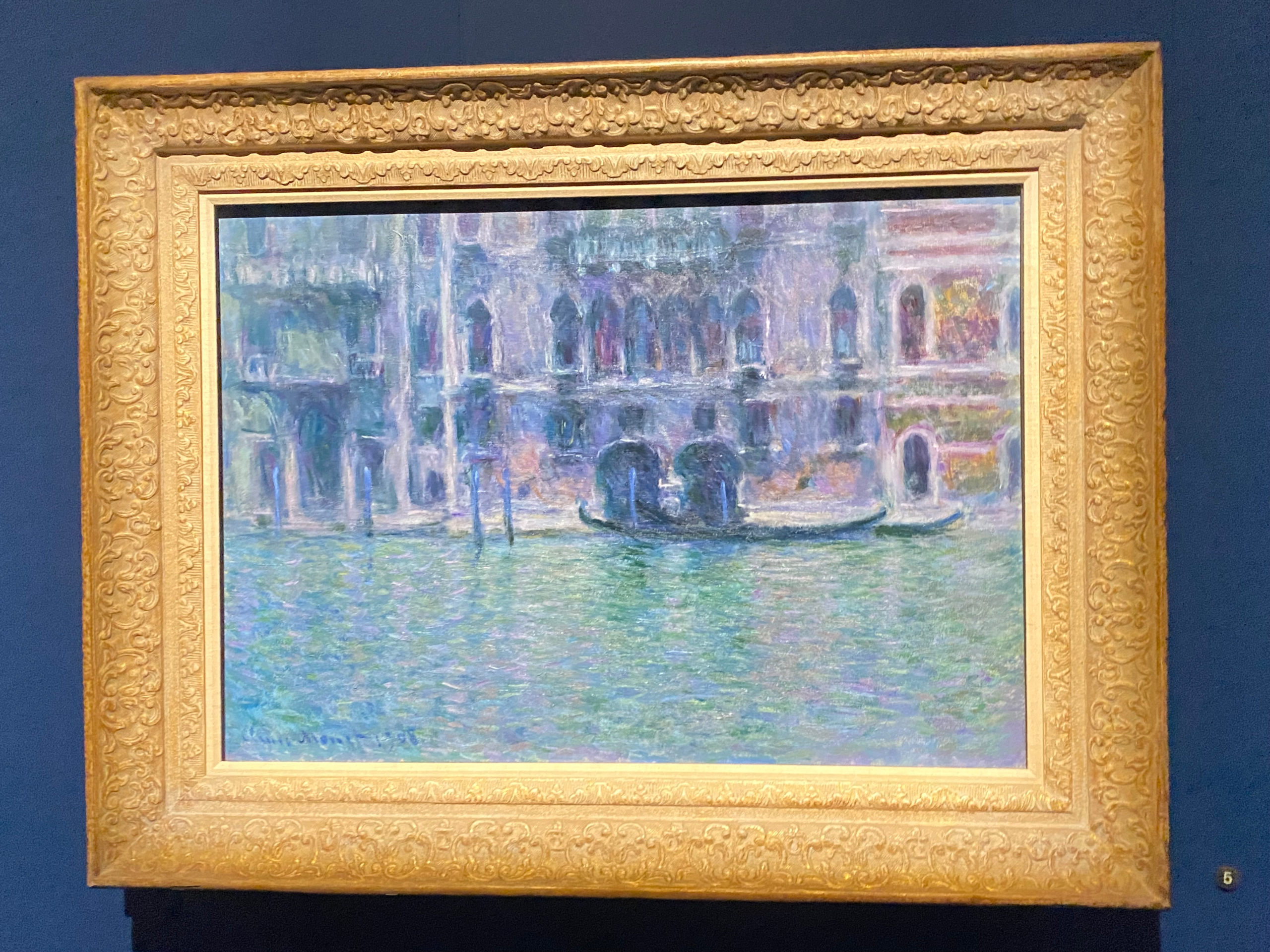
Though it is difficult to believe now, the Paris Salon often rejected Monet’s early art for exhibition, as did London’s Royal Academy, both deeming it too radical.  Monet struggled for years. Art critics ridiculed the works of the first exhibition by Monet and his peers in 1874. Louis Leroy noted that Monet’s “Impression, Sunrise (1872)” was just an impression, a work left unfinished like those of the other artists.  This painting, which launched Impressionism and abstract art, did not sell. Ultimately, it was the first sales of his art in the United States that led to Monet’s financial stability. By the time of his trip to Venice, Monet had achieved critical and commercial success.
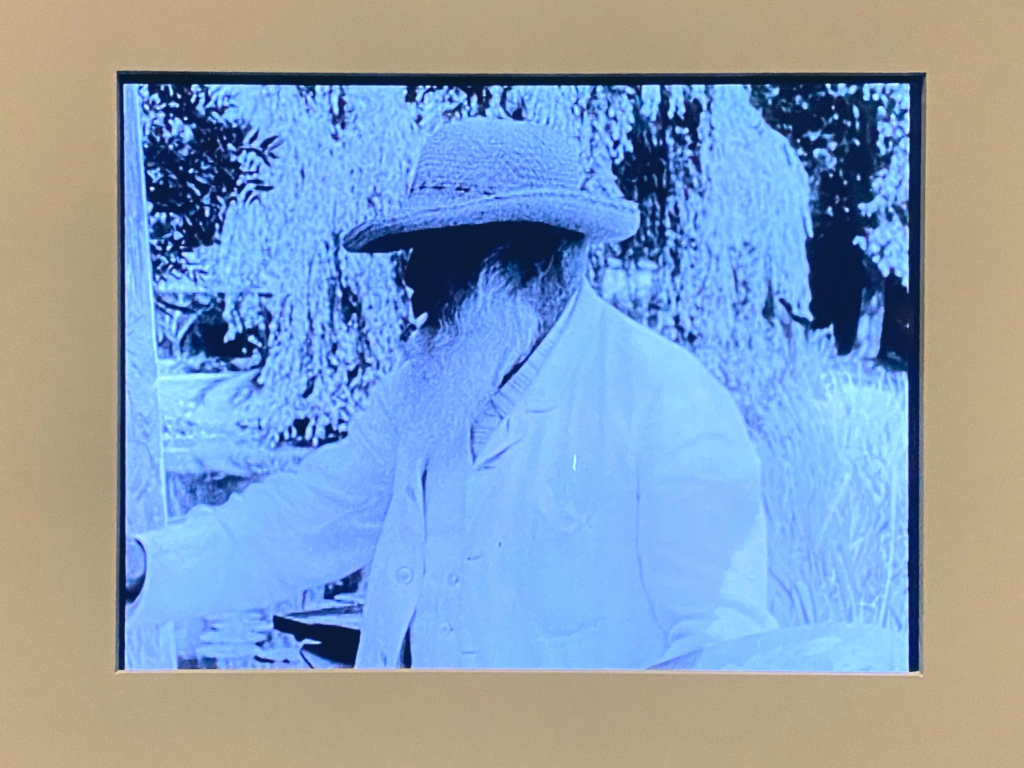
Monet, 75, at work in the gardens of Giverny from Sacha Gurtie’s 1915 film “Those of Our Land,” which included Renoir, Degas, and Rodin.
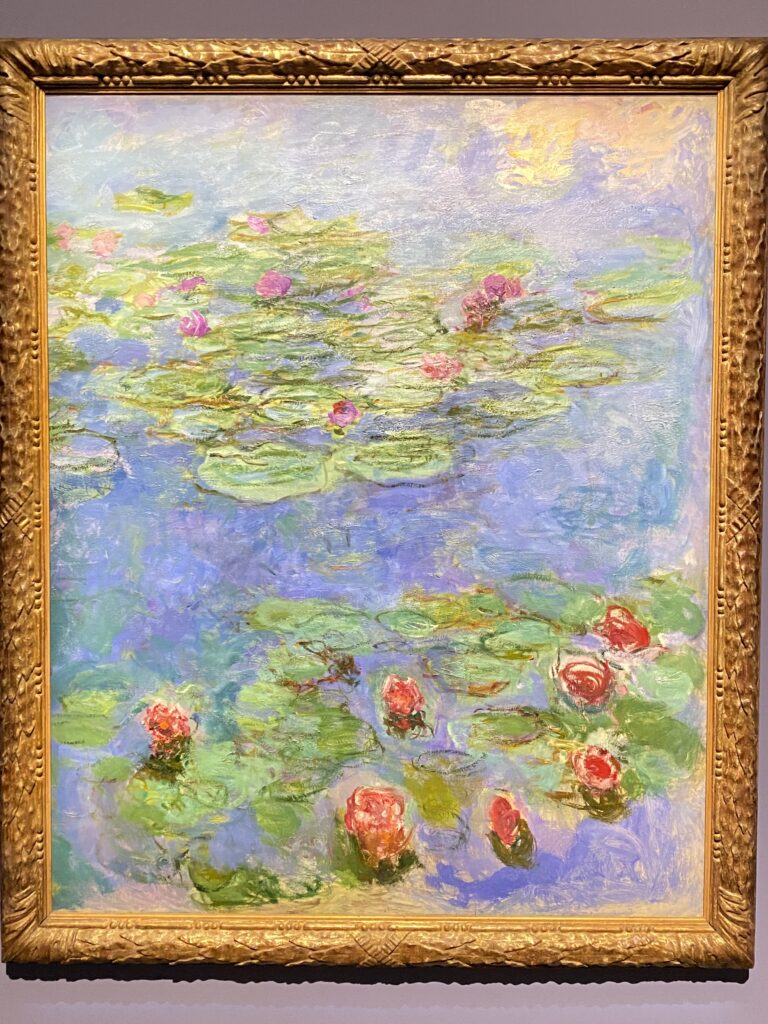
A sublime treat in the exhibition, a Monet water lily painting:
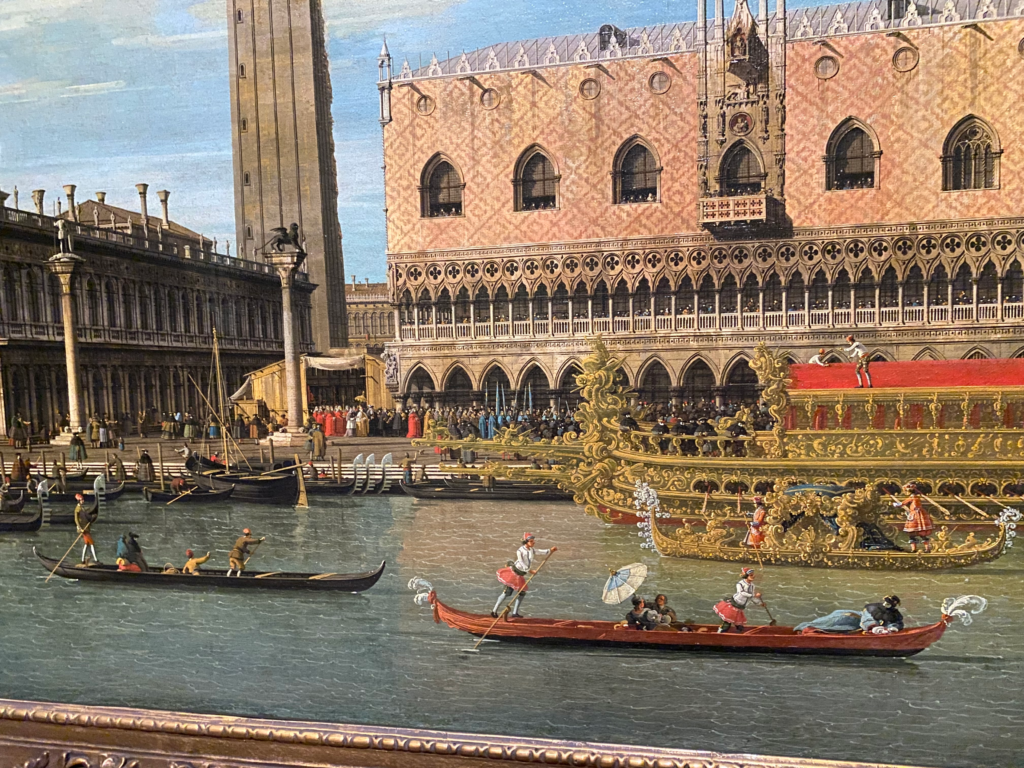
Just when one might think life couldn’t get any better, there is the incredible surprise of Canaletto. Canaletto (Giovanni Antonio Canal), also painted en plein air in the 1700’s, which distinguished his work from the studio-based art of the time:
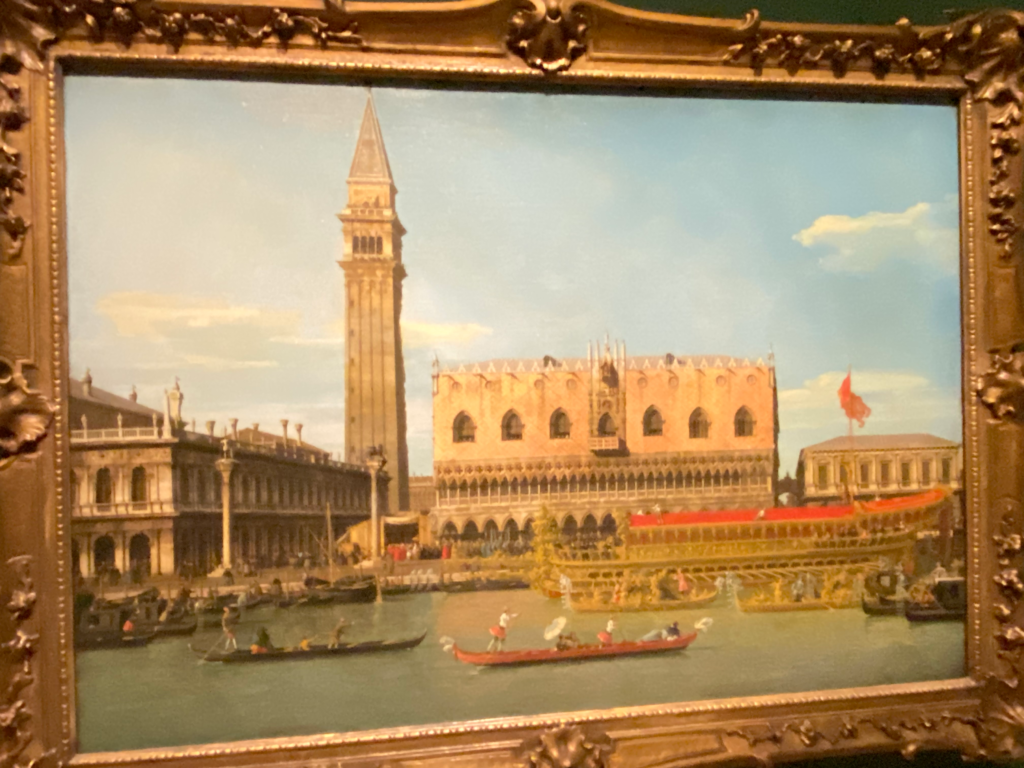
“The Bucintoro at the Molo on Ascension Day,” Canaletto, 1745, and some details (below), created using a camera obscura, a precursor to the modern-day camera.
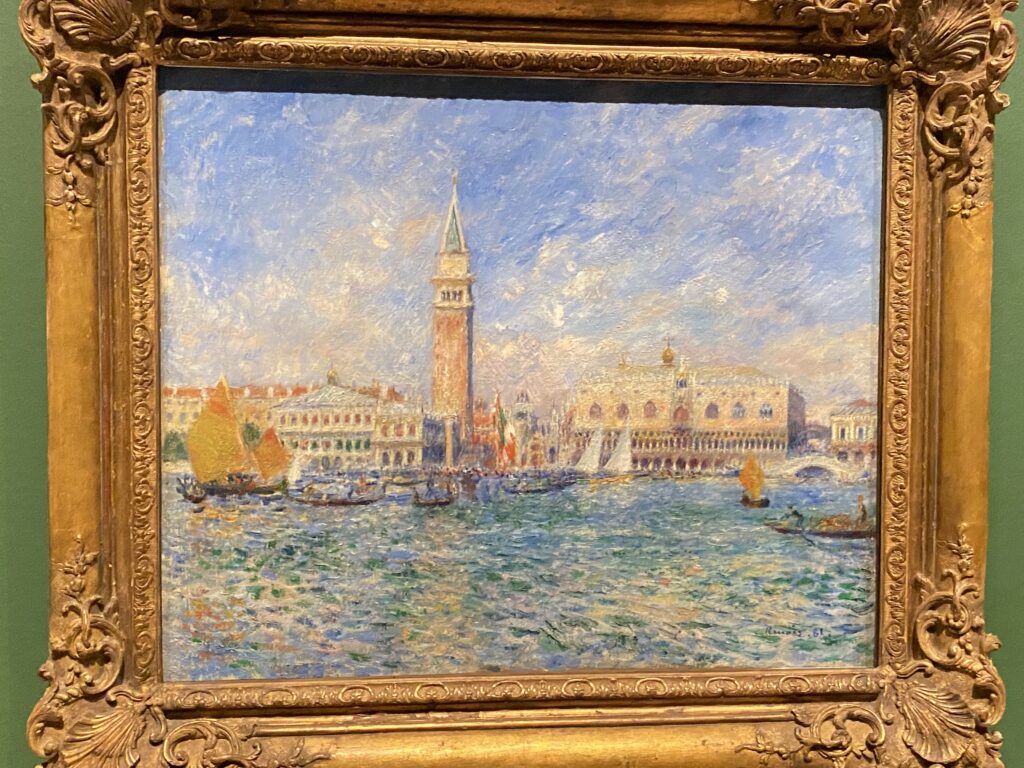
The exhibition includes the Venice-inspired work of other renowned artists like Jean Renoir, Monet’s friend, classmate at the Academie Suisse, and co-founder of Impressionism, who suffuses his paintings with warmer light and greater detail. (An exhibition of Renoir’s drawings was recently at The Morgan Library.) To enhance Venice’s serenity, Monet included few people despite the crowds of tourists, while Renoir depicted more vibrant scenes. Renoir noted that sometimes as many as six other painters were working alongside him. Each artist may have had the same view, but made it his or her own.
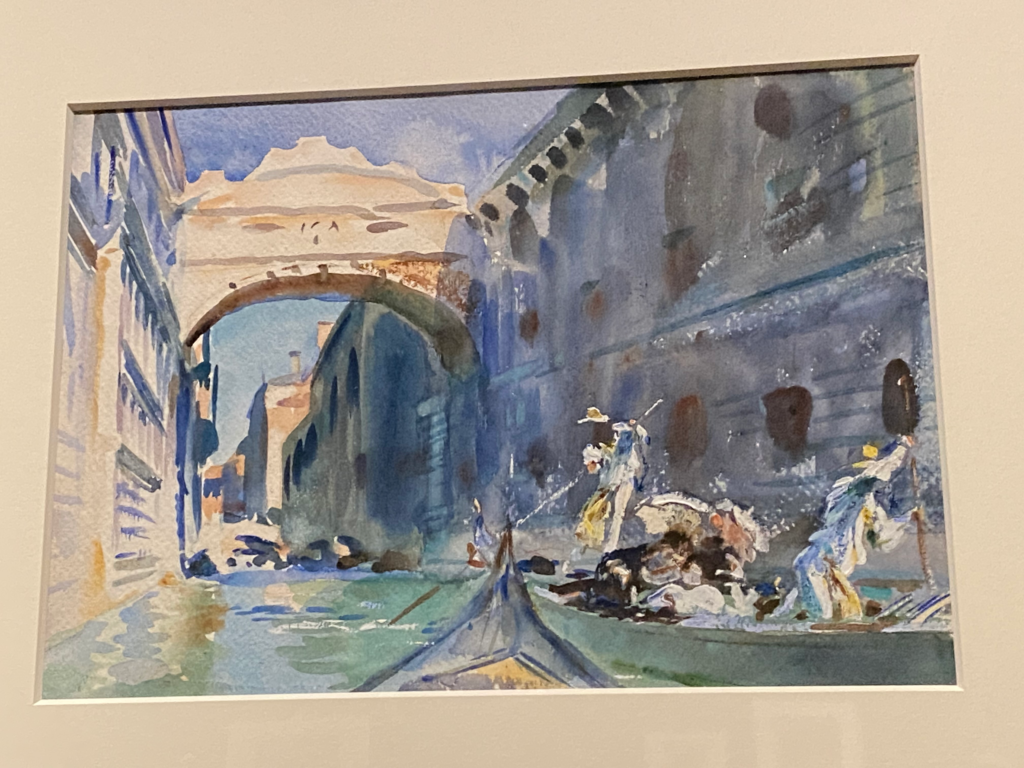
John Singer Sargent, whose works are in the museum’s own impressive collection, had a recent exhibition at The Met. He shared everyday scenes of Venice in watercolor paintings such as “The Bridge of Sighs,” 1903-1904:
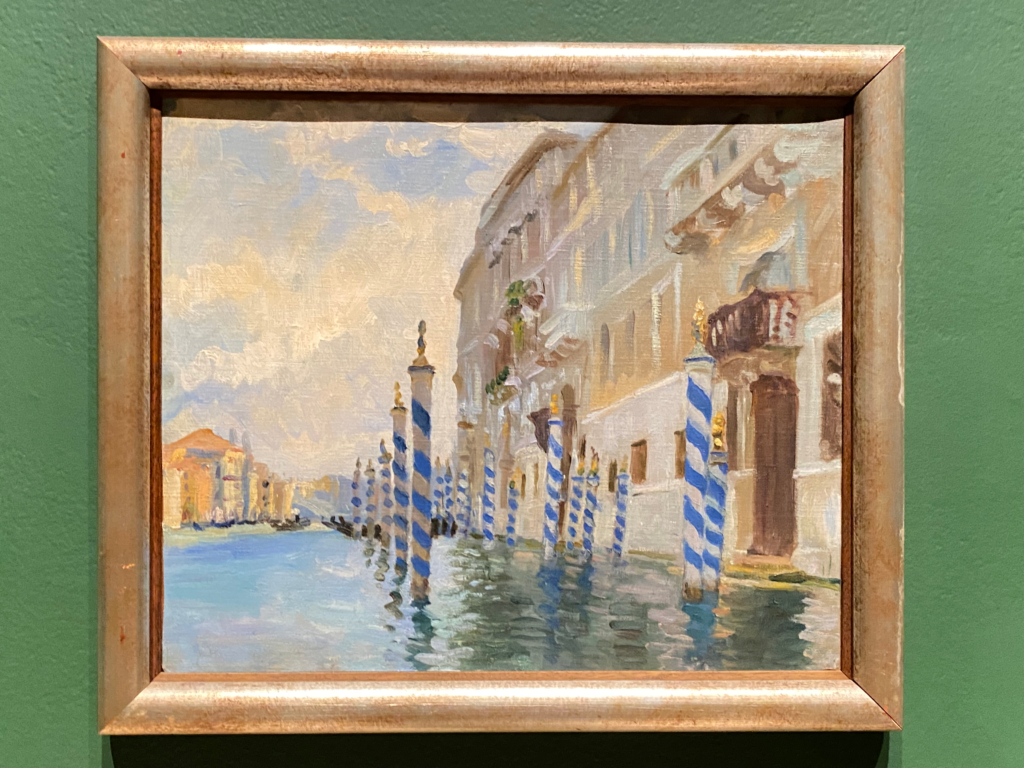
“Canal View, Venice,” Jane Emmet de Glehn, ca. early 1900s; the artist was a friend of John Singer Sargent:
Paul Signac, a younger artist whom Monet encouraged:
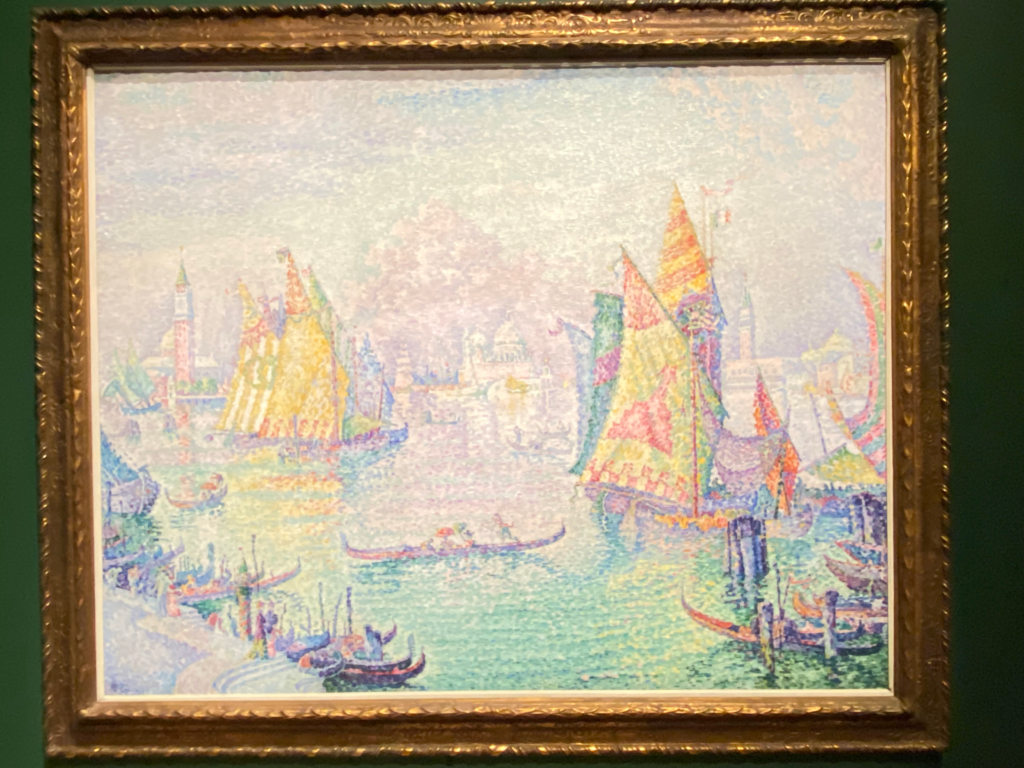
“The Lagoon of Saint Mark, Venice,” Paul Signac, 1905
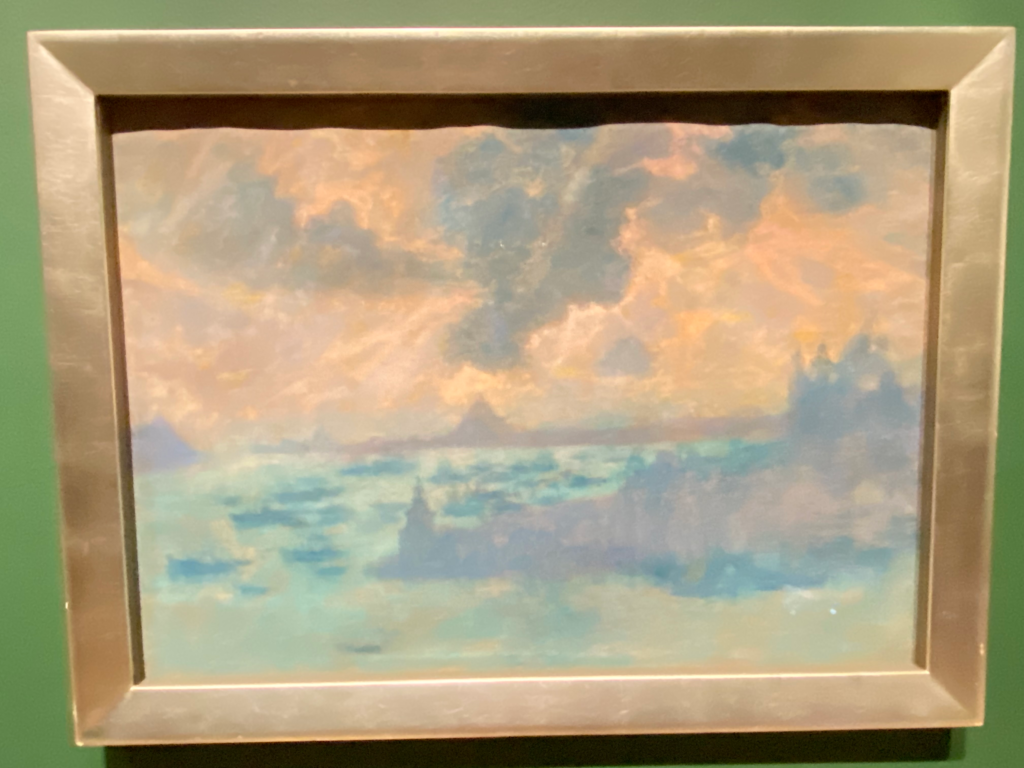
“The Grand Canal at Night,” Lucien Levy-Dhurmer, 1895, Symbolist style
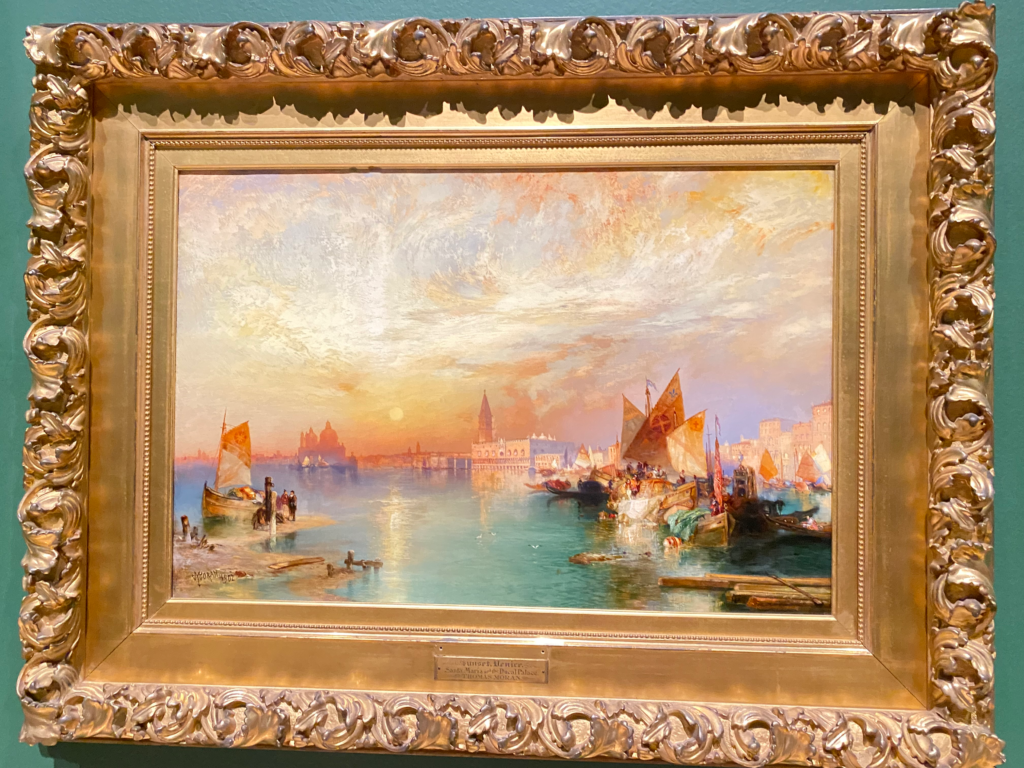
“Venice, Sunset behind Santa Maria,” Thomas Moran (American), 1898

In a rotunda-like room and alcove towards the end of the exhibition, a few children were sketching on the carpeted floor.  Parents proudly toted adorable newborns in baby carriers, which added to the overall charm. Monet drew visitors from the Metro area, and internationally, including his native France. 
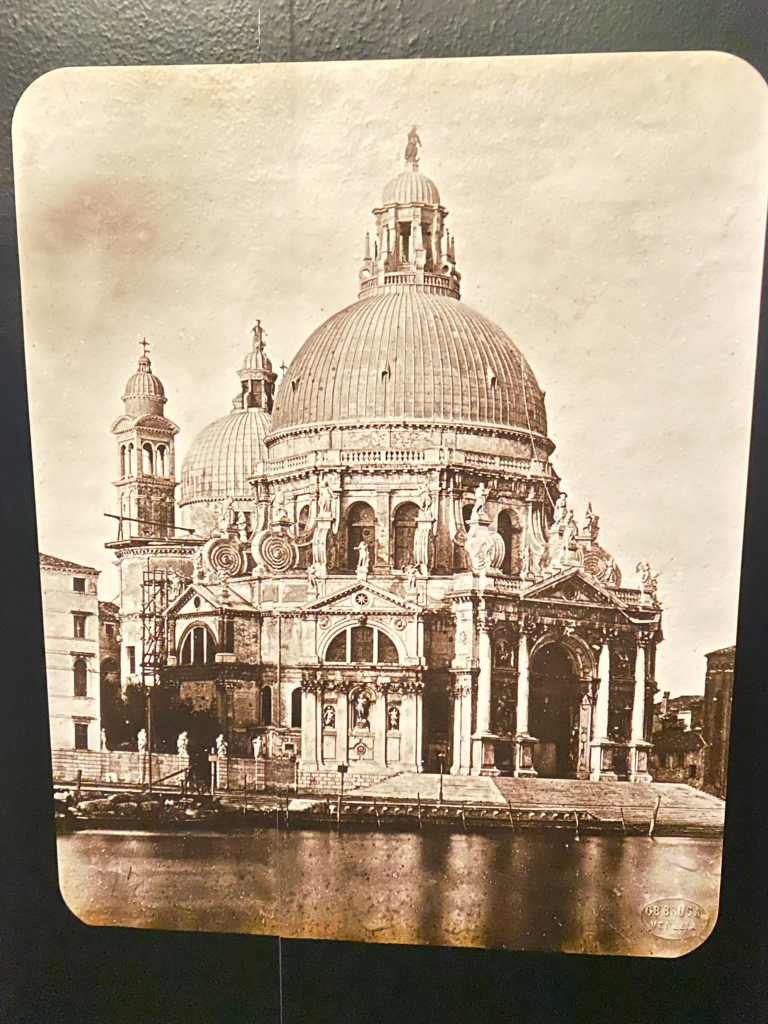
The Church of San Giorgio Maggiore of the same era from the Brooklyn Museum’s noteworthy and extensive lantern-slide collection

As an aside, one of the perks of visiting NYC museums is enjoying the stylish clothing of international visitors, though the city that hosts Fashion Week each February touts its own inestimable style. Such style is notable in the American gallery next to Monet on the museum’s fifth and top floor.
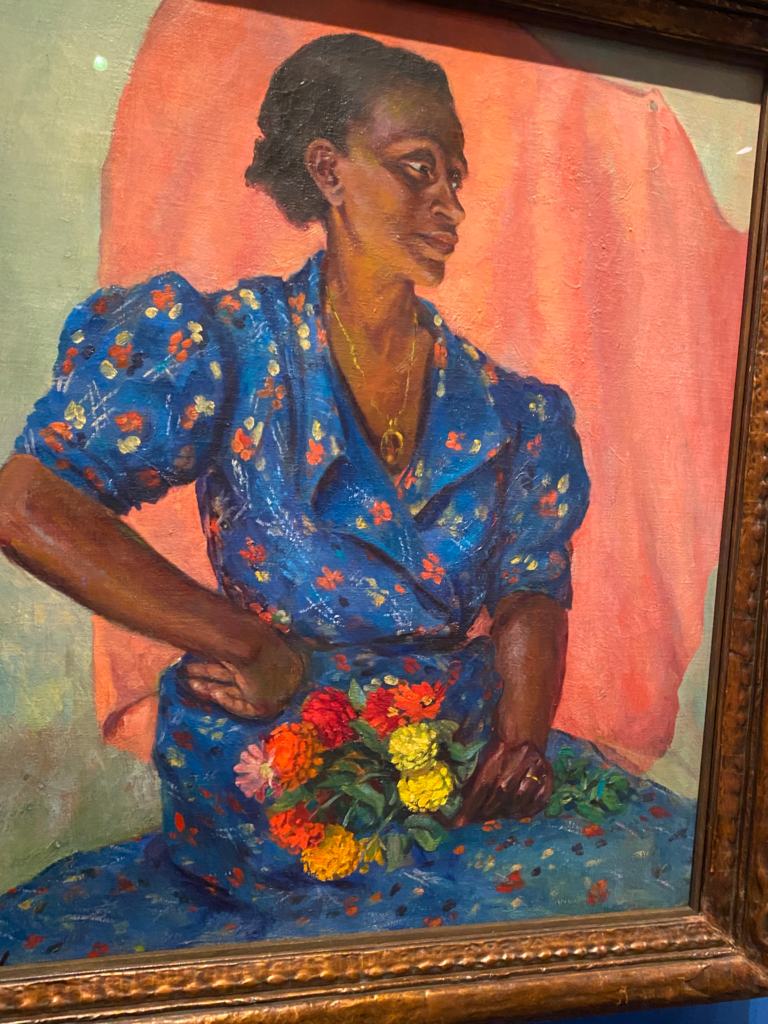
“Woman with a Bouquet,” Laura Wheeler Waring, 1940
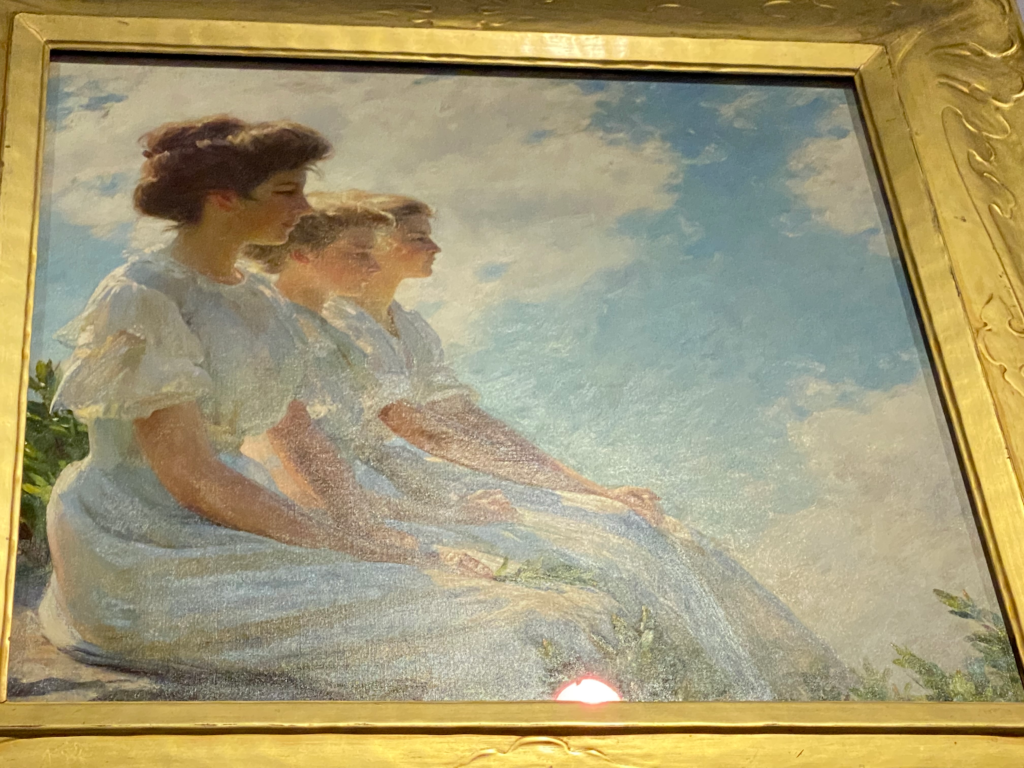
”On the Heights,” Charles Courtney Curran, 1909, oil on canvas
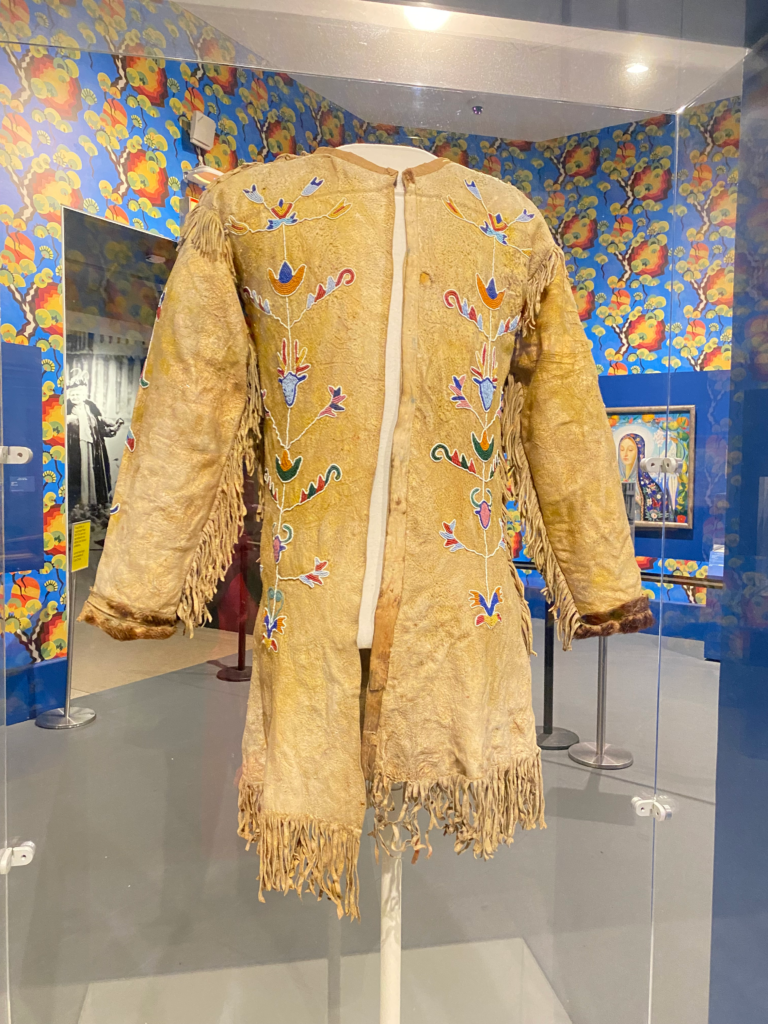
“Man’s Shirt Cut in European Style”, late 19th century, Red River Metis Artist or Eastern Dakota Artist (Manitoba Plains, Canada, or Northern Plains, Dakota) (North America)
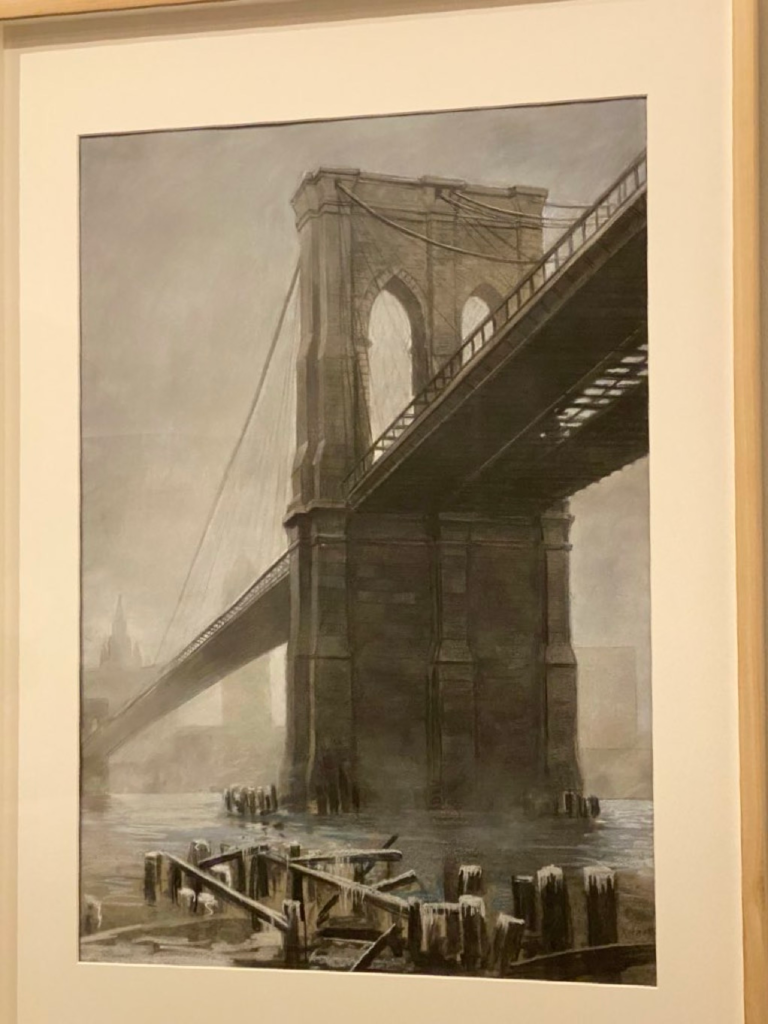
“Brooklyn Bridge,” Richard Haas, 1985, charcoal and pastel; iconic bridge designed by John A. Roebling

Also in the American gallery is Christian Marclay’s “Doors,” a film created with movie clips of characters going in and out of doors, which was thought-provoking and fun. (Having only seconds to “name that film” was an unexpected delight. Spotted Ocean City-Philadelphia’s Grace Kelly several times.)
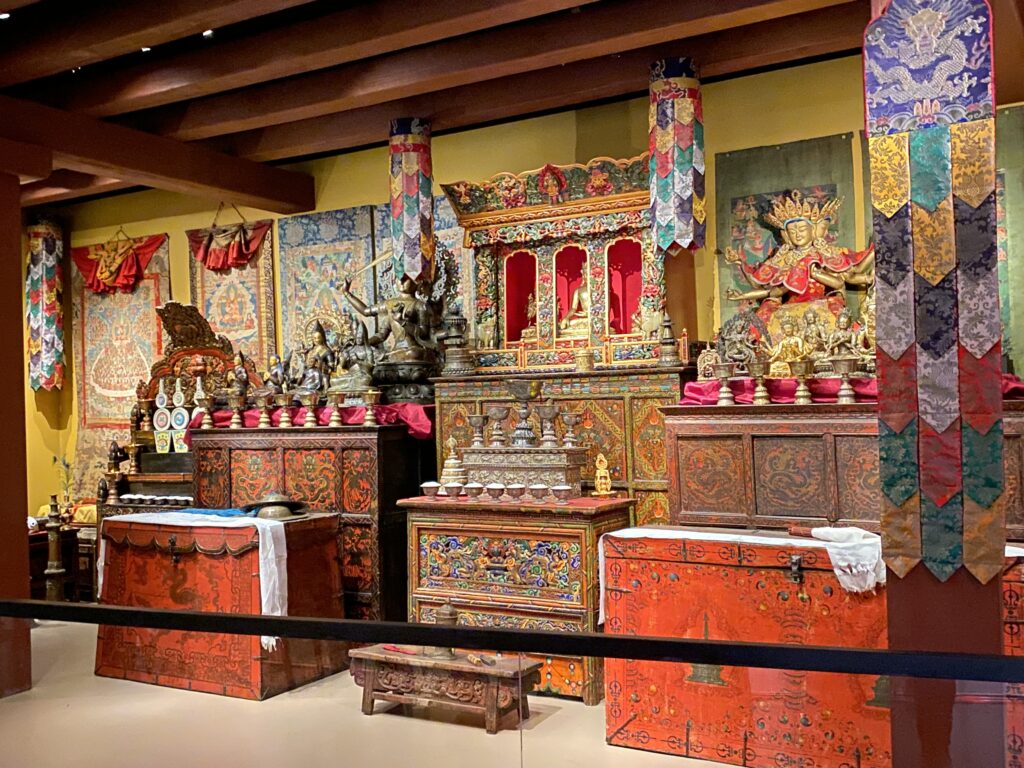
Partial view of the Rubin Museum Tibetan Buddhist Shrine Room

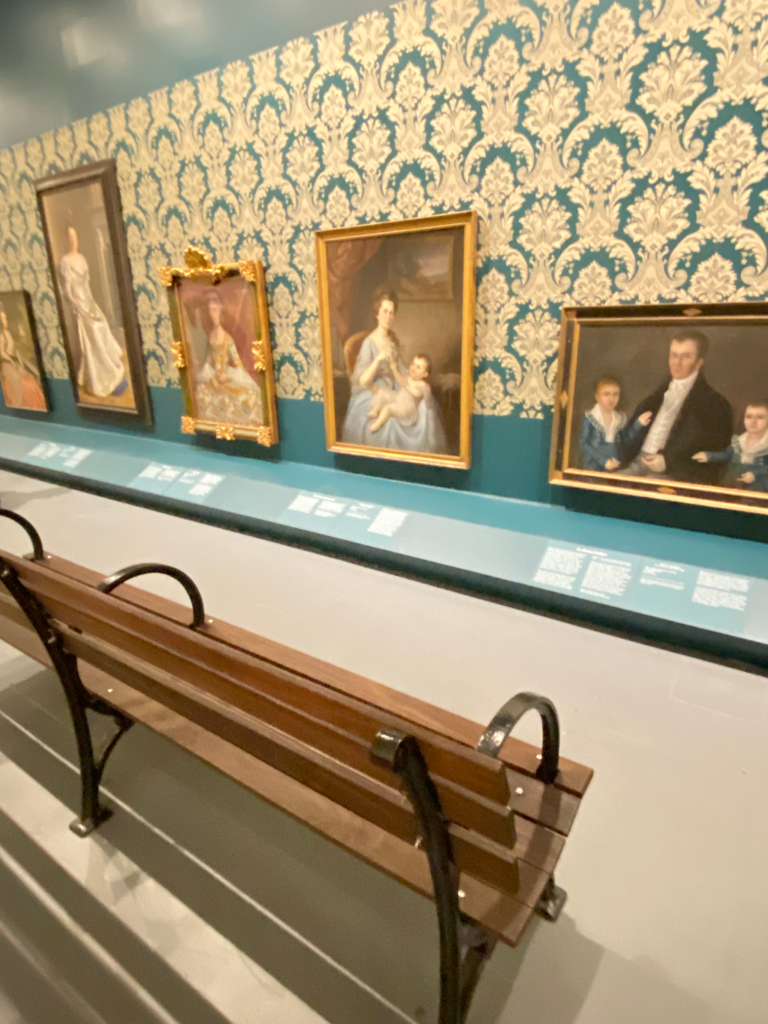
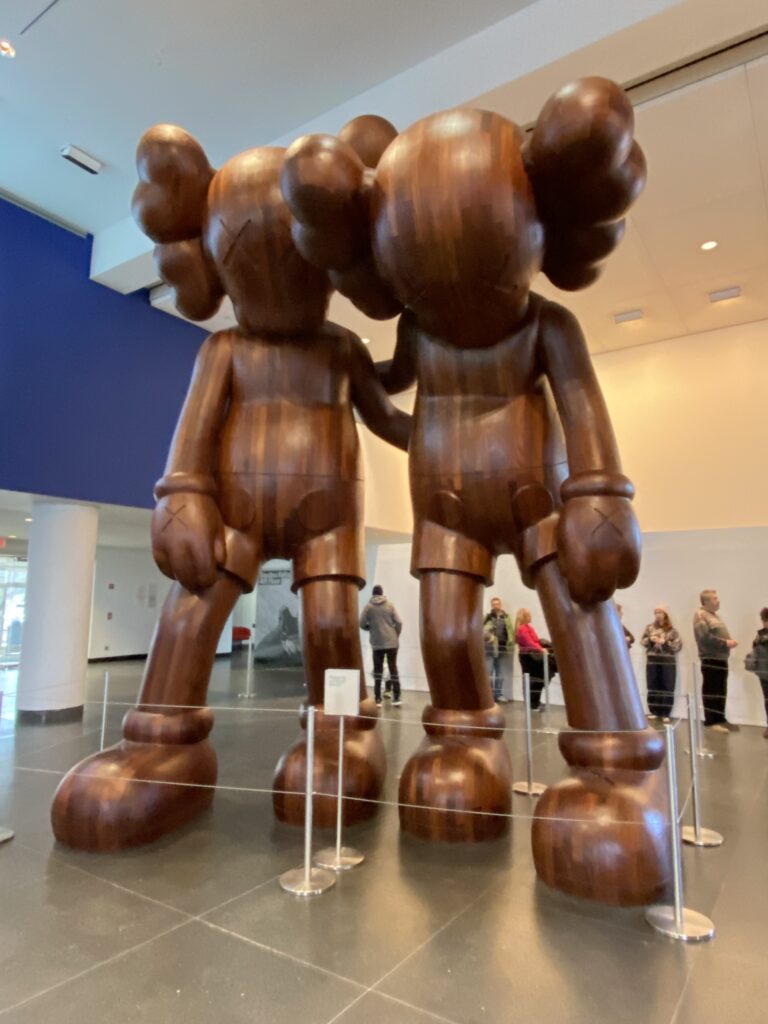
From the get-go, visitors know that the museum is fun.  The wooden pals in the Rubin Pavilion by Brooklyn-based artist KAWS (Brian Donnelly), originally from Jersey City, serve as hosts in the sunny atrium.  Visitors are greeted with smiles by courteous and helpful staff members. The museum is meant for enjoyment and is not just a checklist of cultural must-sees. Floral wallpaper, park benches, and interactive exhibitions underscore this. The Beaux-Arts style building, now being refurbished, is a work of art, designed by the renowned architectural firm McKim, Mead & White, 1895-1897.  
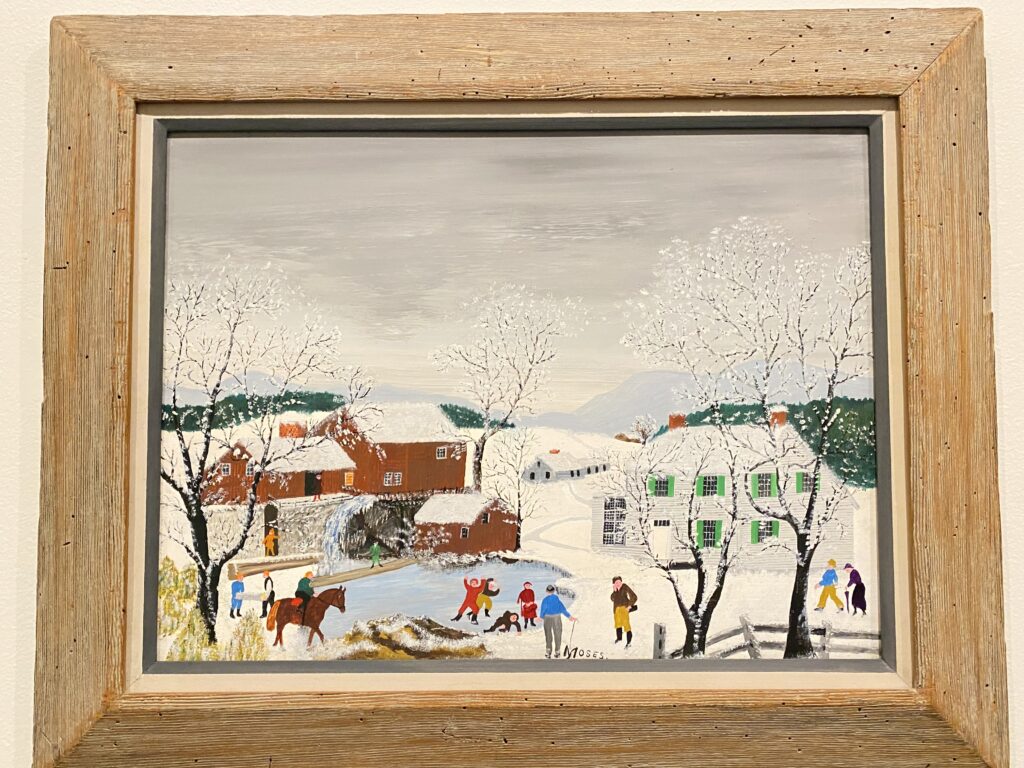
A charming greeting warms the wait of those in the coat check line who have come in from a wintry cold like that depicted in ‘Early Skating,” Anna Mary Robertson Moses (Grandma Moses), 1951:
Must tempt the crash of WordPress with so many beautiful works (!):
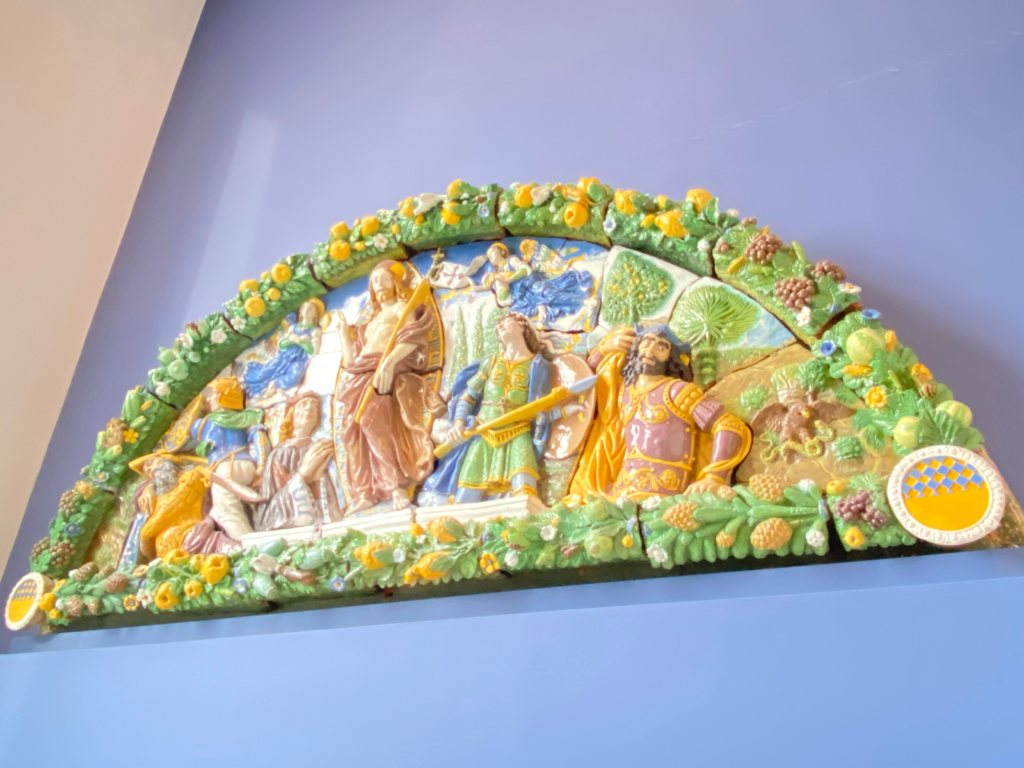
“The Brooklyn Della Robbia” or “The Resurrection of Christ,” Giovanni della Robbia (Italian), 1520, glazed terra cotta, restored by the museum in 2015
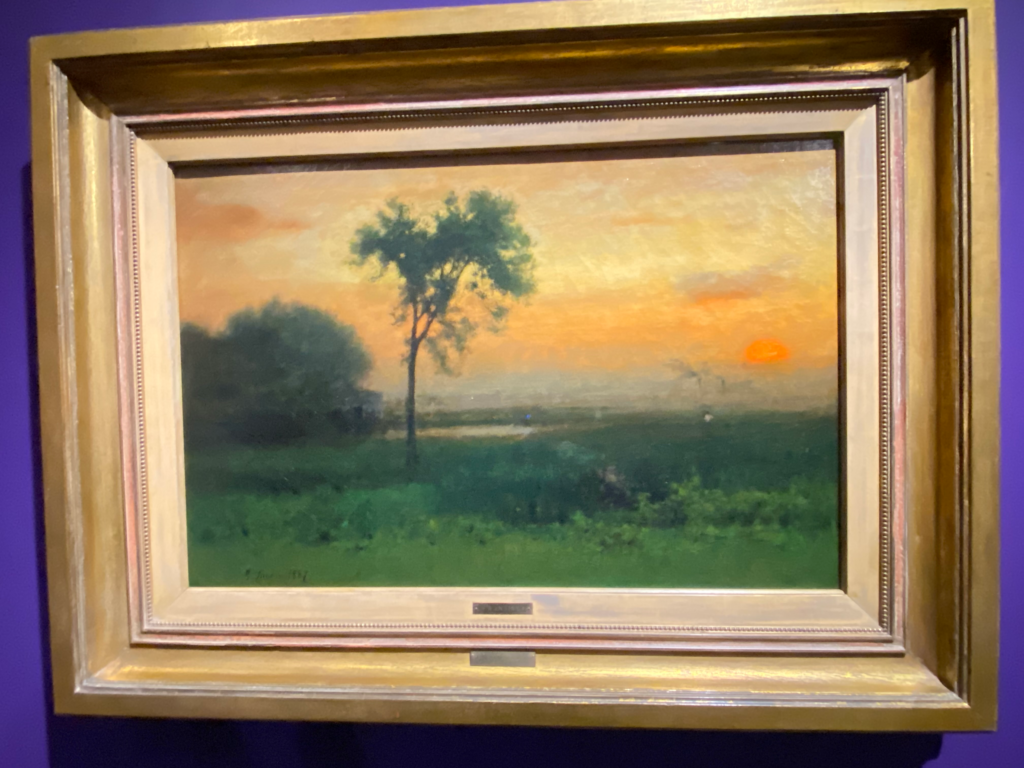
George Inness, “Sunrise,” 1887, Montclair, NJ; his paintings are also on view at the Montclair Art Museum and The Clark Institute with a visit to the latter to see his works described in “Clicking at the Clark”.
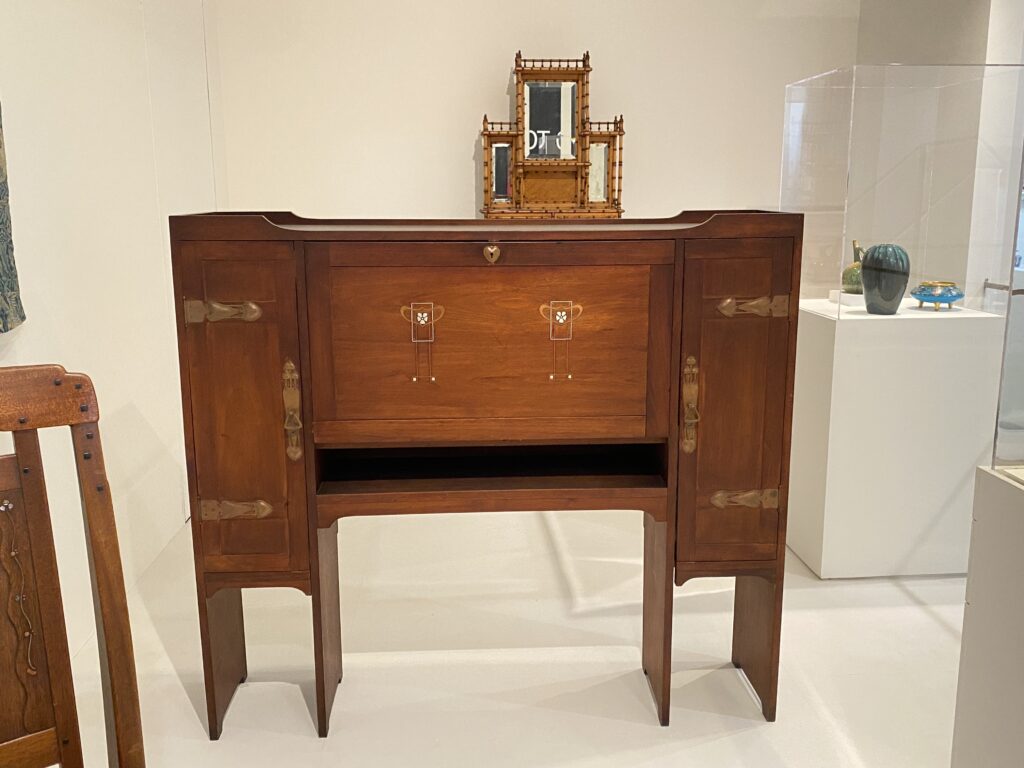
Walnut desk, Gustav Stickley, 1904, whose works are also on view at The Stickley Museum at Craftsman Farms, Parsippany-Troy Hills, NJ
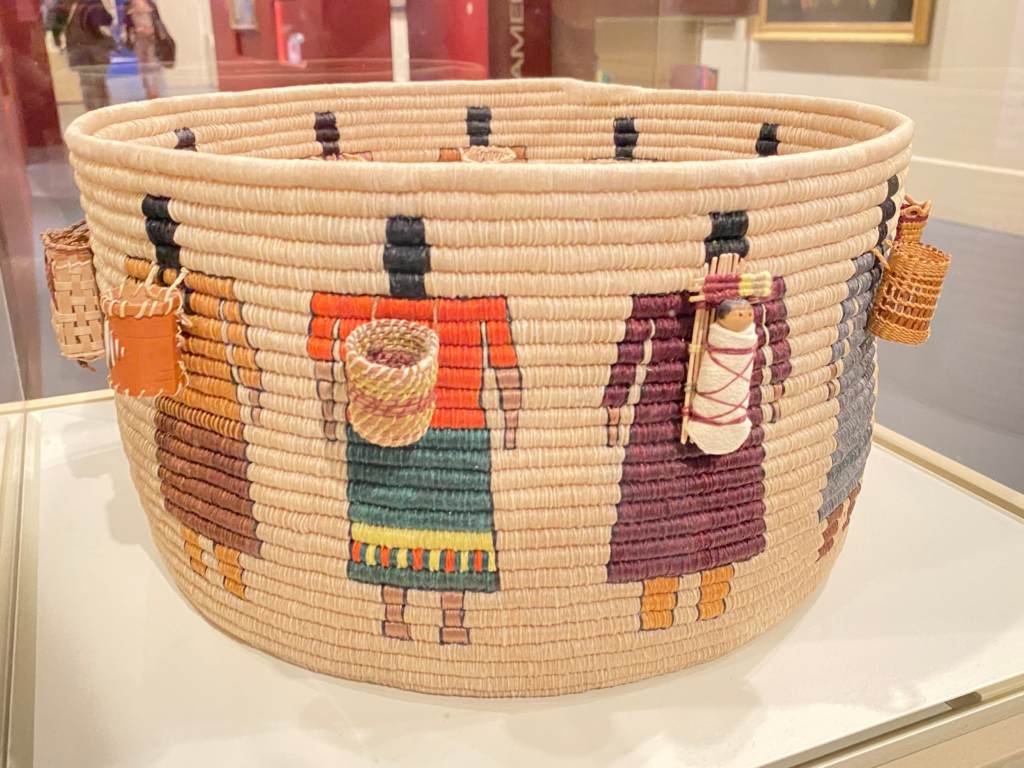
Cultural Burdens Basket, Carol Emarthle-Douglas, 2016, hemp, waxed linen thread, reed, hickory
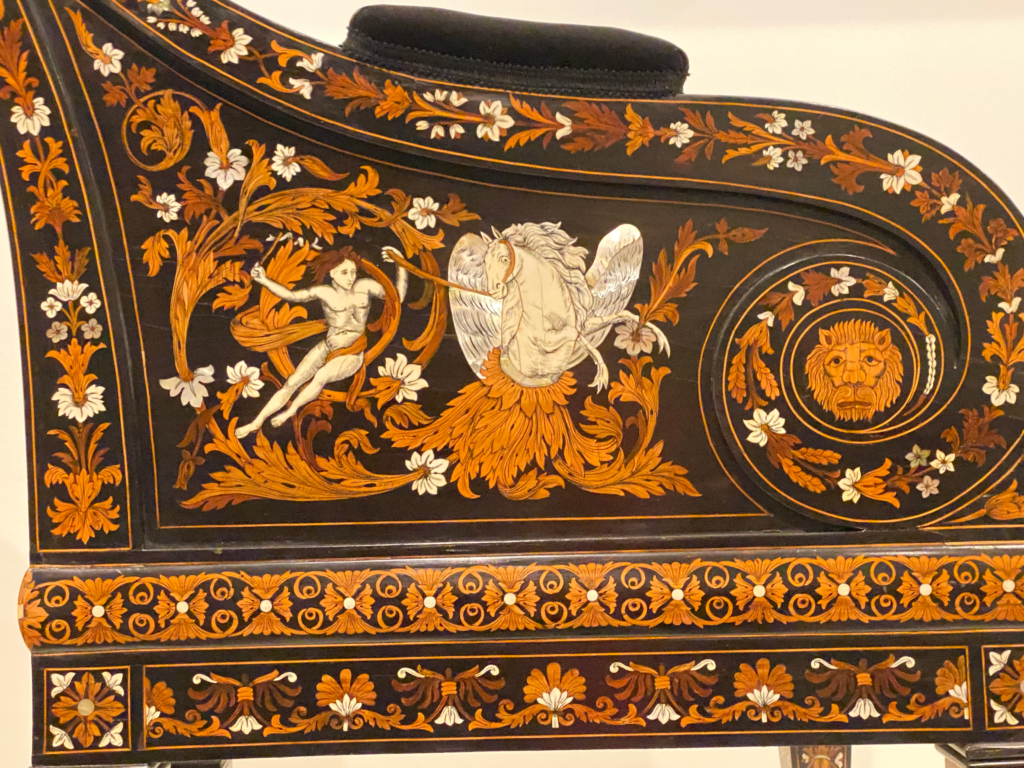
Mahogany chair, Charles-Honore Lannuier, 1700’s, with shimmering details, inspired by Ancient Greek klismos chair
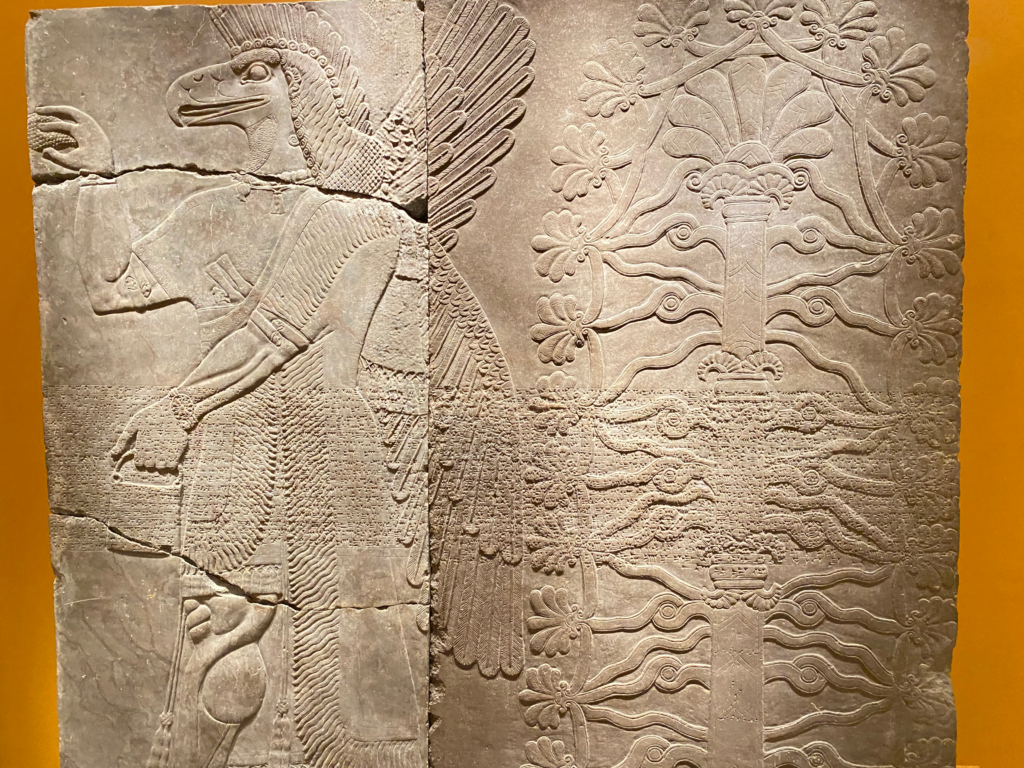
Apkallu-figure (a Mesopotamian demi-god) between Two Sacred Trees, Neo-Assyrian Period, circa 883-859 B.C.E., from the palace of Ashur-nasir-pal II at Nimrud; the reliefs were “meant to awe” visitors.
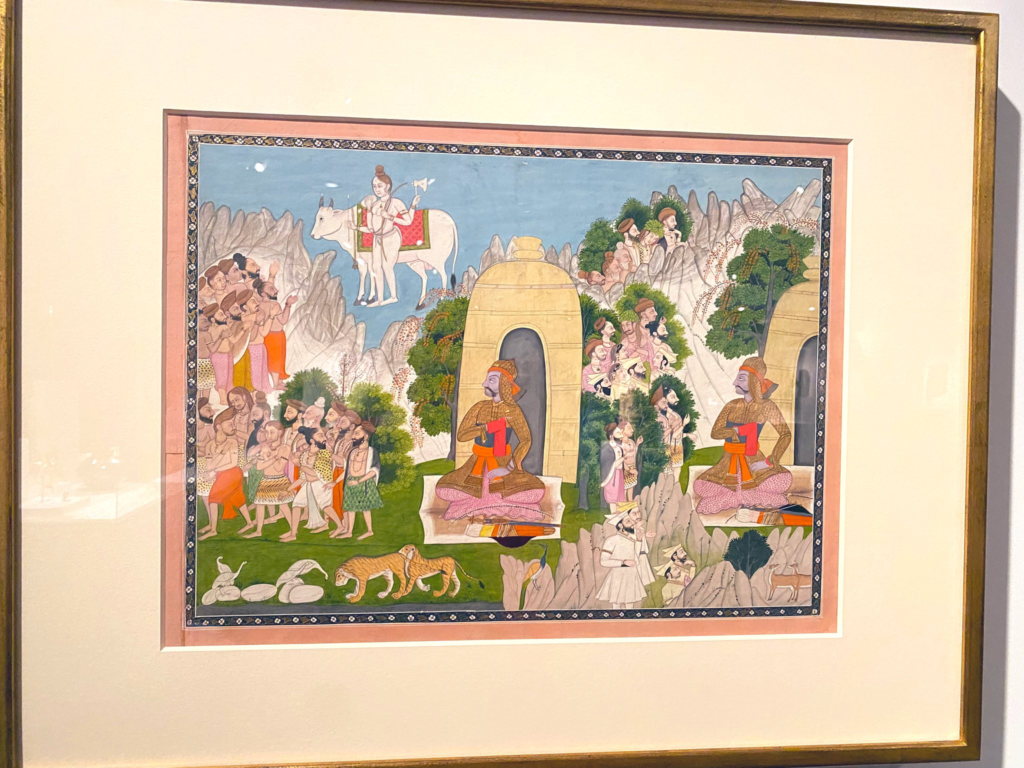
“Ajuna’s Penance” from the “Muhabharata,” ca. 1825-40, India
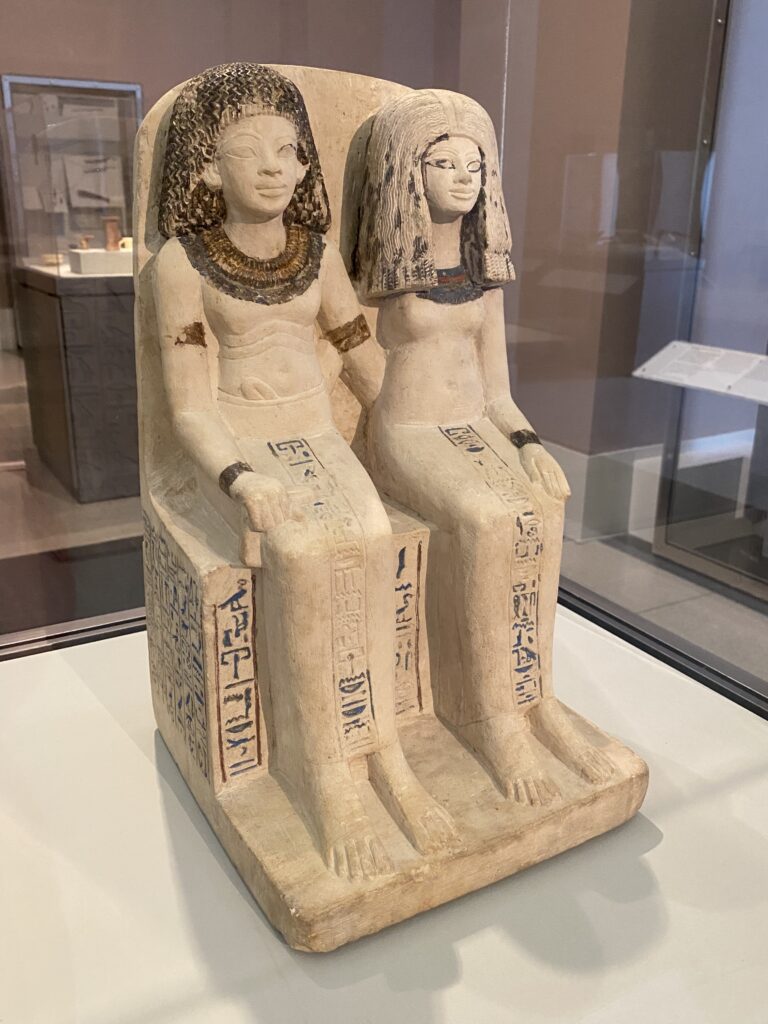
Pair Statue of Nebsen and Nabet-ta, New Kingdom, Dynasty 18, reign of Thutmose IV or Amunhotep III, circa 1400-1352 B.C.E. (The label notes that Nebsen was “a scribe in the royal treasury” and Nebet-ta was “a singer in the temple of the goddess Isis”.)
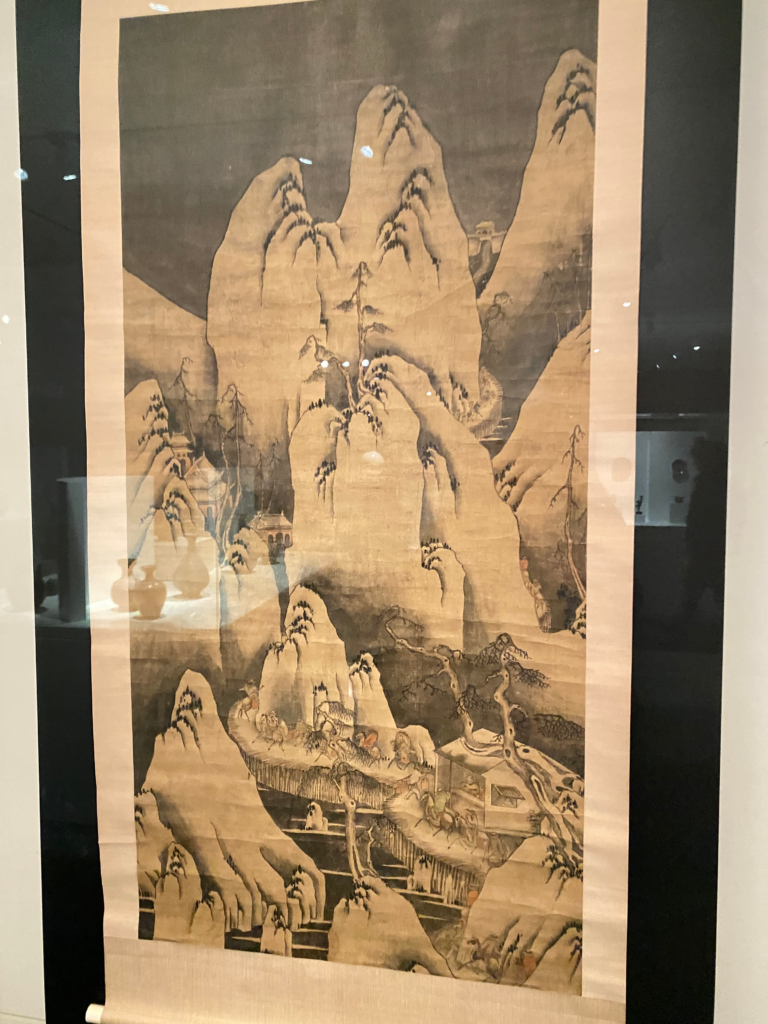
Ancient scroll, Arts of Korea

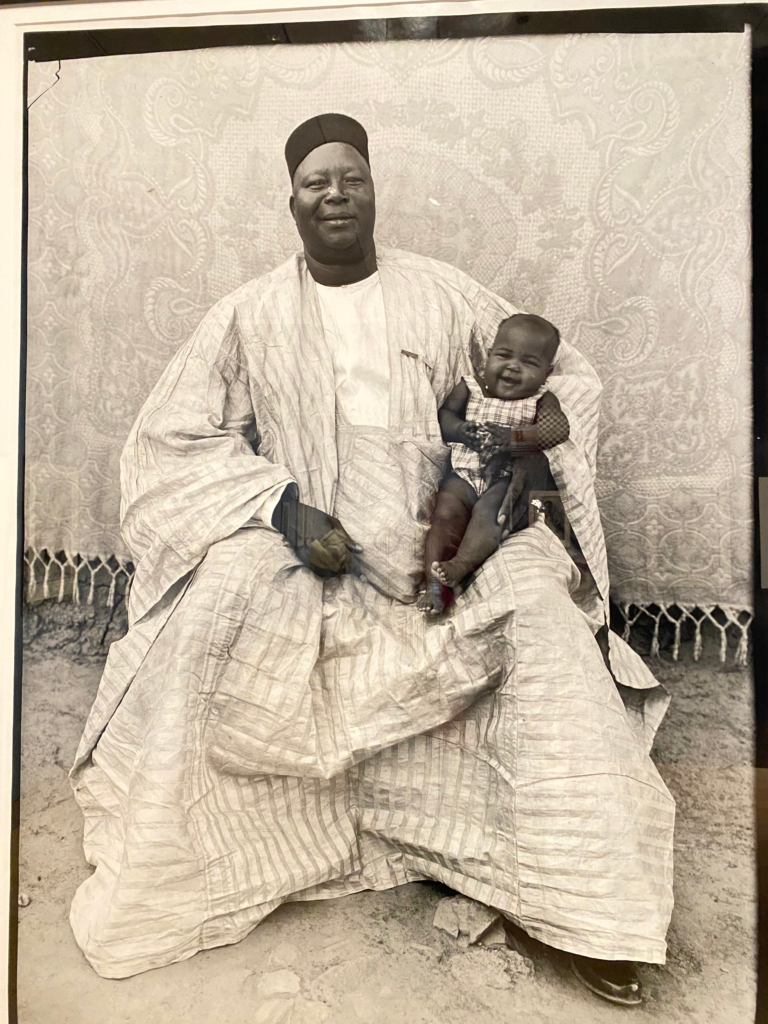
Not to be missed are the mesmerizing portraits of “Seydou Keïta: A Tactile Lens” through May 17th.  The Malian photographer Seydou Keita (1921/1923-2001), “the father of African photography,” worked primarily in his studio in the nation’s capital of Bamako.  He produced beautiful portraits that reflected the country’s history from the 1950s through the 1970s, a period which saw national independence, a coup, and a famine.  The sweet account of Seydou’s start is that his uncle gifted him a Kodak Brownie camera. Photography was a curiosity at the time in Mali.  People flocked to have their photos taken by Keita, who had a mentor in French photographer Pierre Garnier, but was largely self-taught and initially supported himself as a carpenter.  The compelling portraits reveal his subjects’ trust in him.  What is remarkable is that due to costs, he only took a single shot of each person. 
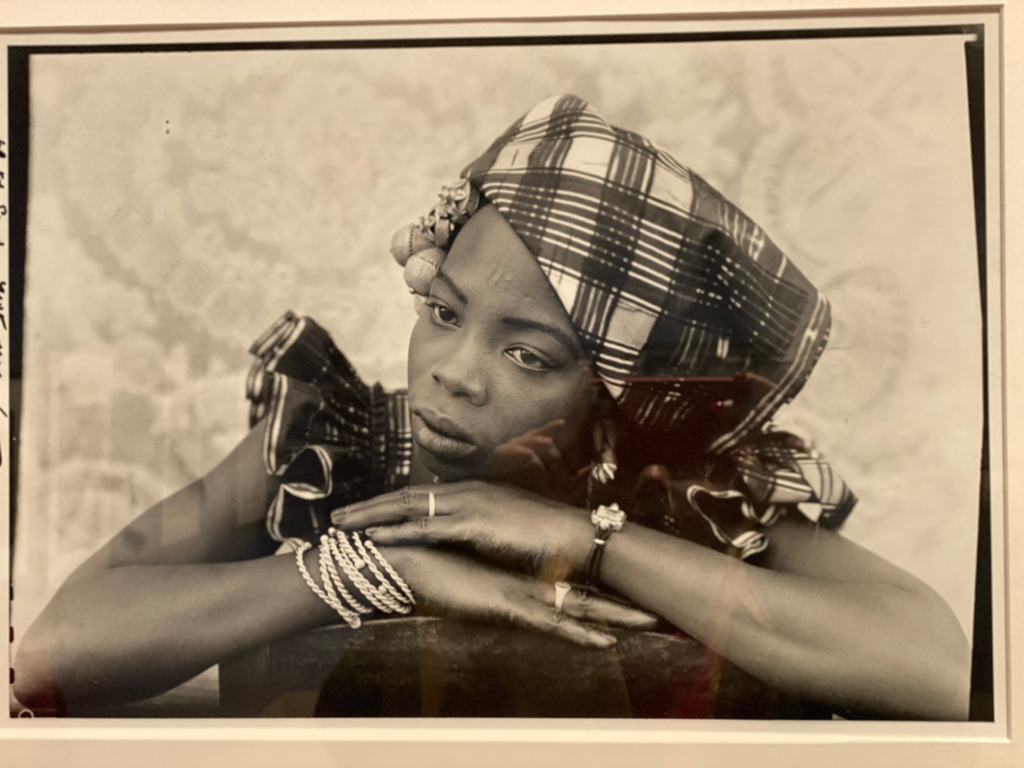
Eventually, a government job and the theft of his equipment in the 1970’s took the artist-photographer from his studio; however, as he remarked, he retired once color photography became the fashion.  In the 1990s, his work was discovered in Europe and the United States. (Seydou Keita’s portraits are also on exhibition at MOMA through July.)
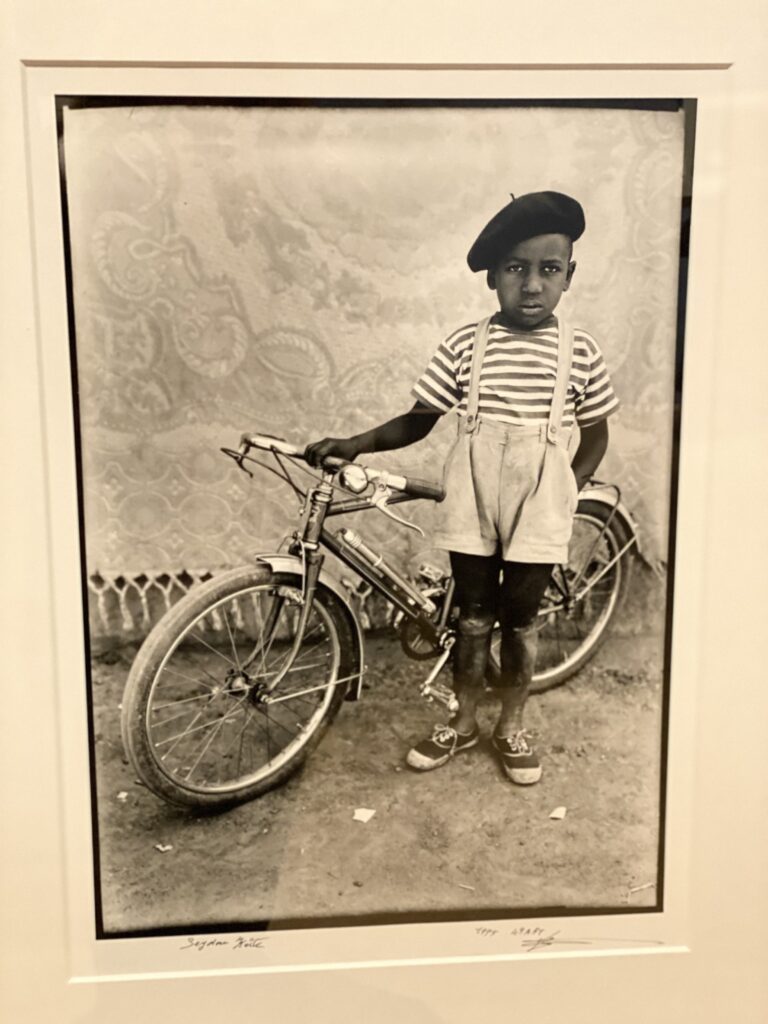
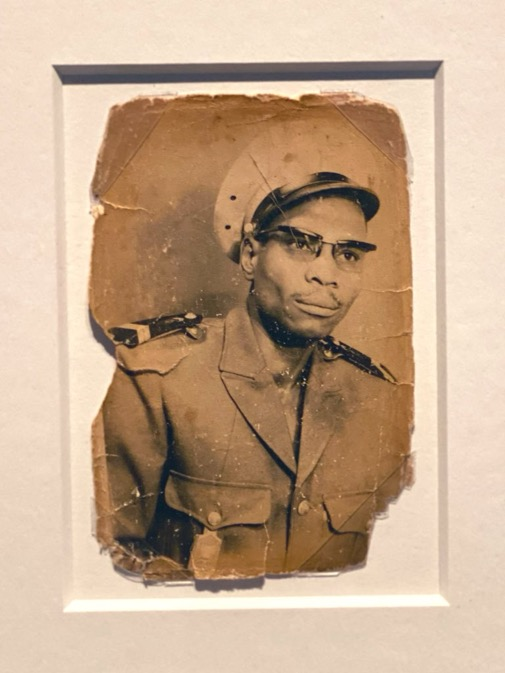
Seydou Keita, 1963, when he served as official state photographer (1962-1977)
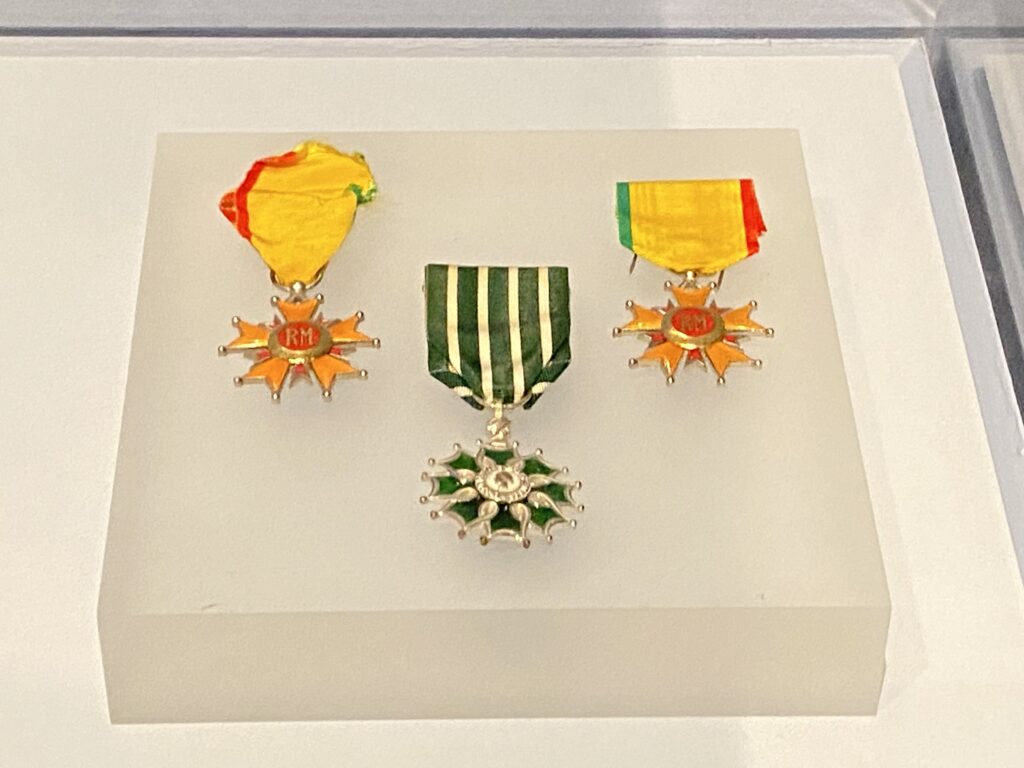
Mr. Keita’s National Order of Mali Medals and a Silver Order of Arts and Letters Chevalier Medal from the French government for his “significant contribution to the arts”.
There is still so much more to see at the Brooklyn Museum including, “Breaking the Mold: Brooklyn Museum at 200,” commemorating the history of art in the borough.  “Unrolling Eternity: The Brooklyn Books of the Dead” opens January 30th. Went back a couple times, but kept missing, “The Dinner Party” (the invitation must be in the mail) and the Feminist Exhibition (mea culpa from a Seven Sisters graduate), and Norman Rockwell’s “The Tattoo Artist,” which was in storage on this visit.  On that note, the Visible Storage and Study Center was an innovative way to enjoy some of the collection not currently on view.
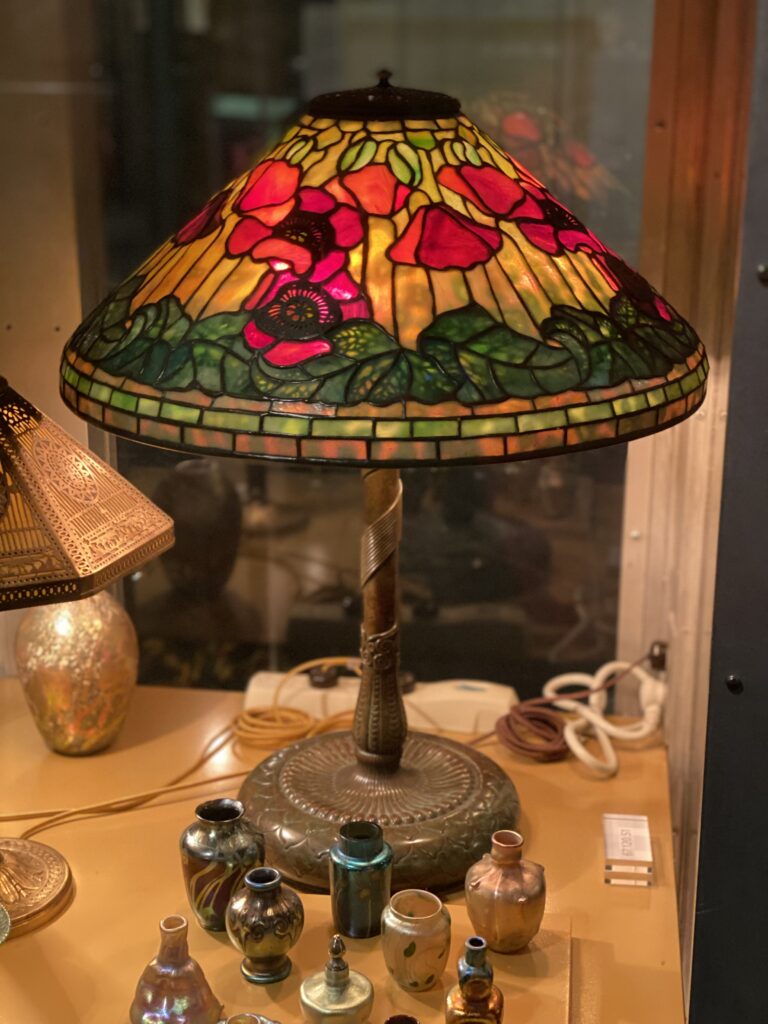
Tiffany Studios Leaded Glass Red Poppy Bronze Table Lamp, early 1900’s. Historical trivia: While a student at Eagleswood Military Academy in Perth Amboy, NJ, Louis Comfort Tiffany studied art with George Inness.

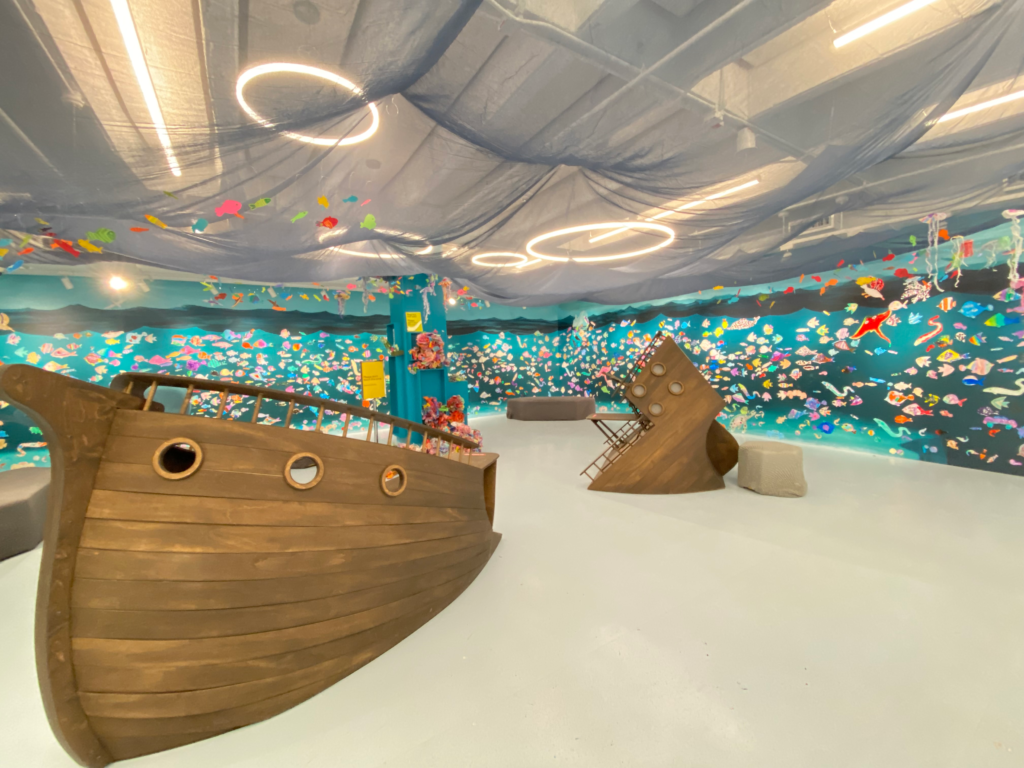
An inviting Education Center with Oliver Jefferies’, “Life at Sea,” 2025, on view through April 26th. The museum offers activities for children and teens, Kids Club memberships, and university memberships.
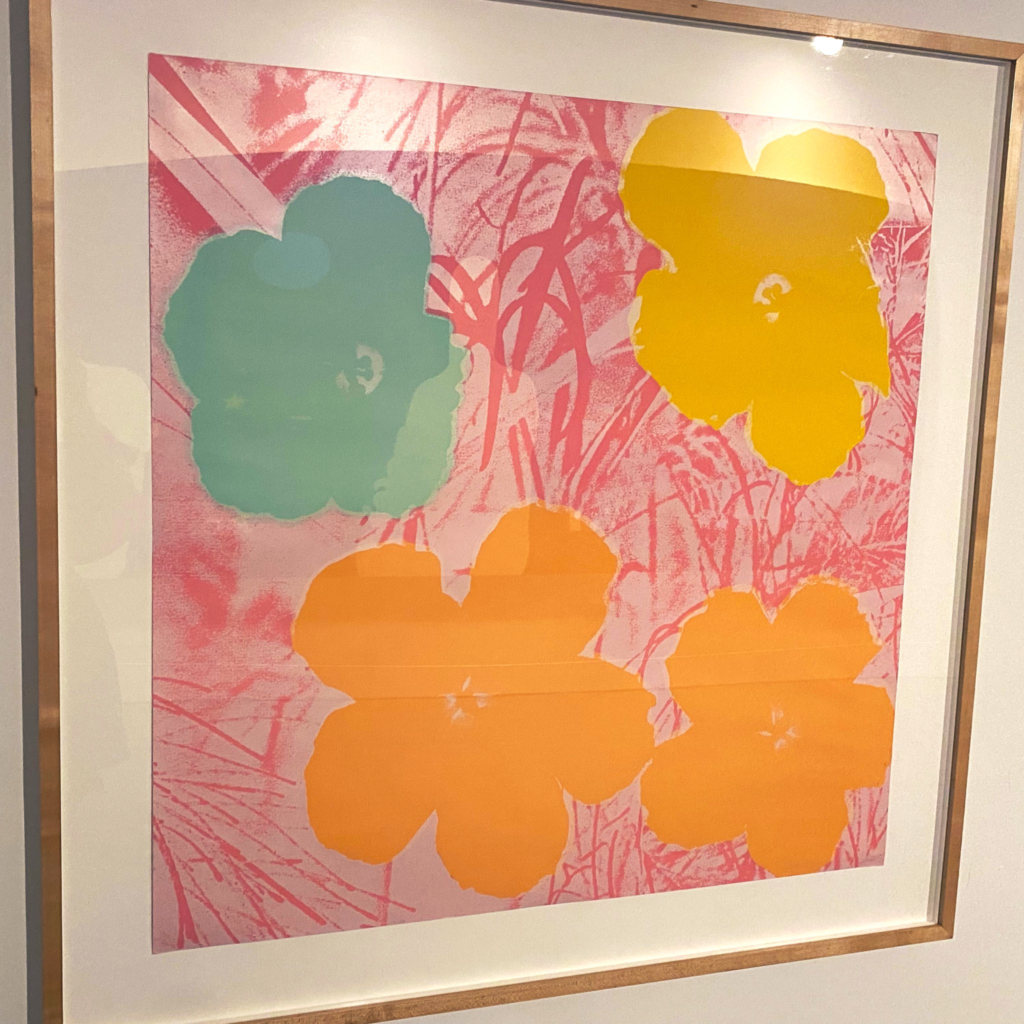
“Flowers,” Andy Warhol, 1970, screenprint
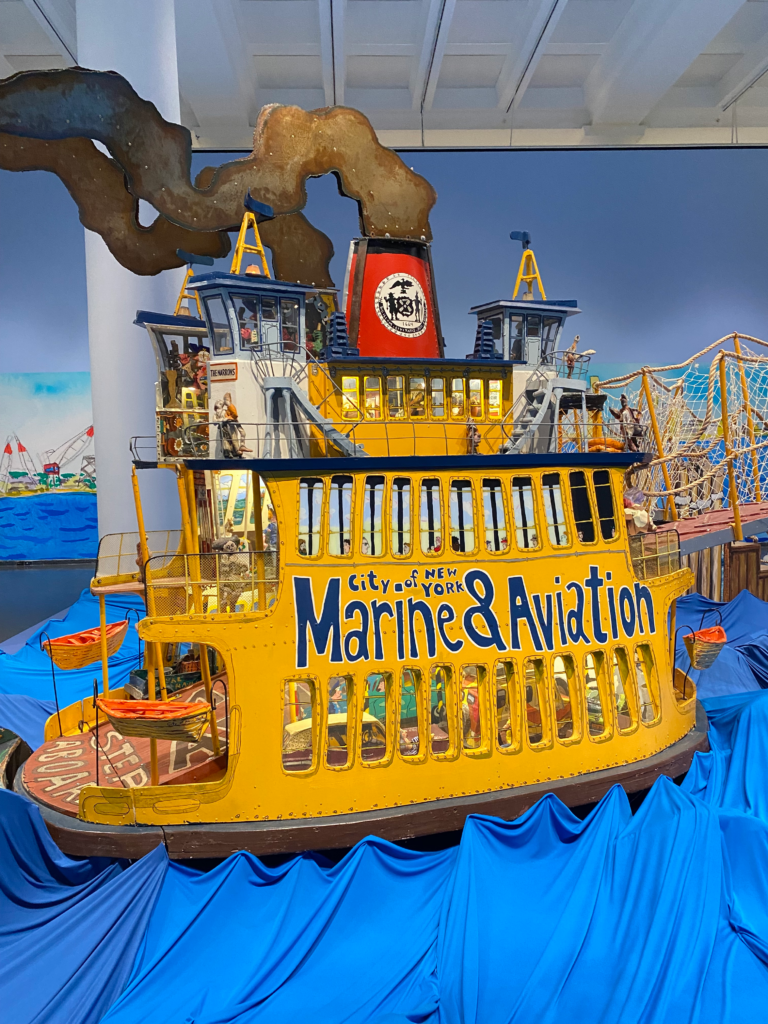
Excerpt from “Ruckus Manhattan” by Red Groom, Mimi Gross, and “The Ruckus Construction Co.”

Practical, random tidbits: Timed tickets for “Monet and Venice” kept things moving, though not rushed. Ticketed parking is convenient, as was public transportation on a visit some years ago; the 2/3 subway lets visitors out on Eastern Parkway–Brooklyn Museum, which is wheelchair accessible.  (In a neighborly fashion, there are directions from Long Island, Westchester, New Jersey, and Connecticut on the museum website.) Bike racks are available for cyclists.  The museum allows standard-size strollers, which flow smoothly in museum traffic.  Most galleries include live captioning.  Trained service animals are permitted; there was one beautiful and impeccably well-behaved tall, white poodle or a labradoodle on a leash, which looked like it stepped out of a painting.  If anyone wants to avoid the coat check, which takes a while, consider wearing a lightweight coat and a wristlet or the like; purses and bags will need to be checked for security.
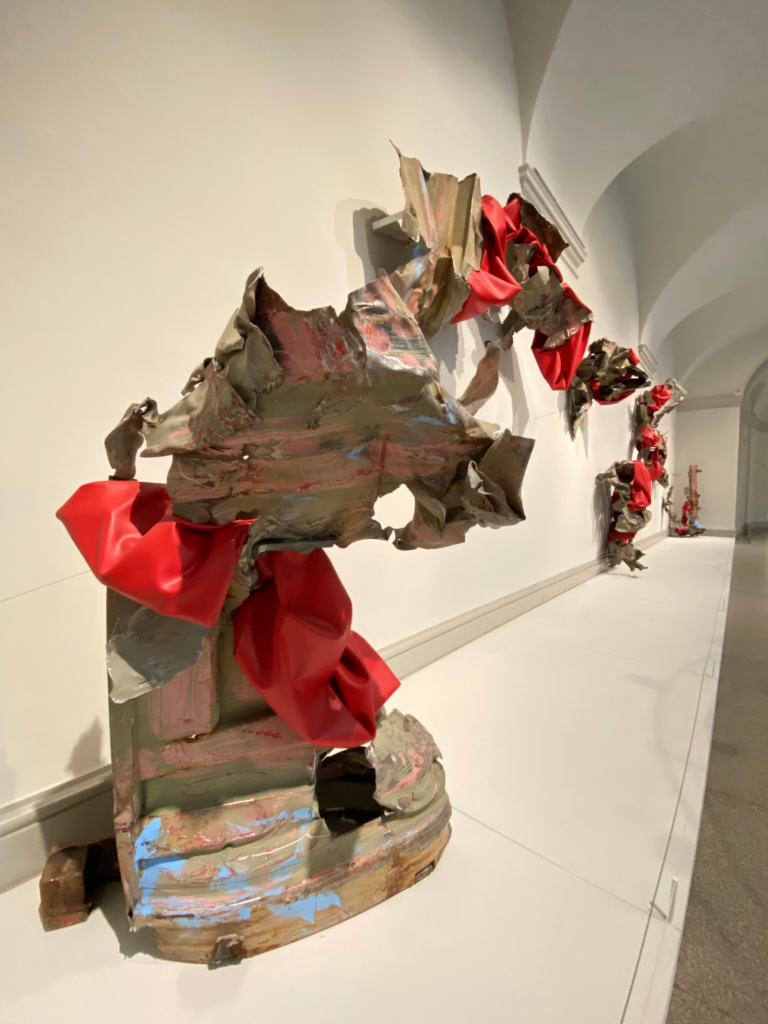
Side view of “No More Drama,” Kennedy Yanko, 2022, Brooklyn-based artist via St. Louis, Missouri

The light and airy café features friendly staff and healthful options.  Though it is not overly expensive for a museum café, it could be costly for a family. The profit, however, supports the museum. (Members receive a 10% discount.) In warmer weather, food trucks are outside.
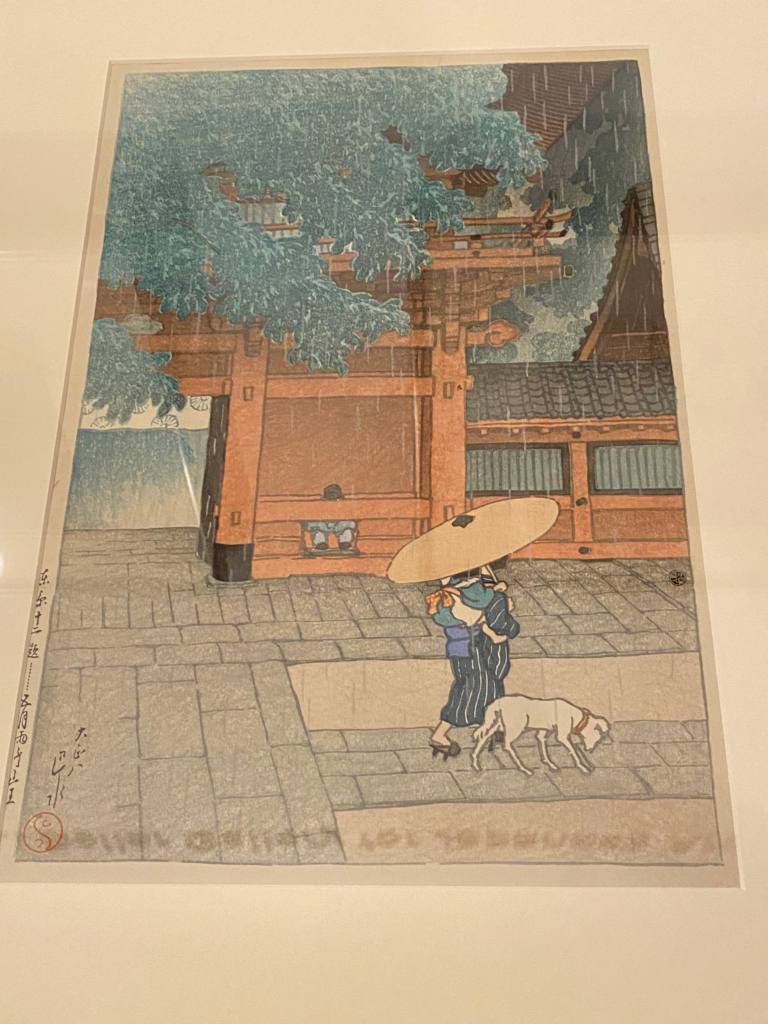
“Early Summer Rain at the Sanno Shrine” from the series “Twelve Scenes of Tokyo,” Kawase Hasui, 1919, woodblock print on paper
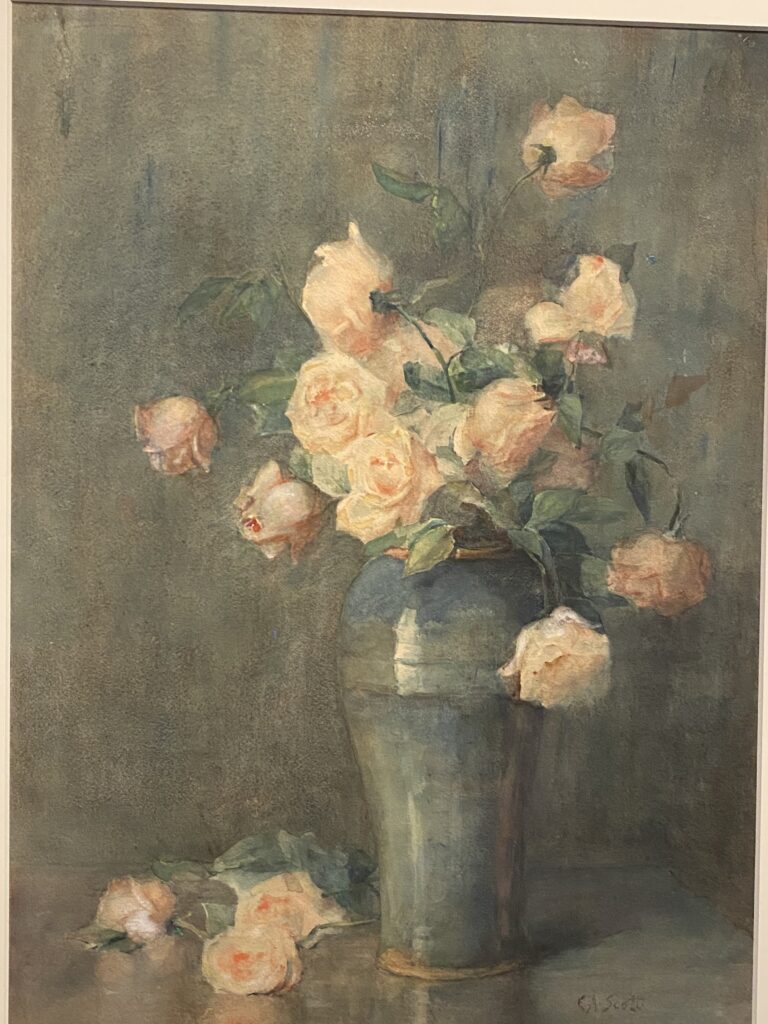
“Tea Roses,” Emily Maria Spaford Scott, aka “Lady of the Roses,” late 19th-early 20th century, watercolor
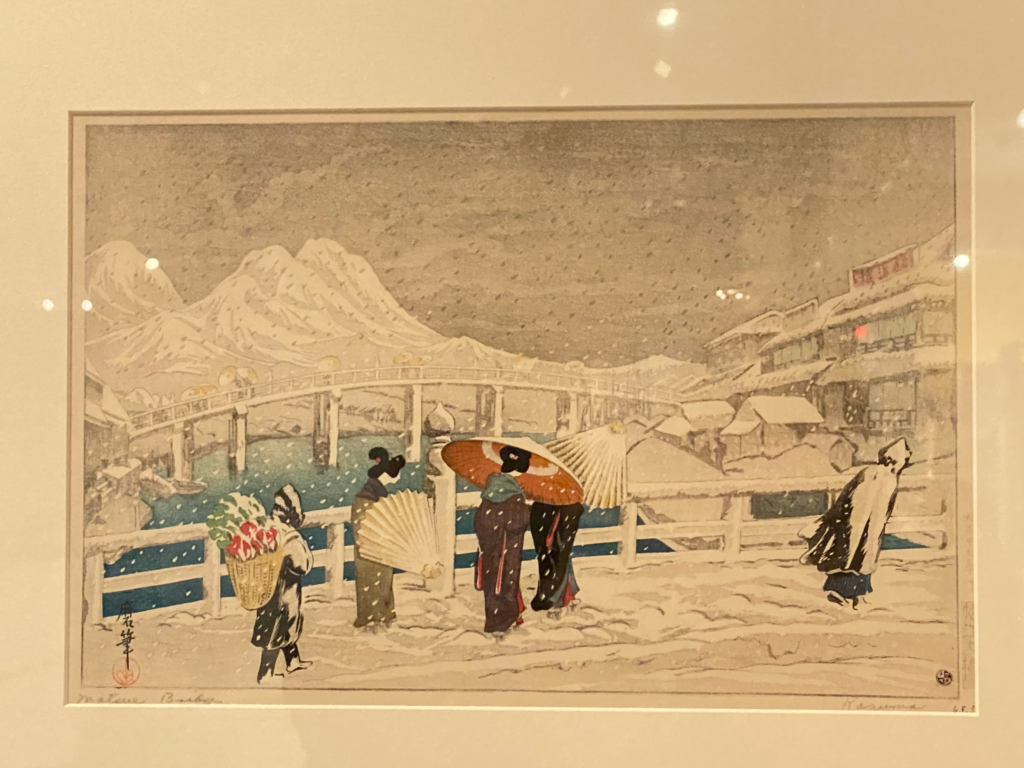
Winter scene by Kawase Hasui

Select First Saturdays, which start February 7th, welcome visitors free of charge.  Enjoy upcoming programs like the Lunar New Year celebration.
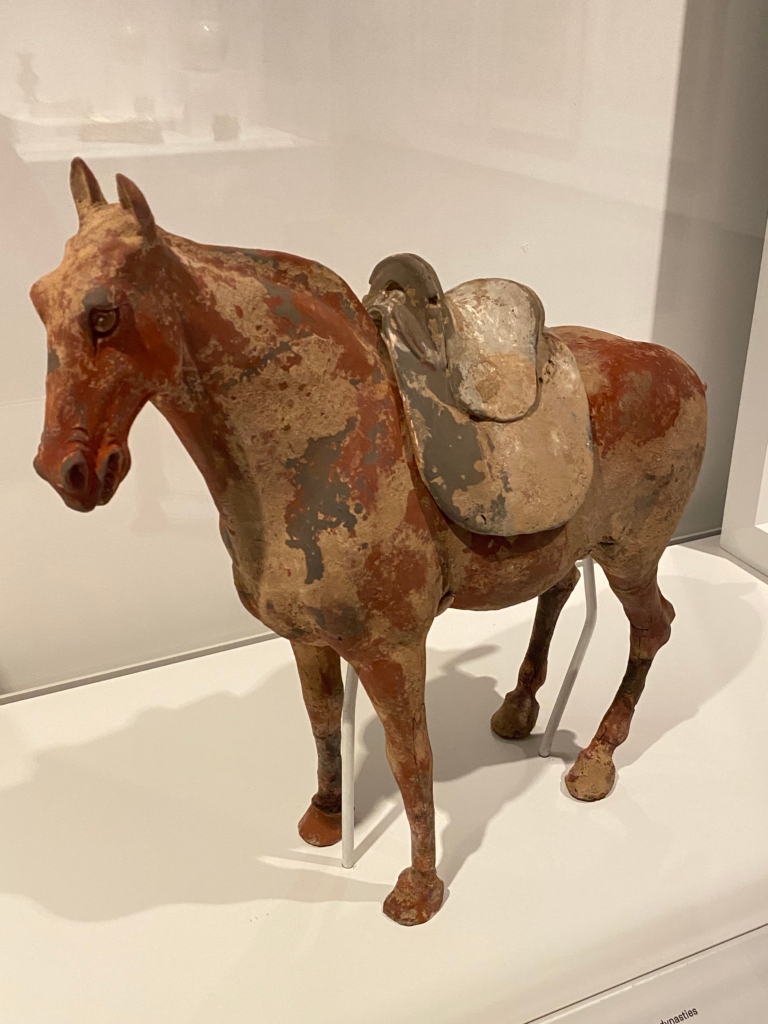
Year of the Horse 2026, Horse with Saddle, late 6th century, China, earthenware

Travel sites note that a visit to the Brooklyn Museum takes between 2-4 hours.  Reserve a day to enjoy all that it has to offer!
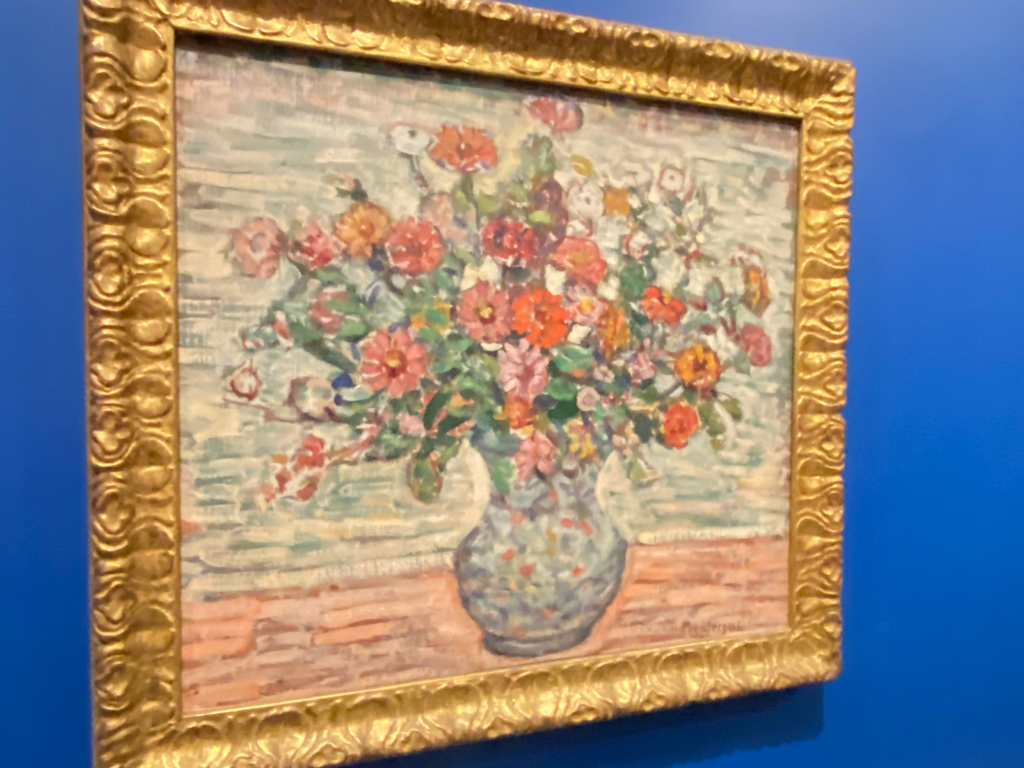
“Flowers in a Vase (Zinnias),” Maurice Brazil Prendergast, ca. 1910-1914, presented with a note on zinnias from the Brooklyn Botanic Garden
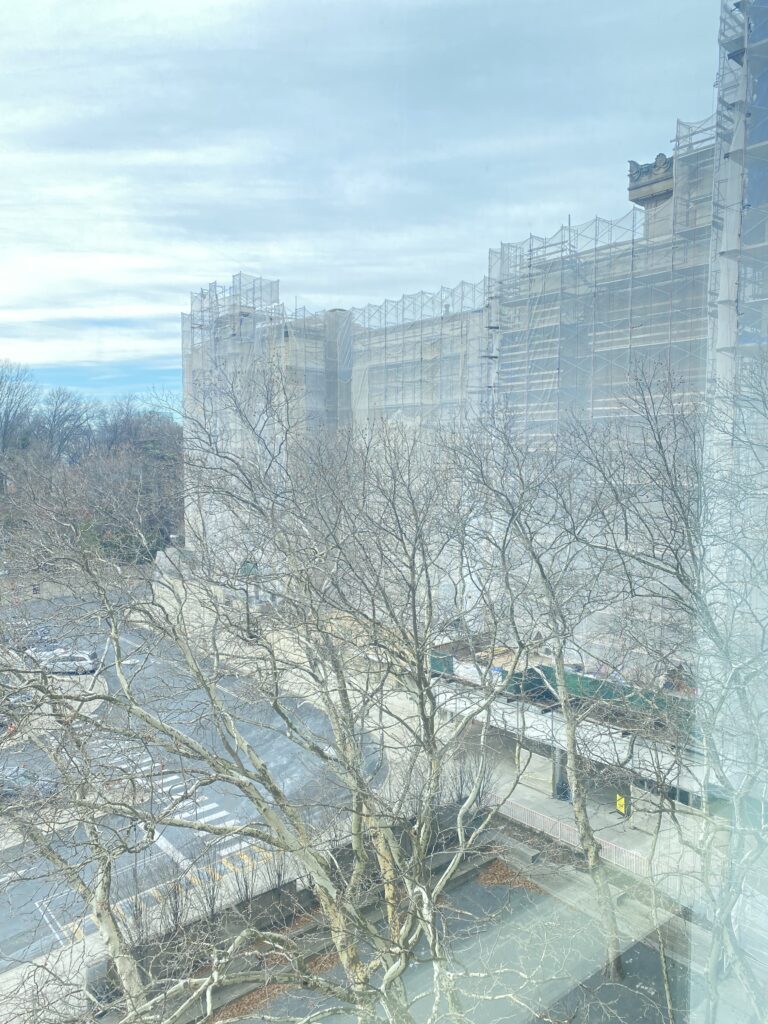
Brooklyn Museum’s refurbishment in Monet’s blue light

(Sources: brooklynmuseum.org, theartnewspaper.com (interview with Jackie Wullschläger, author of Monet: The Restless Vision), claudemonetgiverny.fr, dailyartmagazine.net, seydoukeitaphotographer.com, artnet.com, all-about-photo.com, traveladvisor.com, reverse image app, YouTube, Wiki)

“’Monet and Venice‘ at the Brooklyn Museum” All Rights Reserved ©2026 Kathleen Helen Levey

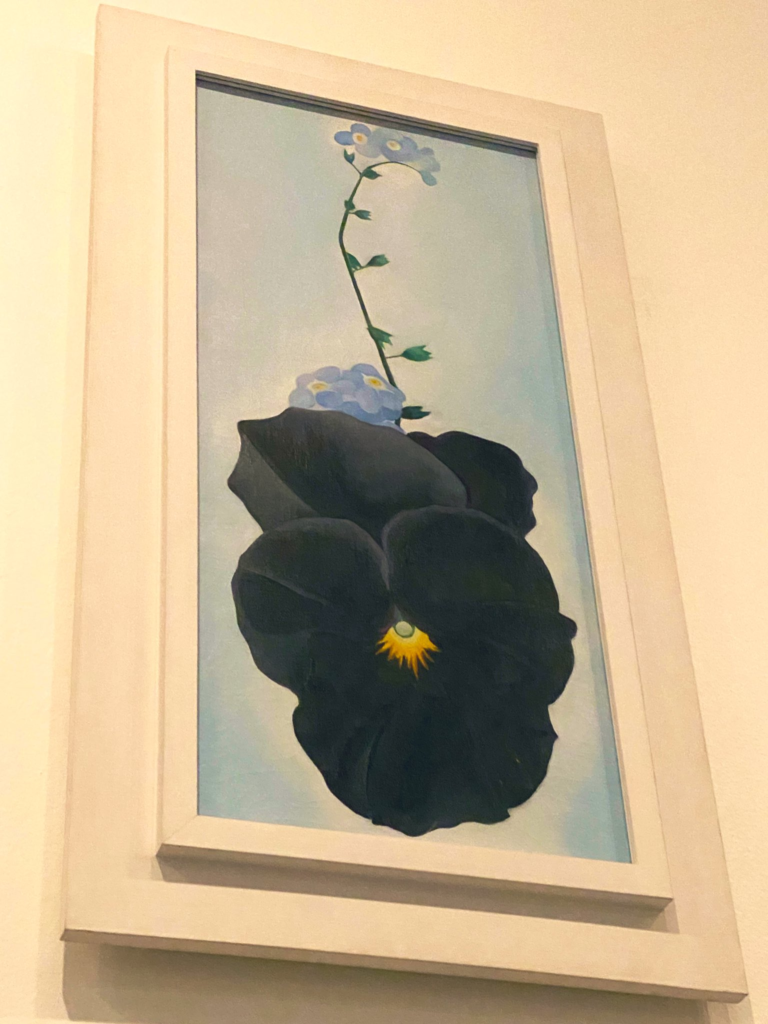
Georgia O’Keefe has the final word with “Black Pansy & Forget-Me-Nots,” 1926, oil on canvas
Renoir and the Psalms at The Morgan Library

I like a painting which makes me want to stroll in it. ” Pierre-Auguste Renoir

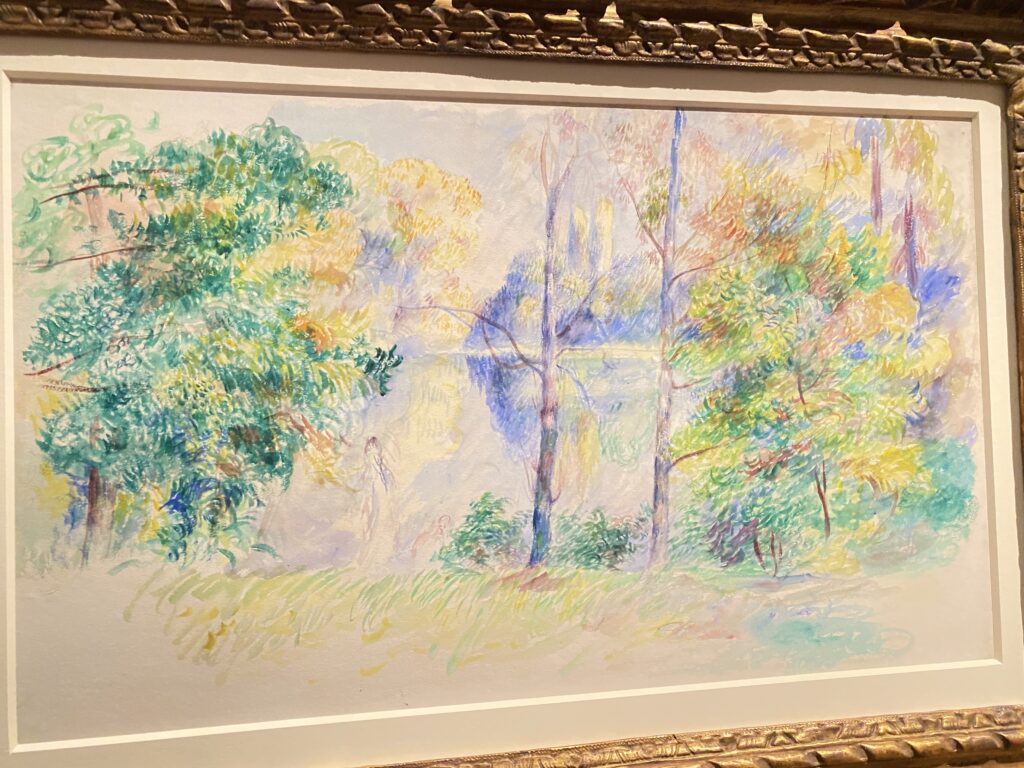
“View of a Park,” ca. 1885-90, watercolor, The Morgan Library

Step into the eternal spring of Renoir in a new exhibition of his drawings at The Morgan Library and Museum.  November brings its own kind of beauty, but the dappled Impressionist light of Renoir’s art is a joyfully irresistible invitation.

The Morgan Library exhibition is an incredible opportunity to enjoy Renoir’s rarely displayed drawings and see the process for several of his great works. The exhibition with the artist’s drawings and paintings in two large galleries features works from museums and private collections around the world.  Visitors receive an overview in the room adjoining the galleries that includes two filmed interviews with Renoir from 1915 and 1920.  The size of the exhibition is ideal for enjoying his art in pen and ink, pencil, chalk, pastels, watercolor, oil, and even plaster.

“Portrait of a Girl,” 1879, pastel, The Albertine Museum, Vienna

Renoir is an artist whom we all think we know, but the meticulously curated exhibition offered new insights, not just revisits to his beloved works.  Some of these prompted more research into Renoir’s life and art.

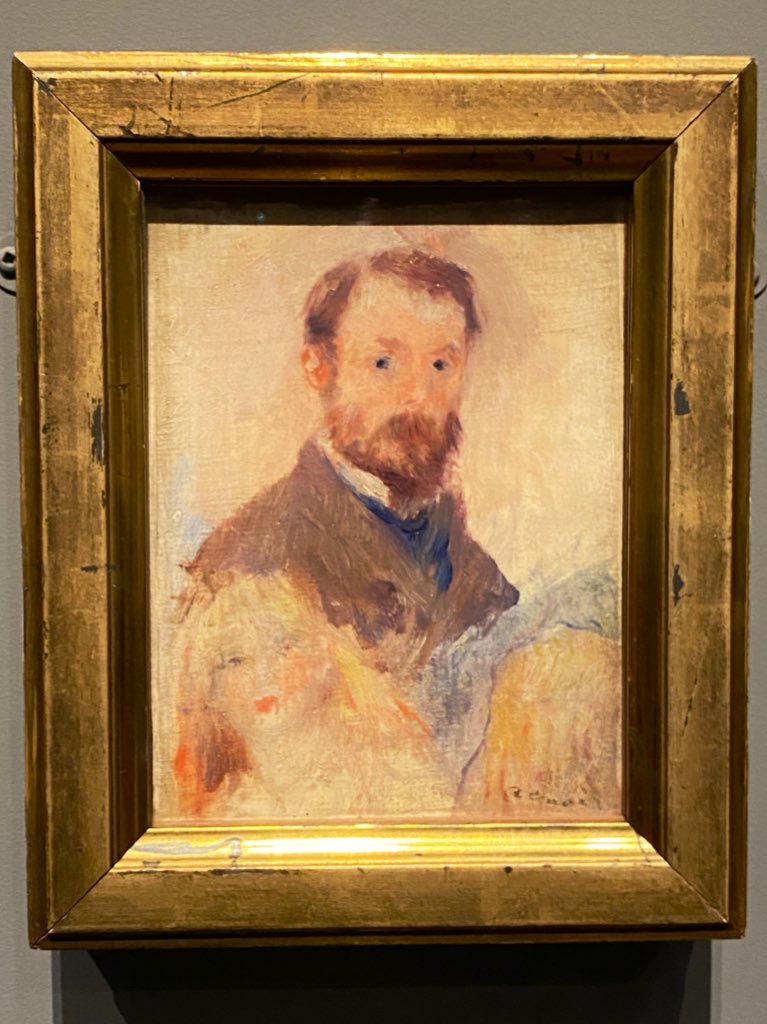
“Self-Portrait,” 1879, oil, Musee d’Orsay, Paris

Renoir as a decorative artist

Renoir, who was from a family of artisans, originally studied decorative arts and saw himself as a craftsman, not an artist. “To my mind, a picture should be something pleasant, cheerful, and pretty, yes pretty! There are too many unpleasant things in life as it is without creating still more of them.”  One of seven children, Pierre-Auguste spent his first few years in Limoges, known for its porcelain and high-end leather goods industries. Around the time of his birth in 1841 and during early childhood, there were riots among the poor workers. (Limoges was the city of the first consolidated French workers’ union in 1895.)  When Renoir was a small boy, his family moved to Paris, so his father, a tailor, might find work.  Renoir apprenticed at a porcelain factory and was highly skilled at painting decorative flowers. Clearly talented, he got a permit to sketch at the Louvre, which was near his home.  Having saved a bit, Renoir took night classes at the Ecoles Beaux-Arts (School of Fine Arts) and painting lessons with Swiss-born Charles Gleyere, who had studied with renowned Neoclassical portrait artist Jean Auguste Dominique Ingres. Renoir surprised his serious teacher by sharing, “If painting were not a pleasure to me I should certainly not do it”.

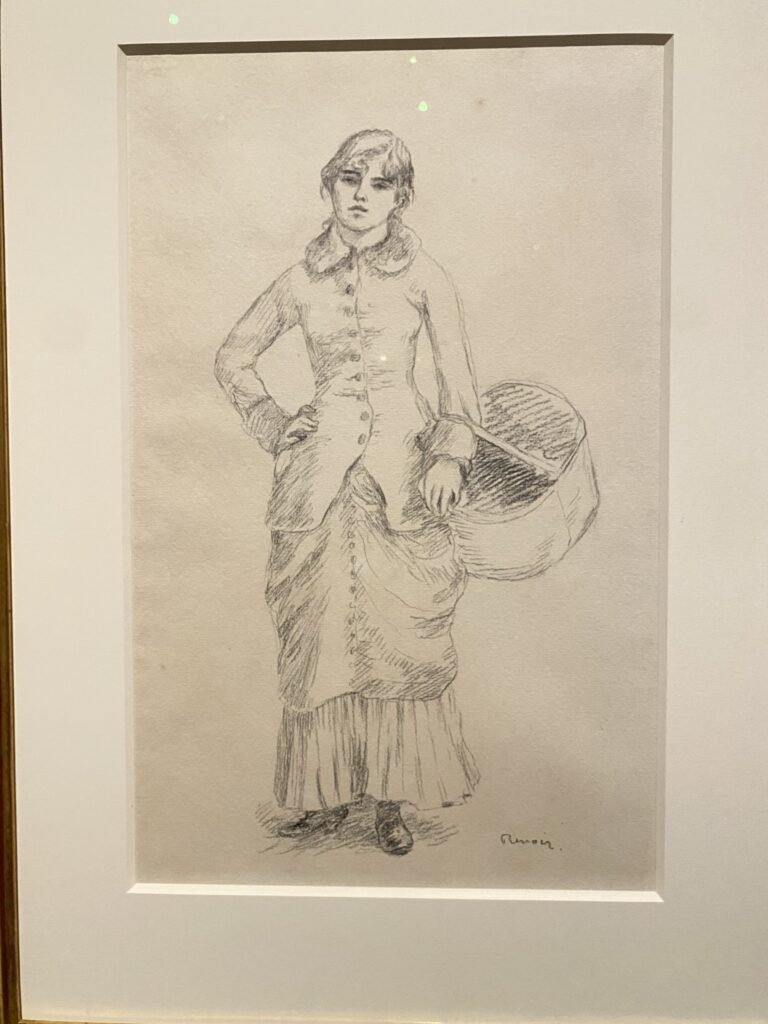
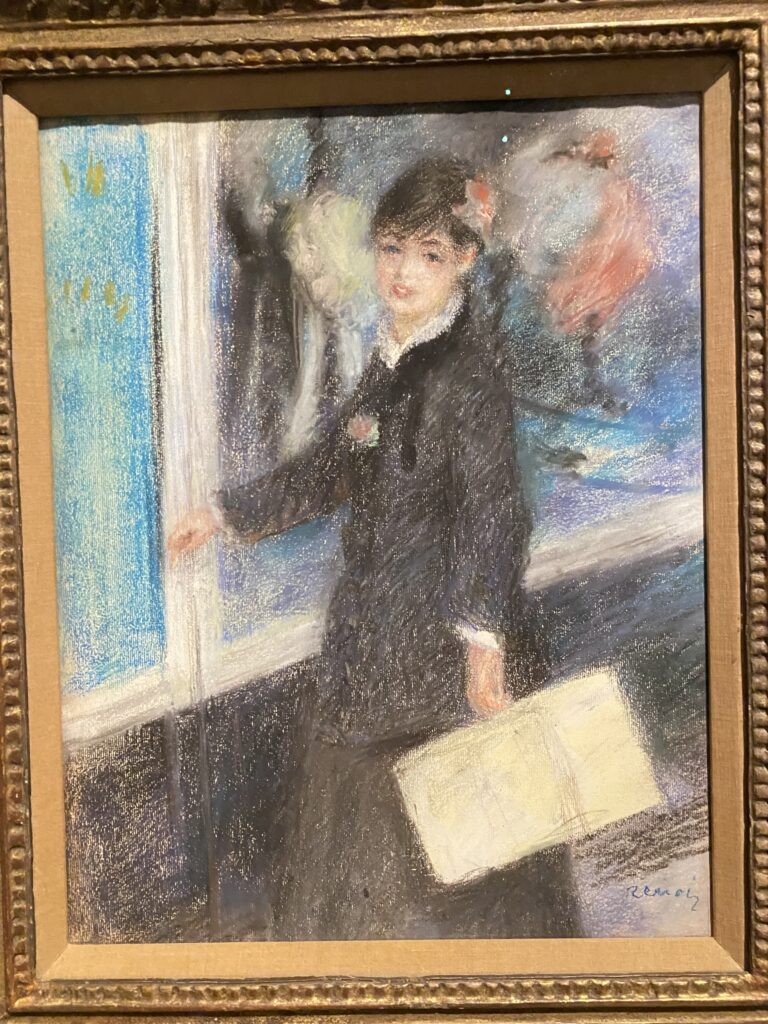
“The Milliner,” ca. 1879, The Virginia Museum of Fine Arts, Richmond

Renoir joined Claude Monet, Camille Pissarro, Berthe Morisot, Edgar Degas, and Alfred Sisley, among others, as part of the Anonymous Society of Painters for an independent art exhibition in 1874.  The studio owner, Gaspard-Félix Tournachon, known as “Nadar,” a caricaturist, journalist, and photographer, was also an outlier known for taking the first aerial photograph from a hot-air balloon.  The artists exhibited outside the established Salon, which was the annual show of the Academie des Beaux-Arts (Academy of Fine Arts).  For the Salon, a jury selected the works that the public would see.  Following the exhibition, the group’s name came from Claude Monet’s “Impression, Sunrise” and a critic’s comment that it was indeed only an impression, an unfinished painting.

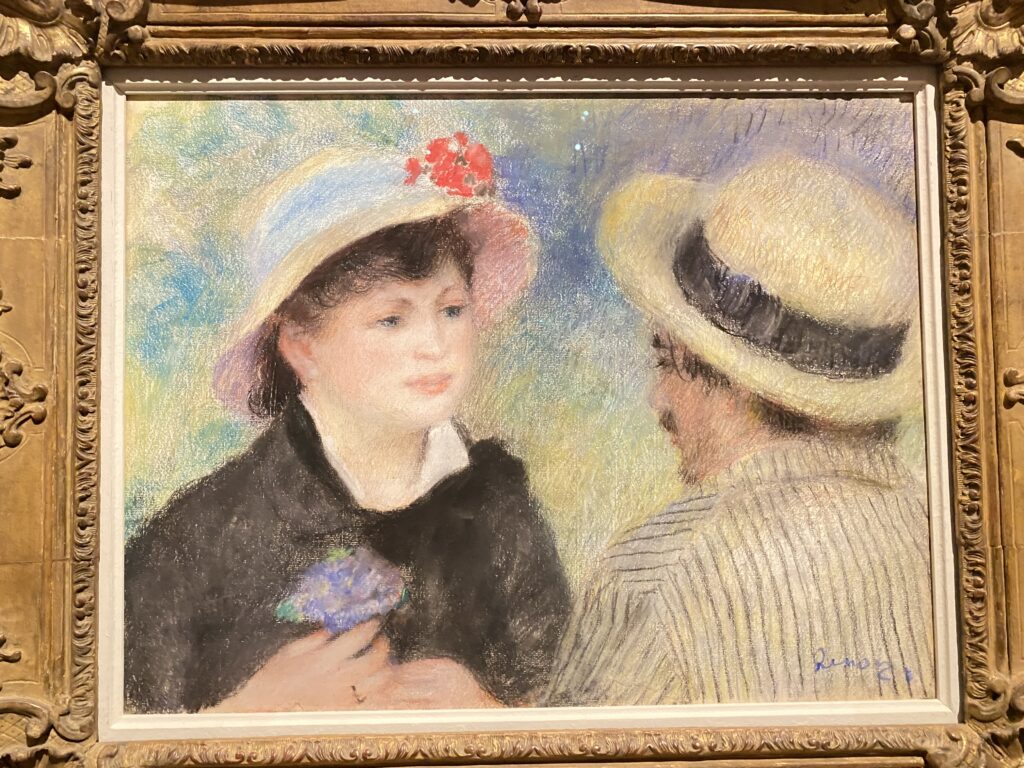
“Boating Couple,” 1880-81, smaller pastel work for “Luncheon of the Boating Party,” Museum of Fine Arts, Boston

After a period of creating sketches as a young artist and student, Renoir adopted the “spontaneous painting” of his fellow Impressionists and began his work directly on canvas.  Like the other Impressionists, whose works were originally rejected by the artistic establishment, Renoir enjoyed plein air painting, or outdoor painting “in the open air,” which captured natural light. An innovation with the production of the paints allowed for this, and Renoir and his peers made full use of the opportunity. They often painted with, and influenced, each other.

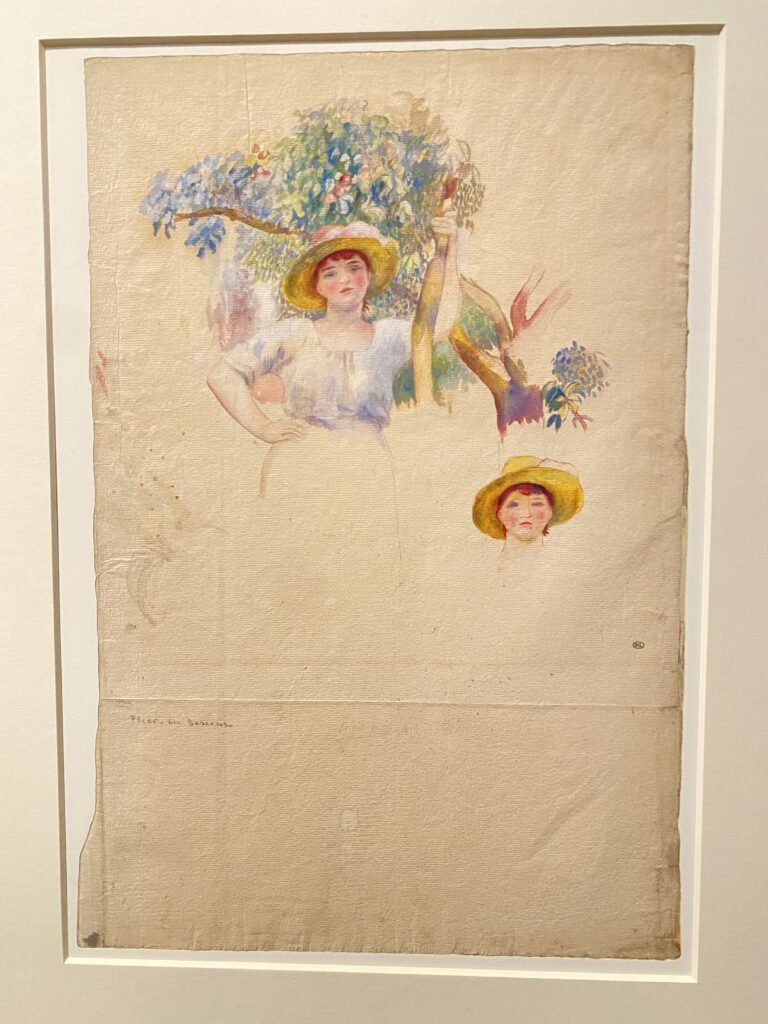
“Harvest,” ca. 1885, watercolor, white opaque watercolor, graphite, and varnish (unusually), Musee d’Orsay, Paris

“Impressionism” captured the artists’ “snapshot” style and brushstrokes.  In addition to natural light, they favored the use of bright colors, another result of improved paints, and did not varnish their works, which was done for a formal look. Such techniques lent themselves to painting nature and the countryside.

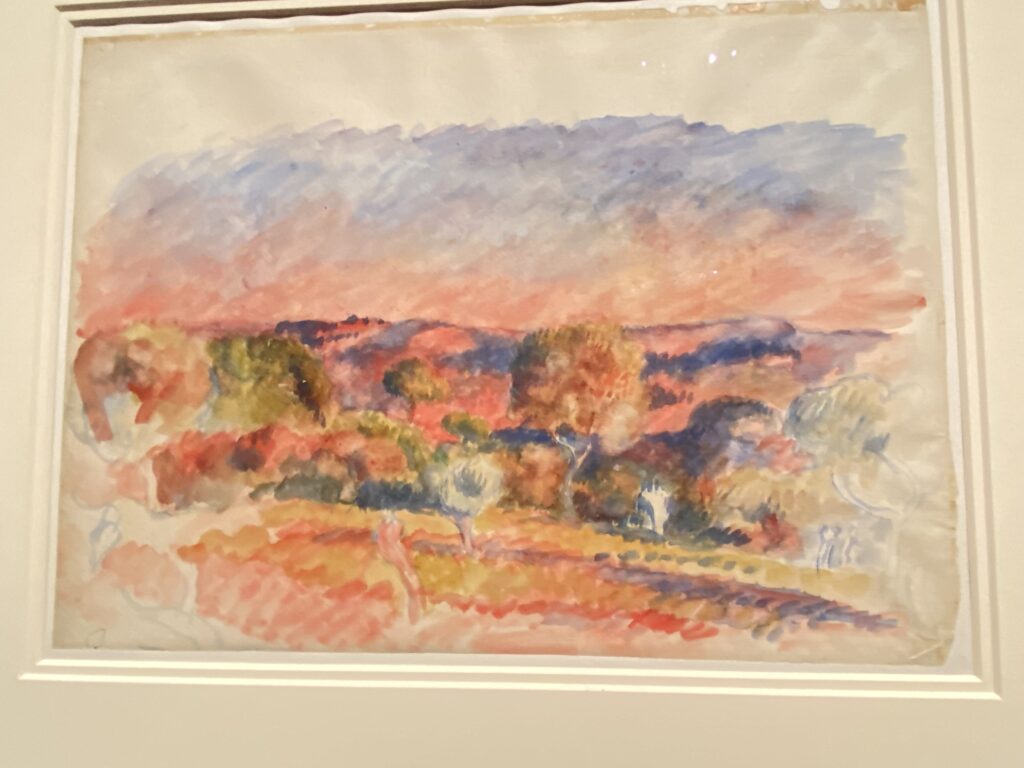
“Landscape,” 1899, watercolor, The Metropolitan Museum of Art, New York

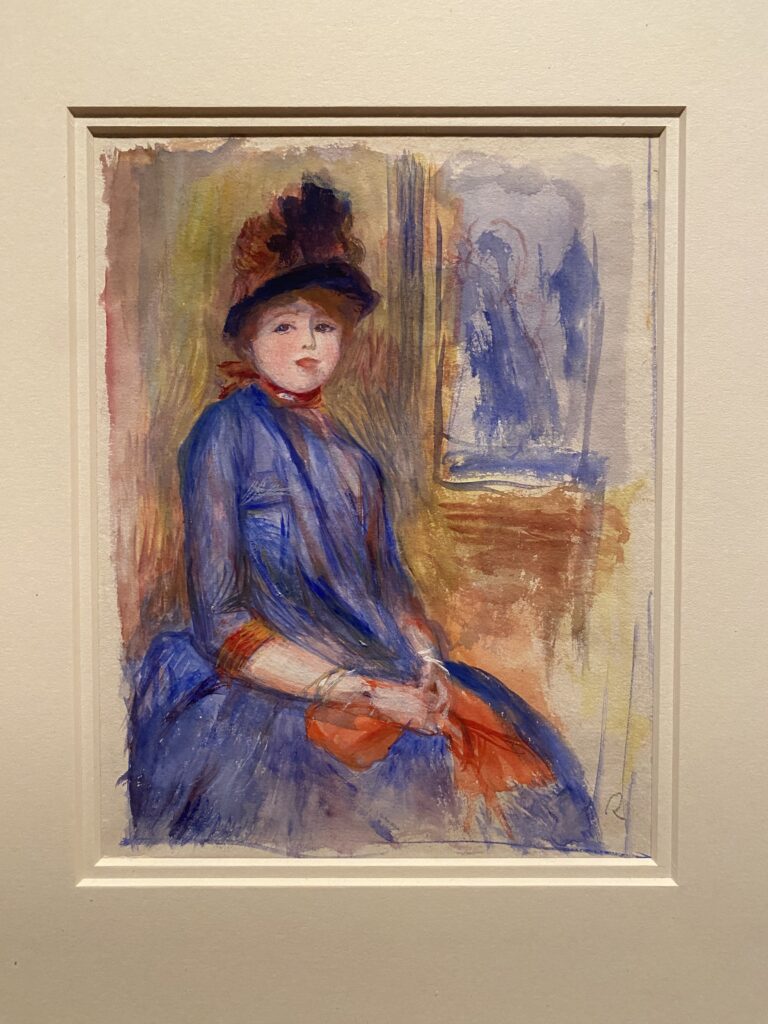
Regarding subject matter, Renoir painted working-class subjects as well as wealthy patrons, which is how he met his wife, Aline Victorine Charigot, depicted in the portrait below. Aline was working as a dressmaker when Renoir approached her to model for him.  When they married, Aline was 20, and he was 38.  After 18 years as a painter and 25 years of working in the arts, Renoir had reached career stability, which suggests a strikingly long and difficult trajectory to success.  

Aline sitting for “Young Woman in a Blue Dress,” ca. 1885-86, watercolor with opaque watercolor, The Metropolitan Museum of Art, New York

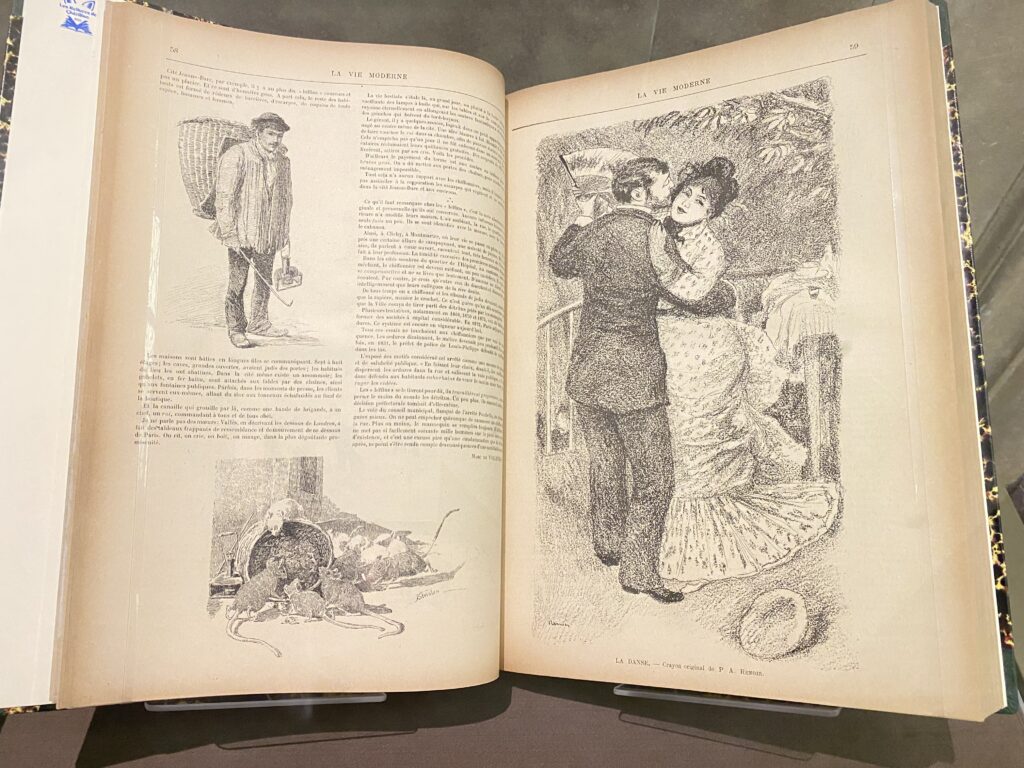
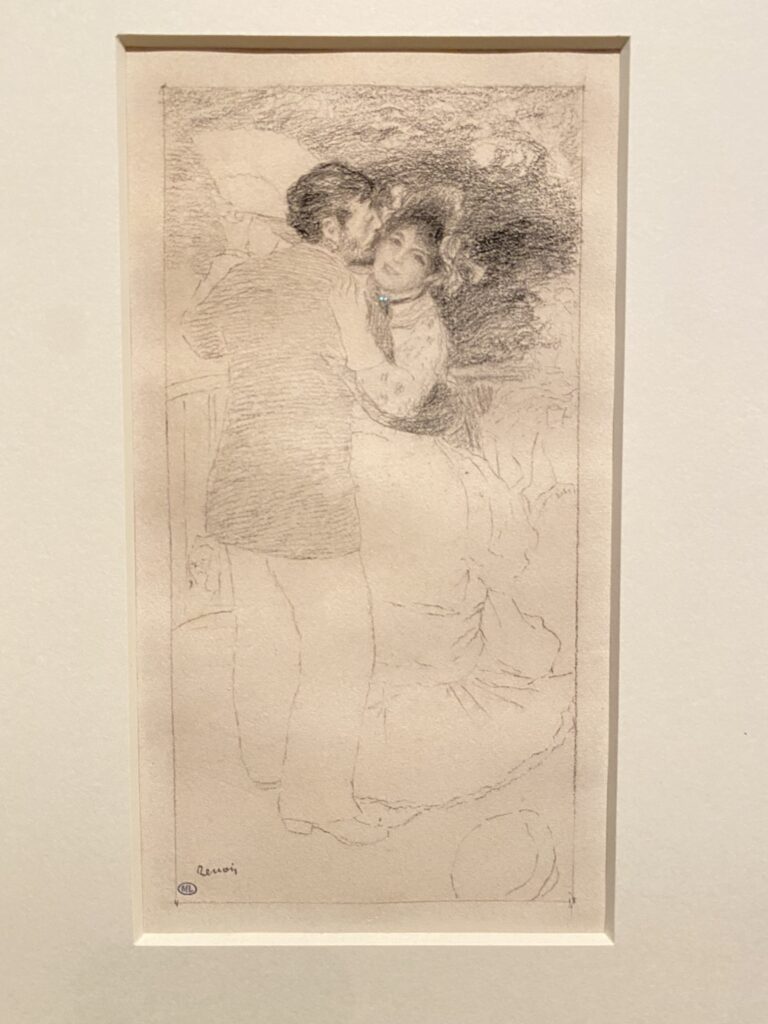
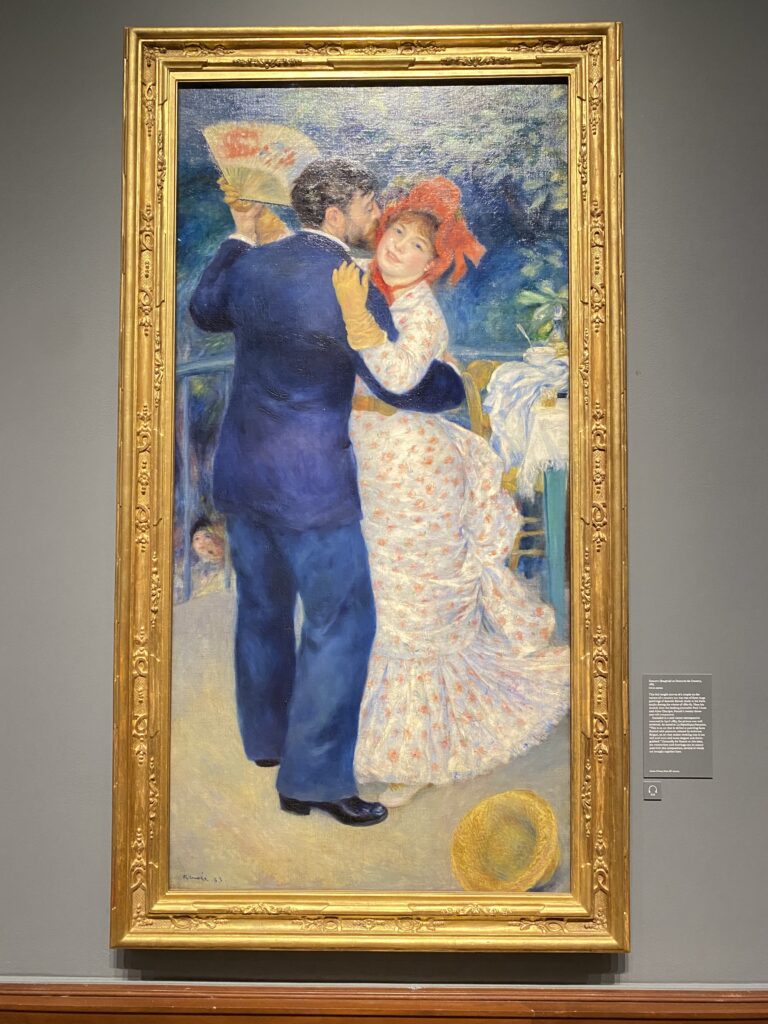
Renoir also earned income as an illustrator. Some illustrations were for stories, others reproduced his paintings, like “Dance in the Country” and “Dancing Couple”/“Dance at Bougival” in which Aline was the model for both.

Book illustration

Study for “Dance in the Country, 1883, graphite, Musee d’Orsay, Paris

“Dancers (Bougival)” or “Dance in the Country,” 1883, oil, Musee d’Orsay, Paris

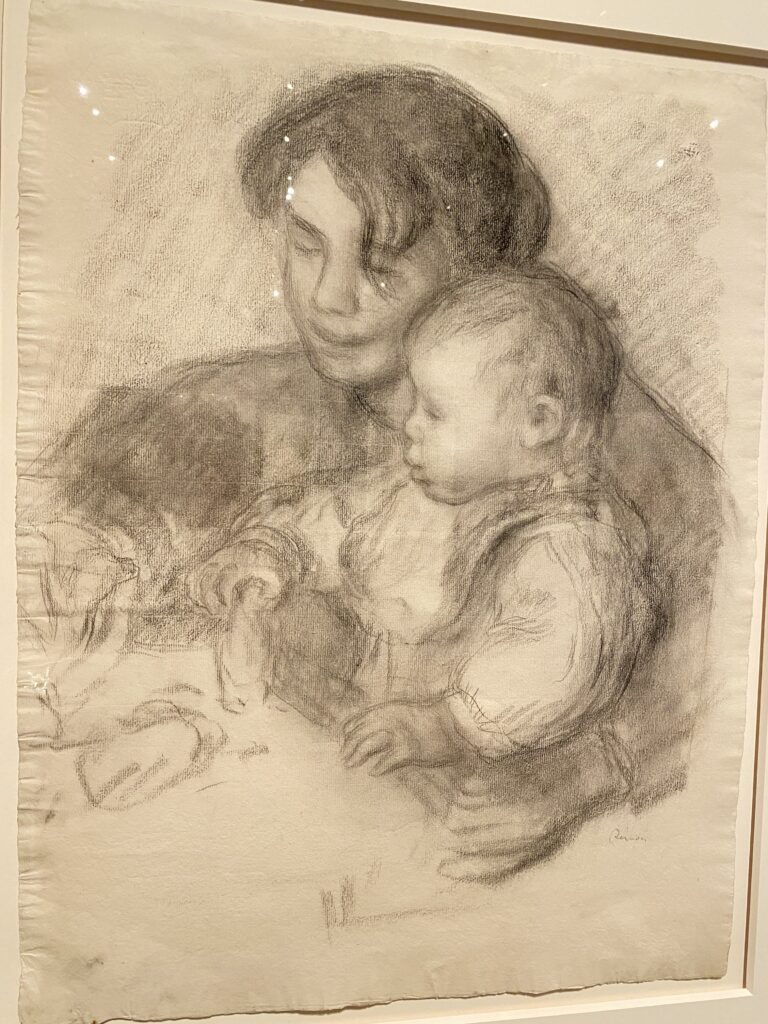
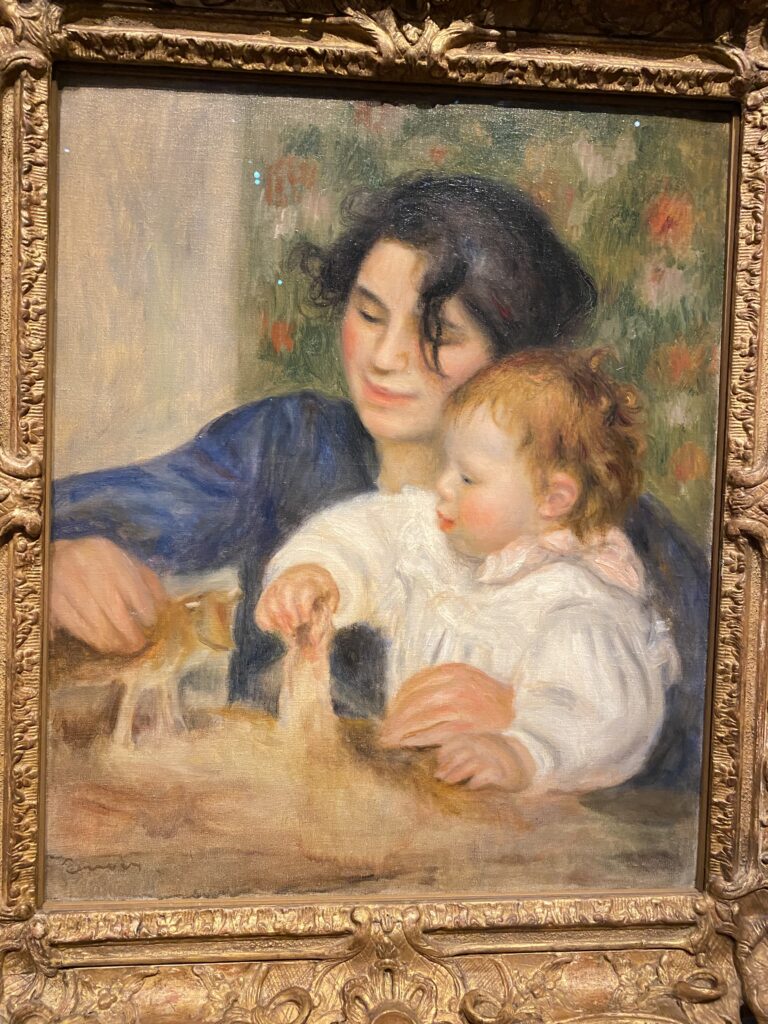
Aline and Pierre-Auguste had three sons who all had careers in the arts: Pierre, an actor, Jean, a celebrated filmmaker; and Claude, a ceramic artist.  Renoir’s family was a great source of his happiness, and they were often subjects in his paintings.  Aline modeled for “Luncheon of the Boating Party,” most notably, and her cousin and the family’s nanny, Gabrielle Renard, was a frequent model for Renoir, too.  Before Aline, Renoir had a relationship with Lisa Trehot, another model, with whom he had a daughter, Jeanne, whom he supported.  Despite Renoir’s happiness with Aline, he had affairs during the marriage.  Four years before Renoir’s death, Aline passed away after a hospital visit to Jean, who was badly injured in WWI, as was his brother Pierre. 

Sketch for “Gabrielle and Jean,” 1895, National Gallery of Canada, Ottawa

“Gabrielle and Jean,” 1895, oil, Musee de l’Organerie, Paris

(Note: On November 26th, a similar “long-lost” Renoir painting, L’enfant et ses jouets – Gabrielle et le files de l’artiste, Jean (The Child and His Toys – Gabrielle and the artist’s son, Jean sold for $2 million dollars.)

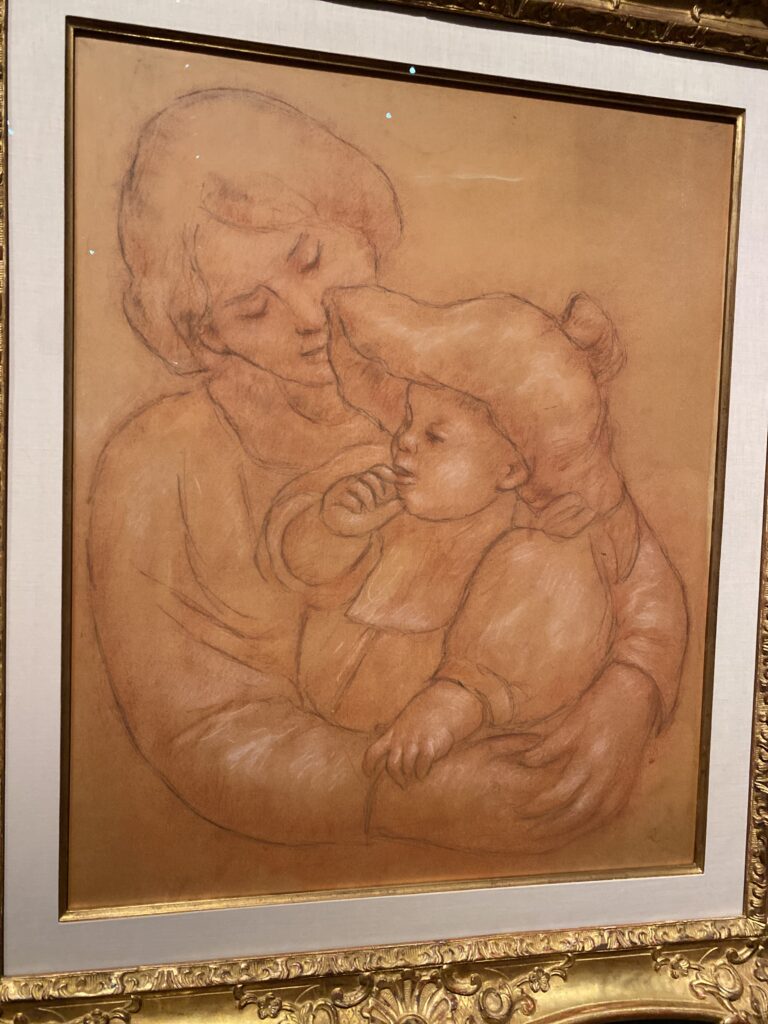
Chalk sketch of “Jean in the Arms of Gabrielle,” 1895-96, possibly reworking “Gabrielle and Jean” (exhibition note), Collection Foundation Pierre Gianadda, Martigny, Switzerland

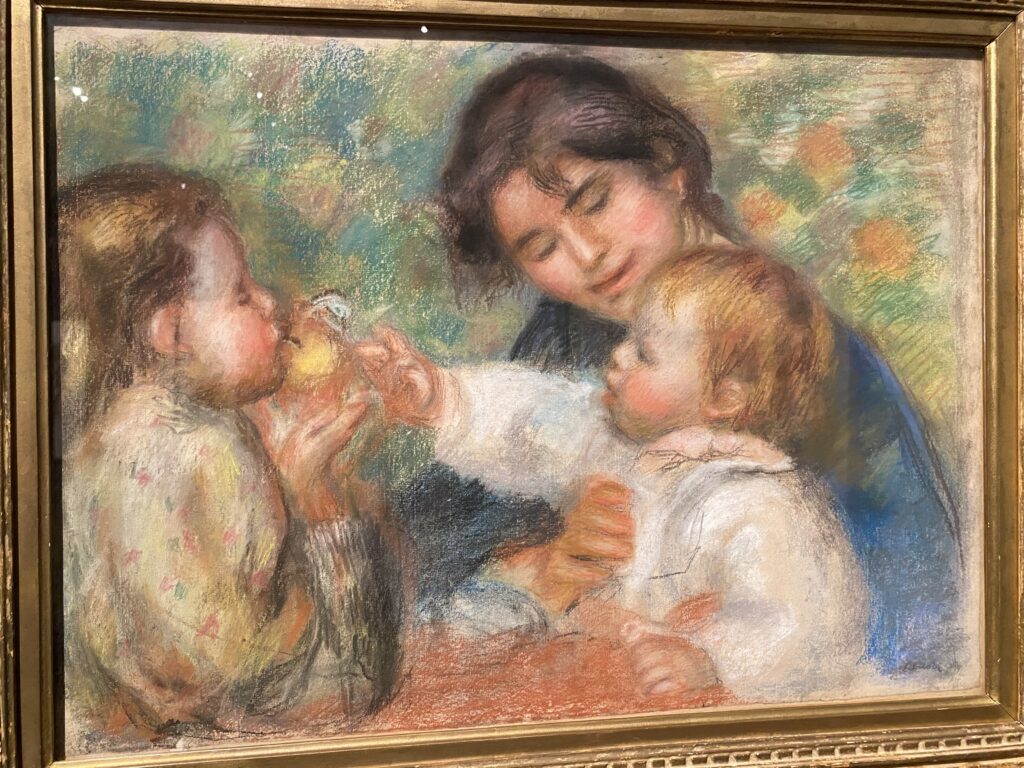
“Child with an Apple” or “Gabrielle, Jean, and a Young Girl with an Apple,” ca. 1905, Collection of Leone Cettolin Dauberville

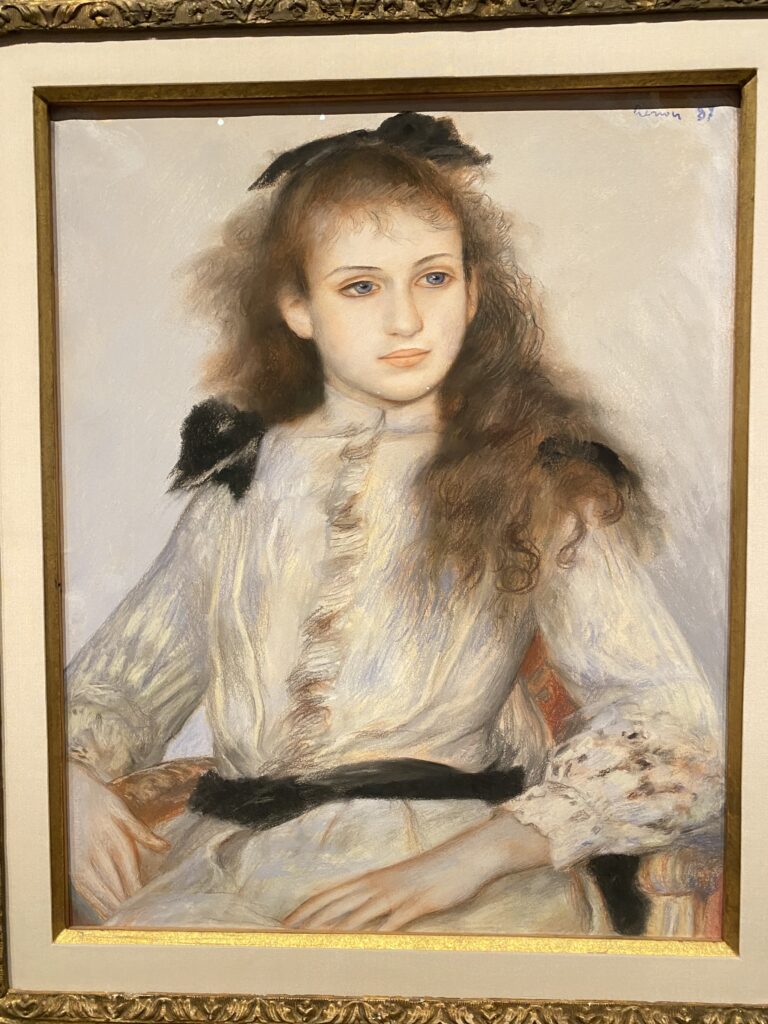
“Madeleine Adam,” 1887, pastel and graphite, Collection of Diane B. Wilsey

Division among the Impressionists

The founding members of Impressionism remained close for years.  They supported each other’s work, exhibited their art together, and looked out for each other, including each other’s families.  A falling out occurred over the Dreyfus affair.  As a quick history refresher, between 1894 and 1906, the guilt or innocence of Alfred Dreyfus, a Jewish army captain, divided then predominantly Catholic France.  Captain Dreyfus, tried twice and found guilty of espionage, was eventually exonerated.  Camille Pisarro, who was Jewish and a Dreyfusard, along with Monet, supported the captain, and Edgar Degas, an anti-Dreyfusard, who was anti-Semitic, did not, which is not to suggest that the national division was about religion and not politics.  In Renoir, My Father, Jean attributed his father’s artistic divergence from Pissarro to differing artistic and political views. In Growing Up with the Impressionists: The Diary of Julie Manet, based on the journals of the then-teenaged daughter of Pierre-Auguste’s dear friend Berthe Morisot, Julie wrote about Renoir and his family, with whom she first stayed at 16 after her mother died.  (The diary was first edited and published in 1987 by Rosalind De Boland Roberts and Jane Roberts; the latter became a Chevalier de l’Ordre des Arts et Lettres, or ‘Knight of the Order of Arts and Letters,’ France’s top honor, in 2011. In 2017, Jane Roberts edited a second, revised edition with 472 footnotes.) Julie, who had often posed for Renoir and was clearly fond of him, noted that he sometimes shared the less generous anti-Dreyfusard opinions of the time.  Renoir, however, stayed close to his Jewish sister-in-law, Blanche-Marie Blanc, and later attended the funeral of Pissarro, whereas Degas did not.

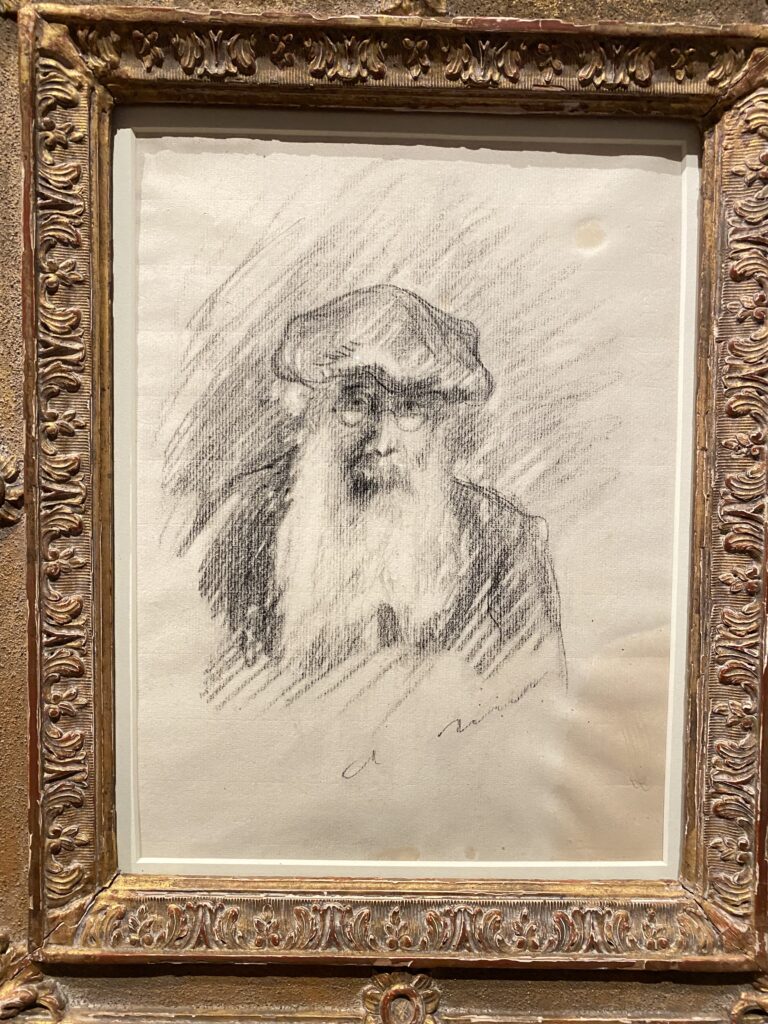
“Portrait of Camille Pissarro,” ca. 1893-94, charcoal, Dallas Museum of Art, Wendy and Emery Reves Collection

Having escaped from poverty, Renoir may have resented that he initially relied on Jewish patrons for exhibitions and commissions. Renoir’s early Jewish patrons supported his talent and influenced his early artistic direction. His portraits of these patrons, and especially those of their children, were beautiful. Greater success offered Renoir new commissions and travel around Europe and North Africa, where he saw the art of Raphael, Velázquez, and Rubens; this influenced his style, making it more classical in later years. He remained friends with the Jewish art dealers, Alexandre Bernheim-Jeune and his sons Joseph and Gaston, who curated 16 of his exhibitions.  Barbara Ehrlich White, PhD., who wrote Renoir, An Intimate Biography (2017) and Renoir: His Life, Art, and Letters (1984), and also became a Chevalier des Arts et des Lettres in 2014, attests that Renoir was the Renoir whom the public knew: warm, sociable, and kind.  He loved being around people, which his art reflects. Dr. White based her opinion on her review of 3,000 of his letters, 452 of which were previously unpublished. 

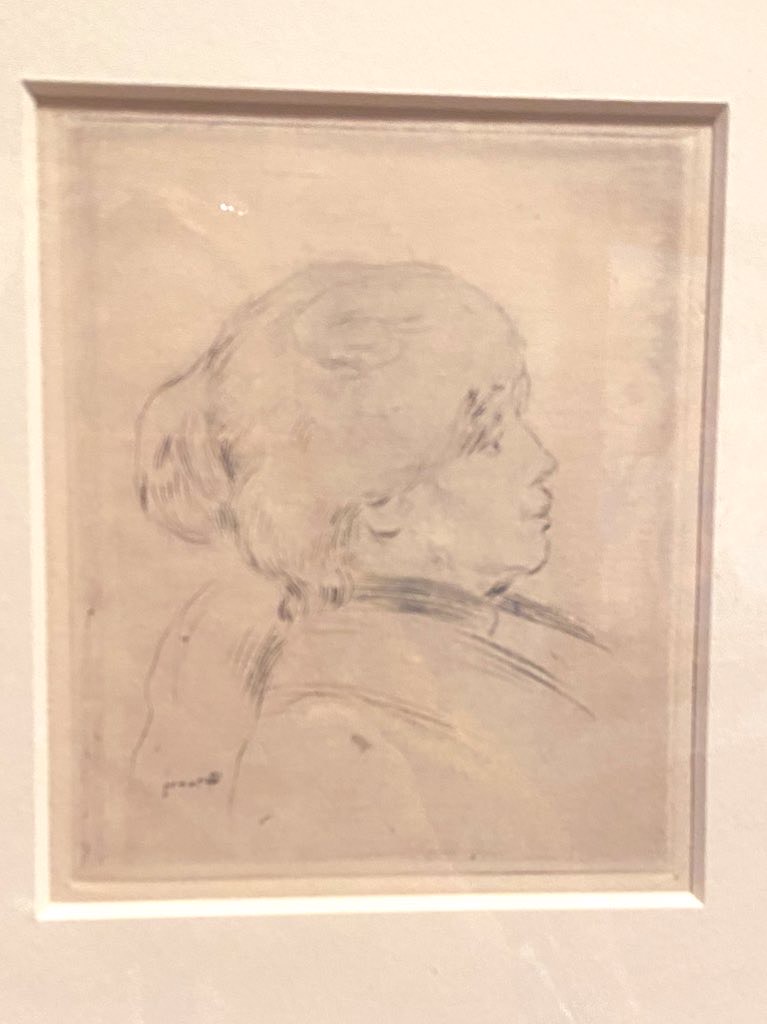
A mournful Berthe Morisot, which Renoir sketched after the death of her husband Eugene Manet for a painting memorializing her after her own passing

Renoir’s paintings were one of the first to delight me as a child, not only for their beauty, but for their joy.  He depicts children with such sweetness, which helps young viewers connect with his work. This issue concerning Renoir was mentioned on one exhibit label, as far as I noted, out of more than one hundred.  It stayed with me, however, and I read more about it.  At this point, I leave Renoir’s legacy in this regard to art historians, but I thought that I should mention it.

The artist overcomes arthritis

“The pain passes, but the beauty remains.” Admirably, Renoir continued to paint despite having crippling and painful rheumatoid arthritis, which began when he was 50.  In his late 60s, Renoir and his family moved to Cagnes-sur-Mer on the French Riviera for the warmer climate.

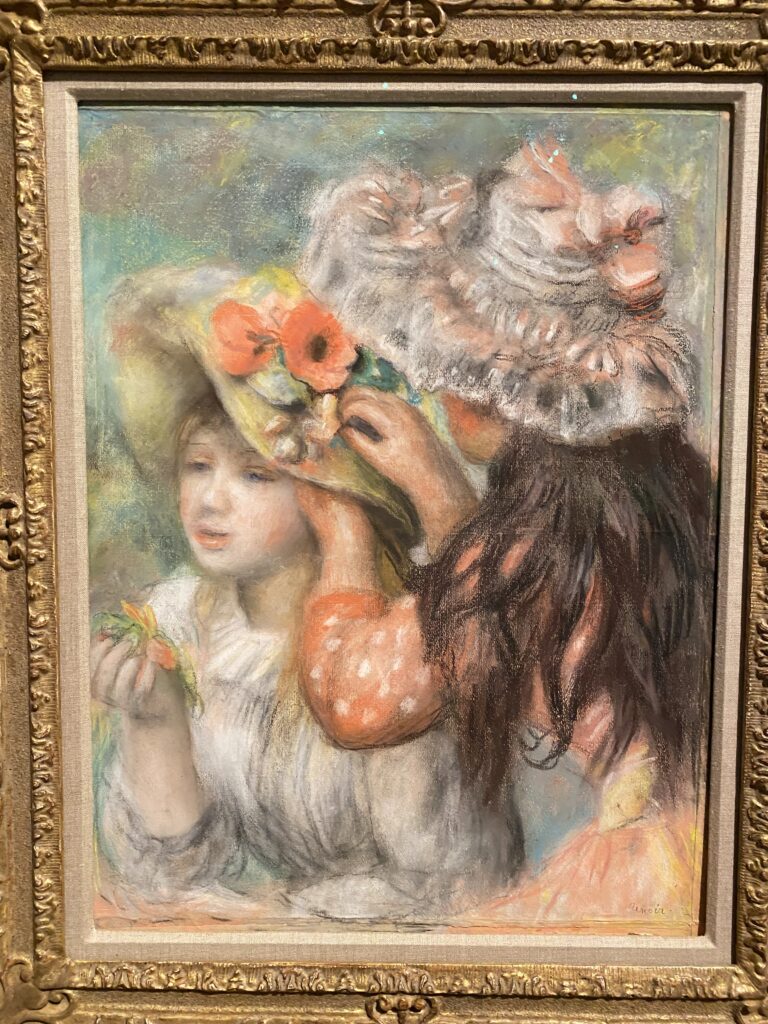
“Girls Putting Flowers in Their Hats,” 1894, oil, private collection

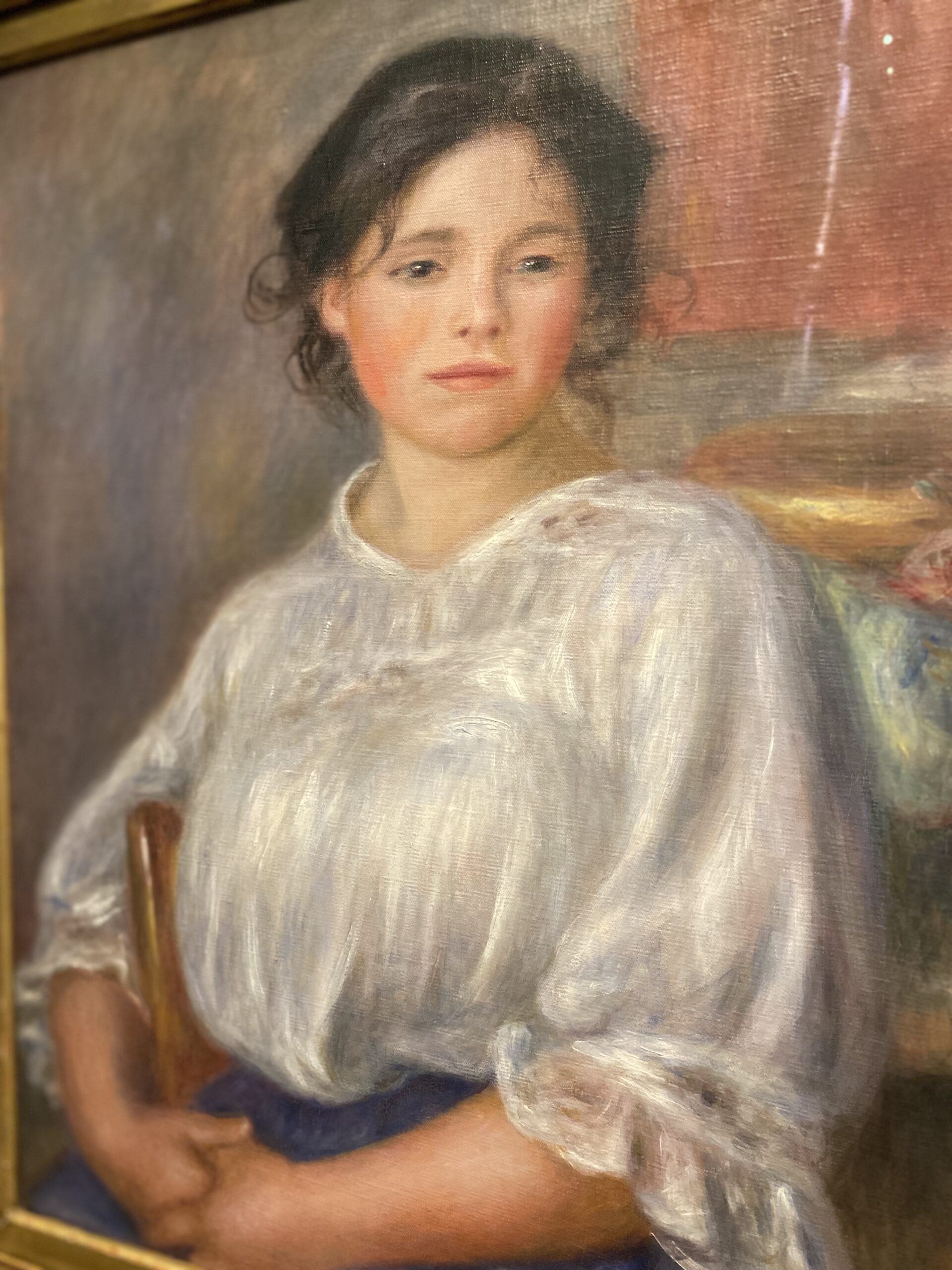
“Young Woman Seated,” 1909, oil, The Art Institute of Chicago/Admin. by Musee d’Orsay. Renoir strove for a luminous quality in his later work.

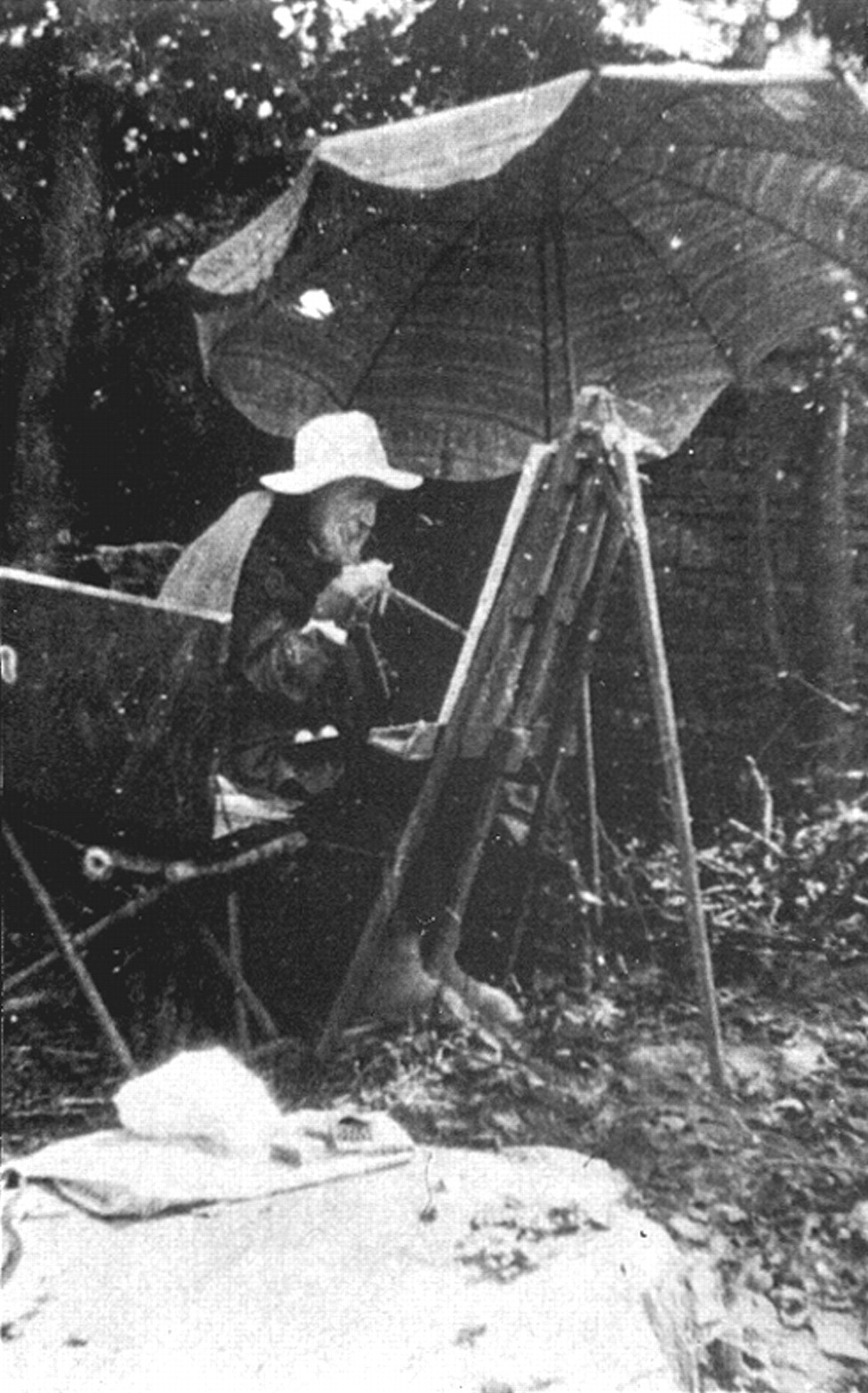
During this time, Renoir was in pain, especially when he tried to sleep, and he became progressively disabled.  He did, however, paint more than 400 works, including the masterpiece, “The Great Bathers,” which is in the exhibition along with sketches, and influenced Henri Matisse and Pablo Picasso. His family and assistants placed his painter’s palette on the arm of his wheelchair and his canvas on a rolling easel. Incredibly, Renoir’s paintings became lighter and more joyful.
The film and newsreel interviews in the exhibition show the deformed joints in Renoir’s hands.  Brushes were not strapped to his hands as sometimes noted, but they had to be placed into them. These interview clips were fascinating to watch, and though film was an early art form, Renoir charmed by periodically turning to the camera with a smile.


An arthritic Renoir, painting, [public domain]

On the day of his passing at 78, having painted for several hours, Renoir told his studio assistant, “I think I’m beginning to learn something about it.”

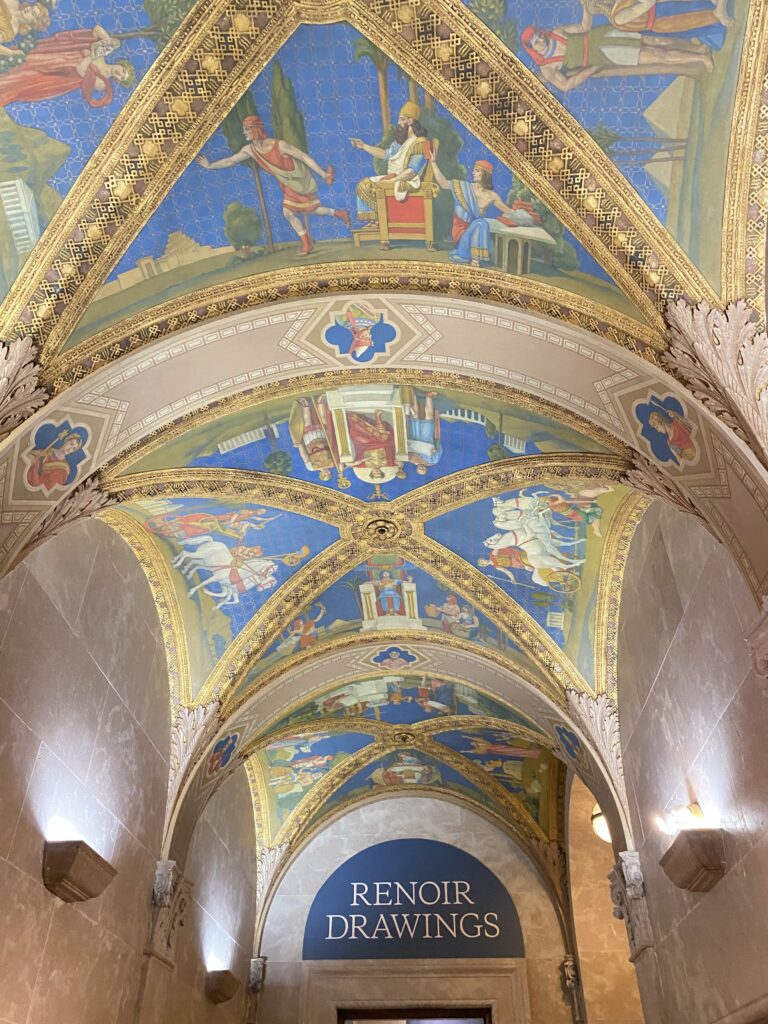
Enjoy seeing “Renoir Drawings” at The Morgan Library, which also offers detailed information about these works on their website, through February 8th.

Sing a New Song: The Psalms in Medieval Art and Life

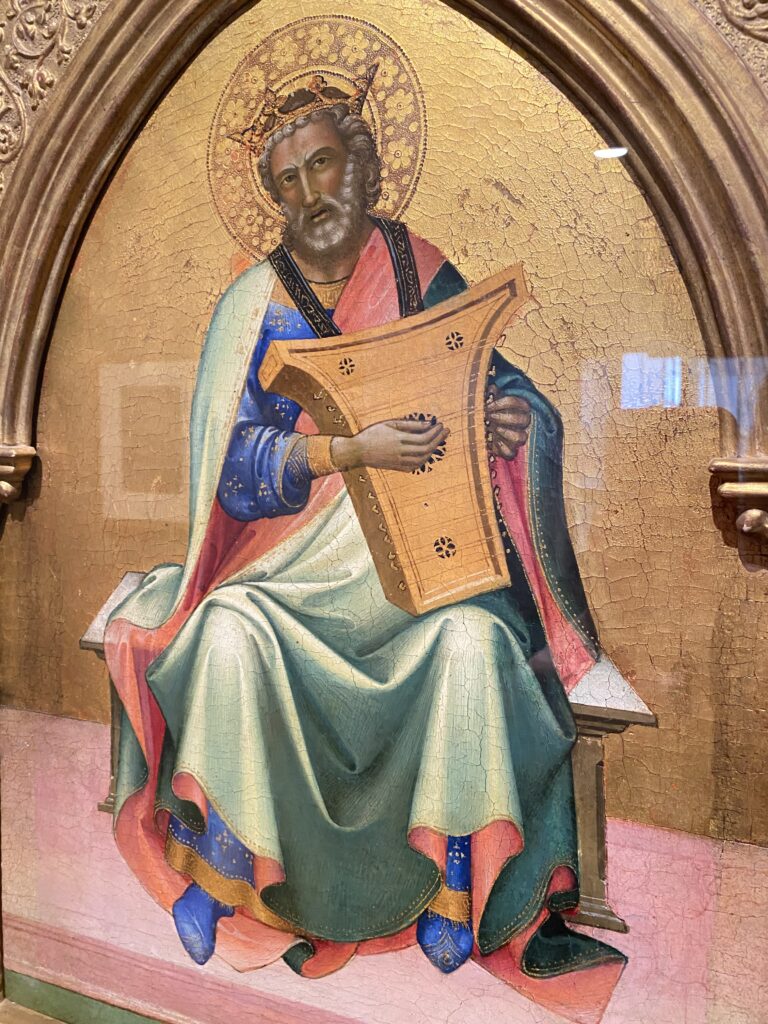
The illustrated Bibles, many from The Morgan Library’s own collection, are exquisitely beautiful.  As the exhibition notes, the Book of Psalms, the most popular book of the Bible, is known as Tehillum, or “Praises,” in Hebrew, and King David is credited as the primary author. The exhibition begins with King David’s composition of the Psalms, or “songs accompanied by stringed instruments” from the Greek “psalmos”. 

“King David as Psalmist” (instrument), 1408-10, by Lorenzo (Piero di Giovanni)

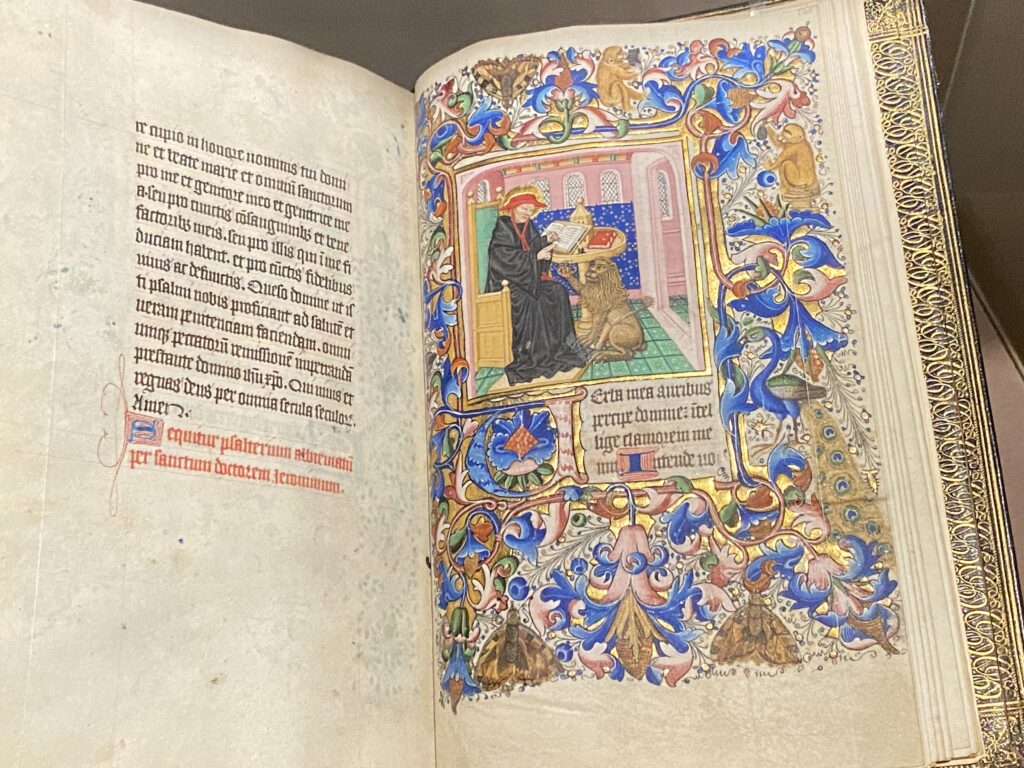
During the Middle Ages, psalters, or books with the 150 psalms, were initially the clergy’s prayerbooks. These promoted literacy and the study of Latin. Priests, monks, friars, and nuns had to recite all the psalms daily. The Book of Hours, customized psalters, were most popular among lay people, or non-clergy. The faithful looked to these prayers for hope, comfort, celebration, and forgiveness. Children had their own psalters, or primers, from which they learned to read.

“[St.] Jerome in His Study,” Book of Hours, in Latin, ca. 1440-50, Fastolf Master, England

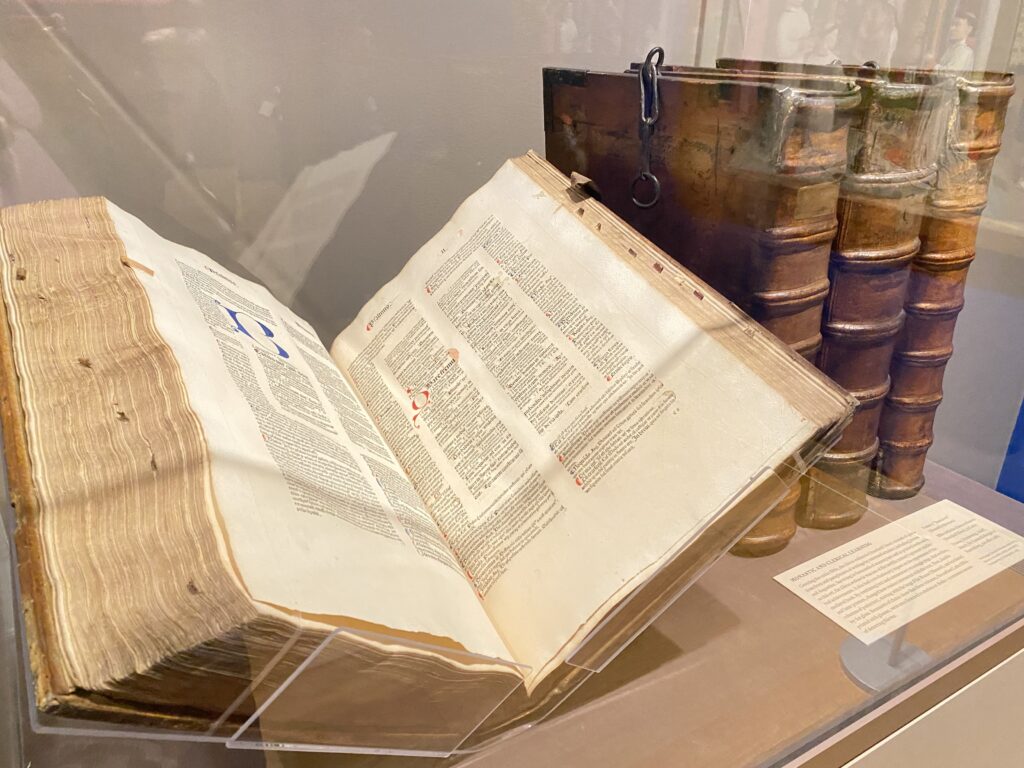
Glossa ordinaria (Standard Gloss), the complete Bible with the writings of Saints Jerome and Augustine, intellectuals and scholars of the Church, before 1480, The Morgan Library, open to Psalm I: “Blessed is the man.”

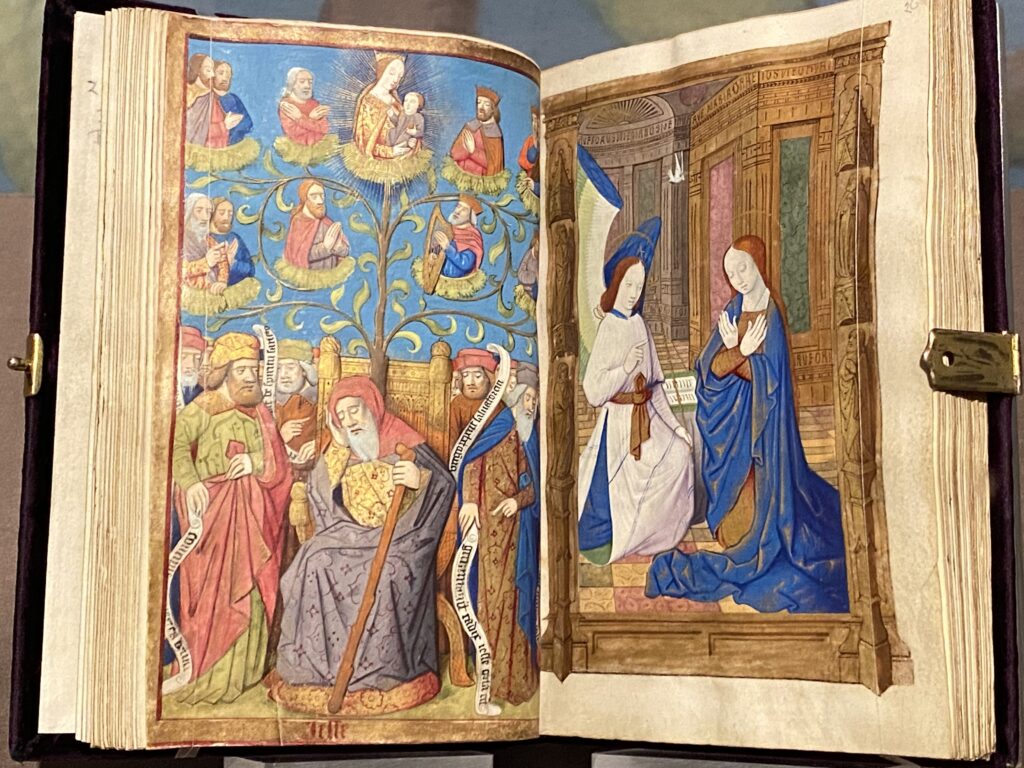
“Tree of Jesse” and “Annunciation,” depicting “David as Ancestor of Christ,” Book of Hours in Latin and French, Robert Boyvin, ca. 1495-1593, France

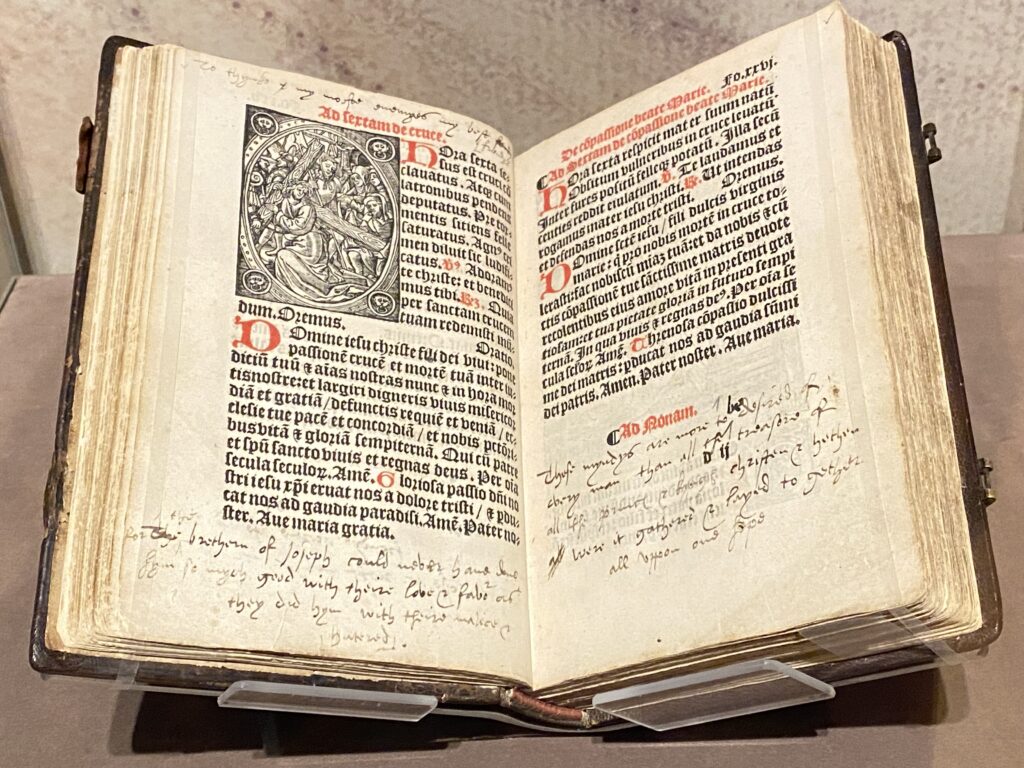
The exhibition concludes with Sir Thomas More’s Book of Hours and Psalter. Visitors can see his handwritten notes in Latin, which are moving to see. As a brief historical note, Sir Thomas More, the respected and beloved clergyman, lawyer, statesman, and humanist, served as the Lord Chancellor to King Henry VIII.  Sir Thomas refused to recognize Henry as Head of the Church, a move intended to facilitate the king’s annulment from Catherine of Aragon, and to break with the Roman Catholic Church and Pope Clement VII. Imprisoned in the Tower of London for well over a year, Sir Thomas was executed and later canonized as a saint. Today, some people may know him from the word “utopia,” which came from his sociological and political satire of the same name; this writing was somewhat out of character, though his motives were always honorable. Below: “To think my most enemies my best friends….,” final verses of “A Godly Meditation,” Francois Regnualt, Book of Hours. 1530, Paris/Franz Birckman, Psalter, 1522, noted below.

For more detail on this period and the beautiful exhibition, enjoy visiting upstairs in the Engelhard Gallery through January 4th, or finding the book in the gift shop.

Other treasures on exhibit are:

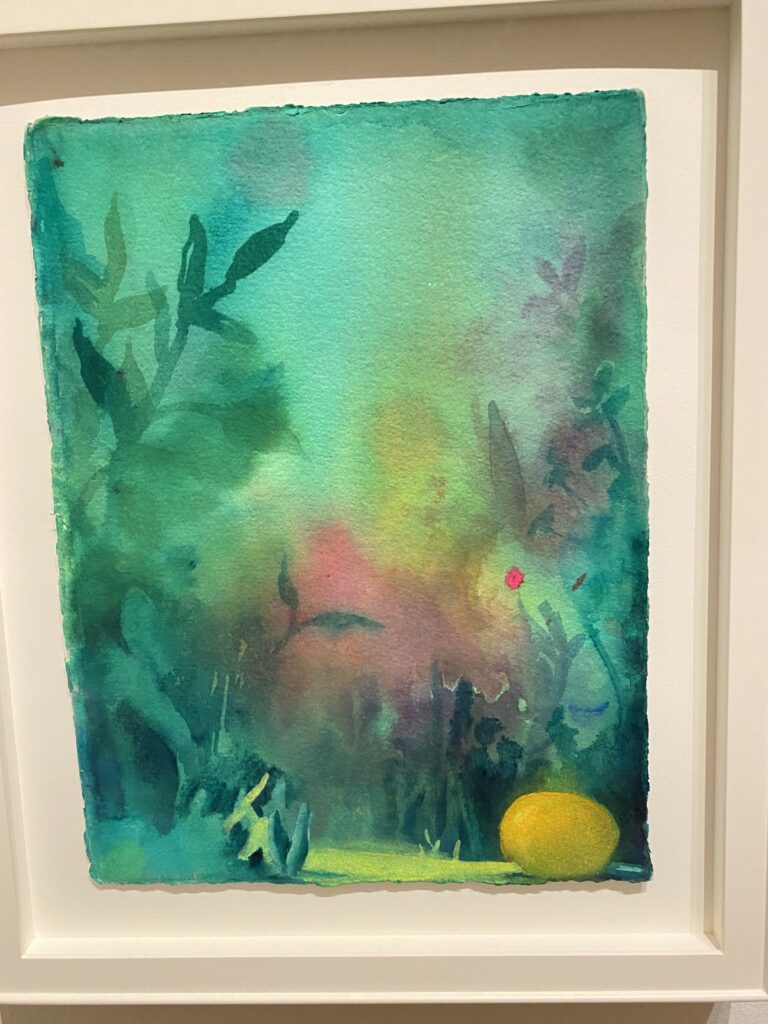
From “Lisa Yuskavage: Drawings”

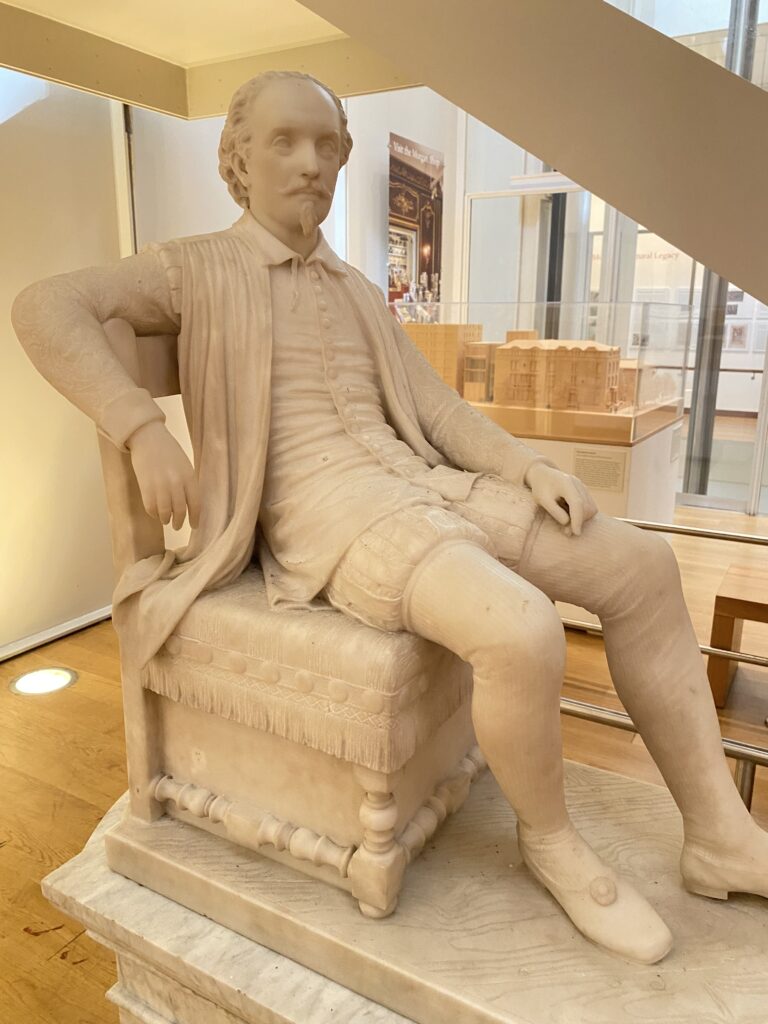
“William Shakespeare, Seated,” 1881, marble, William Wetmore Story, permanent collection

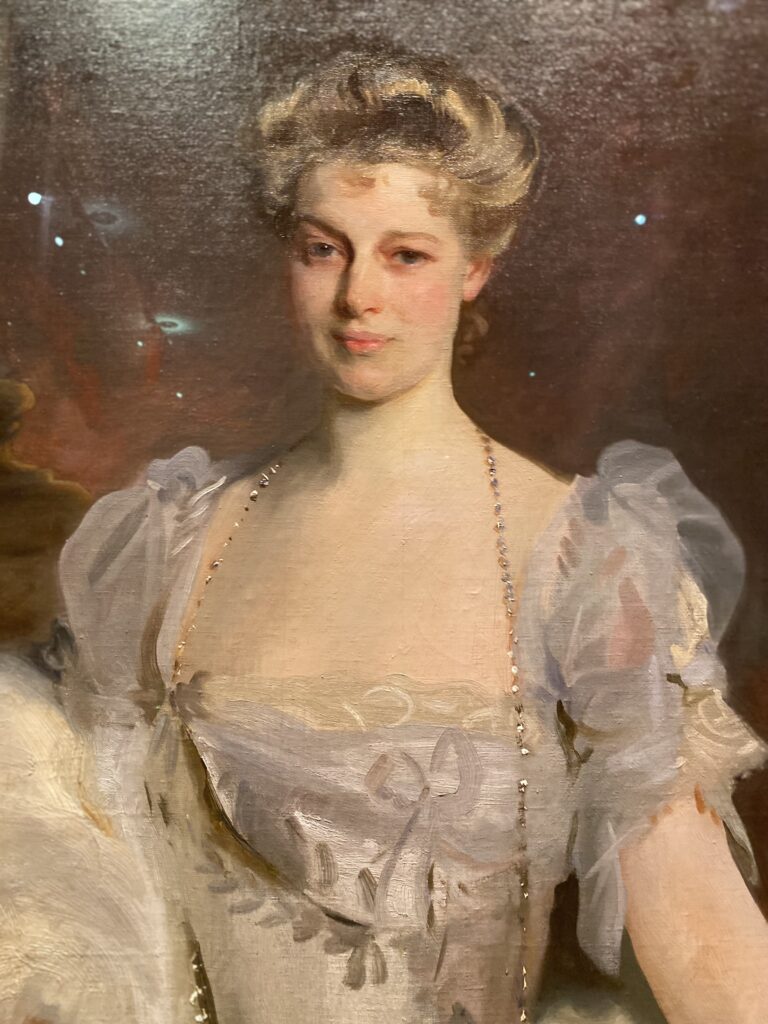
“Jane Norton Grew Morgan,” ca. 1905, oil, by John Singer Sargent, permanent collection. Enjoy another visit to his work via “Travel with John Singer Sargent at the Metropolitan Museum of Art”.

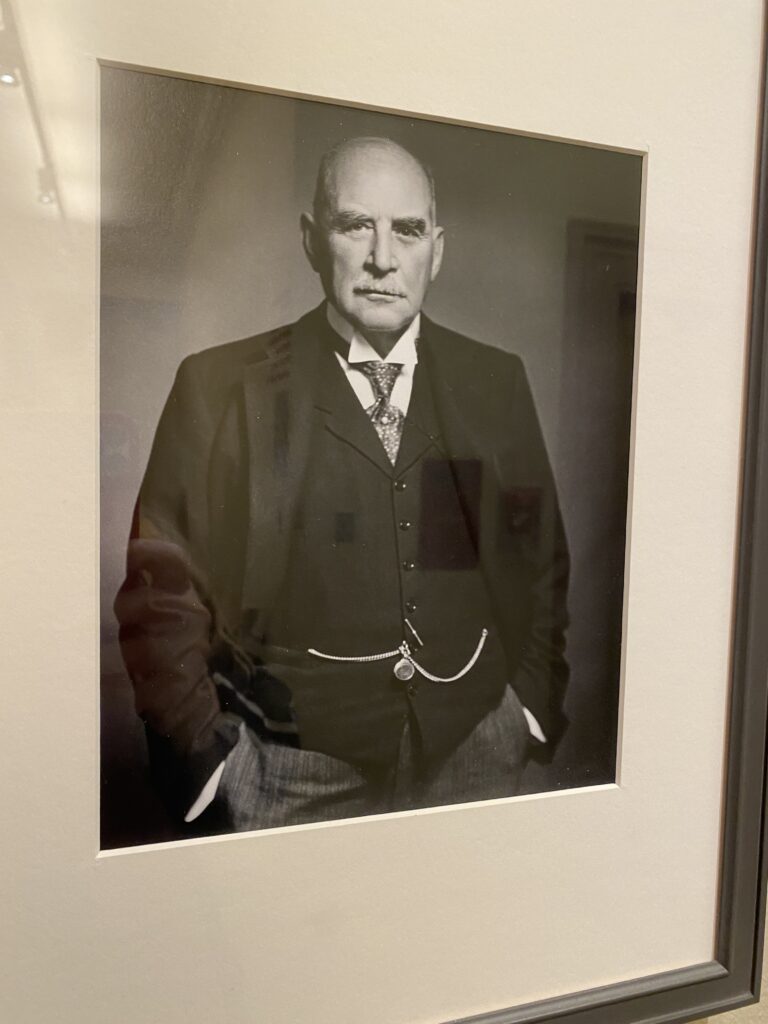
John Pierpont “Jack” Morgan, Jr., ca. 1930 by Fayer of London and Vienna, permanent collection

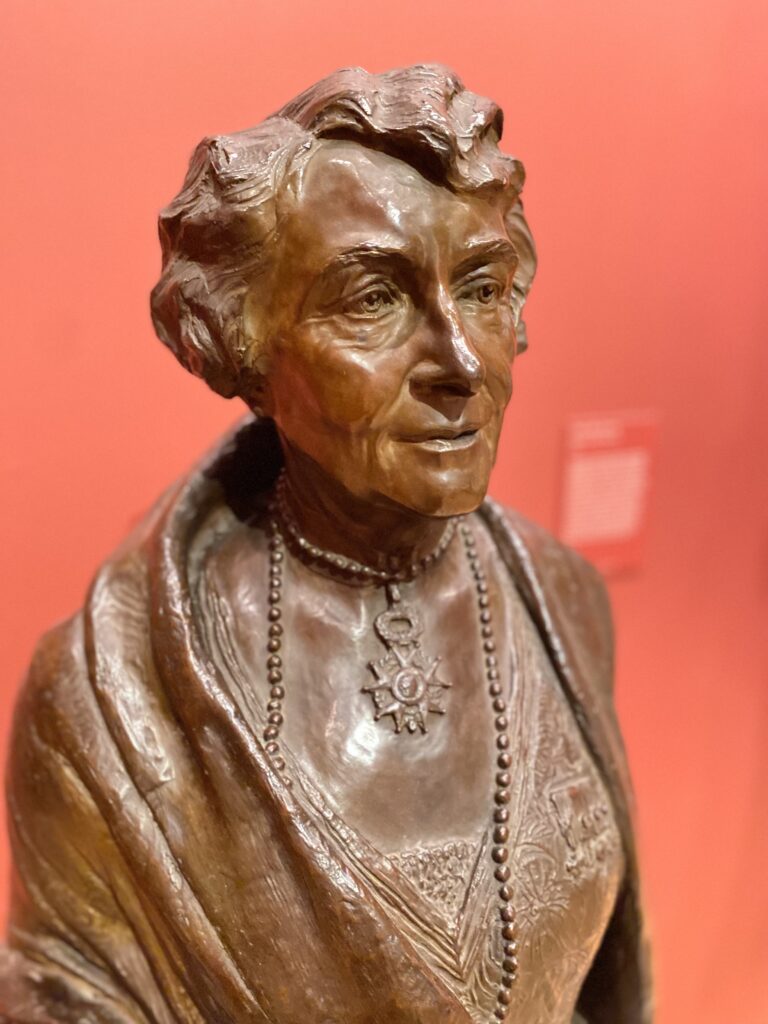
“Bust of Anne Tracy Morgan,” philanthropist and youngest daughter of J.P. Morgan, bronze, 1937, by Malvina Hoffman, permanent collection

Enjoy seeing the beautiful Gilded Age mansion, designed by premier architect Charles McKim of McKim, Mead & White, and appreciating the breathtaking library. Time did not allow for a revisit this time, but that will be the perfect excuse to return and fully appreciate the 2024 renovations, which everyone can appreciate. Free admission for everyone is available Friday evenings from 5-7 p.m.. College students with IDs may enjoy free admission the first Sunday of each month with a reservation. Fellowships and internships are available at times for college students, and for NYC university students, there is a college ambassador program. There are a a number of teen programs (writing challenge, summer reading, and drawing) and teacher resources.

The Morgan is wheelchair accessible and offers wheelchairs and walkers. Additionally, discounted tickets are available.  (Kindly call (212) 685-0008 or email visitorservices@themorgan.org with questions regarding any accommodations.) If visitors plan a longer day at the library, there is an inviting café.

(Sources: The Morgan Library, musee-orsay.com, metmuseum.org, britannica.com, goodreads.com, artinsociety.com, clarkart.edu, openculture.com, 19thc-artworldwide.org, medium.com, nytimes, nationalgallery.org.uk, 19thc-artworldwide.org, apollo-magazine.com, thephilipscollection.org, getty.edu, dailyartmagazine.com, art-renoir.com, adventuresintheprinttrade.blogspot.com, pmc.ncbi.nlm.nih.gov, latimes.org, bbc.co.uk, harvardartmuseums.org, pasonlinelectures.com, galeriemagazine.com, theatlantic.com, theparisreview.org, shop.themorgan.org, amazon.com, legendarte.shop, Wiki)

“Renoir and the Psalms at The Morgan Library” All Rights Reserved ©2025 Kathleen Helen Levey

Clicking at the Clark

Original gallery by Daniel Deverell Perry

Our first trip together to the Clark Art Institute was like the soft-focus idyll of its Renoirs. We pulled into Williamstown, Massachusetts, resplendent on a fall day.  Dressed for the occasion with blazer and sundress, respectively, we reviewed the guide, mapped out our route and dreamily strolled and sighed with admiration among the premiere artworks of the French Impressionists. We discussed each other’s favorites, which led to conversations about other trips, other art, and finally, the getting-to-know each other memories, which this visit would become much like Renoir’s depictions of families and friends.

The George Inness trip took us into the landscape of the world. Weekend excursions sometimes call for sightseeing selection and, on a trip the following summer, the focus was Mount Greylock, which is part of happy, boyhood camping memories for my friend and was indeed wonderful to visit.  Wistful, however, at the thought of passing by incredible art without a nod of respect, somewhat like going through town without at least a call to a local friend, our usual easy give and take resulted in a compromise regarding The Clark – a twenty minute stop.  In sneakers, shorts, and having adopted the Jersey Shore penchant for tee shirt collecting, a Stephen Crane House tee shirt, which in New England elicited the occasional thumbs up and playful shouts of “Denny Crane!” the William Shatner character from “Boston Legal,” I raced past works by Sargent, Remington, Turner, Hokusai, Madrazo, Cassatt, della Francesca, and Degas to find the New Jersey paintings by George Inness and Winslow Homer, undertaking with abandon the sacrilege of photographing paintings for social media when time for note-taking and creative photos was out of the question. Dashed out, returned to the car, and with a nod to my friend who was studying the map, noted, “Fifteen”.

The June return was our unrushed Alma-Tadema savoring of details having had a winter preview of his work by Clark curators at New York City’s The National Arts Club . Revisiting art museums allows us all to get off the bucket list treadmill, look around, and enjoy talking with people. Like taking in a Berkshire sunset on the beautiful Clark grounds, the art is different every time we view it. As a place of growth, The Clark literally changes with new artworks, buildings, and exhibitions. The cinematic painter Sir Lawrence Alma-Tadema created a splendid music room for Gilded Age magnate Henry Marquand and the first-time restoration of its highlights is all about the exquisite design that created not only an impressive, but a serene space, much like the museum, for family and guests to enjoy.

Visitors can view the art of Alma-Tadema in “Orchestrating Elegance” this summer, as well as exhibits: “Picasso: Encounters,” Helen Frankenthaler “As in Nature” and “No Rules,” 17th century Dutch artists “An Inner World,” the Thomas Schutte Crystal, and Community Access to the Arts (CATA) “I Am Part of Art” with the Lunder Center at Stone Hill, art “drawing attention to the ability within disability”.  If you have not been to The Clark think about wandering from the route this summer, or revisiting for a new view.  The Clark (clarkart.org) is part of a consortium with The Williams College Museum of Art (wcma.williams.edu) and MASS MoCA (massmoca.org) in nearby North Adams, both of which we look forward to visiting.

Part of “Symmetry”  travel series.  Posted July 13, 2017 on “Writing New Jersey Life” All Rights Reserved © 2017 Kathleen Helen Levey


Powered by WordPress & Theme by Anders Norén