Writing New Jersey Life

People and places of New Jersey…with some travels.

Tag: travel

The Frick Collection: A Splendid Dream

“I dream my painting, and then I paint my dream.” Van Gogh

Visiting the newly reopened The Frick Collection is like stepping into an artist’s dream.  After an experience that is wonderous and splendid, one wakes upon leaving, startled by unfiltered daylight and the sounds of the city street.  Putting iPhones away upon entering the museum, a polite requirement for viewing the collection, visitors immerse themselves in the art. The uninterrupted viewing of the artwork, combined with its location in a former home, creates a feeling of intimacy.  Underscoring this intimacy is the exhibition, “Vermeer’s Love Letters” on view only until August 31st.  Comprised of “Woman Writing a Letter, with her Maid,” c.1670, on loan from the National Gallery of Ireland, Dublin, “Mistress and Maid,” ca. 1664-67, The Frick Collection, and “The Love Letter,” c. 1669-1670, on loan from the Rijksmuseum, Amsterdam, the exhibition showcases another art not lost at The Frick.  Vermeer fans will also enjoy “Officer and Laughing Girl,” ca. 1657, and “Girl Interrupted at Her Music,” ca. 1658, in the permanent collection.  
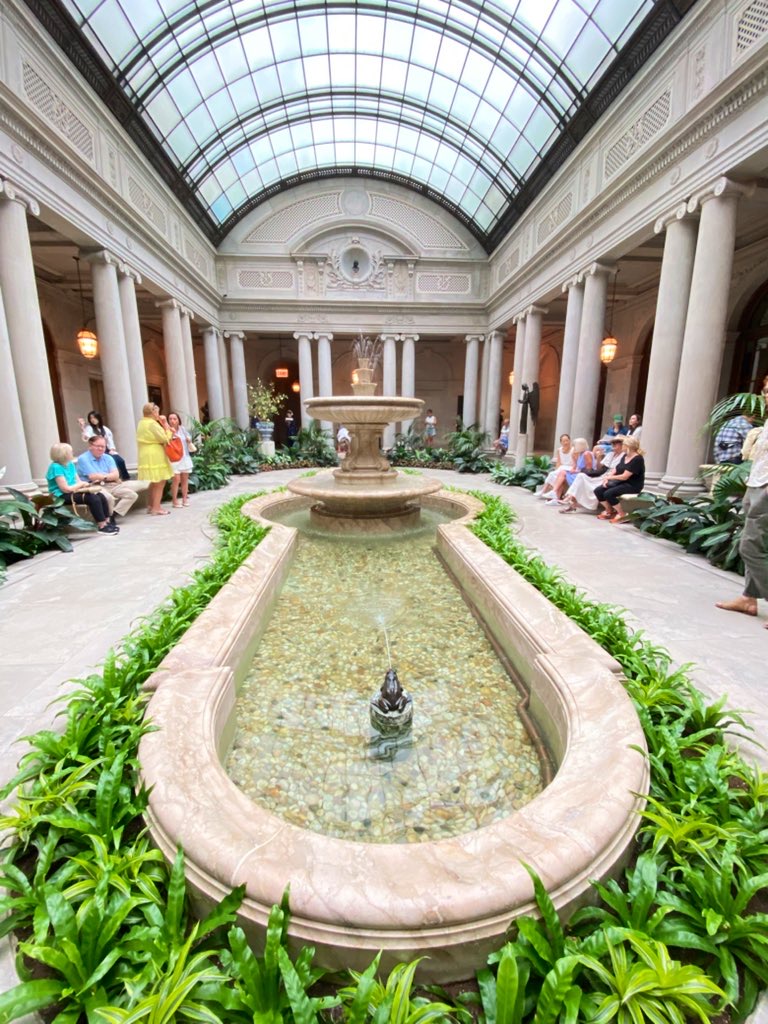
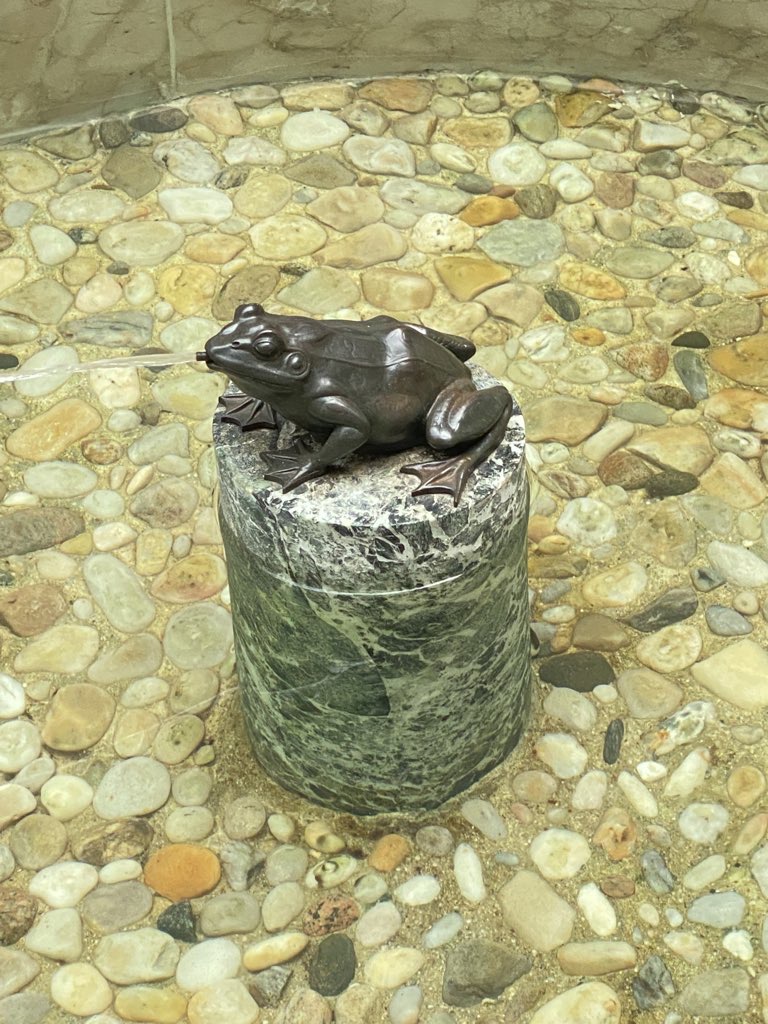
Garden Court designed by John Russell Pope (Visitors may take photos here.)
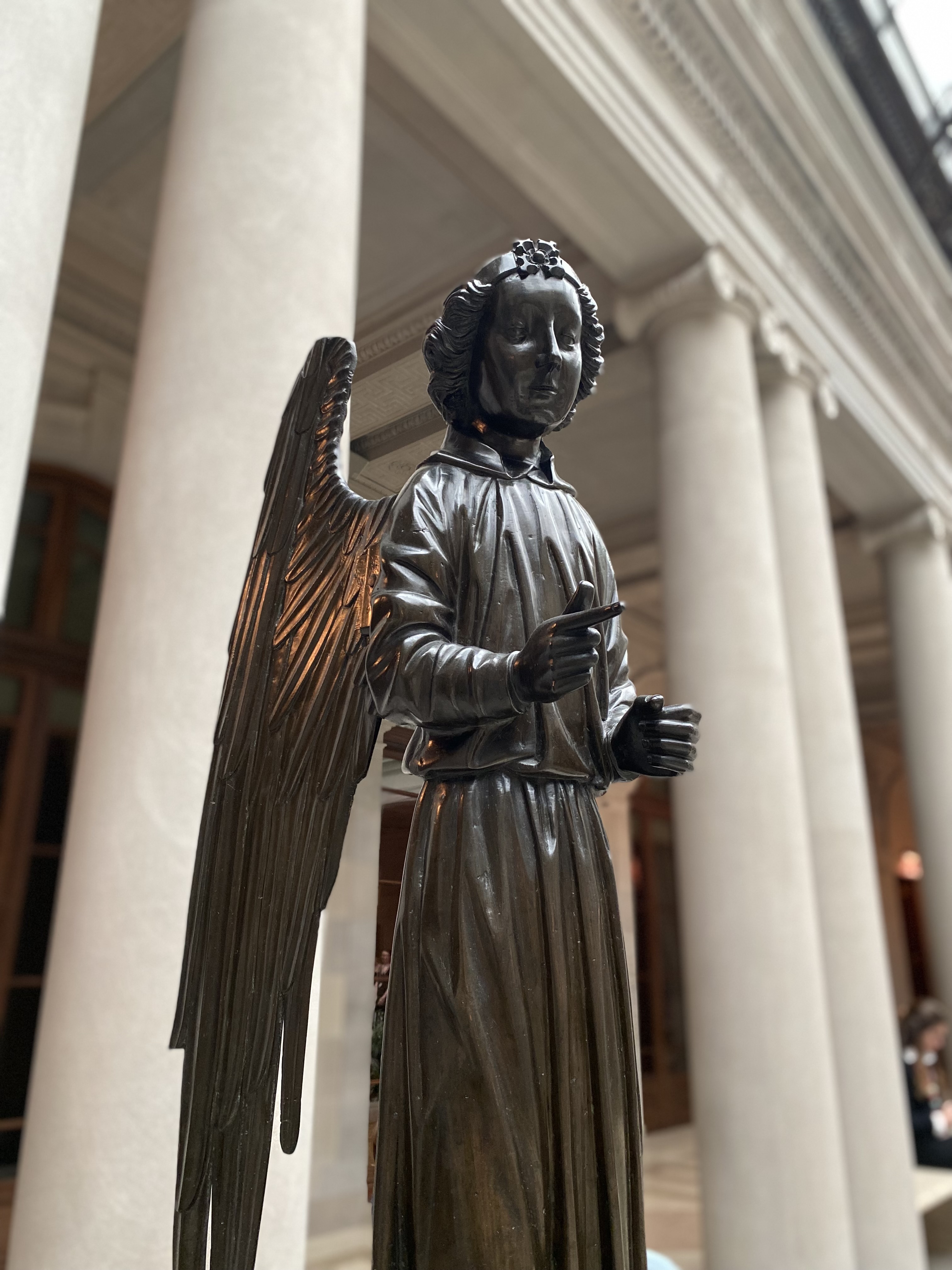
“Angel” by Jean (Jehan) Barbet (France, 16th century)

To truly appreciate such an incredible collection, visitors must return and make it a cornerstone of every visit to New York City.  (What visitors saw before the recent renovation was 25% of the collection; now they can see 47%, a boon for art lovers.) New visitors will be dazzled by the sumptuous décor by English interior designer Charles Allon of White, Allom & Co., primarily on the ground floor, and by Elsie de Wolfe, one of the first American interior designers, mostly on the second floor, which includes ceiling art in the hallway that connects the galleries.  Returning visitors will enjoy the improved lighting and relish ascending the formerly roped staircase to the second floor.  Though the works of Van Gogh have only graced the museum via exhibitions, the quote was irresistible.  Still, the artists’ works on view are beyond imagination (noted in order via “Featured Artists” from The Frick): Bellini, Carreira, van Dyck, Fragonard, Goya, El Greco, Ingres, Monet, Rembrandt, Titian, Turner, and Vermeer.  (If visitors are able to turn their gaze away from the paintings, the beautiful Sevres porcelain, antique clocks, and Chinese vases are a few of the other exquisite treasures.)  As a complement to the Old Master works, highlights of drawings from the collection are on view through August 11th, and Vladimir Kanevsky’s porcelain floral art, commissioned by the museum, is on view until Nov. 17th.
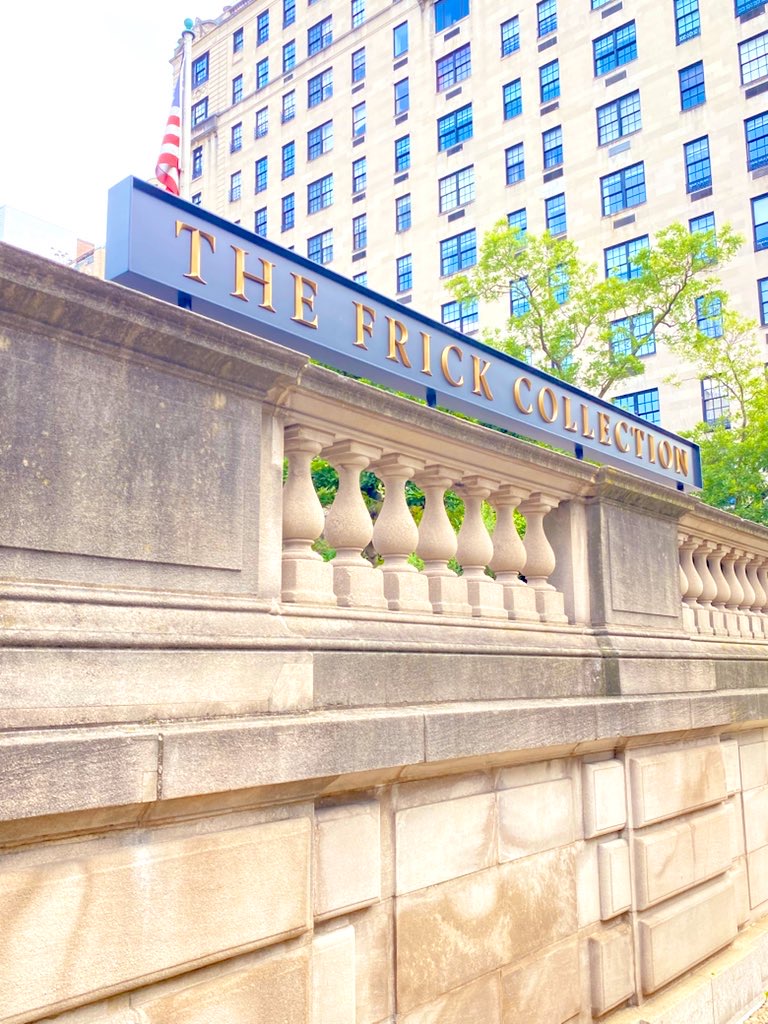
View along Fifth Avenue with a hint of the elevated garden
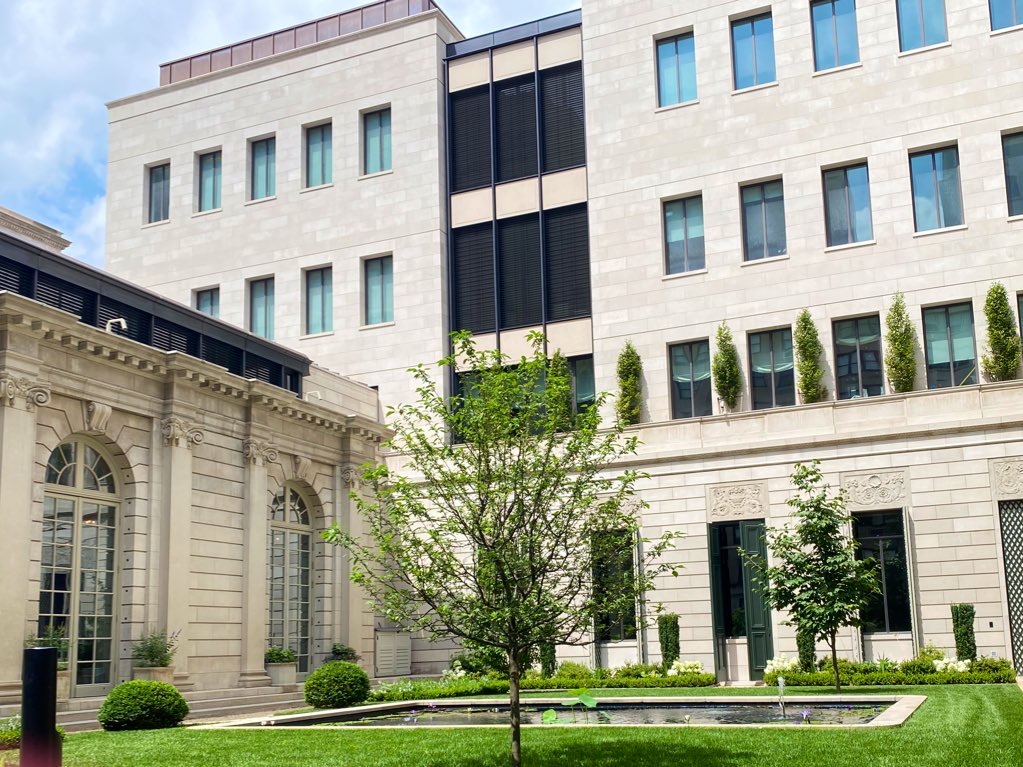

Partial views of the Russell Page Garden along East 70th Street

The building that houses the collection is magnificent.  The three-story Gilded Age Beaux Arts mansion with its limestone facades was originally the home of collector Henry Clay Frick and, strikingly, fills a city block.  At various times, premier architects have created, expanded, and renovated the building which include the original architect Thomas Hastings of Carrere and Hastings, 1912-1914, and John Russell Pope, who converted the home to a museum with the addition of the entrance, the Garden Court (formerly the carriage pavilion and where visitors may take photos), and The Frick Research Library, all in 1935, when Frederick Olmsted, Jr. updated the elevated the garden that elegantly sets the building back from the street and complements the serenity of his father and Calvert Vaux’s Central Park across Fifth Avenue.  In 1977, the museum added a pavilion and another garden with a rectangular pool along East 70th Street, designed by Russell Page OBE. Annabelle Selldorf of Selldorf Architects designed the most recent renovations, which included enhancing the galleries, creating an auditorium, and adding a cafe and gift shop. Beyer Blinder Belle assisted with the historic preservation. Both the mansion and Frick Research Library are New York City and National Historic Landmarks.
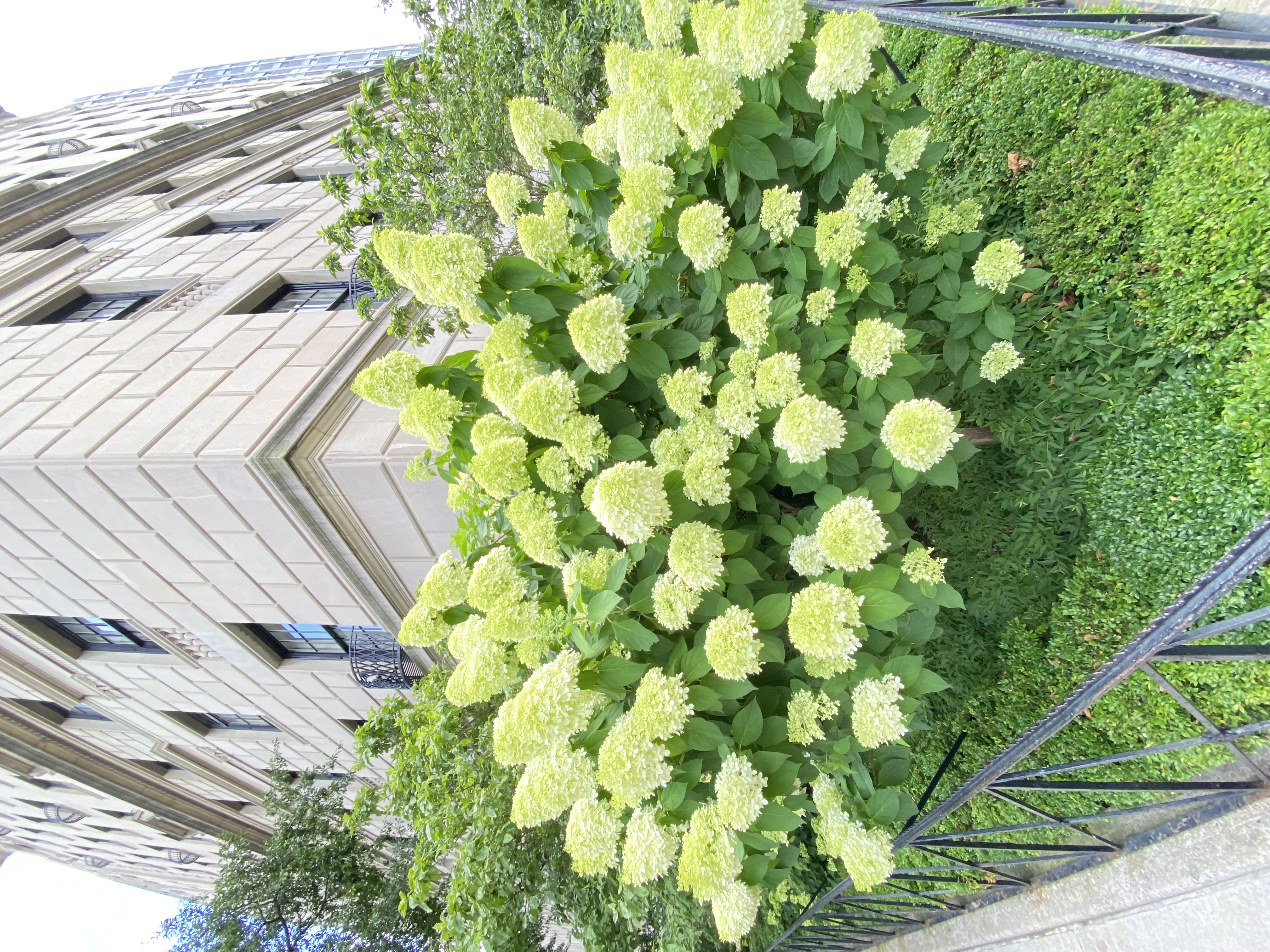
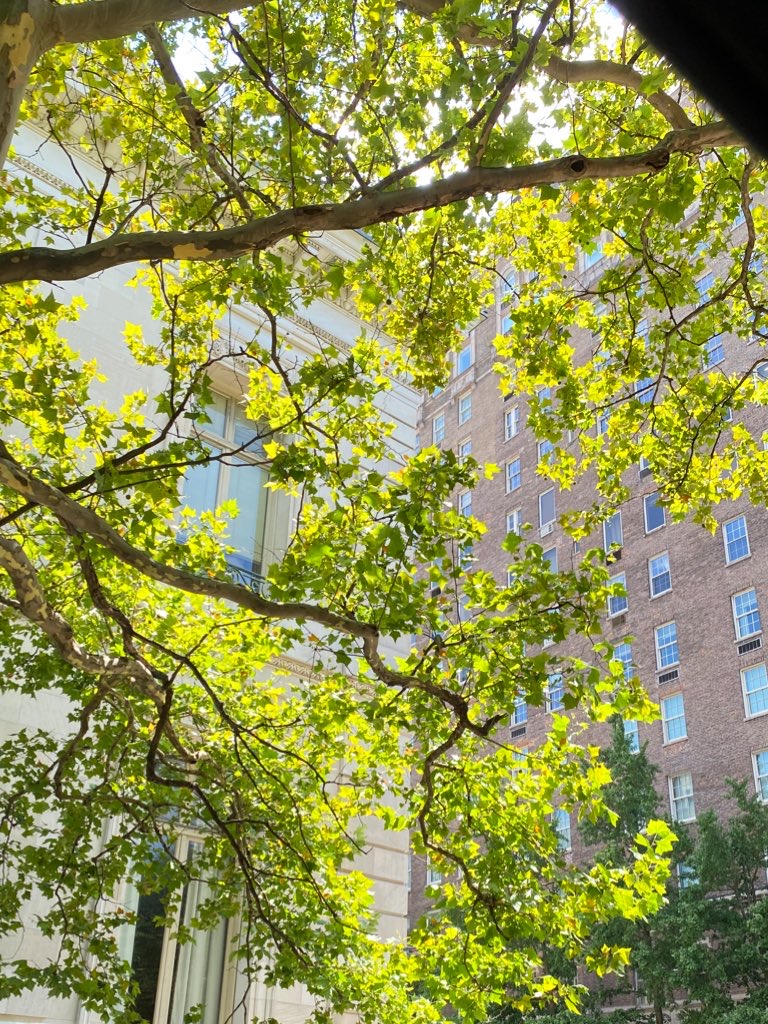
Blooming hydrangeas on the Upper East Side near The Frick

The friendly and professional staff members, who are proud to share such a treasure, warmly welcome visitors, which was a lovely part of the visit. A courteous guard explained to a surprised visitor that people sometimes try to touch the art, especially Mr. Kanevsky’s lifelike flowers. Though most of the visitors seemed awed, delighted, and considerate, kudos to the staff for their patience as this surely happens.
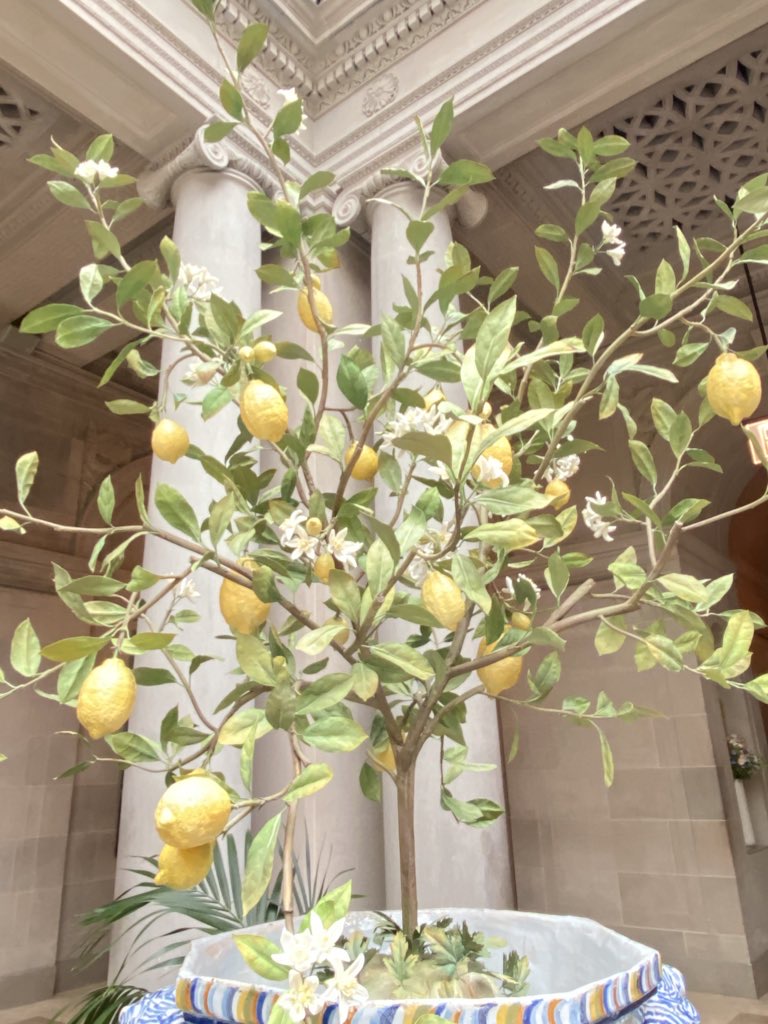
“Lemon Tree” by Vladimir Kanevsky in the Garden Court

Some logistics: Visitors must reserve timed tickets to view the galleries which have accessibility for most types of wheelchairs.  (Discounted tickets are available for visitors 10-18, those with disabilities, seniors, and students with valid IDs. Admission is free for care partners and active military with valid IDs. Note: Visitors must be over 10.)  Memberships may interest repeat visitors, and donations are always welcome.  The art does not have labels, but the museum offers a $5 guide (which has a new book smell) that may be purchased along with tickets, or visitors may enjoy an audio tour via Bloomberg Connects.  (My first tour was with a wonderful teacher and friend who suggested a visit; the website offers audio for some artwork, helpful for teaching and study, and tours are available for class trips.) Some discounts are available, particularly on Wednesdays from 1:30 to 5:30, when admission is “pay-as-you-wish” with programs that are open to the public.  A charming new café, “Westmoreland,” named after Henry Clay Frick’s Pullman car, and a shop complement the experience.  Students and faculty with valid IDs from the City University of New York, the Fashion Institute of Technology, New York University, and Pratt Institute may receive two complimentary tickets. To visit the Frick Art Research Library, first-time visitors must register. 
Much beloved, the Frick Collection initially sparked debate over its renovation, but with different perspectives coalescing, the result is a harmonious and inviting city oasis.

(Sources: frick.org, nypost.com, newsart.net.com, artnews.com, www.tclf.org, nps.gov)

“The Frick Collection: A Splendid Dream” All Rights Reserved ©2025 Kathleen Helen Levey
Greenwood Gardens: Fairy-Tale Enchantment

“…daily life…is practically composed of two lives – the life in time and the life by values…” E.M. Forster

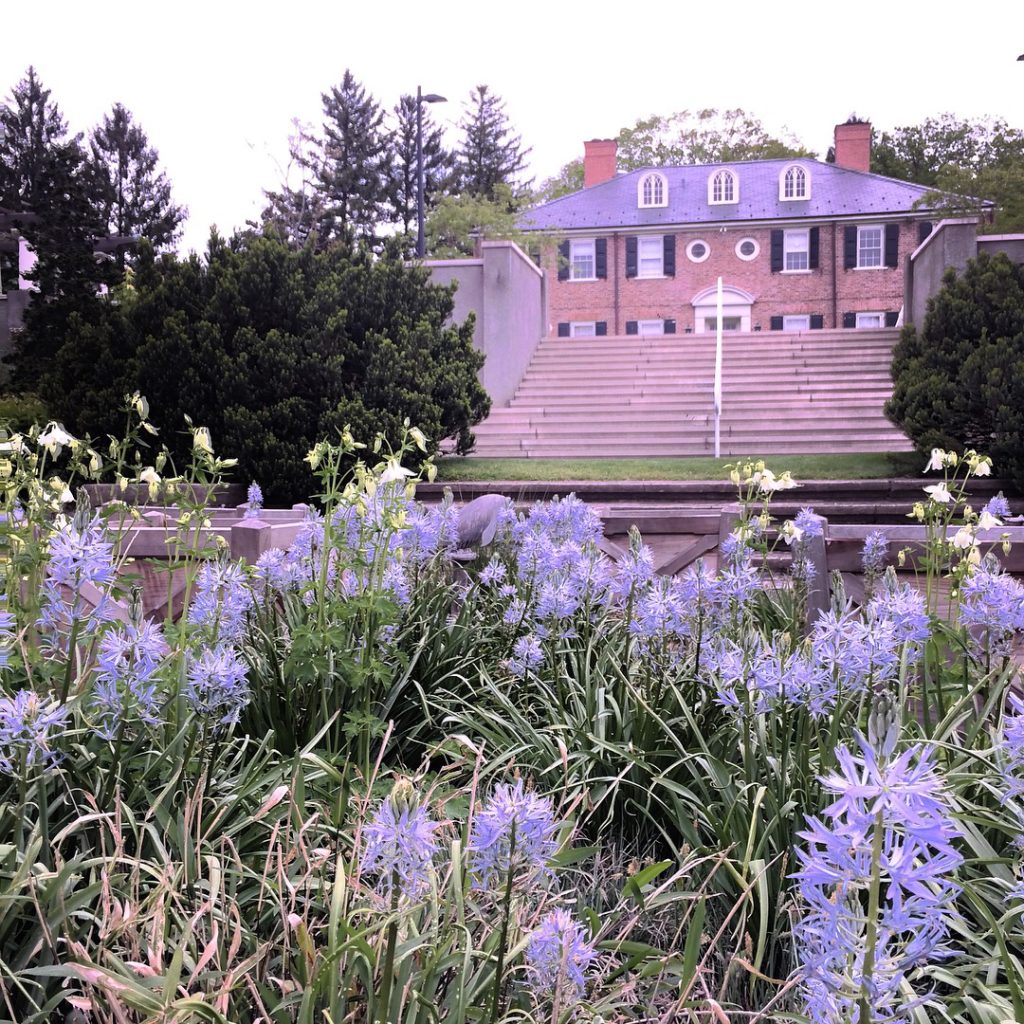
Looking up to the Georgian Revival mansion from the Italiante garden

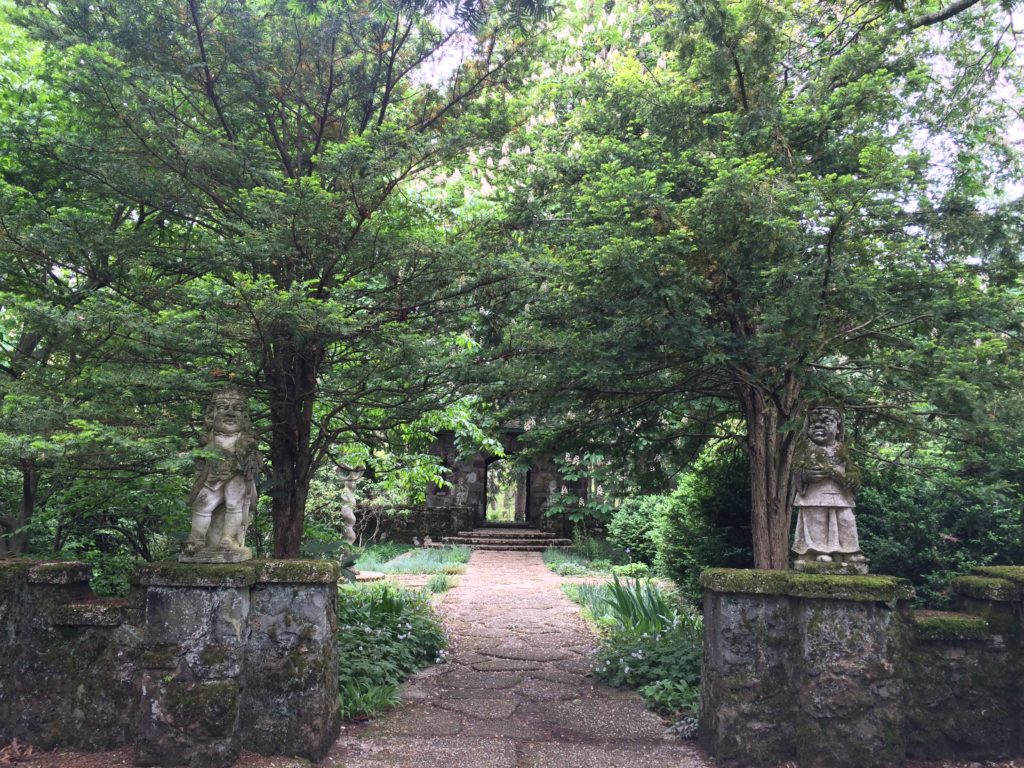
A garden is ever-changing, but perennial at the same time, planned around time to stand outside it.  We go then to a garden to enjoy nature’s beauty in time savored. Stepping into Greenwood Gardens takes us into a world of enchantment by adding fairy-tale charm to nature’s beauty. Greenwood Gardens features classical “Italianate gardens” with an “Arts and Crafts Design,” traditional handcrafted décor, resulting in the delight of Alice in Wonderland chess piece sculptures, a magical wrought-iron grille with birds of paradise and golden rabbits, fountains with Rookwood ceramic tiles, a stone teahouse, grottoes, and cascades.

“Greenwood Gardens” began as “Pleasant Days” an estate owned by the Days, Pauline and Joseph, who also lived in Gramercy Park. In 1906, the couple purchased the property from one of the well-known Newark brewers Christian Feigenspan, whose “P.O.N.,” the “Pride of Newark” beer won a silver medal in the Paris Exposition of 1877.  Mr. Feigenspan, a Cornell graduate, was a Newarker in an area filled with the country estates of wealthy New Yorkers among the “short hills,” high enough for views, low enough for access for those seeking a direct route to the countryside.

As a new Short Hills resident, self-made millionaire Joseph Day admired the garden of his neighbor, architect William Whetten Renwick and commissioned him to create an Italianate mansion and formal gardens for what would become “Pleasant Days”.  Before settling on a plan, Joseph and William toured gardens of Europe for inspiration. William, originally from Lenox, Massachusetts in the Berkshires, contributed to the design of both St. Patrick’s Cathedral and the Church of All Saints in New York City whose principal architect was his uncle James Renwick, Jr..  The Day gardens that he created had a modernized flair from new US inventions like lighting from Thomas Edison whose laboratory was in nearby West Orange and uniqueness with a working farm to fulfill the wishes of Pauline.  The beautiful Day home with its view of the Watchung Mountains was a social hub in the 1920’s and 1930’s.  During the Great Depression, however, Joseph, a real estate broker, had difficulty in maintaining the 79 acre estate, which went on sale in parcels after Mr. Day’s death in 1944.

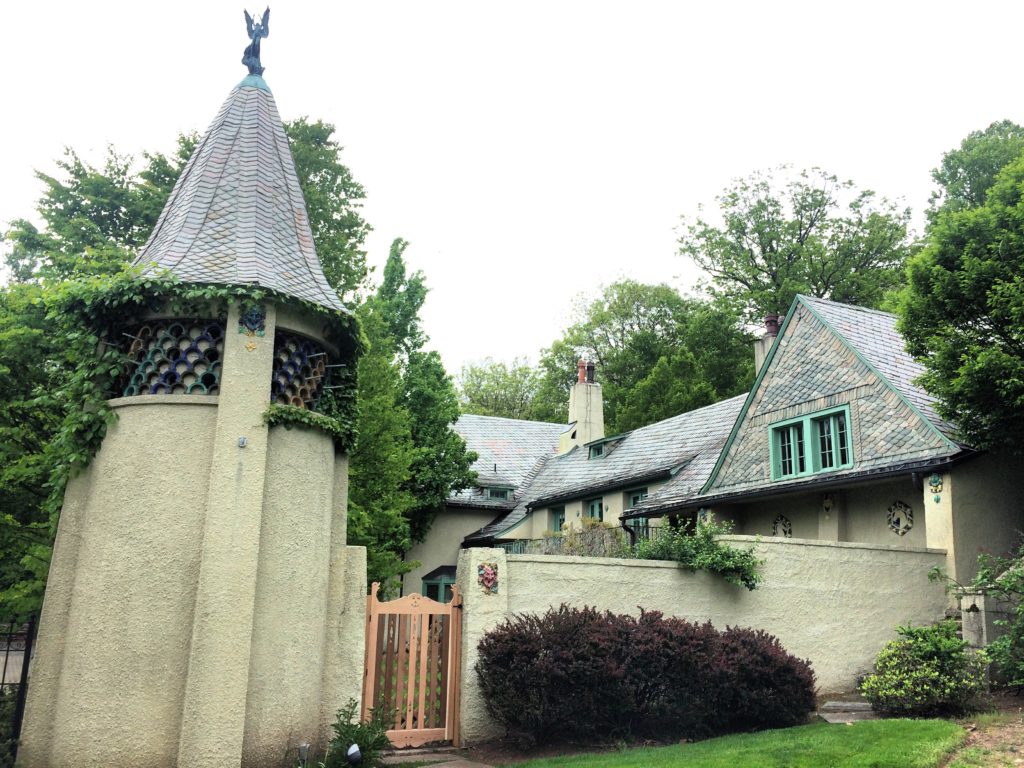
Carriage house

Dr. Adelaide Childs Frick Blanchard bought the house and gardens, replacing the worn mansion with the present Georgian Revival house in 1950.  Adelaide and her husband Peter Blanchard, Jr. preserved the gardens on the still vast parcel of about 28 acres. Adelaide, a pediatrician, was the daughter of Childs Frick, a paleontologist and trustee of the Museum of Natural History and granddaughter of Henry Clay Frick who founded the Frick Collection. The Blanchards added the incredible limestone chess pieces, several ponds, and the striking London plane and Norway spruce allee along the entrance driveway. The estate, bordering on South Mountain Reservation with its mountain trails, allowed for one of the Blanchard family favorite pastimes, horseback riding.  Mr. Blanchard later sold 40 acres of repurchased land to the Township of Millburn where there is a playing field and extensive woodland paths for the public to enjoy as Old Short Hills Park.

The gardens have reflected both the taste of their owners and their respective eras, the Gilded Age and the Colonial Revival. The Day garden favored popular perennials, the Blanchard garden, the “modern” evergreens of 1950’s.  After Dr. Blanchard’s death, her husband, who lived many years thereafter, devoted the remaining years of his life to maintaining and restoring their home as a part of ensuring its future for public enjoyment.  Carrying on Peter, Jr.’s wishes, Peter Blanchard III and his wife Sofia created a nonprofit to preserve the garden under the national Garden Conservancy trust.  Son Peter, a writer, conservationist, and Greenwood trustee often speaks at the garden about which he has written Greenwood: A Garden Path to Nature and the Past, available at the gift shop or by calling (973) 258-4026.  Working from archival photos, the Garden Conservancy has restored the original terrace pergolas among several projects.  Today, the garden is a combination of perennials and plants with attractive foliage that offers color beyond the season of blooms.

Special flowers, particularly their scent, bring back memories – the rose corsage or boutonnière from a first formal dance, gardenias from a wedding bouquet, and pressed wildflowers from a picnic on one of those idyllic days that seem to have lasted forever. For many in our family, the scent of lilacs brings back the memory of our sweet grandmother Helen who returns to us each year with the first spring breeze.

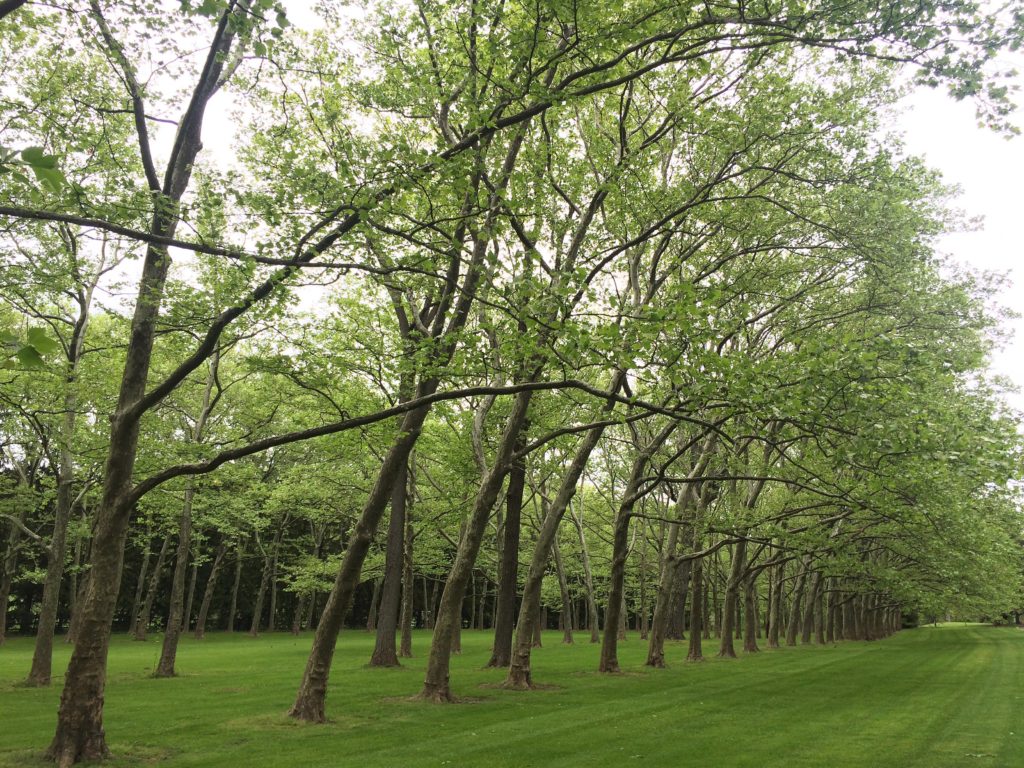
Even more so than the beautiful flowers, perhaps it is the trees that are most significant at Greenwood Gardens.  The visual poetry of the allée of London plane and Norway spruce trees that Peter planted for his wife Adalaide let visitors know that they are about to experience a place so beloved that the Blanchards felt compelled to share it.

Partial view of beautiful London plane and Norway spruce allee
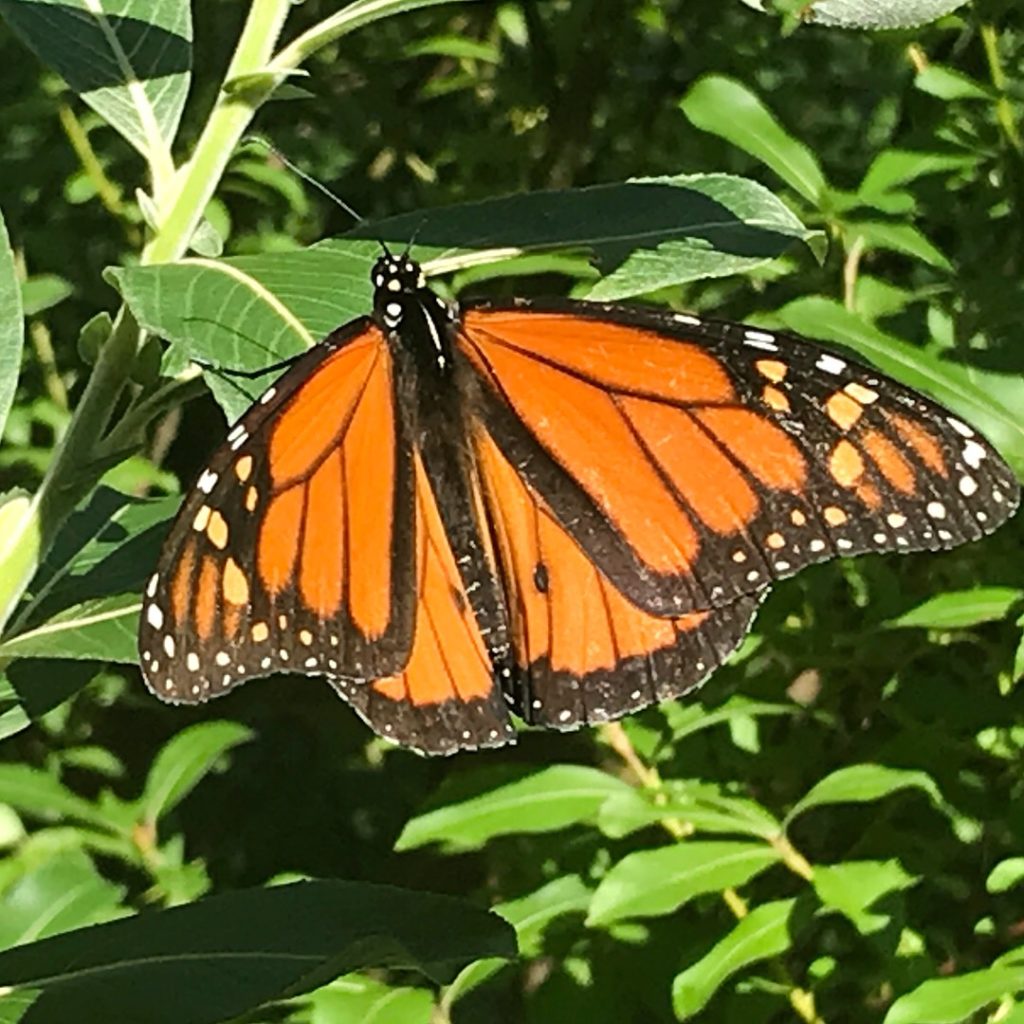
One of the Monarch butterflies in the allee
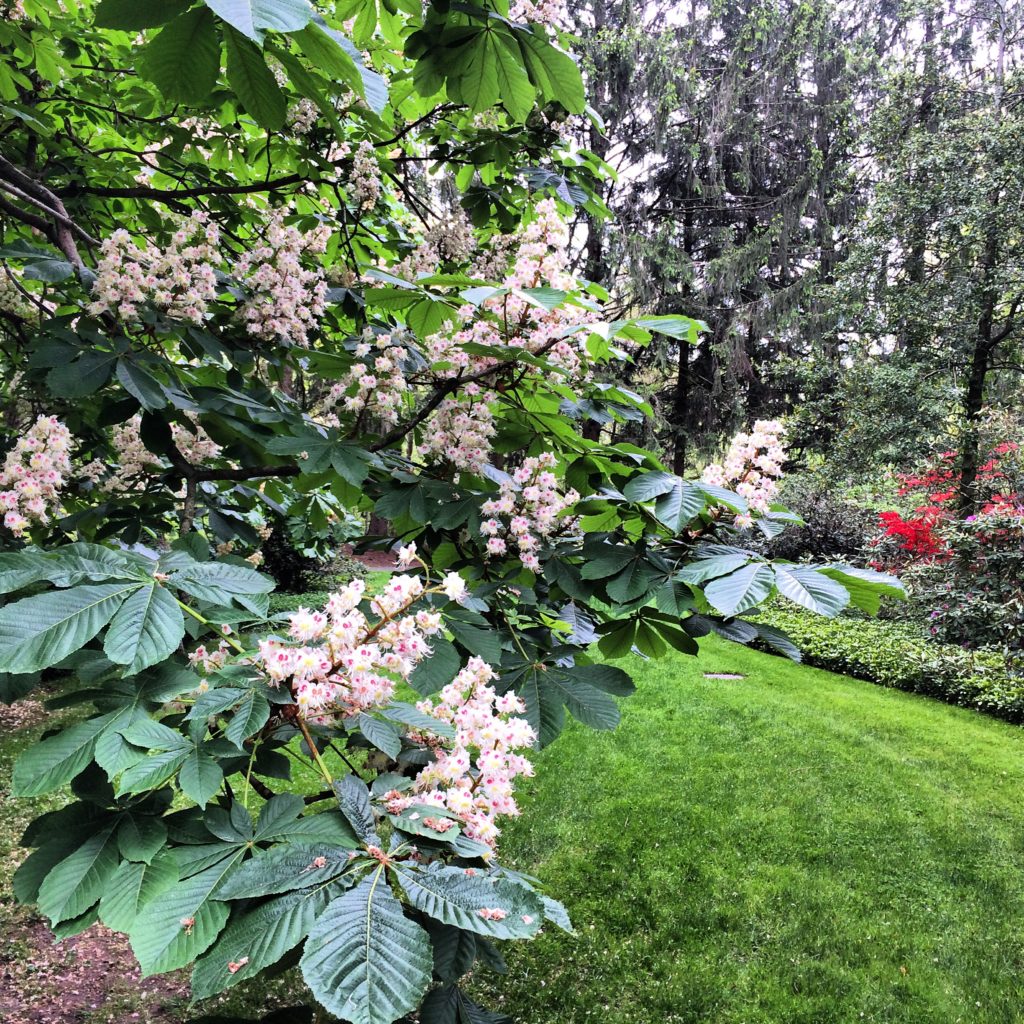
Flowering horse chestnut tree
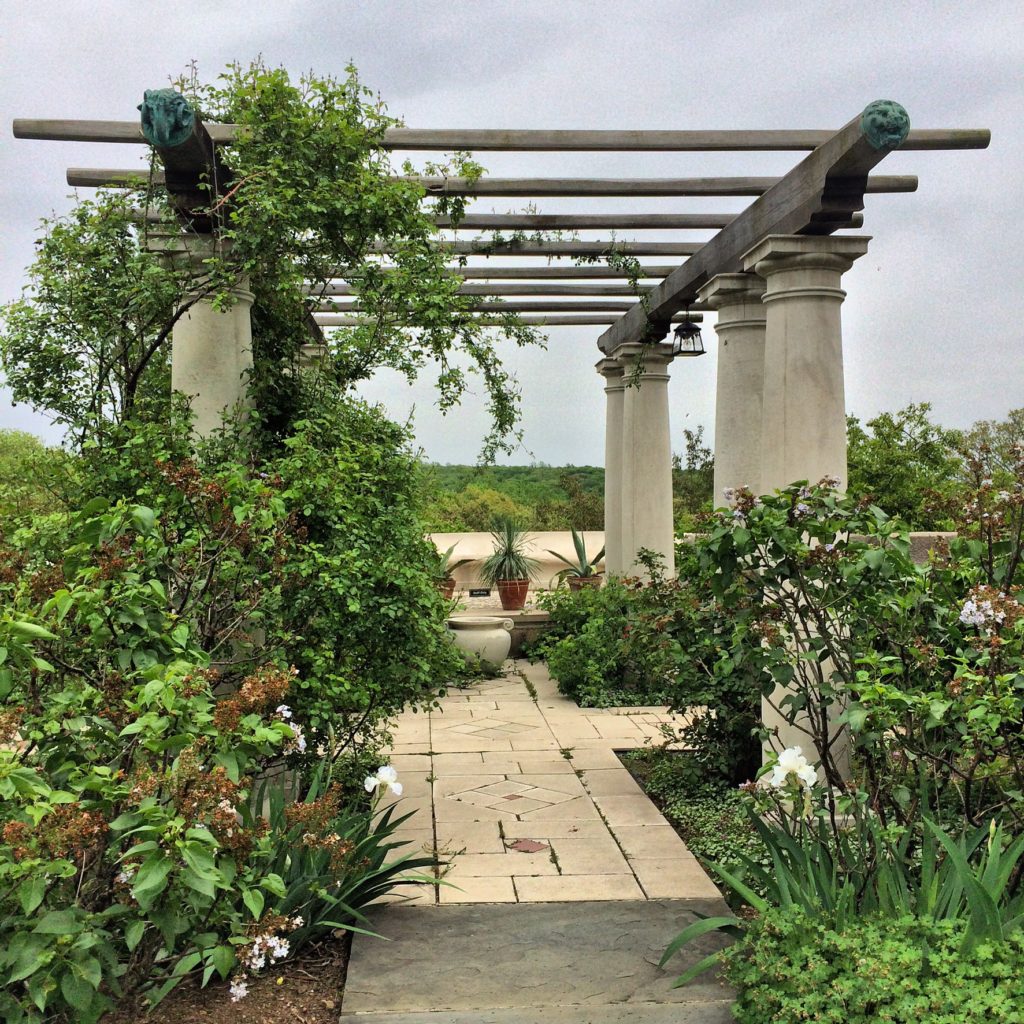
Terrace pergola with mountain view
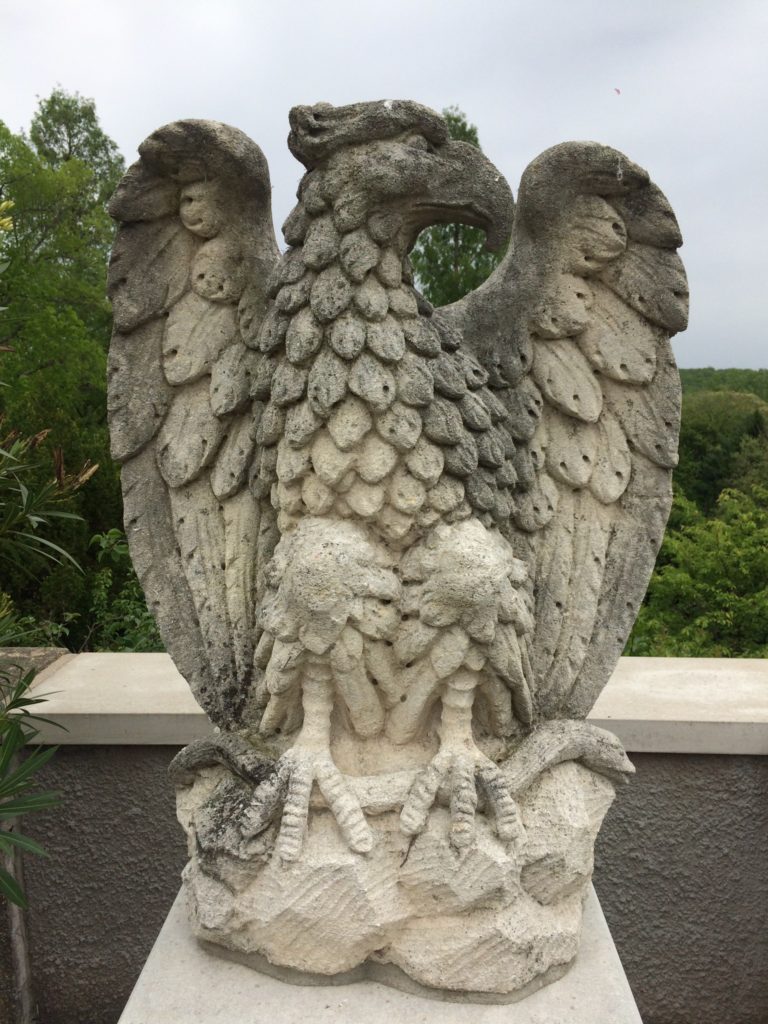
Terrace eagle
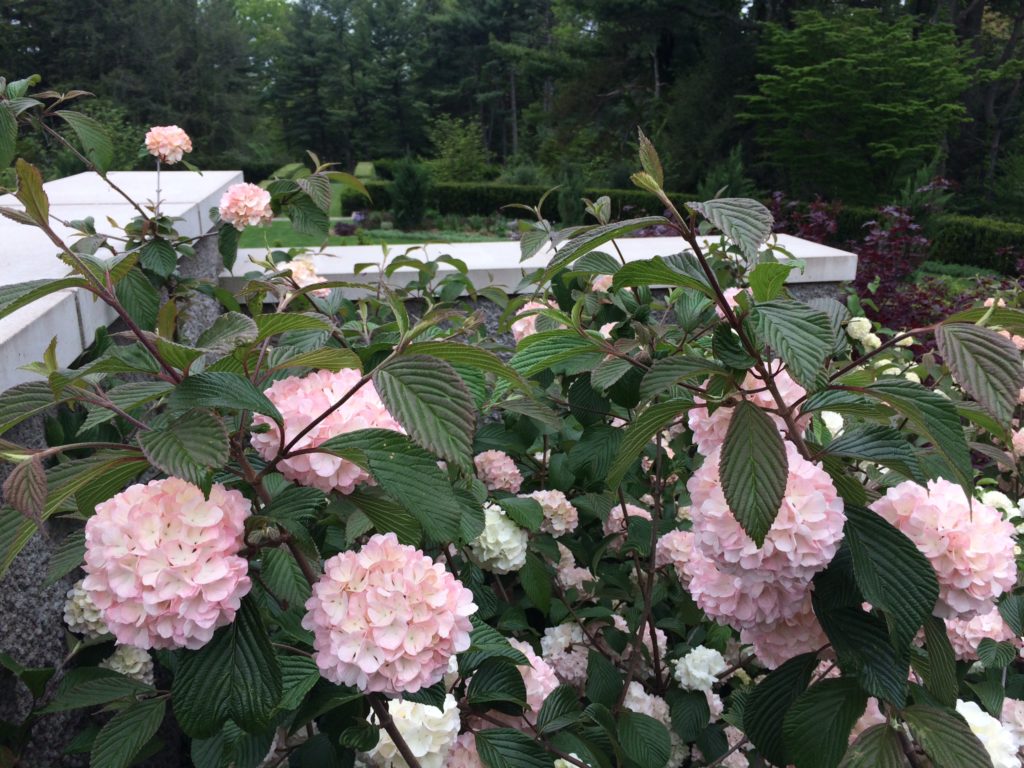
Flowers viewed from the terrace

After descending the steps in each marvelous level of the garden, visitors can travel through Greenwood’s mazes, an encounter with the wondrous. What is around the next corner?  Should one go right or left? The boxwood, fragrant at every turn, suggests that no one can choose wrongly. Surprises, some delightful and expected like birds singing and the rustling sound of squirrels darting through the hedges, may reassure us, and some fanciful, like the Rookwood fountain spouts of the enigmatic Dionysus, either smiling or frowning, offer mystery.

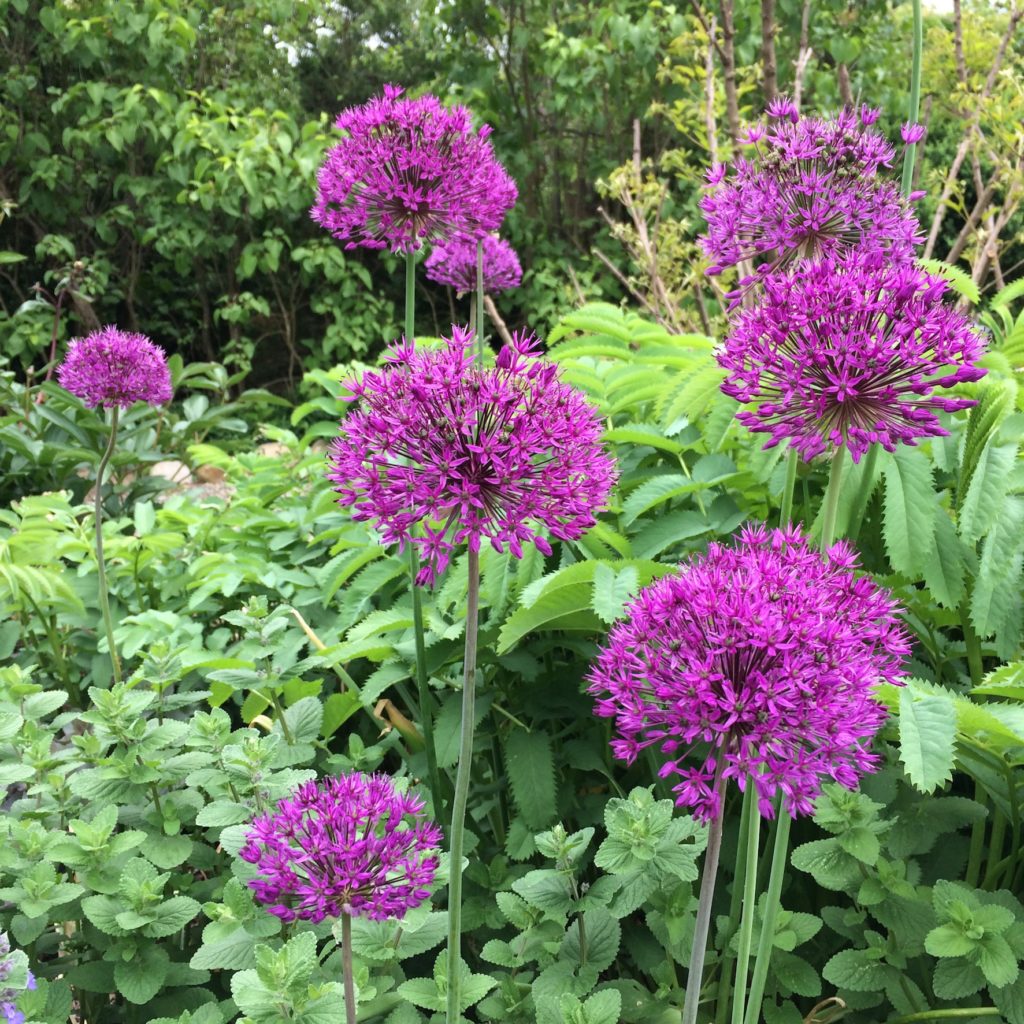
Cheerful allium

Friends who garden share the same qualities of patience, kindness, and good-naturedness. Perhaps that comes from taking the long view, knowing to prepare for spring months in advance and having the vision to imagine a flourishing garden when there is frozen ground.  Some friends in this bouquet are “house proud” as the British say.  They enhance the loving quality of their homes with fresh flowers and vegetables for their families and instill a love of nature in their children.  Others are artists, expressing themselves in the splendor of design.  Some are both. Almost all view themselves as grateful caretakers of God’s gift of beauty.  Each has a pride from accomplishment over time and the serenity of a joyful gift given to others.

A home of garden lovers, now shared with the public to experience not only nature’s beauty, but a sense of time more deeply valued, Greenwood welcomes volunteers.  For more information on their gardens which reopen in the spring, visit Greenwood Gardens, where you can also take an inviting online tour or see what’s in bloom. 

(Sources: greenwoodgardens.org, gardenconservancy.org, nybg.org, artprice.com, Arts & Crafts Home and the Revival: artsandcraftshome.com, nytimes.com, amnh.org, pawprinceton.edu, traditionalbuilding.com, hgtv.com, Wiki)

“Greenwood Gardens: Fairy-Tale Enchantment” All Rights Reserved © 2019 Kathleen Helen Levey

Front view of the mansion
Path to the stone summerhouse
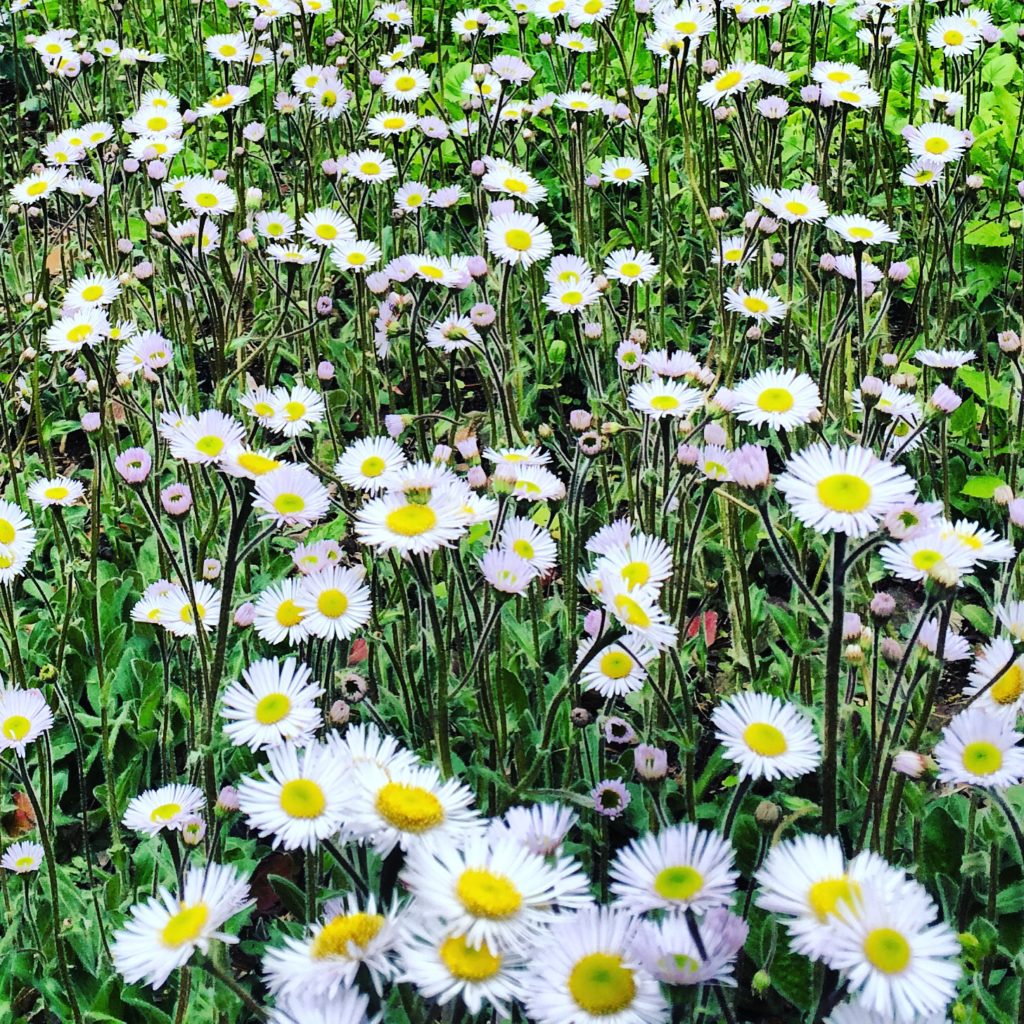
Fields of daisies

Powered by WordPress & Theme by Anders Norén